Connect with us

Lifestyle

I won’t die anytime soon, Obasanjo declares at 89

Published

on

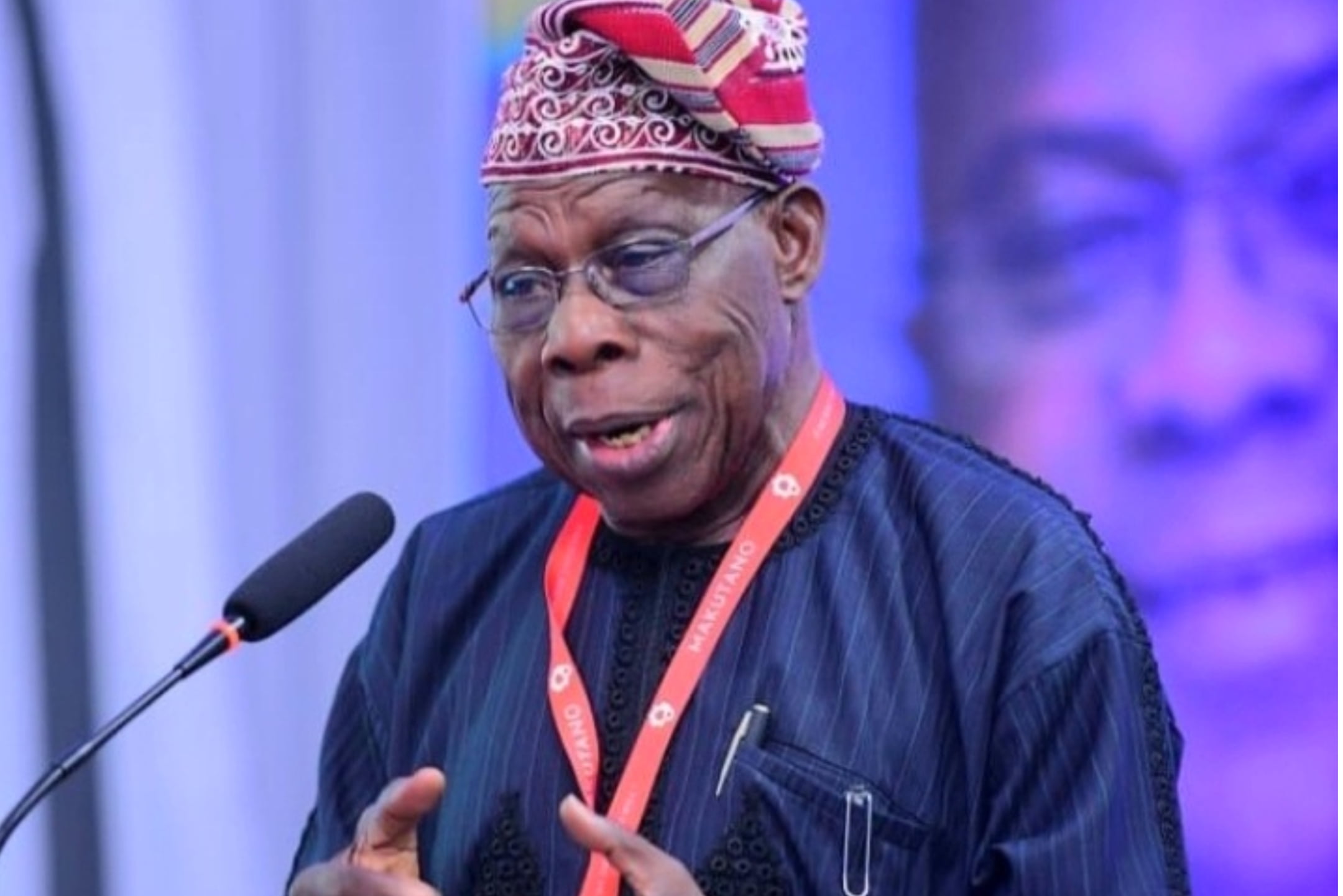
Former President, Chief Olusegun Obasanjo, has said that at 89 years, he won’t die anytime soon.

He condemned those circulating a fake letter in which he was purportedly speaking about his death, saying they were only wasting their time because “I dey Kampe.”

The former president disclosed this on Wednesday while delivering a colloquium titled “Burden and Blessing of Leadership: Reflections from Global Africa to the World” held as part of the ceremonies lined up to mark his 89th birthday in Abeokuta.

Obasanjo was born on March 6, 1937.

The former president said at 89 years he had no doubt that God did not make a mistake to keep him alive and reasonably healthy at his age.

He slammed those wishing him dead, saying he would remain on the earth surface agile and healthy for as long as his Creator wanted.

“For my final note in this address, I want to point your attention to the work of some never-do-well.

“They publish and circulate a fake paper credited to me that I am writing, giving notice of my death, pafuka.

“That is their wish and surely not God’s wish for me. God has assured me that He has more for me to do on earth, and He has given me the wherewithal to do it.

“And those who wish otherwise are going to be dealt with by God Himself. I dey kampe as usual,” the former President said.

Earlier, the former President had lamented the leadership crisis that he said had, for decades, stifled Africa’s development, growth, and economic prosperity.

“Africa is not a problem to be managed but a promise to be fulfilled through honest, courageous, selfless, incorruptible and transformational leadership,” he said.

See also  She Visits My Home – Nollywood Actor Speaks On Impregnating Late Actress, Aunty Ajara

He explained that genuine leadership carried immense burdens, citing his own incarceration and near execution under the military junta of the late Gen Sani Abacha as part of that burden.

Highlighting Africa’s unrealised potential, he said, “By every measure of natural endowment, Africa should be a continent of prosperity, stability, peace, security and global influence.

“Instead, a major part of the continent remains a theatre of preventable disease and suffering, starvation, conflict, insecurity and poverty.”

Obasanjo identified leadership failure, not geography or history, as the primary cause.

“The primary cause is the failure of those entrusted with power to lead for the people and serve them rather than against them; to build institutions rather than subvert them; to welcome accountability rather than flee from it, to ensure equity and justice rather than enthrone injustice, inequality and inequity.”

He warned that many leaders arrive with promises but soon govern for personal or familial gain, undermine democracy, and erode institutions.

“The same young reformer who promised accountability begins to silence the press, harass the judiciary, and intimidate civil society.

“All institutions become perverted only to serve the interest of the leader, his family, political accomplices and business interests,” he said.

To close the leadership gap, Obasanjo stressed the need for leadership formation, not just training.

“We must invest not only in teaching leaders what to do, but in forming leaders who are constituted and imbued with attributes and values to do the job the right way,” he said.

The former President urged young Africans to take democracy seriously and commit to governance that is accountable, transformational, transparent, and oriented toward the common good.

See also  Money can’t buy happiness, Elon Musk sparks global debate

“A continent that fails its youth does not merely waste a generation; it plants the seeds of instability that will haunt the next several generations,” he said.

Reflecting on personal leadership experiences, Obasanjo described the loneliness and moral weight of decision-making, from commanding troops in the Nigerian Civil War to serving as Nigeria’s President from 1999 to 2007.

“The loneliness I speak of is the loneliness of final decision… your decision will affect millions of lives. That weight settles on one pair of shoulders – the leader’s shoulders,” he explained.

“I remember a few days before the Nigerian Civil War ended in January 1970. I was commanding the Third Marine Commando Division.

“My troops were positioned for the final push. Hundreds of thousands of Igbo civilians were trapped, starving, dying. On one side was the imperative of ending the war quickly to stop further suffering.

“On the other was the risk that a military advance would deepen the humanitarian catastrophe. No textbook told me what to do. No senior officer was going to make that call. It was mine alone. I made it. We saved lives by not shelling Owerri.  History has rendered its verdict,” he said.

He stated that a leader also carried the burden of being the repository of other people’s hopes — hopes that are often larger than any human being can satisfy.

Obasanjo said that “When I was elected President in 1999, the Nigerian people had endured years of military dictatorship, economic stagnation, and institutional decay.

“They did not elect a president, some of them thought; they elected a miracle performer. And when the miracle did not arrive in full measure overnight — as it never can — I could hear the murmurs of some of them. This is the burden: to be elevated by hope and measured by time, often simultaneously.

See also  Maj.Gen. Tunde Idiagbon: The Iron Hand of Discipline (PHOTOS)

The former President said that with leadership also comes the burden of principle, adding that “True leadership requires the willingness to hold a position when it is unpopular, to say no when yes would be more convenient, to name a truth that powerful interests wish suppressed.

“This costs friendships. It costs alliances. It sometimes costs your freedom — as I learned in the prison under Sani Abacha, where I was held for three and a half years, tried before a kangaroo tribunal, and very nearly executed.”

He also highlighted the blessings of leadership, citing achievements such as Paris Club debt relief and the establishment of the Economic and Financial Crimes Commission to recover stolen public funds.

“The blessing of having done the right thing when doing the wrong thing would have been easier. That is the first blessing of leadership: the opportunity for moral self-definition. Not who others say you are,” he said.

On his personal well-being, Obasanjo affirmed that he remained strong at 89 and condemned those spreading false news of his death.

“God has assured me He has more for me to do on earth, and He has given me the wherewithal to do it. I dey kampe as usual,” he added.

punch.ng

FOLLOW US ON:

FACEBOOK

TWITTER

PINTEREST

TIKTOK

YOUTUBE

LINKEDIN

TUMBLR

INSTAGRAM

Continue Reading
Click to comment

Leave a Reply

Your email address will not be published. Required fields are marked *

Lifestyle

Governor Amuneke reveals party officials offered him dollars to alter anti-govt skits

Published

on

Comedian Kevin Chinedu, popularly known as Kevinblak, has revealed that officials of a political party offered him dollars to change his satirical skits criticising politicians and governance.

He made the disclosure on Monday in an interview on ARISEtv’s Arise 360 programme, where he spoke about the pressures facing content creators who hold public officials accountable through humour.

Chinedu, known for his character Governor Amuneke, said the approach came at a particularly vulnerable moment, shortly after his wife had a Caesarean section and he was under financial strain.

“They said they were going to change my life, that I’m earning crumbs, you know, give me dollars. They mentioned that my colleagues are in the game and all of that,” he said.

He declined to name the party, saying only that it was “Amuneke’s party”, a reference to the fictional political figure in his skits, and cautioned against any attempt to identify it publicly.

“Don’t mention names, trust me, don’t mention names,” he said.

Despite the financial pressure, the comedian said he turned down the offer, recalling how the officials had tried to lure him to Abuja with the promise of a life-changing sum.

“I had a lot of bills on my head and I just heard come, come to Abuja, let’s change your life. Dollars upon dollars,” he said.

He said he ultimately held firm, guided by a personal code he had maintained throughout his career.

“I looked at it, I said, no, I am who I am. I’ve been here for a long time, and I’ve never been in any illegal thing, and I’ve never been somewhere, you know, I’m doing something because I’m being influenced, because of money.

See also  Presidency backs EFCC on Atiku’s son-in-law hunt

“If I want to do it, it should be something I’m doing because I want to do it. So, you know, it is what it is,” he said.

When asked whether friends had urged him to accept the money, Chinedu said his inner circle was equally principled, and had themselves been approached and refused.

“I don’t have friends that are easily overwhelmed with money. I have people who have principles because they have, you know, approached them, they themselves. So, we always have that conversation,” he said.

punch.ng

FOLLOW US ON:

FACEBOOK

TWITTER

PINTEREST

TIKTOK

YOUTUBE

LINKEDIN

INSTAGRAM

Continue Reading

Lifestyle

Over 4,600 Nigerian doctors relocate to UK in three years – Report

Published

on

Nigeria’s already fragile healthcare system is facing renewed strain as no fewer than 4,691 doctors have relocated to the United Kingdom since President Bola Tinubu assumed office on May 29, 2023, fresh data from the General Medical Council shows.

The UK GMC is a public official register detailing the number of practising doctors in the UK alongside other details such as their areas of speciality, country of training, among others.

The mass migration represents not just a human resource crisis but a significant economic loss.

With the Federal Government estimating that it costs about $21,000 to train a single doctor, Nigeria has effectively lost at least $98.5m in training investments within less than two years.

The figure put the total number of Nigeria-trained doctors currently practising in the UK to about 15,692, making Nigeria one of the largest sources of foreign-trained doctors in Britain, second only to India.

As of May 28, 2025, official records showed that the number of Nigerian-trained doctors in the UK was a little over 11,000. The figure has grown significantly since then.

The exodus of doctors comes as Nigeria’s doctor-to-population ratio hovers around 3.9 per 10,000 people, far below the minimum threshold recommended by the World Health Organisation.

For many health experts, the numbers confirm what has long been visible: a system gradually losing its most critical workforce.

The Nigerian Medical Association has repeatedly warned that poor remuneration, unsafe working conditions, and inadequate infrastructure are pushing doctors out of the country.

“Our members are overworked, underpaid and exposed to unsafe environments daily. Many are simply burnt out,” the NMA said in one of its recent statements addressing workforce migration.

See also  Amnesty deal: Outrage mounts as Katsina moves to release 70 bandits

Similarly, the National Association of Resident Doctors has consistently highlighted the toll on younger doctors, who form the backbone of Nigeria’s tertiary healthcare system.

“Doctors are leaving because the system is failing them—irregular salaries, excessive workload, and lack of training opportunities,” NARD noted during one of its nationwide engagements.

Ironically, the doctor exodus persists even as Nigeria continues to spend heavily on healthcare abroad.

While official foreign exchange data shows only modest spending on medical tourism in recent years, broader estimates suggest Nigerians still spend hundreds of millions of dollars annually seeking treatment overseas.

For instance, a recent report by The PUNCH revealed that foreign exchange outflow for health-related travel by Nigerians surged to $549.29m in the first nine months of 2025, a 17.96 per cent increase from $465.67m in the same period of 2024, according to official data by Nigeria’s apex bank.

A public health expert, Dr David Adewole, noted that the Federal Government’s national policy on health workforce migration, aimed at curbing the growing trend of health professionals leaving the country—commonly referred to as ‘Japa’—is a good initiative, but may not do much to address the fundamental problems of the shortage of skilled healthcare professionals in Nigeria, particularly in rural and underserved areas.

According to him, many of the push factors for health professionals emigrating to greener pastures, like insecurity, emolument and lack of basic amenities like potable water, health facilities, cost of living and constant electricity, persisted.

He stated: “To make healthcare workers stay here, let the salaries be enough so that what you earn will be much more than the multiples of what you need for basic needs, like food, power supply, housing, and so forth.

See also  The Tragic Death of “Africa” — A Life Cut Short by Cult Violence at OAU

“People still look at life after retirement. You might have a good policy, but its implementation is the issue. For example, you are retired, and for your retirement package, you don’t need to know anyone for it to be processed promptly.

“Then subsequently, your monthly pension, without pressing anybody, should be paid. Those things are not here.

“And when you go to the hospital abroad, if you tell them that you are in a hurry, you go to your home; they’ll bring the medicines to your doorstep.”

Continue Reading

Lifestyle

Another Nigerian found dead in UK apartment

Published

on

Barely one week after a Nigerian mother of three died of cancer in the United Kingdom, another Nigerian father of three, identified simply as Herbert, has been found dead in his apartment.

This is just as the deceased was said to have left behind a wife and three young children, as his family appeals for financial support to cover funeral and repatriation costs.

PUNCH Metro learnt on Sunday from a post by an X user identified as ‘The Stress Manager’ that Herbert, who lived in Thornaby, died suddenly in his sleep last week, in what relatives described as a shocking and heartbreaking incident.

According to the post, the deceased had been battling emotional and financial strain following the death of his father in Nigeria just days before his own passing.

The post read, “Herbert, a calm and devoted Nigerian husband and father of three young children, the youngest just eight years old, passed away suddenly in his sleep in Thornaby.

“Only a few days before his death, he was already dealing with the pain of losing his father in Nigeria. He could not travel for the burial, but he gave everything he had financially to ensure his father had a dignified farewell. That alone drained him mentally and financially.

“Then the unimaginable happened. Herbert passed away on the very day his father was laid to rest.”

The X user added that the incident was particularly traumatic for the family, as Herbert’s children were the ones who discovered his lifeless body.

He noted that Herbert was a devoted husband and father, survived by three children, the youngest aged eight.

See also  Veteran actor, EyiyemiOlivia Rogbinyin, to host QEDNG summit

He added that following his death, the family has been left with the burden of caring for the children and raising funds to repatriate his remains to Nigeria for burial.

“To make it even more heartbreaking, his children were the ones who found him that morning because his wife was away at the time. No child should ever experience that.

“Now his wife is left alone to care for three young children while also facing the heavy financial burden of funeral and repatriation costs,” he added.

A former president of Nigerians in the UK, Benjamin Kuti, also confirmed Herbert’s death in a post on his X page on Friday.

Kuti also appealed to the Nigerian community in the UK to support Herbert’s family.

Meanwhile, a fundraising campaign has been launched to support the family, with an appeal to Nigerians in the UK and the wider public to assist.

As of the time of filing this report, a sum of £2,633 had been raised out of the £7,000 target.

PUNCH Metro reported on April 13 that a UK-based Nigerian mother of three, Omotayo Abioye, died after a battle with breast cancer.

Kuti had stated that Omotayo died on April 5 at the age of 40.

She was described by her family as a devoted mother, loving wife, and compassionate individual whose life impacted many.

punch.ng

FOLLOW US ON:
FACEBOOK

TWITTER

PINTEREST

TIKTOK

YOUTUBE

LINKEDIN

INSTAGRAM

Continue Reading

Trending