Connect with us

News

US defends Soyinka’s visa revocation

Published

on

The United States Embassy in Lagos has stated that visas granted by the country to foreign nationals are based on privilege, not a right.

The US Consulate in Lagos made this clarification on Thursday in response to an inquiry from The PUNCH regarding the revocation of the visa of Nobel laureate, Prof. Wole Soyinka.

In an email response to our correspondent on Thursday, the Consulate noted that it could not discuss the details of the particular visa for confidentiality reasons.

“Under U.S. law, visa records are generally confidential. We will not discuss the details of this individual visa case,” the Public Diplomacy Officer, US Department of State, US Consulate General, Lagos,  Julia McKay, said.

McKay added that visas could be revoked at any time at the discretion of the US government, noting that they are a privilege.

“Visas are a privilege, not a right. Every country, including the United States, can determine who enters its borders. Visas may be revoked at any time, at the discretion of the U.S. government, whenever circumstances warrant,” she said in an email responding to The PUNCH.

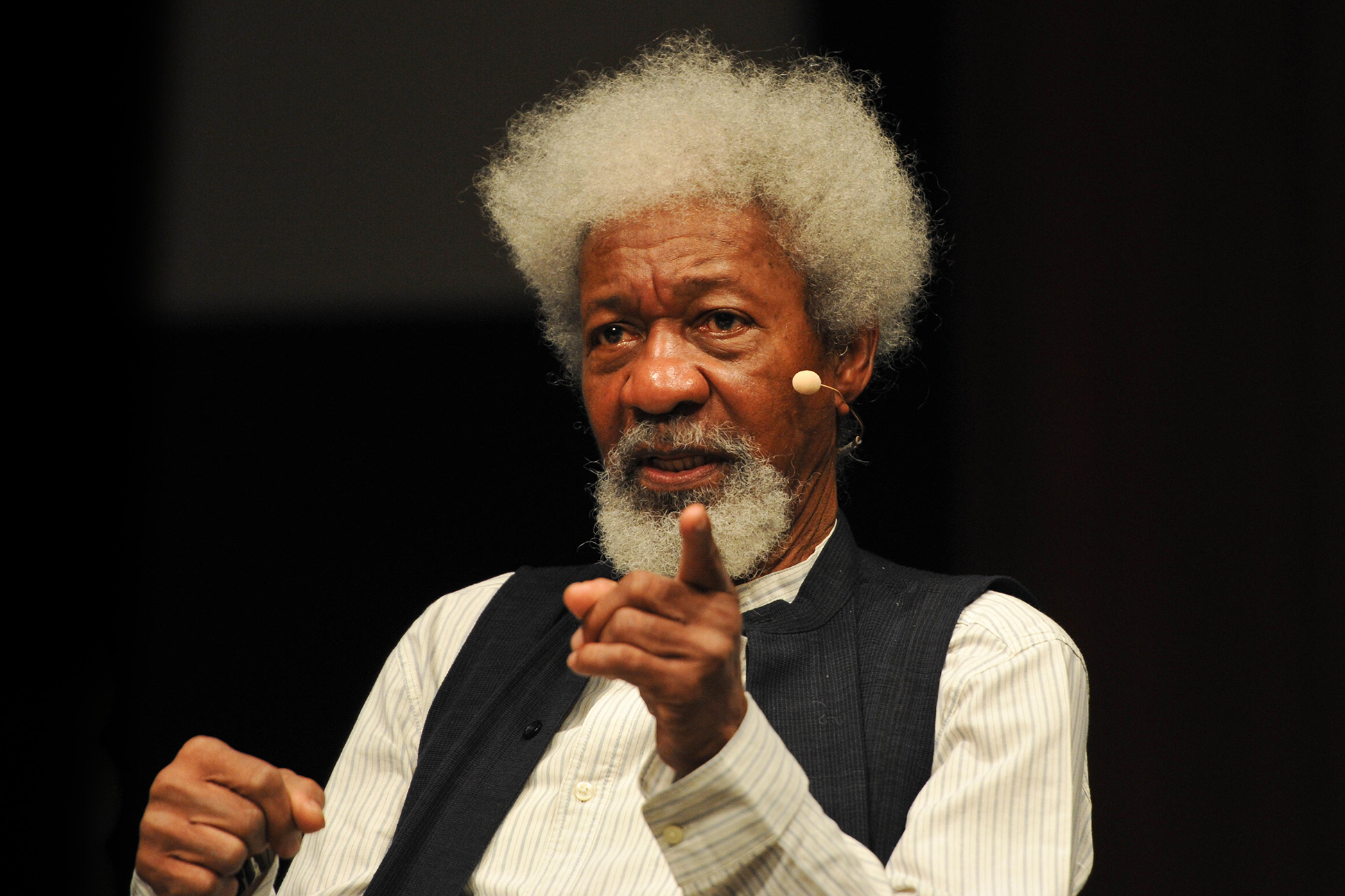
Soyinka had, during a media parley on Tuesday in Lagos, announced the revocation of his B1/B2 visa by the US Embassy.

The 91-year-old world-acclaimed writer told journalists at Kongi’s Harvest, Freedom Park, that he should not be expected in the US by anyone, as he currently has no visa.

Addressing the media at the parley titled “Unending Saga: Idi Amin in Whiteface,” Soyinka said the notice of revocation was communicated to him by the US Consulate General in Lagos, in a letter dated October 23, 2025.

See also  "You’ll see things happen"- Trump threatens Putin on Ukraine war again

“It is necessary for me to hold this press conference so that people in the United States who are expecting me for this event or that event do not waste their time.

I have no visa; I am banned, obviously, from the United States. And if you want to see me, you know where to find me,” the author, playwright, and poet told journalists at the upper chamber of the art gallery.

Soyinka, who is a staunch critic of US President Donald Trump, stressed that he did not know the basis for the revocation of his visa.

While pondering over the revocation of his visa, the renowned writer said he could not recall any offence by committed by him that could have warranted the decision to revoke his visa.

“I’ve started looking back—have I ever misbehaved towards the United States of America? Do I have a history? Have I been convicted? Have I gone against the law anywhere?” he wondered.

He, however, said he recalled two minor incidents that happened years ago, wondering if they were connected to the present action.

Soyinka said, “And I remembered finally, two instances, which I want to make public now in case it is brought up later on.

“I remember pleading guilty at the airport one day. I was landing in Chicago. It was my first major production in the United States. We were in rehearsals at the time. And the night before, I had to dash to London and then return for rehearsals.

“I had gone to an Indian restaurant in London, and as usual, when I go to cold wintry countries, I always carry peppers with me. At that restaurant, when I was leaving, I put a few green chilies in my pockets just to keep me going when I got back to Chicago. I forgot to declare those chilies.

See also  Yuletide: Police tighten security, FG declares holidays

“So, I’m warning you now that you may learn that I was convicted for carrying some small chilies. At the airport, they wanted to charge me to court, but they said I could plead guilty and pay a fine. I think I remember paying about $25 or so. So, that’s one possible crime that could have been dug up. I had forgotten all about it, quite frankly, that’s my fault. That’s one.”

He added, “Two, the American Society of African Culture had an international conference some years ago, just in the early 70s, I’m not good with dates. It took place in the American Hotel, Atlanta. And, I had a confrontation with the police (over) some racist conduct by the receptionist, which led to the police being called. And this policeman came and was trying to throw his weight around. So, I could be convicted, if you like, for, shall we say, disobeying orders from law officers of the US. This was at least 30 years ago.”

“So, ladies and gentlemen, these are the only two crimes I can consider myself guilty of in all the decades I’ve been going to the United States.”

Soyinka said he did not think the two incidents were the reasons for the revocation of his visa.

According to the letter addressed to him, the US Consulate stated that the Nobel laureate’s non-immigrant visa “has been revoked pursuant to the authority contained in the U.S. Department of State regulations 22 CFR 41.122 and is no longer valid for application for entry into the United States. Additional information became available after the visa below was issued. This revocation refers only to the visa listed below.”

See also  Oba of Benin declares two-week fasting, prayer for Edo

The Consulate further requested Soyinka to bring his visa to the Lagos Embassy “for physical cancellation,” a request the Nobel laureate described as humorous, asking if anyone in the audience would volunteer to deliver it on his behalf.

“If you have plans to travel to the United States, you must apply again to re-establish your qualifications for a new non-immigrant visa,” the letter, issued by the NIV Section of the Consulate, added.

Soyinka’s visa was issued on April 2, 2024, in Lagos, according to the letter.

Best known as a playwright, Soyinka won the Nobel Prize in Literature in 1986. He had lived abroad, primarily in the US, for a long time, where he held professorships at several universities, according to The Nobel Prize.

Soyinka’s visa revocation has sparked fresh conversations about recent steps taken by the US to curb migrant influx into the country, especially from Africa.

Continue Reading
Click to comment

Leave a Reply

Your email address will not be published. Required fields are marked *

News

‘Revenue doubled, debt hit N200tn’ — Peter Obi demands answers from Tinubu govt

Published

on

Mr Peter Obi, presidential candidate of the Nigeria Democratic Congress, NDC, and former governor of Anambra State, has questioned the Federal Government’s borrowing pattern, arguing that the sharp increase in national revenue under President Bola Tinubu’s administration has not translated into improved living conditions for Nigerians.

The remarks were contained in a statement posted on Obi’s official page while reacting to the President’s recent account of his administration’s performance after three years in office.

According to Obi, President Tinubu listed the increase in government revenue from N16.8 trillion in 2022 to N35 trillion in 2025 as one of the administration’s major achievements.

Obi argued that despite the reported increase in revenue, the country’s debt profile had continued to rise.

“Shockingly, while Nigerians expected a reduction in borrowing with the exponential increase in revenue, the opposite is the case,” Obi stated.

According to him, Nigeria’s total public debt has risen to about N200 trillion, representing an increase of over N100 trillion within the last three years.

Obi also argued that the country earned more than projected budget revenues during the period due to global and regional economic developments that affected commodity prices and government earnings.

Obi also alleged that key socio-economic indicators had worsened during the same period.

“Alarmingly, even with the astronomical increase in both revenue and debt, almost all key socio-economic and governance indicators are worse than in 2023,” he said.

Obi cited rising multidimensional poverty, unemployment and a decline in gross domestic product, GDP, per capita as areas of concern.

See also  North-East logs nearly 2,000 explosions in seven years – Report

According to him, multidimensional poverty increased from about 87 million people in 2023 to more than 140 million people in 2025.

“The question Nigerians and even the international community are asking is, ‘Where did all the money go?’” Obi stated.

He called for greater transparency and accountability in the management of public resources, urging the government to provide Nigerians with a detailed explanation of how revenues and borrowed funds have been utilised since 2023.

FOLLOW US ON:

FACEBOOK

TWITTER

PINTEREST

TIKTOK

YOUTUBE

LINKEDIN

INSTAGRAM

Continue Reading

News

Tinubu approves N10bn funding for emergency response to Ebola

Published

on

President Bola Tinubu has established a Presidential Task Force on Ebola Virus Disease Preparedness and approved the immediate release of N10bn in emergency intervention funding.

This follows the rapidly expanding outbreak that has already killed at least 349 people across the Democratic Republic of Congo and Uganda, with the World Health Organisation declaring it a Public Health Emergency of International Concern.

A statement by the Special Adviser to the President on Information and Strategy, Bayo Onanuga, said the task force would be chaired by the Chief of Staff to the President, Femi Gbajabiamila, with membership drawn from relevant ministries, departments and agencies and state representatives.

The N10bn, Onanuga said, will strengthen the operational preparedness of the Nigeria Centre for Disease Control and Prevention and support critical national public health emergency response activities.

The task force was constituted following a stakeholder meeting convened by Gbajabiamila to review Nigeria’s preparedness.

It was attended by representatives from the Ministry of Interior, the Federal Airports Authority of Nigeria, the Nigeria Immigration Service, the Nigerian Civil Aviation Authority and the Lagos State Government, among others.

According to Onanuga, Tinubu directed the “intensification of passenger screening at all international airports, including enhanced temperature checks and crowd-control protocols, and enhanced monitoring of passengers arriving on high-risk airline routes, including Air Uganda, RwandAir, Air Tanzania, Air Angola, Kenya Airways and Ethiopian Airlines, all carriers with direct or connecting services from the affected region.”

He ordered the immediate activation of referral and isolation centres at Lagos and Abuja international airports, with other airports to follow, and the mandatory activation of QR code-based pre-arrival health declaration systems for passengers originating from or transiting through designated high-risk countries.

See also  ‘Fake News From Nigeria’ – Trump Attacks CNN Over Iran Ceasefire Report

The President also directed the disinfection of departure halls, cargo areas, baggage sections and airport facilities as precautionary environmental measures.

Tinubu directed the task force to designate specific airports or terminals for high-risk flights to enable controlled screening and isolation procedures, and to consider adjusting flight timings to minimise interaction between high-risk passengers and other travellers.

He also mandated the group to consult with security, diplomatic and aviation bodies on the possibility of regulating flights from affected and high-risk countries.

The President directed all states hosting international airports and international border corridors, as well as relevant MDAs, to immediately submit their plans, funding requirements and intervention needs for coordinated implementation.

The current outbreak, caused by the Bundibugyo virus, a species of Ebola, was first confirmed in DRC’s Ituri Province on May 15, 2026, and rapidly spread to Uganda after a case was confirmed in Kampala.

As of June 7, the European Centre for Disease Prevention and Control reported 515 confirmed cases and 91 confirmed deaths, with 283 individuals in isolation.

By May 29, the total suspected case count had risen to 1,037 with 349 deaths.

Unlike earlier-known Ebola strains, there is no licensed vaccine or specific therapeutic agent against the Bundibugyo virus, though early supportive care has been shown to be lifesaving.

Case fatality rates in previous Bundibugyo outbreaks ranged from 30 to 50 per cent.

In 2014, during the West African Ebola epidemic, Nigeria recorded 20 confirmed cases and eight deaths after a Liberian-American diplomat, Patrick Sawyer, arrived at Lagos’s Murtala Muhammed International Airport infected.

See also  War: Why peace talks with US failed – Iran

punch.ng

FOLLOW US ON:

FACEBOOK

TWITTER

PINTEREST

TIKTOK

YOUTUBE

LINKEDIN

INSTAGRAM

Continue Reading

News

June 12: Atiku backed rotational presidency deal, insists Akume

Published

on

The Secretary to the Government of the Federation, George Akume, has said former Vice President Atiku Abubakar was among political leaders who supported the adoption of rotational presidency in Nigeria following the annulment of the June 12, 1993, presidential election.

Atiku Abubakar
Former Vice President Atiku Abubakar

According to the SGF, the annulment of the June 12 election, won by the late Chief MKO Abiola, prompted political leaders to take difficult decisions aimed at preserving national unity and strengthening democracy.

A statement by his Media Aide, Yomi Odunuga, said Akume made the clarification on Tuesday while responding to questions at a World Press Conference in Abuja, as part of activities marking Nigeria’s 27th Democracy Day anniversary.

He recalled that leaders of the Peoples Democratic Party met in Kaduna under the leadership of the late Chief Solomon Lar and Alhaji Adamu Ciroma to deliberate on the country’s political future, with the issue of power rotation featuring prominently.

“It was a tough argument before the issue of rotational presidency was agreed on. At the end, we had to concede. We must do this.

“June 12 annulment had complicated the whole thing. It was finally agreed that we’ll be alternating between North and South.

“Atiku was one of the leaders at that meeting, which was convened by Chief Solomon Lar. He was part of that agreement,” Akume was quoted as saying.

The SGF explained that the decision to alternate presidential power between the North and South was designed to address the political consequences of the annulled election and promote inclusiveness and national cohesion.

See also  Yuletide: Police tighten security, FG declares holidays

Akume’s remarks come amid ongoing political debates over power rotation ahead of the 2027 general election.

Atiku, a northerner and the presidential candidate of the African Democratic Congress for the 2027 election, is expected to challenge incumbent President Bola Tinubu, who is seeking a second term in office.

Tinubu, a southerner, was elected President in 2023 following the completion of the constitutionally permitted two-term tenure of the late President Muhammadu Buhari, a northerner.

Atiku has been criticised by political rivals and the Presidency for running for the highest office and maintaining future presidential ambitions during election cycles when political consensus favours power rotation to the South.

Reflecting on the significance of June 12, the SGF described the annulment as a painful setback to the democratic aspirations of Nigerians.

“Abiola won that election round and square. That election was annulled by the military government. It was very painful because the people spoke, and they spoke freely. They made their own choice,” he said.

According to him, one of the major lessons from the June 12 experience is the supremacy of the people’s will in a democratic system.

“The first lesson is that the voice of the people must always be supreme; it must be sacrosanct. That’s the beauty of democracy. We prefer the ballot to bullets,” he stated.

Akume expressed confidence in Nigeria’s democratic institutions, particularly the Independent National Electoral Commission, saying the country had learned from the events of 1993 and would never allow a repeat of such an annulment.

“If an election is conducted very fairly, and one wins, no problem. The actors at the Independent National Electoral Commission are not young people; they were adults when this thing happened.

See also  War: Why peace talks with US failed – Iran

“If we were to take a poll at that time, over two-thirds of Nigerians would have condemned that act of annulment,” he said.

The SGF further commended INEC officials, describing them as men and women of integrity committed to protecting the nation’s democratic process.

“Fortunately for us, those at INEC are men of honour and integrity. They are well-read, patriotic Nigerians, and they are determined to make a difference. Never again would such happen in this country.

“You win, you win. When you lose, go back and prepare for another election. Look at the American example. President Trump lost to Joe Biden. He didn’t bring America down. He went back, prepared and came back and won. That’s the beauty of democracy,” Akume said.

He noted that Nigeria’s 27 years of uninterrupted democratic rule reflected the country’s commitment to democratic governance and freedom.

“We have decided to embrace democracy. That is why, for 27 unbroken years, we have been enjoying this freedom in a democratic setting. We love the values and the morals of democracy, and there is no system that is as beautiful as democracy,” he said.

Akume also highlighted freedom of expression as one of the key benefits of democratic rule.

“It is under a democratic system that you can insult your president and insult anybody and still go to bed, and you don’t receive a midnight knock on your door. Try it under a totalitarian regime,” he stated.

The SGF urged political actors to embrace democratic principles, respect electoral outcomes and continue to strengthen the nation’s democratic culture.

See also  VIDEO: VP Shettima arrives in Kwara over tragic terrorist attack that claimed 100

He added that Nigeria’s 27 years of uninterrupted democracy underscored its commitment to the rule of law, freedom of expression and peaceful political participation.

Continue Reading

Trending