Connect with us

Education

NSCDC uncovers fake university in Lagos, rescues 106 students

Published

on

The Nigeria Security and Civil Defence Corps, Badagry Area Command, has uncovered a suspected fake university operating from a three-bedroom apartment in Ilado, Olorunda Local Council Development Area of Lagos State, rescuing 106 youths allegedly recruited into the scheme.

The command also arrested the alleged proprietor of the institution, who was accused of luring young people from across Nigeria and neighbouring West African countries with promises of admission into a foreign university.

The operation was carried out in the early hours of Monday following days of intelligence gathering and covert surveillance by NSCDC operatives.

According to the corps, the suspected institution was operating without an official name, registration, signboard or recognised campus, while allegedly presenting itself online as a distance-learning centre affiliated with a foreign university.

Students of the fake Lagos university during the raid by NSCDC…Photo Credit: NSCDC

On Monday, the Badagry Area Commander of the NSCDC, Chief Superintendent Gbenga Ekunola, said the raid followed credible intelligence about activities at the apartment.

“We got reliable intelligence about the activities going on there. Our officers monitored the place for days before moving in. We have arrested the proprietor, who is assisting with our investigation, while the students have been taken into our protective custody,” Ekunola said.

Investigations revealed that the rescued youths, mostly between the ages of 19 and 24, came from several Nigerian states, including Kogi, Oyo and some northern states. Others reportedly travelled from neighbouring countries such as Niger, Cameroon and Togo after being recruited online.

Preliminary findings indicated that the victims were persuaded to pay admission and processing fees ranging from ₦200,000 to ₦1.5 million, while some foreign nationals reportedly paid between $400 and $500 after being promised admission into a foreign tertiary institution.

See also  Convention: Four PDP governors storm Ibadan as INEC signals boycott

The NSCDC further discovered that the admission offer allegedly came with a recruitment condition requiring participants to bring in more students in exchange for commissions.

NSCDC uncovers fake university in Lagos, rescues 106 students NSCDC after the raid of the fake Lagos university…Photo Credit: NSCDC

Investigators said the arrangement allegedly operated like a Ponzi or chain-marketing scheme, with participants promised increasing financial rewards based on the number of new recruits they brought into the programme.

One of the victims reportedly told investigators that after paying $400, he convinced his brother in Kogi State to enrol and had already started receiving referral commissions.

The command also uncovered another dimension of the operation, alleging that some participants were involved in promoting unidentified products online while earning percentages from product sales and recruitment.

Expressing concern over the incident, Ekunola said many parents were unaware of what their children were actually doing in Badagry.

“We have started contacting their families. One parent told us her child informed the family that he came to Badagry to learn a trade, not to attend a university. That shows many of these parents were completely unaware,” he said.

Students of the fake Lagos University during the raid by NSCDC…Photo Credit: NSCDC

He said all the rescued youths would be profiled before being reunited with their families after investigations.

The area commander added that anyone found culpable in operating the alleged fake institution would be prosecuted in accordance with the law.

The NSCDC said investigations had been expanded to uncover the full network behind the operation, identify other collaborators and determine whether similar schemes are operating in other parts of the country.

The discovery has renewed concerns over the growing number of fraudulent online admission schemes targeting young Nigerians and foreign nationals seeking opportunities to study abroad.

See also  2026: EKSU alumni present APC interest, nomination forms to Oyebanji

punch.ng

FOLLOW US ON:

FACEBOOK

TWITTER

PINTEREST

TIKTOK

YOUTUBE

LINKEDIN

Continue Reading
Click to comment

Leave a Reply

Your email address will not be published. Required fields are marked *

Education

Australia scraps digital writing tests for Year 5 pupils

Published

on

Australia will return to pen-and-paper writing tests for Year 5 pupils from 2028 following growing concerns over the impact of excessive screen time and digital technology on children’s learning outcomes.

The decision, agreed by the country’s education ministers, will see pupils take the National Assessment Programme – Literacy and Numeracy (NAPLAN) writing test on paper rather than computers.

According to an updated ABC News report late Tuesday, South Wales Deputy Premier and Education Minister, Prue Car, said there was growing evidence that excessive screen exposure was affecting students and their academic performance.

“There is a lot of evidence to suggest that excessive screen time has been harmful for students and their outcomes.

“Ministers across the country have agreed that we work towards year 5 NAPLAN being writing with pen and paper, that will be in addition to year 3 already being pen and paper,” Car said.

Car is also pushing for the writing assessments for Years 7 and 9 to return to paper, with the Australian Curriculum, Assessment and Reporting Authority, which administers NAPLAN, expected to provide advice to ministers on the proposal.

Explaining the decision, she said students performed better when writing by hand than typing on screens.

“It’s about the evidence of how children learn and they actually do better when they’re writing pen to paper as opposed to typing on screen.

“So making sure that the assessment is actually pen to paper will then necessitate more classroom time being pen and paper as opposed to a computer,” she said.

See also  PCC inauguration: APC banks on Tinubu’s record for re-election, read details

The decision comes amid concerns about declining academic performance among Australian pupils, with recent international assessments highlighting challenges in literacy, numeracy and students’ use of digital devices.

Australian students recorded their worst-ever results in the recent Programme for International Student Assessment, which compares educational performance across countries.

The assessment found that Australian students spent an average of 2.6 hours daily using digital devices, compared with the Organisation for Economic Co-operation and Development average of 1.7 hours.

NAPLAN results have also consistently shown that about one-third of Australian students are not meeting what education authorities describe as challenging but reasonable expectations in foundational literacy and numeracy.

The Heads Up Alliance, a grassroots movement of parents campaigning against screen time, welcomed the proposed changes but called for more comprehensive reforms.

Its founder, Dany Elachi, said the decision was a step in the right direction but argued that more needed to be done to reverse the decline in educational standards.

“New South Wales’ recently announced screen time parameters and proposed NAPLAN reforms are welcome steps in the right direction.

“However, more will be needed to reverse the decline in Australian educational standards. It turns out that Australia’s Digital Education Revolution of 2008 was, in effect, a vast experiment on our children. Today, the results of that experiment have become impossible to ignore,” Elachi said.

La Trobe University Distinguished Professor Pamela Snow also backed calls for a broader reassessment of technology use in schools, arguing that its adoption had moved faster than the available evidence supporting its benefits.

See also  Succession firestorm heats up in 10 states ahead of 2027 governors election

“I think as a general principle, the application of technology and education has got way ahead of the evidence.

“We can’t just keep going with these stopgap measures of tinkering around the edges downstream,” Snow said.

Snow said technology was introduced into classrooms too quickly.

“It’s now just become normalised, and, of course, it’s difficult now to wind it back and calibrate its use, but I’m not aware of any actual evidence that says technology has enhanced students learning,” she added.

Car said education ministers had also agreed to begin work on a broader digital detox initiative for Australian classrooms.

“State and territory ministers and the Commonwealth have agreed to start work on a digital detox for Australian classrooms.

“In New South Wales mandatorily from 2028, we’re going forward with screen time limits in classrooms, phased in from preschool to year 12 in the HSC year,” she said.

The education ministers are expected to release a communique later in the week outlining further reforms, including a proposed federal super commission partly aimed at addressing concerns over Year 12 dropout rates.

The ministers are also considering reforms to the primary school mathematics curriculum and additions to the national curriculum to address anti-Semitism.

Source: punchng.com

FOLLOW US ON:

FACEBOOK

WHATSAPP CHANNEL

TWITTER

PINTEREST

TIKTOK

YOUTUBE

LINKEDIN

INSTAGRAM

Continue Reading

Education

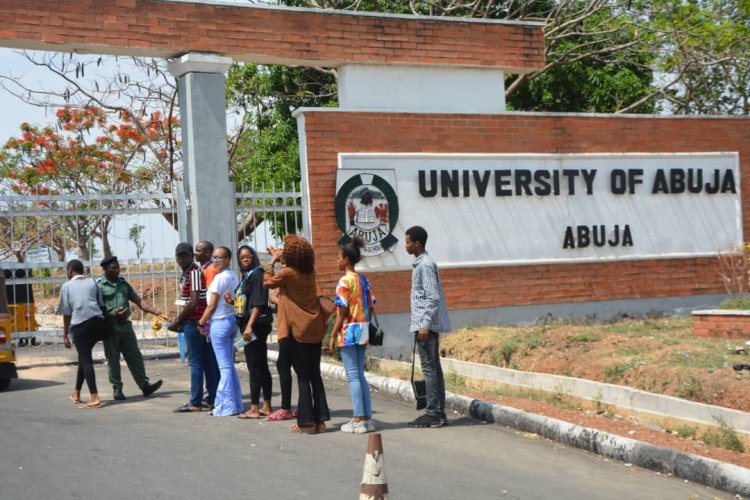
UniAbuja land dispute: ASUU threatens industrial action

Published

on

The Academic Staff Union of Universities (ASUU), University of Abuja (UniAbuja) branch, has demanded the immediate reversal of the alleged unlawful allocation of the university’s land by FCT Minister, Nyesom Wike.

The union also appealed to President Bola Tinubu to call Wike to order over the disputed land, saying this would allow peace and harmony to prevail on the university campus.

The Chairperson of ASUU, UniAbuja branch, Prof. Sylvanus Ugoh, made the demands at a news conference on Tuesday in Abuja.

The News Agency of Nigeria (NAN) reports that the conference was tagged: “Ministerial Encroachment into University of Abuja Land: Some Points to Ponder.”

Ugoh said the union would no longer guarantee industrial harmony if the minister failed to reverse the alleged allocation of the university’s land to his friends and cronies.

“The act of the FCT Minister is an outright breach and total disregard for the rule of law.

“On Aug. 18, Justice F.E. Mesiri of Maitama High Court granted interlocutory injunctions, including an order restraining the FCT Minister from entering or encroaching on University land.

“In spite of the court order, the FCT Minister went ahead on Sept. 26, to allocate the university land to companies and individuals,” he said.

Ugoh said the minister announced on June 30, 2025, during the inauguration of an access road to the Economic and Financial Crimes Commission (EFCC) Institute in Giri, the retrieval of 7,000 hectares from the 11,000 hectares allocated to the university.

He said the minister had accused the university of land grabbing and fencing several hectares of land without proper approval or documentation.

See also  FG declares Thursday, Friday public holidays for Eid-el-Fitr

“There is overwhelming documentary evidence showing that this parcel of land was allocated to the University of Abuja,” he said.

He explained that the University of Abuja was established on January 1, 1988, with an initial land allocation of 11,824 hectares to accommodate its long-term academic and infrastructural development.

According to him, the university authority could not have on its own decided where to situate the institution.

He said the university and the land were the property of the Federal Government and not the FCT.

Ugoh said the large landmass was deliberately allocated to provide room for future expansion, research activities, academic facilities and other institutional needs.

He noted that the university, as a dual-mode institution offering conventional and distance learning programmes, required sufficient land to fulfil its mandate.

Ugoh said the land was also needed for the establishment of research institutes, innovation centres and other facilities that would contribute to national development.

He added that portions of the land served as green areas for ecological balance, environmental conservation and climate change mitigation.

“The development of the University of Abuja may seem very slow, but it is still the Federal Government that is responsible for the development of its university.

“We appreciate the zeal of the FCT Minister to develop the FCT, but the argument that the land has been left undeveloped for too long does not stand.

“Universities gradually realise their full potential. It is pertinent to mention that the 11,824 hectares of University of Abuja land is not in any way beyond a dual-mode university in the country’s capital.

See also  FG gets tough, begins trial of over 600 terrorism suspects

“For instance, University of Ilorin occupies 15,000 hectares, Obafemi Awolowo University, Ile-Ife, occupies 13,000 hectares, Federal University of Technology, Minna, occupies 10,650 hectares and Federal University of Agriculture, Abeokuta, occupies 10,000 hectares,” he said.

He explained that out of the 11,824 hectares occupied by the University of Abuja, about two hectares were hilly and would require huge resources to develop.

He said the union would, within the ambit of the law, resist in totality any attempt by the minister to unlawfully take away UniAbuja land.

NAN reports that the news conference followed an emergency congress of the union held at the university on November 3 to deliberate on the land dispute.

In June 2025, Wike accused the varsity of land grabbing and noted that the institution has claimed 11,000 hectares of land, of which he had retrieved 7,000.

(NAN)

Source: punchng.com

FOLLOW US ON:

FACEBOOK

WHATSAPP CHANNEL

TWITTER

PINTEREST

TIKTOK

YOUTUBE

LINKEDIN

INSTAGRAM

Continue Reading

Education

MURIC kicks against hijab ban in Nigerian law schools

Published

on

Muslim Rights Concern, MURIC, has expressed displeasure over the ban on female Muslim students from wearing hijab at Nigerian law schools.

The organisation described the development as sad and unfortunate.

MURIC, in a statement signed by its Executive Director, Professor Isiaq Akintola, on Sunday, alleged that female Muslim students in law schools across the country were, on Saturday, barred from wearing hijab.

He added that the students were intimidated and harassed, condemning the action of the Nigerian law schools’ authorities.

Akintola called for the suspension of all examinations at law schools across the country, pending investigation into the matter.

He said, “There was harassment and intimidation of hijab-wearing female Muslim students in some Law School examination halls across the country yesterday, Saturday, 31st October, 2026.

‎”Hijabites who came hoping to sit for their call to bar final examinations were disallowed from entering the examination halls. In some places, they were forced to remain standing outside for about one hour until they removed their hijabs before they were allowed to enter and start the examination.

‎”While this was going on, our office was inundated with telephone calls, text messages and chats. We heard the cries of traumatised candidates, the lamentations of distressed parents, hundreds of kilometres away from the examination centres and the agitation of concerned Muslims around the country.

“MURIC strongly condemns the wanton disruption of the lawful educational pursuit of innocent Muslim ladies. It is crude, irrational and sadistic.”

FOLLOW US ON:

FACEBOOK

WHATSAPP CHANNEL

TWITTER

PINTEREST

TIKTOK

YOUTUBE

LINKEDIN

INSTAGRAM

See also  FG to unveil ₦50m grant for STEMM students
Continue Reading

Trending