

Connect with us

Education

FG Bans Igbo, Hausa, Yoruba In Schools, Declares English Sole Medium Of Instruction

Published

on

The Federal Government has cancelled the national policy mandating the use of indigenous languages like Hausa, Igbo and Yoruba as the medium of instruction in primary schools.

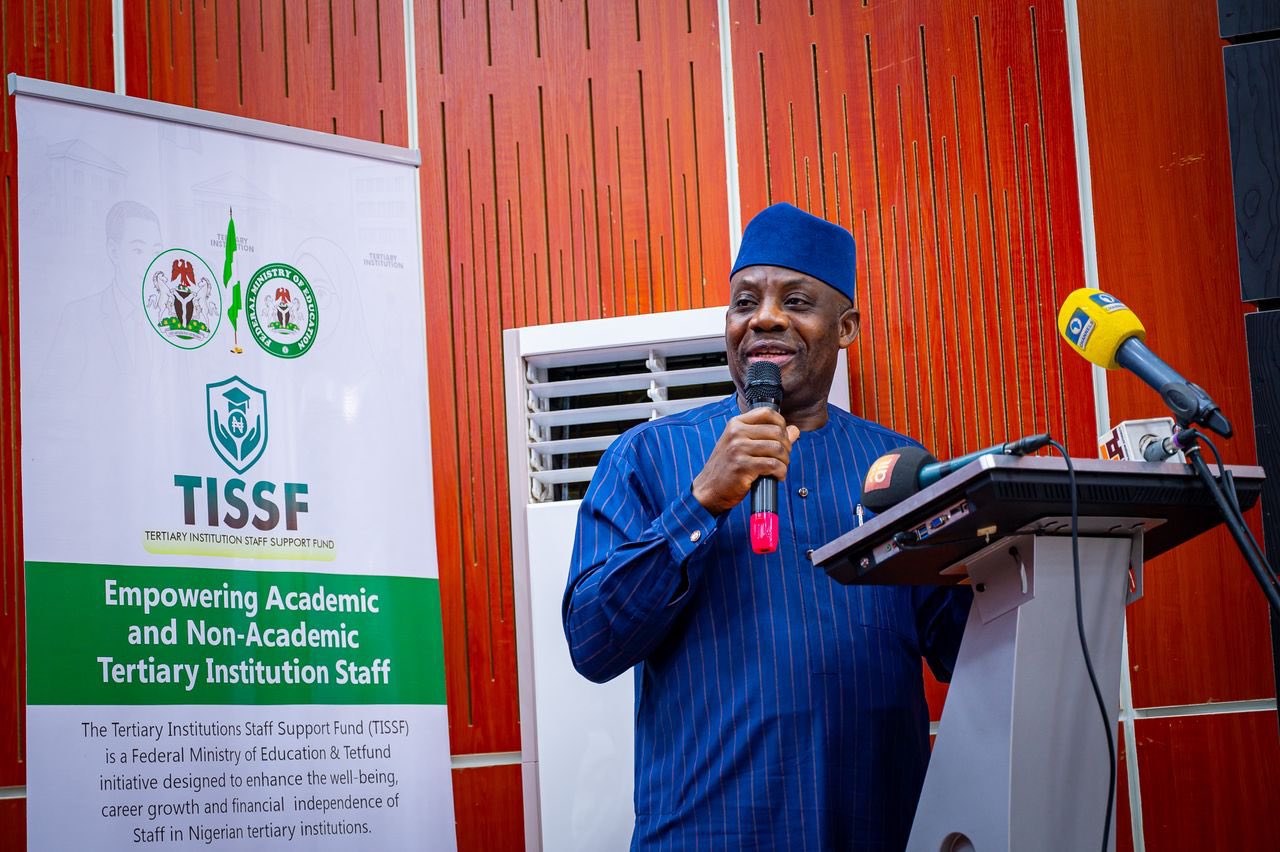
The minister of Education, Dr. Tunji Alausa, announced this development at the 2025 Language in Education International Conference, organized by the British Council in Abuja on Wednesday.

In 2022, the Nigerian government approved a National Language Policy (NLP), which stipulates that from Early Childhood Education to Primary Six, the language of instruction will be in the mother tongue or the language of the immediate community.

The policy aims to promote indigenous languages, recognise their equal status, and improve early childhood learning outcomes, while English remains the official language used in later education and formal settings.

Speaking at the conference, Alausa said English is now the language of instruction in Nigerian schools from primary to tertiary levels.

He said Nigerian children had been performing abysmally in public exams as a result of being taught in their mother tongue.

The minister stated that the decision to cancel the policy was based on extensive data analysis and evidence showing that the use of the mother tongue as the primary medium of instruction had negatively impacted learning outcomes in several parts of the country.

“We have seen a mass failure rate in WAEC, NECO, and JAMB in certain geo-political zones of the country, and those are the ones that adopted this mother tongue in an over-subscribed manner.

“This is about evidence-based governance. English now stands as the medium of instruction from the pre-primary, primary, junior secondary, senior secondary and to the tertiary education level.”

See also  Nigerian professors should earn N2.5m monthly, says ex-NAL president

“Using the mother tongue language in Nigeria for the past 15 years has literally destroyed education in certain regions. We have to talk about evidence, not emotions,” he said.

According to him, data gathered from schools across the country revealed that students taught primarily in indigenous languages recorded higher failure rates in national examinations and struggled with basic English comprehension.

“The national policy on language has been cancelled. English now stands as the medium of instruction across all levels of education,” he declared.

The minister urged stakeholders with differing views to present verifiable data to support their positions, adding that the government remained open to evidence-based dialogue that would strengthen the education sector.

He commended the British Council for its continued partnership with Nigeria in advancing education reforms and promoting inclusive language and learning policies.

The Minister of State for Education, Prof. Suwaiba Ahmed, spoke on other areas of focus by the government to address the teaching and learning crisis at the foundational level of education.

Ahmad said a new training package had been designed for teachers to help with literacy and numeracy learning.

”Now we are designing a training package for the teachers that focuses on the learning of literacy and numeracy.

“This is specifically training teachers who teach across the foundation level from pre-primary to primary one to three.

“We are training them how best to teach literacy, how best to teach numeracy, and of course, the approach,” she said.

FOLLOW US ON:

FACEBOOK

TWITTER

PINTEREST

TIKTOK

YOUTUBE

LINKEDIN

TUMBLR

INSTAGRAM

Continue Reading
Click to comment

Leave a Reply

Your email address will not be published. Required fields are marked *

Education

FG launches nationwide AI training for 11,700 unity schools’ teachers

Published

on

The Federal Government has launched a nationwide Artificial Intelligence (AI) capacity-building programme for teachers in Federal Unity Colleges, with about 11,700 educators expected to receive digital skills training aimed at transforming classroom teaching across Nigeria. NigerianBusiness News

The initiative advanced on Thursday with the signing of the Terms of Reference (ToR) between the Federal Ministry of Education and ICEDT Consult Limited, paving the way for the nationwide implementation of the AI Teacher Capacity Development Programme.

The programme, to be implemented through the Ministry’s Education Support Services Department, forms part of the Federal Government’s broader strategy to modernise Nigeria’s education sector, strengthen teacher professionalism, and prepare students for a technology-driven global economy in line with President Bola Tinubu’s Renewed Hope Agenda.

Speaking during the signing ceremony in Abuja, the Director of the Education Support Services Department, Gabriel Amudipe, described the programme as a strategic investment in Nigeria’s teaching workforce and the future of education.

He said the nationwide rollout followed the success of an earlier pilot phase and commended ICEDT Consult Limited for developing a structured implementation model that would ensure effective coordination and quality delivery across the country’s six geopolitical zones.

Amudipe stressed that the standards achieved during the pilot phase must be maintained throughout the national rollout. He also urged ministry officials assigned to monitor the programme to carry out their responsibilities professionally and ensure strict compliance with every provision of the agreement.

“The Ministry remains committed to supporting innovative initiatives that strengthen teacher professionalism, improve learning outcomes and promote the responsible integration of emerging technologies into education,” he said.

See also  ASUU mobilises chapters for Oct 13 warning strike

Earlier, Deputy Director of the Education Support Services Department, Oladele Fapohunda, described the programme as a strategic intervention designed to deepen digital innovation in Federal Unity Colleges. He emphasised that collaboration among all stakeholders would be critical to the successful implementation of the initiative nationwide.

Providing further insight into the programme, the Head of Strategic Partnerships and Learning Scientist at ICEDT Consult Limited, Dr Abdulrahman Orosanya, said the project was approved for national expansion after a successful pilot conducted in six Federal Unity Colleges, representing the country’s six geopolitical zones.

According to him, the pilot demonstrated how Artificial Intelligence could significantly improve lesson planning, classroom instruction, assessment methods and teachers’ overall productivity.

He noted that the nationwide rollout would strengthen teachers’ digital competencies, enhance instructional delivery and support the Federal Government’s vision of building a technology-driven education system capable of producing globally competitive learners equipped with 21st-century skills.

The ceremony concluded with the formal signing of the Terms of Reference by officials of the Federal Ministry of Education and ICEDT Consult Limited, signalling the commencement of preparations for the full implementation of the programme across all Federal Unity Colleges.

Beyond the direct training of approximately 11,700 teachers, the initiative is expected to benefit thousands of students through improved classroom practice, increased digital innovation and the responsible application of Artificial Intelligence in teaching and learning.

The Federal Ministry of Education reaffirmed its commitment to partnering with key stakeholders to modernise Nigeria’s education system, improve teacher quality and deliver inclusive, equitable and future-ready education nationwide.

See also  How Edo man sponsored me from Almajiri school to university – Jigawa varsity graduate

FOLLOW US ON:

FACEBOOK

TWITTER

PINTEREST

TIKTOK

YOUTUBE

LINKEDIN

INSTAGRAM

Continue Reading

Education

FG extends 2026 textbooks ranking deadline to August 7

Published

on

The Nigerian Educational Research and Development Council on Friday announced a final extension of the deadline for the submission of textbooks and other instructional materials for the “2026 Phase I assessment, reassessment and ranking exercise”, giving publishers, authors and other stakeholders until August 7, 2026, to complete their submissions.

The council said the extension, approved under the Federal Ministry of Education, follows the earlier deadline of July 3, 2026, and is intended to encourage wider participation in the national textbook evaluation exercise while providing eligible stakeholders additional time to finalise and submit their materials.

In a statement issued by the Executive Secretary of NERDC, Prof. Salisu Shehu, the council said the extension was granted to ensure that more publishers, authors and other participants in the book industry have the opportunity to take part in the 2026 Phase I textbook assessment process.

The statement read, “This final extension is being granted to ensure broader participation and provide publishers, authors, and other eligible stakeholders with an additional opportunity to complete and submit their materials for participation in the 2026 Phase I textbook assessment, reassessment, and ranking exercise.”

NERDC urged all intending participants to take advantage of the final window, stressing that every submission must comply with the approved procedures outlined in the Textbook Quality Indicators and Submission Guidelines.

The council noted that the guidelines remain unchanged and are available on its official website for prospective participants.

It further warned that the August 7 deadline is final and that no additional extension would be granted.

See also  How blind UNILAG freshman beat brain tumour to top JAMB

“No further extension will be granted, and late submissions received after the final deadline will not be accepted under any circumstances,” the council stated.

NERDC also thanked publishers, authors and other stakeholders for their continued cooperation and urged them to ensure prompt compliance with the submission requirements to facilitate a smooth assessment and ranking process.

The National Textbook Ranking System is one of the key reforms being implemented by the Federal Ministry of Education under the Renewed Hope Agenda to improve the quality of basic and secondary education.

punch.ng

FOLLOW US ON:

FACEBOOK

TWITTER

PINTEREST

TIKTOK

YOUTUBE

LINKEDIN

Continue Reading

Education

UK lecturer loses appeal after being sacked for calling women ‘females’

Published

on

A senior lecturer at the University of Derby, Russell Cherrington, has lost his appeal against his dismissal after an employment tribunal upheld the university’s decision to sack him over language described as “misogynistic”, “transphobic” and “divisive”.

Cherrington, who taught film studies at the university, had challenged his dismissal, arguing that his comments were protected under his right to freedom of expression as enshrined in Article 10 of the European Convention on Human Rights.

According to GB News on Thursday, the case arose after four students complained about his conduct while teaching on the university’s Film and High End TV programme.

According to the tribunal, the complaints came to light after the course recorded poor results in the National Student Survey.

The lecturer was suspended on December 18, 2023, before an investigation in 2024 found several instances of what was described as “gross misconduct.”

The employment tribunal found that Cherrington was misogynistic because he “only, or almost exclusively, referred to women in the class as ‘females’.”

It also found that he used “misogynistic” language while assessing a student’s music video by describing the lead actress as “not attractive enough for the role.”

Cherrington did not deny referring to female students as “females”, saying he used the term because he did not know their names. He also said he did not believe describing the actress as not being attractive enough for the role was harmful.

The tribunal further heard that Cherrington did not deny telling a student: “If you had worn that nail polish back in the day, you would have been called a p**f.”

See also  Nigerian professors should earn N2.5m monthly, says ex-NAL president

He was also accused of using “transphobic” language by referring to “a student who was transitioning as a ‘troublesome trans kid’.”

Cherrington denied making that remark, but told the tribunal he had used the example of a transitioning student to illustrate that he would support any student regardless of background.

The lecturer also rejected allegations that he was “ableist” after he allegedly said universities were “becoming a care home for people with disabilities.”

Despite what the tribunal described as a “previously unblemished disciplinary record”, Cherrington was dismissed in April 2024 over what the university found to be “inappropriate and unprofessional language.”

At the disciplinary hearing, Cherrington submitted a list of eight students whom he said could “speak to his teaching and how he treated students.” However, they were not contacted because the professor leading the disciplinary panel “did not consider that he should weigh what might have been positive accounts of the appellant against the allegations of inappropriate and unprofessional language.”

After unsuccessfully challenging his dismissal before an employment tribunal in May, Cherrington appealed to the Employment Appeal Tribunal, arguing that his “academic freedom of expression” had been infringed.

Employment Appeal Tribunal Judge Mr Justice Cavanagh dismissed the appeal, ruling that the European Convention on Human Rights does not “as a matter of course” have to be considered in every unfair dismissal case.

Rejecting Cherrington’s free speech arguments, the judge said: “The ET [employment tribunal] considered whether the appellant’s dismissal was in breach of the university’s freedom of speech obligations and decided that it was not.

See also  How Edo man sponsored me from Almajiri school to university – Jigawa varsity graduate

“The ET was plainly well aware that the university had a duty to promote and protect freedom of speech for university employees.

“The appeal is dismissed.”

punch.ng

FOLLOW US ON:

FACEBOOK

TWITTER

PINTEREST

TIKTOK

YOUTUBE

LINKEDIN

Continue Reading

Trending