Connect with us

Education

Reps seek suspension of WAEC CBT exams until 2030

Published

on

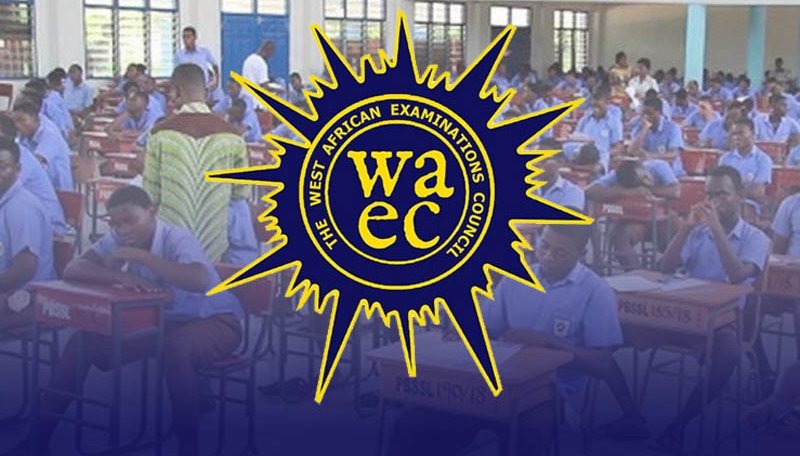
The House of Representatives has urged the Federal Ministry of Education and the West African Examinations Council to suspend the planned introduction of Computer-Based Testing for the 2026 school examinations.

The lawmakers’ directive followed concerns that most schools, especially in rural areas, lack the infrastructure and manpower to support a full CBT transition.

WAEC, with the backing of the Federal Government, had earlier announced plans to conduct the 2026 May/June examination using computers, following the partial rollout of the model for private candidates in 2024.

But the House urged the Education Ministry and state governments to make provisions in the 2026, 2027, 2028, and 2029 budgets for the recruitment of computer teachers, construction of computer halls with internet facilities, provision of standby generators, and assessment of private schools’ readiness before fully implementing the CBT policy in 2030.

The resolution followed the adoption of a motion of urgent public importance sponsored by Rep. Kelechi Wogu, titled “Need for Intervention to Avert the Pending Massive Failure of Candidates Intending to Write the 2026 WAEC Examination Using Computer-Based Testing (CBT), Capable of Causing Depression and Deaths of Students,” at Thursday’s plenary, as reported by Vanguard.

Leading the debate, Rep. Wogu noted that WAEC is responsible for conducting examinations that qualify students for higher education, adding that most tertiary institutions require at least five credits—including English Language and Mathematics—for admission.

He recalled that the 2025 WAEC result portal was temporarily shut down due to “technical glitches,” which left many candidates distressed.

See also  NUC Approves 13 New Courses For Universities In Nigeria (Full List)

Rep. Wogu expressed concern that despite opposition from the Nigeria Union of Teachers and heads of schools, especially in rural areas where over 70 per cent of students are located, the Ministry of Education has insisted on introducing CBT for the 2026 examination.

“The House is cognisant that computer-based examinations require fully equipped halls with functional computers, internet access, and constant electricity — either from the national grid or standby generators,” he said.

He further noted that about 25,500 schools nationwide are expected to present candidates for the 2026 examination, which will run concurrently for four months, from March to July.

However, he said most schools, particularly in rural areas, lack functional computers and qualified computer teachers.

The lawmaker argued that, unlike JAMB, WAEC candidates are required to take at least nine subjects — including practicals, objectives, and theory — making a rushed transition to CBT unrealistic.

He warned that premature implementation of the policy could result in widespread failure, frustration, depression, and social vices among students.

He therefore recommended a minimum of three years of preparation before rollout in the 2029–2030 academic session.

The House unanimously adopted the motion and mandated its Committees on Basic Examination Bodies, Digital and Information Technology, Basic Education and Services, and Labour, Employment and Productivity to interface with relevant stakeholders in the education and technology sectors and report back within four weeks for further legislative action.

Meanwhile, PUNCH Online reported last month that WAEC had intensified preparations for full CBT deployment, with officials carrying out sensitisation campaigns under the slogan “CB-WASSCE: New Way, Same Destination.”

See also  Cross River shuts 36 illegal schools

The council maintained that the partial transition in 2024 had made “significant progress” and would be scaled up nationwide ahead of the 2026 examination.

punch.ng

FOLLOW US ON:

FACEBOOK

TWITTER

PINTEREST

TIKTOK

YOUTUBE

LINKEDIN

TUMBLR

INSTAGRAM

Continue Reading
Click to comment

Leave a Reply

Your email address will not be published. Required fields are marked *

Education

UUTH resident doctors join nationwide strike

Published

on

The Association of Resident Doctors, University of Uyo Teaching Hospital, has resolved to join the nationwide strike declared by the National Association of Resident Doctors on Monday, January 12, 2026.

The decision was contained in a communiqué issued after an emergency general meeting of the association held in Uyo, Akwa Ibom State, on Thursday.

The communiqué, endorsed by its President, Dr Ekomobong Udoh, and General Secretary, Dr Kenneth Ikott, and made available to our correspondent in Uyo on Friday, said the centre would undertake a peaceful protest by 9am on Monday within the UUTH premises, in total compliance with the directive of NARD.

It read in part, “Members of the congress gathered for an emergency general meeting to discuss the resolutions issued by the NARD Extra-Ordinary NEC virtual meeting held on Saturday, January 2, 2026. After thorough deliberation and discussion on the resolutions of NARD, the meeting, chaired by the President, resolved as follows.

“The centre fully supports the implementation of the NARD NEC meeting resolutions. The congress immediately agreed to participate in the NARD TIC 2.0 from 12 noon on Monday, in line with the NEC directive, and will undertake a peaceful protest by 9am on Monday within the UUTH premises.”

Udoh said the proposed industrial action followed the failure of the Federal Government to fully implement the Memorandum of Understanding signed with resident doctors in November 2025.

According to him, the strike, tagged TICS (Total, Indefinite and Comprehensive Strike) 2.0, with the slogan, “No Implementation, No Going Back”, would only be suspended after the full implementation of the minimum demands.

See also  Cross River shuts 36 illegal schools

He listed the demands to include the reinstatement of the FTH Lokoja Five, payment of promotion and salary arrears, full implementation of the professional allowance table with arrears captured in the 2026 budget, and official clarification on skipping and entry-level issues by the Federal Ministry of Health and circulars to chief executives.

Other demands include the reintroduction and implementation of the Specialist Allowance, resolution of house officers’ salary delays and arrears, including the issuance of a pay advisory, recategorisation of membership certificates, and issuance of certificates after Part I by the NPMCN, commencement of locum and work-hours regulation committees, and resumption and timely conclusion of the Collective Bargaining Agreement process.

punch.ng

FOLLOW US ON:

FACEBOOK

TWITTER

PINTEREST

TIKTOK

YOUTUBE

LINKEDIN

TUMBLR

INSTAGRAM

Continue Reading

Education

Nigeria emerges fifth-best English-speaking country in Africa

Published

on

Nigeria has emerged as the fifth-best English-speaking country in Africa, according to the 2025 Education First English Proficiency Index cited by PUNCH Online on EF’s website on Monday.

The report, compiled by global education leader EF, assessed English skills across 123 countries and regions, using data from 2.2 million test takers. This year’s edition also included, for the first time, speaking and writing skills, measured using artificial intelligence technology developed by EF’s education technology arm.

English, Nigeria’s official language, remains central to education, governance, media, and business, helping the country maintain strong proficiency levels. On the African continent, Nigeria trails South Africa, Zimbabwe, Kenya, and Zambia, which lead in English proficiency. The rankings underscore the growing importance of English as a bridge for international communication, education, and commerce.

Top 10 English-Speaking Countries in Africa (EF EPI 2025):

South Africa – Widespread use in government, education, media, and business.

Zimbabwe – English is the primary language of instruction and administration.

Kenya – Official language alongside Swahili, widely used in urban and professional settings.

Nigeria – Official language, central to national communication and commerce.

Ghana – English is used from basic to tertiary education and in public administration.

Uganda – Official language; key role in trade, diplomacy, and professional environments.

Ethiopia – Widely used in education and international affairs, though not official.

Tunisia – Growing adoption among youth and professionals in education, tech, and tourism.

Morocco – Increasing popularity in schools and business for global trade and relations.

Continue Reading

Education

Bandit attacks: Kebbi, Kwara reopen schools

Published

on

Kebbi and Kwara state governments have announced the reopening of schools in selected areas, signaling a gradual return to normal academic activities after months of closures due to rising bandit attacks.

In Kebbi, the state government approved the immediate resumption of selected primary and secondary schools located in major cities and towns.

The state had ordered school closure following bandit attack on Government Girls’ Comprehensive Secondary School, Maga town, Danko/Wasagu Local Government Area in November, during which 25 schoolgirls were abducted and the school guard killed.

The reopening announcement was made on Sunday by the Commissioner for Basic and Secondary Education, Dr. Halimatu Bande, during a briefing in Birnin Kebbi.

According to Bande, the resumption takes effect from Monday, January 5, 2026, and applies only to schools within urban centres. Schools in rural areas will reopen later, following further improvements in security.

“Only schools located within major cities and towns are approved to resume at this stage,” Bande said. “Schools outside these areas will reopen at a later date, which will be communicated in due course.”

The commissioner explained that the phased reopening is aimed at ensuring the safety of students and teachers while gradually restoring full academic activities across the state.

She also directed Education Secretaries and Zonal Directors to enforce compliance and monitor implementation, appealing to parents and guardians to ensure that their children return to school promptly.

Bande commended Governor  Nasir Idris for his sustained support for education, describing his administration as committed to providing safe, inclusive, and quality learning for all children in Kebbi State.

Meanwhile, in Kwara State, the Ministry of Education and Human Capital Development has ordered the resumption of academic activities in all schools from today (Monday).

See also  Mathematics no longer compulsory for Arts students, says FG

The directive, issued by the ministry’s Press Secretary, Peter Amogbonjaye, quoted the Commissioner for Education, Dr. Lawal Olohungbebe, as saying that learning will resume immediately, except in areas still under “special security measures.”

“Learning activities are to resume immediately in all but areas earlier identified to be under special security surveillance,” the statement said. “Normal school activities will resume in such places very soon.”

The move follows a November 2025 directive that temporarily closed schools in several local government areas, including Ifelodun, Ekiti, Irepodun, Isin, and Oke Ero, in response to escalating insecurity and bandit attacks.

The closures were aimed at safeguarding pupils and teachers and were part of broader emergency responses to violent incidents in the state.

To ensure continuity in learning, especially for pupils in areas still affected by insecurity, the ministry also announced a radio-based learning initiative in collaboration with UNICEF and the Nigeria Learning Passport.

The programme, airing on the state-owned 99.1 Midland FM, will begin on January 5, with scheduled broadcasts at 11 a.m. on Mondays and Tuesdays, 1 p.m. on Wednesdays, and 2:30 p.m. on Fridays. Additional radio stations will be added to expand reach.

“The initiative aims to ensure continuity in learning, especially for pupils in areas where school activities are still limited by security concerns,” the ministry said.

FOLLOW US ON:

FACEBOOK

TWITTER

PINTEREST

TIKTOK

YOUTUBE

LINKEDIN

TUMBLR

INSTAGRAM

Continue Reading

Trending