Connect with us

Education

National Assembly shifts WAEC’s CBT adoption to 2030

Published

on

The House of Representatives has ordered the Federal Ministry of Education and the West African Examinations Council to suspend the planned introduction of Computer-Based Testing for the 2026 West African Senior School Certificate Examination.

The directive followed the adoption of a motion of urgent public importance moved by Kelechi Wogu during Thursday’s plenary session.

His  motion was titled “Need for Intervention to Avert Massive Failure in the Proposed 2026 WAEC Computer-Based Examination.”

The lawmaker warned that rushing into the CBT model could trigger widespread failure, frustration, and mental distress among students.

Wogu expressed concern that the Ministry of Education was determined to proceed with the digital examination format despite objections from the National Union of Teachers and heads of schools, especially those in rural areas, where more than 70 per cent of candidates are located.

He noted that most schools, particularly outside urban centres, lack functional computer laboratories, internet access, reliable electricity, and trained ICT teachers.

He stressed that introducing CBT in such conditions would be disastrous, citing the technical glitches that disrupted the 2025 WAEC results portal as evidence of unpreparedness.

“The computer-based system requires well-equipped halls with functional computers, stable internet, and constant power supply. Many schools are simply not ready for that level of transition,” he said.

To address these challenges, the House directed the Ministry of Education, in collaboration with state governments, to include in their 2026–2029 budgets provisions for recruiting computer teachers, constructing ICT halls, installing internet facilities, and providing backup power sources.

See also  How A Classmate’s Question At Harvard Forced Me To Dump Banking For Politics – Abia Governor, Alex Otti

The House further resolved that the CBT system should not be implemented before the 2030 academic year.

The motion was unanimously adopted, with the House mandating its Committees on Basic Education, Digital and Information Technology, Examination Bodies, and Labour to engage relevant stakeholders and report back within four weeks for further legislative action.

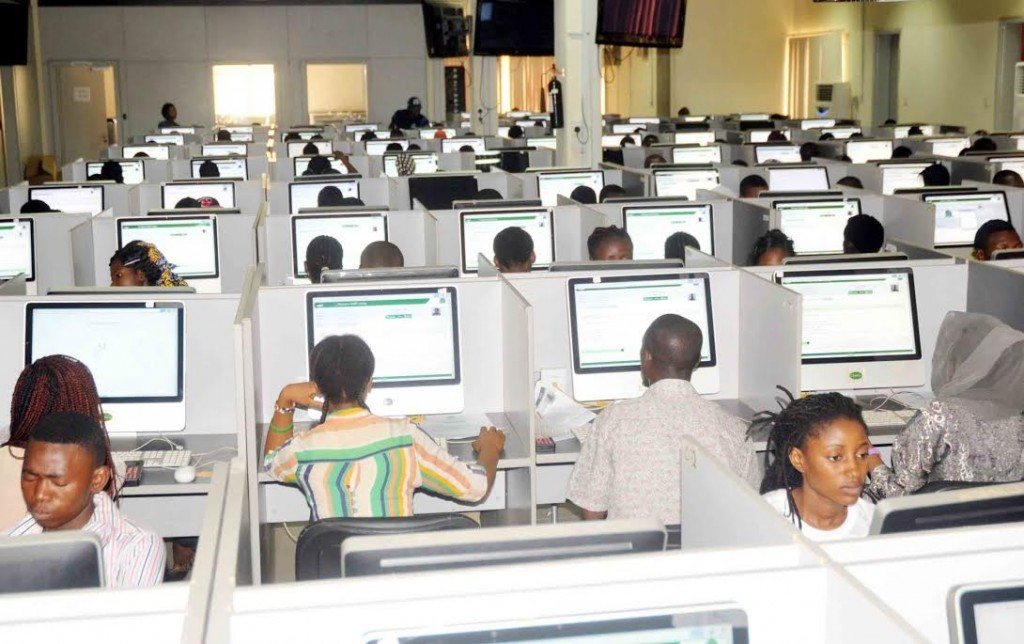
The CBT was introduced in Nigeria partly to address incessant cases of examination malpractices and also to modernise the nation’s education system.

The Joint Admissions and Matriculation Board  pioneered the use of CBT in 2013 and successfully conducted the first fully computer-based Unified Tertiary Matriculation Examination in 2015.

Since then, other examination bodies, such as the National Examinations Council and the National Business and Technical Examinations Board, have gradually introduced elements of CBT in limited or pilot forms.

Despite these efforts, challenges remain, including inadequate digital infrastructure, irregular power supply, poor internet connectivity, and limited access to functional computers, particularly in rural and public schools.

In 2024, the West African Examinations Council announced plans to adopt CBT for the West African Senior School Certificate Examination starting in 2026.

The announcement triggered widespread debate. Teachers, parents, and education unions expressed concern that most schools, especially in rural communities, lack the necessary facilities and trained personnel to support the transition.

Supporters of the policy, however, argue that digital examinations will improve transparency, promote efficiency, and strengthen Nigeria’s global competitiveness in education.

In September, WAEC listed  250 functional laptops with 10 per cent backups, a robust computer server capable of supporting 250 systems simultaneously, and a Local Area Network setup, as key facilities schools must provide ahead of the full migration to CBT in 2026.

See also  Lagos NANS demands ban on unregistered trucks after student deaths

Other mandatory requirements include functional air conditioners and lighting, uninterrupted electricity supply, a backup generator with at least 40kVA capacity, CCTV cameras, and a holding room or reception facility for candidates.

Continue Reading
Click to comment

Leave a Reply

Your email address will not be published. Required fields are marked *

Education

FG approves N4bn take-off grants for Tinubu poly, Epe varsity

Published

on

The Federal Government has approved N2bn each as take-off grants for the Bola Ahmed Tinubu Federal Polytechnic in Abuja and the Federal University of Science and Technology, Epe in Epe, Lagos State, as part of efforts to support their early operations.

The Minister of Education, Dr Tunji Alausa, disclosed this on Thursday during the inauguration of key officials appointed to lead the two institutions, according to Arise News.

Among those inaugurated were Prof. Nosiru Onibon, who will serve as the pioneer Rector of the Bola Ahmed Tinubu Federal Polytechnic, Abuja; Prof. Adeola Oshikoya, appointed Vice-Chancellor of the Federal University of Science and Technology, Epe; and Dr Angela Ajala, who assumed office as Executive Secretary of the National Commission for Colleges of Education.

Presenting the letters of appointment in Abuja, Alausa said the newly created institutions were part of the Federal Government’s efforts to expand access to higher education and strengthen Nigeria’s capacity in science, technology and innovation.

“Every child in this country deserves access to the highest quality education comparable to global standards. The appointees were carefully selected based on their record of service and achievements across Nigeria’s educational institutions.

“To whom much is given, much is expected. You have been chosen from millions of Nigerians to serve your country, and this recognition extends to your families as well,” the minister said.

He noted that the administration of President Bola Tinubu was focused on building a stronger education system capable of producing skilled manpower needed for national development.

See also  UK boarding schools woo Nigerian students at Abuja, Lagos fairs

According to the minister, the N2bn take-off grants approved for each institution are meant to help the schools establish basic administrative and academic structures as they commence operations.

Alausa urged the newly appointed officials to provide strong leadership that would shape the identity and long-term development of the institutions.

He said the Federal University of Science and Technology in Epe and the polytechnic in Abuja were strategically located to harness the economic potential and human resources available in the two regions.

The minister added that the institutions are expected to focus on areas such as technological innovation, renewable energy, climate change response, disaster risk management and other research fields relevant to national development.

He also congratulated Ajala on her appointment as NCCE Executive Secretary, stressing the importance of teacher education to the development of the country’s education system.

punch.ng

FOLLOW US ON:

FACEBOOK

TWITTER

PINTEREST

TIKTOK

YOUTUBE

LINKEDIN

Continue Reading

Education

Ekiti approves N165m for rehabilitation of two schools

Published

on

Ekiti State Government has approved about N165m for reconstruction works at two special schools in the state.

The Commissioner for Information, Taiwo Olatunbosun, in a statement in Ado Ekiti on Thursday, listed the schools as Government Special School, Ido-Ekiti and Government Special School for the Deaf, Ikoro-Ekiti.

Speaking on decisions taken at the State Executive Council meeting on Wednesday, Olatunbosun said the council approved N85.73m for the Government Special School, Ido-Ekiti, covering the reconstruction of failed drainage systems and the concrete landscaping of driveways and walkways within the school premises.

Similarly, the government approved N88.94m for the Government Special School for the Deaf, Ikoro-Ekiti, where erosion had severely affected drainage channels, driveways, walkways, and parts of the school frontage.

He said, “The interventions are expected to restore critical infrastructure within the affected schools, improve the safety and accessibility of the facilities, and provide a more conducive learning environment for students, particularly those with special educational needs.

“The approval specifically covers the reconstruction of failed drainage systems and the concrete landscaping of driveways and walkways at the Government Special School, Ido-Ekiti, as well as the construction of a new culvert, drainage systems, and associated concrete works at the Government Special School for the Deaf, Ikoro-Ekiti.”

According to him, the interventions became necessary following the devastating impact of erosion on key infrastructure within the schools, including collapsed drainage channels, damaged walkways, compromised driveways, and in some cases, damaged perimeter fencing and assembly grounds.

These, he said, had significantly affected the learning environment and overall safety of students, particularly given the special needs of the pupils in the affected institutions.

See also  Lagos NANS demands ban on unregistered trucks after student deaths

The commissioner said the two projects “are to be executed within 16 weeks by the State Bureau of Special Projects through direct labour, given the urgency of the intervention and the need to minimise disruption to the learning activities of the students.”

punch.ng

FOLLOW US ON:

FACEBOOK

TWITTER

PINTEREST

TIKTOK

YOUTUBE

LINKEDIN

TUMBLR

INSTAGRAM

Continue Reading

Education

UNILAG faults ASUU strike, insists exams will hold

Published

on

The management of the University of Lagos UNILAG has chided the varsity’s chapter of the Academic Staff Union of Universities for declaring an industrial action without following due process.

PUNCH Online reports that the ASUU UNILAG, rising from a congress held on Tuesday, asked lecturers to withdraw their services from Wednesday over what they described as ‘amputated’ January and February salaries received.

The Chairman, ASUU, UNILAG chapter, Prof Idou Keinde, stated that the lecturers did not receive the full complement of their salaries: Consolidated Salary Structure for Academics, Consolidated Academic Tools Allowance and Professorial Allowance.

Keinde vowed that the lecturers would not resume work until their full salaries are paid.

But UNILAG, through its Head, Communication Unit, Adejoke Alaga-Ibraheem, on Wednesday, said the university would continue to engage with the ASUU executive to address the issues, especially the unpaid Consolidated Academic Teaching Allowances.

The statement read, “The Management of the University of Lagos has noted reports circulating in the media that the Academic Staff Union of Universities, UNILAG Chapter, at its Congress held on Tuesday, March 10, 2026, directed its members to suspend their services over alleged unpaid Consolidated Academic Teaching Allowances.

“Management observes that due process was not followed in making this declaration. Nevertheless, in its commitment to the welfare of staff and students, the university has continued to engage with the ASUU Executive to address all issues.”

While noting that engagement with the ASUU would continue, the UNILAG management said the ongoing students’ examinations scheduled for Wednesday will proceed as planned.

See also  Zamfara varsity gets new VC

“The university is particularly mindful that students are currently at a critical stage of the academic session, with semester examinations already underway.

“Any disruption at this time would adversely affect students, especially those scheduled to commence the Students’ Industrial Work Experience Scheme, internships, and those preparing to proceed to the Law School,” the statement added.

It, however, noted that courses for which students have been informed by their Deans or Heads of Department that examinations will not be held will be rescheduled.

“All examinations will continue as scheduled from Thursday, March 12, 2026, and deans are to ensure that necessary arrangements are put in place for the smooth and successful conduct of the examinations.

“Management appeals to all members of the university community to remain calm and continue to go about their lawful academic activities as discussions with ASUU executive continue toward an amicable resolution of the issues raised,” the statement concluded.

Continue Reading

Trending