In a dramatic proceeding that lasted for over seven hours, Justice James Omotosho of the Federal High Court, Abuja, on Thursday, sentenced the leader of the Indigenous People of Biafra, Nnamdi Kanu, to life imprisonment following his conviction on all seven counts of terrorism charges preferred against him by the Federal Government.
But in a swift response to the development, the South-East leaders said they would explore a political solution for Kanu’s release, calling for calm.
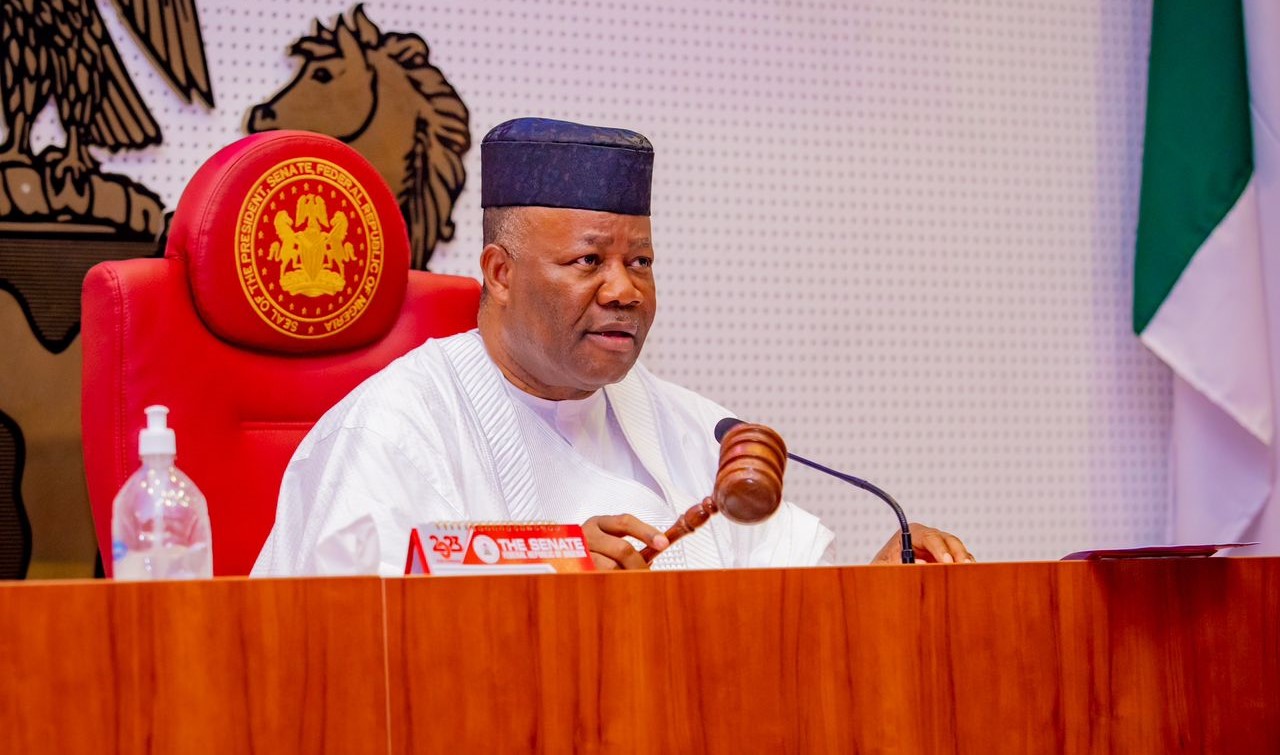
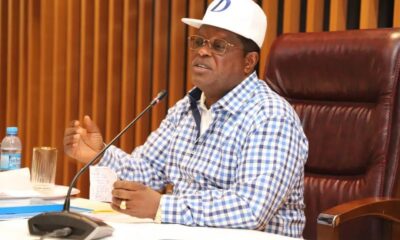
Speaking on behalf of Ndigbo leaders, the Deputy Speaker, Federal House of Representatives, Ben Kalu, stated, “All hope is not lost: Political solution is underway to secure Kanu’s release.”
In a statement by Levinus Nwabughiogu, the deputy speaker’s Chief Press Secretary, Kalu expressed optimism that Kanu would be freed through a political approach.
The South-East leader expressed confidence that President Bola Tinubu would listen to the pleas of well-meaning Igbo leaders on the matter, saying that the President would not be averse to it. He urged the people of the South-East and all Nigerians to remain calm.
“It is now time to explore political solutions that had been hindered because the matter was before the court. But now that the court has finished, it is time to intensify the request for the President’s intervention and we are sure that the President is not averse to it. We are going to get it. All hope is not lost. Our people should remain calm.”
The court proceeding began on a tense note after Kanu interrupted the judge, prompting him to order the security operatives to remove the IPOB leader from the courtroom.
The judge said the session would continue without Kanu after describing his behaviour in court as unruly.
Kanu had interjected during the verdict, insisting that the court could not proceed as he had not filed his final written address.
He raised his voice, demanding, “‘Which law states that you can charge me on an unwritten law? Show me. Omotosho, where is the law? Any judgment declared in this court is complete rubbish.”
He accused the judge of bias and claimed that he lacked an understanding of the law.
After a brief recess, the prosecution, led by Adegboyega Awomolo, urged the court to continue the trial without Kanu, citing his disruptive conduct.
Omotosho stated that while a defendant had a constitutional right to be present during trial, repeated misconduct can allow proceedings to continue in their absence.
“If a defendant misconducts himself or acts in an unruly manner during the course of his trial, his trial can be conducted in his absence,” he said.
He added that the court of justice is a temple of God.
He noted that Kanu’s unruly attitude was not new, as he had previously exhibited similar behaviour several times in the past.
The judge added that the leader of the proscribed group had indicated he would not present a defence, and that Thursday’s session was for judgment and possible sentencing.
Following the order, Kanu was removed from the courtroom, and the judge proceeded with delivering the ruling.
Omotosho, while concluding the judgment in what was the last phase of the proceeding that started at 9am and concluded at about 4:30 pm, sentenced Kanu to life imprisonment in relation to counts one, two, four, five, and six of the seven-count charge.
The seven counts border on Kanu’s secession agitations to disintegrate South-East, South-South and some parts of the middle belt from Nigeria, engaging in acts of terrorism, belonging to a proscribed group, killing security operatives, burning and destroying public properties, concealment, and importing an unregistered radioactive transmitter.
For count three, which relates to the offence of his belonging to a proscribed terrorist group, Omotosho sentenced him to 20 years imprisonment without an option of fine.
On count seven, bordering on his unlawful importation of a radio transmitter for the purpose of broadcasting his activities of Radio Biafra, which is not registered in Nigeria, Justice Omotosho sentenced him to five years imprisonment without an option of fine.
Justice Omotosho said committing acts of terrorism against the country by utterances such as saying “people will die and the nation will stand still” was an act of terrorism which amounts to an offence punishable by death.
Omotosho stated that, “A person who is found guilty of the offence will get a maximum of a death sentence. The death penalty is increasingly frowned upon by the international community. Consequently, and in the interest of justice, I hereby sentence the convict, Mazi Nnamdi Kanu, to life imprisonment on counts 1, 2, 4, 5, and 6 instead of the death penalty.
“With respect to count 3, he is hereby sentenced to 20 years imprisonment with no option of fine, and for count 7, he is sentenced to five years with no option of fine. To extend mercy, I order that the sentences shall run concurrently, “ the judge said.
According to the judge, Kanu’s repeated threats of violence and killings, including his directives enforcing sit-at-home orders across the South-East in various broadcasts, amounted to acts of terrorism under the law.
“The defendant enforced the order of Sit-at-home in the South-East, saying there will be a complete shutdown of Biafraland; Saying I know some of you are foolish, trying to open your shop around 12 noon. If you do that, we will burn you in that shop.”
The judge further held that Kanu’s orders were unconstitutional.
“This is an unconstitutional act that is subversive, a notorious act where people in the South-East are made to sit at home, everywhere is deserted, even the farmlands.”
The court also held that Kanu, who said he is the founder and Director of Radio and Television of Biafra, made a broadcast to the effect that the ‘Army of Nigeria will die and that everything called Nigeria will perish in Biafra.’
It equally found him guilty of breaching the terrorism law in several broadcasts in which he threatened the existence of Nigeria, repeatedly referred to Nigeria as a “Zoo”, and promoted the breakaway of the South-East, South-South and parts of the Middle Belt region from Nigeria to form a Biafra nation.
The court affirmed that his orders led to the death of an All Progressives Congress chieftain, Ahmed Gulak, the shutting of businesses, preventing farmers from going to their farms, and, with the South-East being a Christian region, stopping people who are citizens of Nigeria from going to church.
Omotosho said Kanu, in one of his broadcasts, made it clear that Somalia would be a paradise if the agitation for the Biafran nation was not granted.
In one of the interviews he granted Sahara Television, the court recalled that the IPOB leader stated that nothing would be living in a “zoo” called Nigeria by the time he executed his secession threat.
The judge noted that Kanu, in one of his many utterances, said the only language people in the “zoo” (Nigeria) understand is violence and that it would be given to them.
At the Igbo World Congress in the United States, Kanu also stated that there would be a bloodbath and that America would give “guns and bullets.”
“We are ready to perish unless they give us Biafra,” Omotosho quoted him to have stated.
Omotosho stated that while Kanu has been unruly all through the trial, and though the law allows for him to be sentenced to death for the terrorism offences, he has, however, chosen to temper justice with mercy as a Christian and “according to the teachings of our Lord Jesus Christ,’’ quoting the book of Mathew in the Bible.
He said, “I read the entire file from the time the matter first started in 2015. He has caused delays. Also, his unruly behaviour from the beginning till today. However, this court will not consider that, as God himself is merciful. This court is only being merciful to him as enjoined by our Lord Jesus Christ. The court is minded to sentence the convict to death. He has remained arrogant, unruly, and cocky.
“I have listened to the allocution made by the House of Representatives member, of which I am not convinced; however, I must temper Justice with mercy. The court is moved by the teachings on mercy in the book of Mathew.
“The Lord is merciful, the court will follow the admonishments of the Lord Jesus Christ and show mercy. I hereby sentence the convict to life imprisonment for the said counts one, two, four, five and six. For count three, the convict is sentenced to 20 years’ imprisonment with the option of a fine. Count seven, the convict is sentenced to five years’ imprisonment with the option of a fine. To extend mercy, I hereby order that the sentence shall run concurrently.”
Omotosho added that since the tendency of violence has not left him, and that with the atrocities and in view of the killings he perpetrated against the people of South-East, his safety should be of concern, as he could be attacked by aggrieved persons who lost loved ones based on his orders.
The court pointed out that the Kuje Custodial Centre, Abuja, would not be suitable, especially given the prison breaks recorded in the facility in the past.
He ordered that Kanu be kept in protective prison custody in any part of the country other than the Kuje facility.
“I have no hesitation in concluding that the tendency for violence has not left the convict. As such, he must be kept in a facility suitable for his custody, as placing him in Kuje Correctional Centre may not be appropriate,” he added.
He also ordered that the convict must not be allowed near any digital device.
“For the transmitter (seized from Kanu), it is hereby forfeited to the Federal Government.’’
After Omotosho returned from his chamber to deliver the sentence, he beckoned on Kanu’s legal consultants, Aloy Ejimakor, Prince Mandela, P. Ejiofor and Maxwell Okpara, who were members of his legal team before they were turned into ‘’consultants,’’ to take note of the sentence and deliver it to Kanu who was kept at the ground floor of the five-storey building housing the Federal High Court.
“They were his lawyers before he turned them to consultants. I just want it to be on record that he had representatives.’’
Ejimakor responded that they don’t have his brief.
This prompted Omotosho to ask them, “Why are you here”? to which Ejimakor responded, “ As consultants.”
The judge directed, “I just want you to go and tell him the sentence. You are already here. Your name is in the list as consultants, and I have it on record”.
He clarified that the IPOB leader was not denied a fair hearing as he claimed, stating that a defendant cannot be a judge in his own trial.
He recalled that the matter was first filed in 2015, and in 2017, the defendant was alleged to have jumped bail for four years.
“In 2015, the defendant was brought back to continue his trial. In the course of the trial, the prosecution called five witnesses and the case was closed on June 19, 2025.’’
On multiple dates, he explained that the defendant sought adjournments even after he had decided to give the matter an accelerated hearing.
After the prosecution closed its case, Kanu was required to open his defence following the declaration by the Nigerian Medical Association that he was fit for trial, but the IPOB leader filed a no-case submission, which the court overruled on September 26.
Omotosho added that given Kanu’s unruly behaviour and his decision to personally defend himself after disengaging his legal team, which had no less than five Senior Advocates of Nigeria led by Chief Kanu Agabi (SAN), the court ensured he was capable of standing trial.
He recalled that Kanu informed the court he would summon 28 witnesses, some of whom he claimed were foreigners, noting that his request was approved, but yet again, he abandoned the application.
Omotosho stated that Kanu did not present any witness to testify on oath on the allegation of “extraordinary rendition from Kenya”, denial of fair hearing, among others, made in his preliminary objection and other motions filed before the court.
“His failure to call a witness on oath and the prosecution to cross-examine his witness makes his claims mere assertions, a hearsay which is null and void.
“It is actually a mystery to this court that a defendant will delay trial and shout that he is being denied trial,” Omotosho wondered, asserting that the allegations against Kanu were proved beyond a reasonable doubt based on the exhibits tendered before the court against him.
He reiterated that Kanu made matters worse for himself when he refused to enter his defence or explain himself to the court.
According to the judge, Kanu knew what he was doing while making the reckless, violent statements in his numerous broadcasts.
Meanwhile, the consultant to the convict, Ejimakor, said Kanu would challenge the judgment at the Court of Appeal.
Speaking to reporters after the sentencing, he said, “From here, we are heading to the Court of Appeal. It is the only court in the country that sits as a jury, and we are going to approach the justices there to review what happened in court today.”
Ejimakor described the sentencing as a “travesty of justice” and expressed confidence that the appellate court will overturn the conviction.
“If the Court of Appeal disagrees with us, we will proceed to the Supreme Court. But by God Almighty, Nnamdi Kanu is not going to stand convicted; it is going to get overturned,” he added.
Stunned by the judgment, Igbo leaders and groups have rejected the life sentence passed on the Biafran agitator.
The immediate past Vice President, Ohanaeze Ndigbo, Chief Damian Okeke-Ogene, said the verdict signified another black day for the Ndigbo.
Ogege, who alleged that the judge was working on a script given to him, said, “It is another black day for the Ndigbo, and it is a rape on democracy and a rape of freedom of speech. It is an invitation for disintegration because I believe the judge was just working on a script given to him.
“We are calling on the Federal Government to react immediately and do the needful and set him free. We don’t encourage violence; we will continue to seek redress through the courts. The Supreme Court has already set him free; why should the High Court overrule the Supreme Court?
“But before then, to douse the tension in the country because Kanu is loved by the Nigerian youths, not only the Ndigbo, it is something the Federal Government should look into and set him free. We are not looking at anything other than his unconditional release.
“Members of the Nigerian Bar Association have said there is no basis for the trial. So, we don’t believe it is only the judge that knows there is a reason to try him and jail him for life, while Boko Haram came with their guns, and the Federal Government is negotiating for peace, how much more a man who you didn’t find any gun in his hand.
“The South-East governors should come together and ask the Federal Government for his unconditional release.”
The Public Relations Officer, Ohanaeze Ndigbo, Dr Ezechi Chukwu, said the body is yet to get the judgment. He added, “We will make our position known when we get the judgment.”
The Coalition of South-East Youth Leaders observed that the verdict has created ripples of anxiety and discontent in the region.
COSEYL President General, Goodluck Ibem, in a telephone interview with one of our correspondents, said, “While we respect the judiciary and the rule of law, we believe that the current situation calls for a more compassionate approach. We, therefore, appeal to President Bola Tinubu, as the Commander-in-Chief and father of the nation, to invoke his constitutional powers and adopt a political solution to this pressing matter.
“Nnamdi Kanu’s case has transcended legal implications; it has garnered widespread attention and brought to the forefront underlying issues surrounding national unity, regional representation, and the quest for a more equitable Nigeria.
“As a leader who understands the nuances of governance and the importance of national cohesion, we urge President Tinubu to temper justice with mercy and consider a dialogue that could lead to Nnamdi Kanu’s release.”
The South East Revival Group condemned the judgment, describing it as a judicial aberration, a constitutional violation, and a deliberate assault on the principles of fair hearing, natural justice, and due process.
In a statement issued in Abuja and signed by its National Director of Publicity, Nnaemeka Aleke, SERG said the judgment is a mockery of Nigerian jurisprudence.
SERG expressed shock that the court proceeded to convict Kanu on charges framed under the repealed Terrorism Prevention Act 2013, even though that law has been replaced with the Terrorism Prevention and Prohibition Act 2022.
According to SERG, Omotosho engaged in what it called judicial haste and judicial avoidance by rushing to deliver judgment even when he had been repeatedly informed that several motions, appeals, and jurisdictional challenges were still pending before the Court of Appeal.
Consequently, SERG called on the National Judicial Council to urgently review his conduct, describing the issues raised by the judgment as too weighty to be overlooked.
The group also urged the Court of Appeal to promptly intervene and overturn the ruling in order to restore constitutional order and reaffirm the principle that no Nigerian can be prosecuted or convicted under an inoperative law.
Aleke added, “This judgment is not just flawed; it offends the law, logic, and the conscience of the nation. It must not stand.”
Also, the Igbo Community Association in Abuja vehemently rejected Kanu’s conviction, calling his imprisonment “a threat to the fragile peace in the South-East.”
In a statement, signed by its President-General, Ikenna Ellis-Ezenekwe, the association argued that the court’s decision—rendered without what they view as a fair chance for Kanu to mount his full defence—risks disrupting the stability in the region.
The group regretted that the court did not mention the killings of innocent Igbo youths who were IPOB members by the Nigerian security agencies.
According to Ellis-Ezenekwe, the decision could undermine the relative calm recently restored in the region.
“We are saddened and disappointed by this ruling,” Ellis-Ezenekwe declared. “This conviction is not in line with the spirit of brotherliness that was extended to the Boko Haram combatants and to other combatants around the country,” the statement noted.
A senior lawyer in Imo State, Ngozi Olehi (SAN), said Kanu’s trial was a political issue, arguing that despite the conviction, the Federal Government still has the power to release him.
Olehi, a 2019 governorship candidate in Imo State, said, “Nnamdi Kanu’s trial significantly relates more to a political trial. Kanu’s trial was politics of brigandage, abject quality of governance, crippling leadership crises, and intractable security challenges, all of which have reduced Nigeria to a failed State.
“What would Nnamdi Kanu’s conviction reduce from or add to where Nigeria has found itself now. I don’t like commenting on legal issues when I have not fully studied the judgment along with facts or charges upon which such is based, but suffice it to say that the political dimensions upon which Kanu’s agitations are predicated will hardly be diminished by ignoring those aspects.
‘’This is why I still feel that a political solution is imperative, in which case, notwithstanding the conviction, the Federal Government can still release him.”
Prof Francis Dike (SAN) declared, “It is very shocking that Nnamdi Kanu is convicted. It is very shocking, and we are watching.”
Meanwhile, business activities continued unhindered in Owerri, Imo State, on Thursday.
However, some schools sent their wards back home, but markets and banks operated fully.
The road leading to the Governor’s Office, aka Douglas House, was cordoned off, and motorists were forced to use a single lane.
Kanu’s home state, Abia, was peaceful. Aba, Umuahia and Ohafia zones were calm, and the situation was the same in his country home, Afara Ukwu.