Connect with us

Business

Reps probes tax deductions, multiple charges by banks

Published

on

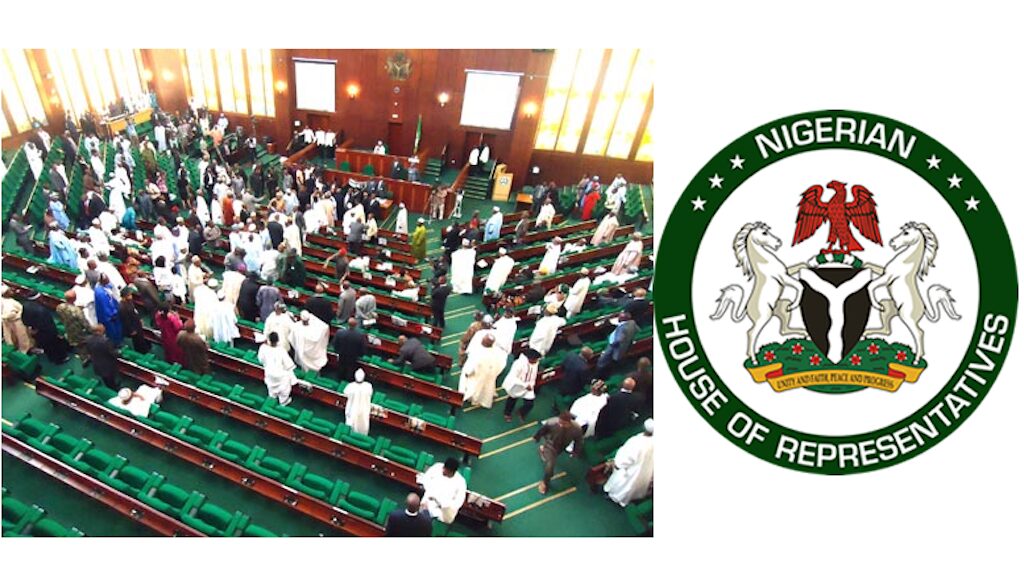
The House of Representatives has inaugurated an ad-hoc committee to investigate growing concerns over excessive tax deductions from the earnings of civil and public servants, as well as multiple and unclear bank charges imposed on customers of deposit money banks.

The committee, chaired by Rivers lawmaker, Kelechi Nwogu, was inaugurated in Abuja on Thursday by the Speaker, Dr Tajudeen Abbas.

Nigerians are increasingly voicing frustration over unfair and unexplained deductions from their salaries and bank accounts. Civil and public servants, in particular, say they are being hit by multiple taxes, levies, and bank fees that reduce their already stretched incomes.

The problem stems from Nigeria’s complex tax system, where overlapping deductions by federal, state, and local agencies often lead to double taxation and poor accountability. Many workers also allege that some deducted funds, such as pensions and housing contributions, are not properly remitted to the relevant authorities.

At the same time, commercial banks have come under fire for imposing a range of service charges, including stamp duty, Value Added Tax, card maintenance, and transfer fees, sometimes applied simultaneously on a single transaction.

In response to growing public outrage, the House of Representatives launched the Nwogu-led committee to probe the allegations.

Lawmakers are seeking explanations from the Central Bank of Nigeria, the Federal Inland Revenue Service, and commercial banks, with the aim of ensuring fairness and transparency.

The outcome of the investigation could shape crucial reforms to restore trust, protect consumers, and promote a more equitable financial system in Nigeria.

See also  Two-year refining milestone: Fuel import spending crashes 54% to $6.7bn

Speaking at the inauguration, Nwogu said the probe was prompted by widespread complaints from Nigerians over confusing and often unexplained deductions by government agencies and financial institutions.

He described the development as a “pivotal step” in the National Assembly’s commitment to transparency, fairness, and accountability, saying lawmakers could no longer ignore the frustrations of citizens who suffer frequent, unexplained financial losses.

“It is with great honour and a profound sense of duty that I stand before you today as Chairman of this ad-hoc Committee,” Nwogu said. “We are responding to citizens’ concerns to ensure that financial practices in both the public and private sectors align with the principles of justice and equity.”

According to him, the committee will investigate the nature, legality, and application of taxes, levies, and deductions affecting civil and public servants, as well as probe potential cases of non-remittance of deducted funds.

It will also examine the range of bank charges and VAT applied to existing fees, with the goal of ensuring transparency and fairness in financial transactions.

“We aim to identify irregularities, recommend reforms, and advocate for the rights of all Nigerians,” Nwogu said.

“Our mission is to ensure that these deductions and charges are fair, transparent, and just, and we are prepared to make far-reaching recommendations, not minding whose ox is gored.”

He urged full cooperation from government agencies, banks, regulatory bodies, and civil society organisations, stressing that the committee’s work would go beyond identifying problems to proposing actionable solutions that restore public confidence in Nigeria’s financial systems.

See also  Apple to invest additional $100 bn in US – White House official

“We encourage participation from a diverse range of stakeholders. Together, we can build a more equitable financial environment for all Nigerians.”

Earlier in his remarks, the Speaker, Tajudeen Abbas, represented by the Chief Whip, Bello Kumo, reaffirmed the commitment of the 10th National Assembly to protecting Nigerians from exploitative financial practices.

Abbas said the establishment of the committee reflects the legislature’s responsiveness to the cries of citizens who continue to face arbitrary deductions from salaries and bank accounts, both by government agencies and financial institutions.

“It is a privilege to inaugurate this committee dedicated to investigating tax deductions and excessive bank charges burdening Nigerians.

“Public servants who work tirelessly for our nation should not bear the burden of unjust financial practices that reduce their hard-earned income,” he said.

He expressed concern over the growing problem of multiple and unclear bank charges, noting that such practices erode public trust and worsen the economic hardship already faced by citizens.

“The issue of multiple bank charges undermines confidence in our financial institutions and places an undue strain on citizens’ finances.

“Demands for transparency and fairness in banking cannot be ignored; they require our urgent attention,” he said.

The Speaker urged members of the committee to conduct their assignment with integrity, objectivity, and commitment to the people, engaging all relevant stakeholders to ensure a thorough and solution-driven investigation.

“This committee must work diligently and engage stakeholders across all sectors to uncover the truth and provide actionable recommendations.

“Together, we have an opportunity to restore public confidence and strengthen financial justice in Nigeria,” he said.


Continue Reading
Click to comment

Leave a Reply

Your email address will not be published. Required fields are marked *

Business

Kwara strengthens partnership to boost mechanised farming

Published

on

The Kwara State Government has strengthened its partnership with the All Farmers Association of Nigeria and other agricultural stakeholders to advance mechanised farming, environmental sustainability and women inclusion across the state.

The renewed commitment was reaffirmed during a courtesy visit by the leadership of the Kwara State chapter of AFAN to the Kwara State Agro-Climatic Resilience in Semi-Arid Landscapes in Ilorin.

This was contained in a statement issued on Tuesday by the Communication Officer of KWACReSAL, Okanlawon Taiwo, a copy of which was made available to The PUNCH in Ilorin.

Speaking during the meeting, the State Project Coordinator of KWACReSAL, Shamsideen Aregbe, assured farmers of the state government’s continued support toward improving food production, mechanised agriculture and climate resilience.

He said, “Tractorisation remains a critical component of modern agriculture. Access to farming equipment is essential for increasing productivity and addressing food security challenges across the state.”

He explained that the tractor support initiative introduced last year followed a World Bank-backed intervention and presidential directive aimed at supporting farmers with mechanised farming equipment.

Aregbe acknowledged concerns raised about operational challenges affecting some tractors, assuring stakeholders that efforts were ongoing to determine the condition and operational status of the equipment to enable effective utilisation by farmers.

“We must sustain engagement with farming communities, particularly in addressing challenges relating to flooding, agricultural logistics and food security,” he added.

The project coordinator also stressed the need for gender equality and inclusion in agricultural interventions across the state.

“The inclusion of women is not negotiable. We must continue to encourage and support women to actively participate in agricultural programmes and leadership processes,” he stated.

See also  Apple to invest additional $100 bn in US – White House official

Earlier, the Chairman of AFAN in Kwara State, Shuaib Ajibola, commended KWACReSAL for its interventions in the agricultural sector, reaffirming the association’s readiness to collaborate on programmes aimed at improving farmers’ welfare and environmental sustainability.

Ajibola disclosed that the association planned to commence an agricultural expo and stakeholder engagement programme across the state following its recent inauguration activities to reconnect with farmers and strengthen agricultural outreach.

“Previous editions of the interventions covered the 16 local government areas of the state and involved stakeholders from different agricultural sectors,” he said.

The AFAN chairman also raised concerns over land use disputes and other agrarian issues affecting farmlands, noting that the development had created anxiety among some farming communities regarding land ownership and rights.

“There is a need for sustained stakeholder dialogue and engagement to resolve disputes and ensure peaceful farming activities across communities,” Ajibola added.

Also speaking, the Project Coordinator of AFAM, AbdulRahman Babatunde, applauded KWACReSAL for its support to farmers, especially in the area of agricultural inputs and mechanised farming.

“ACReSAL provided 100 per cent agricultural inputs to participating farmers last year, and beneficiaries across communities can testify to the positive impact of the intervention,” Babatunde said.

He disclosed that farming activities for the current planting season had already commenced, with farmers actively registering, hiring tractors and preparing their farmlands.

In her remarks, the AFAM Women Leader, Sherifat Ibrahim, advocated increased empowerment and technical training for women in rural communities to enable them to actively participate in mechanised farming.

“There is a need for gender-friendly operational systems and practical training that will make tractor handling easier and more accessible for women and young learners involved in agricultural programmes,” she said.

See also  Tinubu posts three ambassador-designates to France, US, UK

Meanwhile, the Environmental Safeguards Officer of KWACReSAL, Mr Abubakar Mohammed, reaffirmed the project’s commitment to gender equality, women’s inclusion and effective grievance management across all project activities.

The renewed collaboration comes amid growing efforts by the Kwara state government to improve food production and strengthen climate-smart agriculture through partnerships with farmer associations, development agencies and international organisations.

punch.ng

FOLLOW US ON:

FACEBOOK

TWITTER

PINTEREST

TIKTOK

YOUTUBE

LINKEDIN

INSTAGRAM

Continue Reading

Business

See Full List of Top 10 World’s Largest Economies in 2026

Published

on

The United States is projected to remain the world’s largest economy in 2026 with a gross domestic product estimated at $32.1 trillion, according to new global economic forecasts obtained from Focus Economics on Wednesday.

The U.S. continues to lead global output through dominance in technology, finance, healthcare, and advanced manufacturing. Growth in artificial intelligence, healthcare innovation, and high-value industries has further widened its lead over other major economies in recent years.

The top 10 world economies ranked in numbers

1. United States — $32.1 trillion
The United States remains the world’s largest economy, accounting for over a quarter of global output in nominal terms. Its economy is highly diversified, with Silicon Valley driving global leadership in AI, biotech, and software, while Wall Street anchors the financial sector.

2. China — $20.2 trillion
China is the world’s second-largest economy, driven by manufacturing, exports, and large-scale industrial production. It remains the leading global producer of electronics, machinery, and textiles, though it faces structural challenges, including a shrinking population and high debt levels.

3. Germany — $5.4 trillion
Germany remains Europe’s largest economy, supported by a strong industrial base and the Mittelstand network of medium-sized manufacturing firms that form the backbone of its export strength.

4. India — $4.5 trillion
India continues its rapid economic rise, driven largely by services and information technology. Its economy has more than doubled over the past decade, supported by a young population and expanding domestic demand.

5. Japan — $4.4 trillion
Japan remains a global manufacturing powerhouse in robotics, automobiles, and electronics, although long-term growth is constrained by an aging population and structural economic stagnation.

See also  Price war: Retailers drop petrol below Dangote’s N739/litre

6. United Kingdom — $4.2 trillion
The United Kingdom is a major service-based economy, with strengths in finance, insurance, and real estate, anchored by the City of London.

7. France — $3.6 trillion
France has a diversified economy led by luxury goods, aerospace, agriculture, and manufacturing, with global brands such as Airbus and LVMH playing major roles.

8. Italy — $2.7 trillion
Italy combines a strong services sector with manufacturing strengths in fashion, machinery, and automobiles, driven largely by its industrial northern regions.

9. Russia — $2.5 trillion
Russia remains heavily dependent on oil and gas exports, with energy revenues playing a central role in its economy despite ongoing sanctions and geopolitical pressures.

10. Canada — $2.4 trillion
Canada rounds out the top 10, supported by natural resources such as oil, forestry, and mining, alongside a strong services and financial sector.

Economists say the global economy is increasingly being shaped by technology, demographics, energy transitions, and geopolitical tensions, all of which will influence how these rankings evolve in the coming years.

punch.ng

FOLLOW US ON:

FACEBOOK

TWITTER

PINTEREST

TIKTOK

YOUTUBE

LINKEDIN

INSTAGRAM

Continue Reading

Business

Nigeria misses OPEC oil production quota again

Published

on

Again, Nigeria has missed its crude oil production quota set by the Organisation of the Petroleum Exporting Countries after averaging 1.49 million barrels per day in April, below the 1.5 mbpd benchmark.

Figures from the Nigerian Upstream Petroleum Regulatory Commission showed that the country produced an average of 1,488,540 barrels of crude daily in April, representing about 99 per cent of the OPEC quota. When condensates were added, total daily production rose to 1.66mbpd

Last month, the NUPRC said oil production now averaged 1.8mbpd. However, data released on Tuesday was at variance with the report. The latest data mean Nigeria remained below its OPEC allocation for the ninth straight month since July 2025.

The NUPRC document showed that combined crude oil and condensate production peaked at 1.85 mbpd during the month, while the lowest output stood at 1.46 mbpd. The PUNCH reports that the April figures are an appreciable improvement compared to March, when oil output was 1.55mbpd.

Nigeria’s oil production has struggled for years due to crude theft, pipeline vandalism, ageing infrastructure, and underinvestment in the upstream sector. Although output improved marginally in April compared to March, it was still insufficient to meet the country’s OPEC target, underscoring persistent challenges in ramping up production despite government efforts to boost volumes.

The PUNCH reports that Nigeria’s crude production in March was 1.38 mbpd. While there was a 69,000 bpd increase from the 1.31 mbpd recorded in February, the figure is still 117,000 bpd below the OPEC quota.

The figures for February indicated a month-on-month decline of 146,000 barrels per day, widening the country’s shortfall from its OPEC production allocation. This is the eighth consecutive month the country has failed to meet the OPEC quota since July 2025.

See also  CBN announces new withdrawal limit, removes deposit cap

Recall that although Nigeria recorded a marginal improvement in January, when production rose from 1.422 mbpd in December 2025 to 1.46 mbpd, the rebound was short-lived as output fell significantly in February 2026.

Earlier data from NUPRC had also shown that crude oil production weakened at the end of 2025. Production declined from 1.436 mbpd in November 2025 to 1.422 mbpd in December, before recovering slightly in January.

In 2025, Nigeria’s crude oil production fell below its OPEC quota in nine months of the year, meeting or slightly exceeding the target only in January, June, and July.

Nigeria opened 2025 strongly, producing 1.54 mbpd in January, about 38,700 barrels per day above its OPEC allocation. However, production slipped below the quota in February at 1.47 mbpd and weakened further in March to 1.40 mbpd, marking one of the widest shortfalls during the year.

punch.ng

FOLLOW US ON:

FACEBOOK

TWITTER

PINTEREST

TIKTOK

YOUTUBE

LINKEDIN

INSTAGRAM

Continue Reading

Trending