Connect with us

Lifestyle

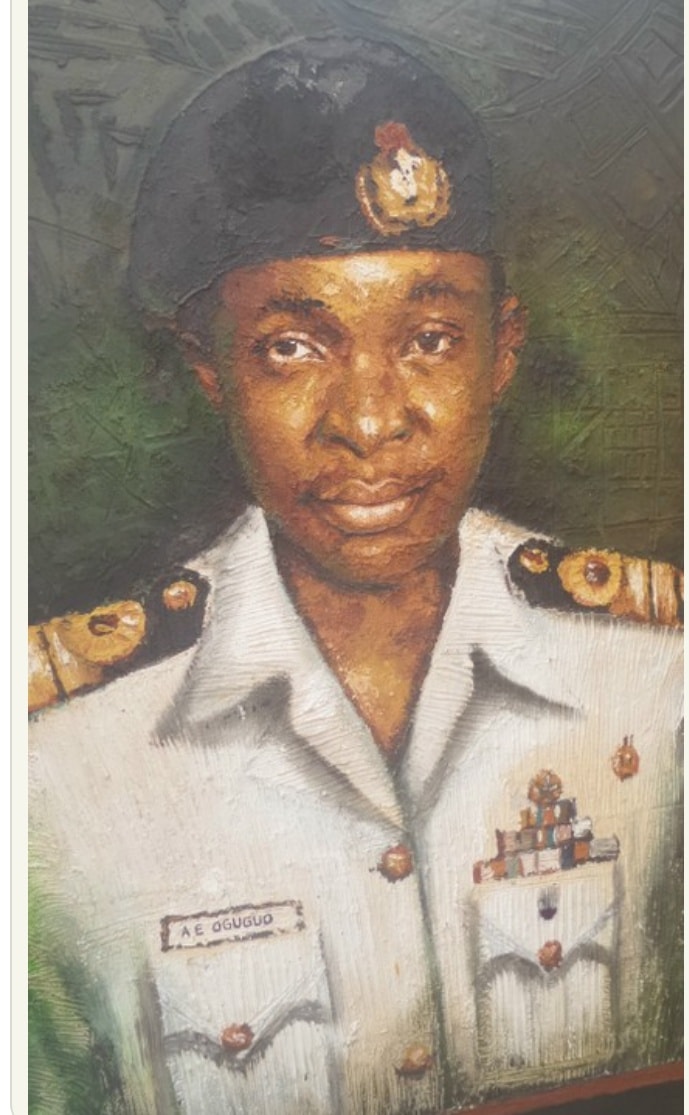
Navy Commodore Anthony Emeluwa Oguguo

Published

on

Navy Commodore Anthony Emeluwa Oguguo was a senior officer of the Nigerian Navy who became the military governor of Imo State from 1990 to 1992 during the administration of General Ibrahim Badamasi Babangida. His tenure is remembered as one of the more development-oriented periods in the military era, particularly marked by infrastructural achievements and strong personal ideals about public service and integrity.

Background and Naval Career

Anthony Oguguo rose through the ranks of the Nigerian Navy at a time when military officers frequently played prominent roles in national administration. By the late 1980s and early 1990s, he had earned a reputation as a disciplined officer, competent administrator, and a man known for candour and forthrightness. His military background shaped his governance style, which was firm but development driven.

Governor of Imo State 1990 to 1992

Oguguo assumed office as the military governor of Imo State at a time when the Babangida administration was restructuring state leadership to strengthen regional administration and accelerate reforms. His governance coincided with efforts to improve infrastructure and public morale in various parts of the country.

One of his most enduring contributions to Imo State was his leadership in the completion and commissioning of the Imo State Airport. Although the idea and initial planning predated his administration, the project had suffered delays. Under Oguguo’s leadership the airport project gained momentum, was completed, and was officially commissioned. Today the airport, known as Sam Mbakwe International Cargo Airport, remains one of the most important transportation facilities in southeastern Nigeria and continues to serve both commercial and cargo aviation needs.

Administrative Style and Integrity

Oguguo was widely respected for his moral uprightness. Among his most famous public statements is the remark: “I saw money and looked away, it is not everything; we can all do the same and teach it to our children.” This statement became emblematic of his term in office, reflecting his personal philosophy about honesty in leadership and his desire for a culture of accountability in public life. At a time when corruption was often associated with military governments, this declaration stood out as a powerful moral message.

His administration encouraged discipline, transparency, and responsible governance. Though his time in office was relatively short, many citizens remembered his tenure for its sense of direction and its emphasis on leaving enduring legacies rather than seeking personal enrichment.

Legacy

Anthony Emeluwa Oguguo’s legacy in Imo State is strongly tied to the airport that continues to operate decades after its commissioning. The facility expanded the state’s economic potential, improved connectivity with other parts of Nigeria, and supported business and mobility for the region. Beyond infrastructure, Oguguo is also remembered for his character. The statement that he “saw money and looked away” has been quoted over the years as an example of the kind of leadership Nigeria needs.

Today he remains an important historical figure in the narrative of Imo State’s development and Nigeria’s military administrative era. His contributions are often cited in discussions of ethical public service, military governance, and state development during the Babangida years.

See also  Lateef Olufemi Okunnu: The Distinguished Nigerian Lawyer and Statesman

FOLLOW US ON:

FACEBOOK

TWITTER

PINTEREST

TIKTOK

YOUTUBE

LINKEDIN

TUMBLR

INSTAGRAM

Continue Reading
Click to comment

Leave a Reply

Your email address will not be published. Required fields are marked *

Lifestyle

Celebrities who battled body shaming

Published

on

In the entertainment space, fame often arrives with a darker companion: online bullying. From actresses to musicians and reality-TV stars, social media has become a brutal arena where women’s bodies are mocked, dissected and policed. Yet, many of these targets have refused to stay silent, choosing instead to reclaim their narratives. Faith Ajayi highlights entertainers who have pushed back against body-shaming and the digital cruelty that comes with stardom

Nkechi Blessing

Actress Nkechi Blessing has never shied away from controversy, but in September 2025, she found herself at the centre of a storm she never anticipated. While taking a break during a routine gym session at an iFitness branch in Lagos, an unflattering photo of her midsection was taken without her knowledge and posted online.

The image triggered harsh mockery from social media users and even a colleague, Blessing CEO, who revisited their past feud in a video.

She said, “Nkechi Blessing, I am shocked you are angry that people are body-shaming you.”

She continued, “Even though we reconciled at JP 2025’s wedding, I remember how you body-shamed me… You told the world you had my nude videos… You went live and showed those videos I sent you in confidence.”

Verydarkman also weighed in, playing an old clip of Blessing promoting a weight-loss product while questioning her claims about body transformation.

Blessing initially responded with humour, writing on Instagram, “I went to the gym to stay fit and healthy, not for a fashion show or runway. With my big belle with pride, una go dey alright!”

But in December 2025, during an appearance on The Honest Bunch podcast, she broke down while discussing the emotional strain. “This is who I am. I wear clothes that make me comfortable. You get BBL and troll me with a natural body?” She added that she tracked down the person who took the photo and had her arrested for privacy invasion and defamation.

See also  Barbara Soky: The Screen Icon Who Defined Nigerian Television Drama

Turning the experience into advocacy, Blessing launched the “Big Belle Challenge,” encouraging women to post unfiltered photos. “I don’t like stress. Instead of fighting online, I handled it privately,” she said.

Uriel

Former Big Brother Naija star, actress and entrepreneur, Uriel Oputa, has consistently challenged Nigeria’s rigid beauty standards. One of her major encounters with body-shaming occurred in 2017 during the BBNaija show, when viewers mocked her breasts and questioned her age. She fired back with confidence: “Proud of what God gave me. If my boobs offend you, look away.”

The attacks resurfaced in 2024 after a photo of her at a Lagos party circulated online. Trolls revived conversations about her body, while some made derogatory remarks about her being mixed-race. Uriel later described those comments as “ignorance wrapped in insecurity.”

Uriel

She pushed back again, posting a bold lingerie video with the caption:

“My body, my rules. My breasts don’t sag for your approval; that’s your insecurity talking.

Do women body-shame other women? Mehn, we’re our own worst enemies.”

Uriel later turned the backlash into an empowerment movement through her Boob Freedom campaign, partnering with lingerie brands to promote natural bodies of all shapes.

“I once lost weight, and they said my boobs got worse. Now? I’m embracing the sag. It’s premium content,” she joked.

Rapper Ruggedman has been one of her biggest supporters, openly celebrating her physique and shutting down trolls whenever they resurface.

DJ Cuppy

Florence Otedola, popularly known as DJ Cuppy, has often found herself the target of colourist and body-shaming attacks despite her global acclaim. After sharing swimsuit photos from her father’s 60th birthday yacht celebration in 2022, trolls criticised her skin tone and mocked her body, with comments such as “too dark and uneven” and “preggy vibes.”

Cuppy responded firmly on social media: “My skin’s my superpower — dark, bold, unapologetic.” She questioned Nigeria’s selective celebration of beauty, asking, “Black excellence, but only if it’s lightened?”

Her fans amplified her message through #CuppyMelaninMagic, which she supported with donations to anti-colourism and skin-positivity organisations across West Africa.

See also  NASFAT warns against twisting Qur’an to abuse women

By 2025, Cuppy had turned the incident into fuel for her expanding global brand, performing at international DJ sets, collaborating with top artistes and leaning fully into her identity without apology.

Ayra Starr

Since her breakout in 2021, Ayra Starr has faced intense scrutiny over her fashion choices. At just 18, she was criticised for wearing skimpy clothes, but the backlash intensified after her performance at a Meta concert on October 11, 2022.

Trolls accused her of being “immoral,” while some commentators blamed her label boss, Don Jazzy. But the young star refused to bend. The next day, she went live wearing an even shorter skirt, declaring, “My skirt is short because I’m hot, literally and figuratively. If my legs disturb you, close your eyes when you stream my music.”

She doubled down with the release of Rush, whose lyrics underscored her message of self-assurance.

This year, she followed up with another confidence anthem, Hot Body, reaffirming her stance on self-expression. Today, Ayra Starr performs globally on her own terms, and even her critics queue to take photos with her.

Etinosa Idemudia

Actress Etinosa Idemudia has been open about her struggles with Polycystic Ovary Syndrome, but after giving birth in December 2020, she became the focus of harsh comments about her postpartum body.

In an Instagram video, Idemudia confronted the insults directly. Lifting her dress, she rubbed her stomach and said, “This is my Christabel tummy! I carried emotions, stress and love. If you don’t have a belly, sorry for your flat life.”

The body-shaming continued for years.

In a 2025 interview with PUNCH, she admitted the constant attacks wore her down. “I have been constantly bullied and mocked for my stomach. It affected me… My fat is largely caused by PCOS, but many people don’t know,” she said.

See also  Lateef Olufemi Okunnu: The Distinguished Nigerian Lawyer and Statesman

After medical consultations, she opted for cosmetic surgery, framing it as an act of self-care rather than defeat. “Science exists to make life easier… As an actor, looks and skill go hand in hand,” she said.

Moyo Lawal

Moyo Lawal has always been vocal about her body confidence, but her most difficult battle came in 2023 when an ex-partner leaked an intimate video of her. The clip spread rapidly across social media and messaging platforms, triggering intense slut-shaming and online harassment.

Lawal initially responded candidly: “Yes, I make love. I’m single, not a nun. Stop acting brand new.” But the situation escalated when strangers attempted to locate her home, turning body-shaming into life-threatening bullying.

In an emotional live session on September 18, 2023, she said, “You watched, you judged, you shared. That was rape by distribution.” She reported the matter to the police and pursued legal action against those circulating the video.

The trauma pushed her into a year-long break from Nollywood. In early 2024, she admitted, “People think bullying is just comments. It’s violence. It almost pushed me into depression.”

Lawal returned in late 2024 with Curvy Queens, a film celebrating body acceptance, which became a streaming hit and marked a triumphant comeback.

Her battles continued into 2025 when trolls mocked her weight. She responded on X: “If I do surgery, I will tell you. If I don’t, I will still tell you. My body is not your national project.” To another critic, she wrote, “Curves don’t expire. Mind your mileage.”

Now an advocate for digital rights and consent awareness, Lawal has turned her experience into a platform for education, proving that resilience can coexist with vulnerability.

punch.ng

FOLLOW US ON:

FACEBOOK

TWITTER

PINTEREST

TIKTOK

YOUTUBE

LINKEDIN

TUMBLR

INSTAGRAM

Continue Reading

Lifestyle

PHOTOS: Emir of Kano’s daughter Aisha set to wed

Published

on

The 14th Emir Of Kano, HRH Khalifa Muhammad Sanusi II, has announced the upcoming wedding of his daughter, Aisha Lamido Sanusi.

Aisha. who bagged First Class from University of Swansea, UK in 2023, will marry Flying Officer Dr. Sayyed Ahmed Usman, on Friday December 12, 2025, at the Emir’s Palace in Kofar Kudu.

Family members, including Fulani Siddika, shared the wedding invite on Thursday.

FOLLOW US ON:

FACEBOOK

TWITTER

PINTEREST

TIKTOK

YOUTUBE

LINKEDIN

TUMBLR

INSTAGRAM

See also  Ladoja crowned 44th Olubadan, set to receive staff of office
Continue Reading

Lifestyle

NASFAT warns against twisting Qur’an to abuse women

Published

on

The Nasrul-Lahi-li Fathi Society of Nigeria (NASFAT) has warned against what it described as the growing misuse of Qur’anic verses and prophetic traditions to justify the abuse and discrimination of women and girls, describing the trend as dangerous, misleading, and un-Islamic.

The organisation issued the warning on Wednesday as part of its activities marking the global 16 Days of Activism Against Gender-Based Violence.

It stated that many acts of violence carried out in the name of Islam were rooted in harmful cultural beliefs, ignorance, and extremism, not in the teachings of the faith.

According to NASFAT in a statement shared with The PUNCH, Islam promotes justice, dignity, and compassion for all human beings, stressing that no verse of the Qur’an or hadith supported the oppression of women.

The Society listed several widespread misconceptions used to excuse abusive behaviour, such as the claim that Hawwā’ (Eve) was responsible for Adam’s fall, the false notion that killing non-Muslims guarantees “72 virgins,” and the misinterpretation of verses on polygyny and marital conflict.

NASFAT also flagged the misuse of texts on inheritance, the hadith on women’s “deficiency,” and the story of Prophet Yūsuf, pointing out that such narratives were frequently taken out of context to reinforce patriarchal norms.

According to NASFAT, Prophet Muḥammad (Peace Be Upon Him) honoured women, condemned injustice, and embodied compassion, principles that directly contradicted any form of gender-based violence.

“Abuse does not come from Islam. It comes from cultural attitudes, ignorance, and the deliberate twisting of religious texts,” the organisation said.

See also  Lateef Olufemi Okunnu: The Distinguished Nigerian Lawyer and Statesman

To counter harmful interpretations and reduce gender-based violence, NASFAT urged religious institutions, scholars, families, and community leaders to take concrete steps, including the promotion of accurate Islamic teachings on women’s rights.

It also urged stakeholders to avoid unverified narrations and cultural myths in sermons and to provide contextual explanations of sensitive religious texts.

The Society canvassed the integration of GBV education into mosque programmes, the raising of boys and girls with equal respect, and the condemnation and reporting of domestic violence as a criminal offence.

NASFAT also called on Muslims globally to uphold justice and protect women from all forms of harm.

Continue Reading

Trending