
Connect with us

News

South West commission pushes revival of old rail corridors

Published

on

The Managing Director/Chief Executive Officer of the South-West Development Commission, Dr Charles Akinola, has revealed that the commission’s push for the revival of many old, unserviced rail lines in the South-West is aimed at building a regional rail ecosystem that will reduce transportation costs, expand market access, enable rural prosperity, and create jobs for youths across the region, among others.

Akinola made this known on Monday at an interaction session with journalists in Lagos. The SWDC MD commended the Managing Director of the Nigerian Railway Corporation, Dr Kayode Opeifa, for welcoming the commission’s proposal on Southwest rail connectivity during the executive management’s working visit to him last week.

Akinola said Opeifa had assured the SWDC team of positive consideration of the proposals, stressing that the NRC was excited to play its role in efforts to make rail transportation a cornerstone of economic development in Nigeria.

According to Akinola, Opeifa had expressed the readiness of the NRC to review SWDC’s application for an operational licence, adding that he had instructed the directors to work with the commission’s technical team to draft the appropriate Memorandum of Understanding that would bring the requests to life.

Akinola insisted that regional rail connectivity will incentivize farming, thereby promoting food security, boosting the region’s Gross Domestic Product, and enhancing the overall economic prosperity of the region in line with President Bola Tinubu’s Renewed Hope Agenda.

The SWDC boss said the commission’s rail development roadmap consists of short, medium, and long-term plans. In the short term, the commission sought the concessioning of old, unutilized rail routes for immediate operation.

Of particular interest to Akinola is the revival of the historic Idogo route and the reactivation of the Dagbolu–Osogbo–Erunmu–Omi–Adio corridor. He said the Idogo route is critical to food security and agricultural evacuation.

See also  Tinubu to meet Council of State, police on insecurity

He said: “Lagos, Ogun, Oyo, and Osun are already serviced by rail. We want to maximize these existing corridors to move foodstuffs into Lagos, and also deliver fast-moving consumer goods from the Lagos axis to other Southwest consumer markets.

“We want to revive the Idogo route, and indeed extend it to Dagbolu for movement of farm produce in large quantities from Osun, Oyo, and Ogun states to Lagos, where demand is high. The route will also enhance the delivery of fast-moving consumer goods from Lagos and Ogun states to other states, thereby boosting commerce, creating jobs, and improving cargo movement efficiency.”

For the medium term, Akinola disclosed that SWDC has applied for an operational licence for new routes, expressing optimism for prompt approval. He noted that the commission was exploring opportunities to bring in private-sector partners to operate selected rail lines across the region.

“This agenda has previously been advanced by the DAWN Commission, and we are now in a position to fast-track its implementation,” he said.

In advancing these proposals, Akinola stated that both agencies have agreed on a joint technical team, assuring that SWDC is working with the six Southwest governors to construct strategic road spurs to rail stations that will link dry ports, industrial hubs, and related facilities.

Continue Reading
Click to comment

Leave a Reply

Your email address will not be published. Required fields are marked *

News

SEE FULL LIST: NJC recommends 28 candidates for judicial appointments

Published

on

The National Judicial Council (NJC) has recommended 28 candidates for appointment as judicial officers across six states, including 24 candidates for various State High Courts.

The recommendations cover the High Courts of Kano, Ebonyi, Edo, Adamawa and Ogun states, the Plateau State Sharia Court of Appeal, Adamawa State Sharia Court of Appeal and Adamawa State Customary Court of Appeal.

The Council announced the recommendations in a statement issued on Wednesday by its Deputy Director of Information, Kemi Babalola-Ogedengbe.

It said the decisions were taken at its 112th meeting held on November 3, 2026, under the chairmanship of the Chief Justice of Nigeria, Justice Kudirat Motonmori Olatokunbo Kekere-Ekun.

According to the Council, one candidate was recommended as Grand Kadi of the Plateau State Sharia Court of Appeal, while another was recommended as Kadi of the Adamawa State Sharia Court of Appeal.

Two others were recommended as judges of the Adamawa State Customary Court of Appeal.

The appointment includes “24 High Court candidates and four candidates for the Sharia and Customary Courts of Appeal.”

The full list of the 28 recommended candidates is as follows:

PLATEAU STATE SHARIA COURT OF APPEAL (GRAND KADI)

1. Tijjani Jibrin Zololo

KANO STATE HIGH COURT

2. Nafisah Yusuf Hassan
3. Halima Yahuza Ahmad
4. Abdullahi Abdulsalam Bature
5. Musa Ibrahim Umar

EBONYI STATE HIGH COURT

6. Dickson Edmund Amaga

EDO STATE HIGH COURT

7. Benson Osagie Osawaru
8. Taiye Osayanmon Omoruyi
9. Dorothy Ibhade Adamaigbo
10. Festus Osagie Usiobaifo
11. Pius Idemudia Oiwoh
12. Majebi Samuel Amune
13. Emike Jessica Imuekemhe

See also  Tinubu to meet Council of State, police on insecurity

ADAMAWA STATE HIGH COURT

14. Aminu Sa’ad
15. Ibrahim Ulenda Musa
16. Sadiq Giwa
17. Musa Bala Mijinyawa
18. Japhet Ibrahim
19. Aliyu Bakari
20. Yakubu Ahmadu

OGUN STATE HIGH COURT

21. Olakulehin Luqman Abiola Oke
22. Adebimpe Folusho Obienu
23. Fatimat Adeola Daudu
24. Rafiat Bolanle Kadiri
25. Oludotun Olaniyi Osho

ADAMAWA STATE SHARIA COURT OF APPEAL (KADI)

26. Abubakar Ishaku

ADAMAWA STATE CUSTOMARY COURT OF APPEAL

27. Elshama Gwama Dimas
28. David Benjamin Pembi

The NJC said all the recommended candidates were expected to be sworn in by their respective state governors without delay.

Source: punchng.com

FOLLOW US ON:

FACEBOOK

WHATSAPP CHANNEL

TWITTER

PINTEREST

TIKTOK

YOUTUBE

LINKEDIN

INSTAGRAM

Continue Reading

News

JD Vance reveals Iran war cost Republicans midterm elections, read details

Published

on

United States Vice President JD Vance has blamed the Iran war for the Republican Party’s poor performance in the 2026 midterm elections, saying many supporters of President Donald Trump switched allegiance to Democrats over dissatisfaction with the conflict.

Vance said this in a post on his X handle on Wednesday, arguing that the party’s defeat was not primarily caused by poor voter turnout but by the defection of voters who supported the Trump-Vance ticket in 2024.

He said data analysis conducted by his team before the elections had shown that Republican supporters were turning out in significant numbers, despite opinion polls predicting a major Democratic victory.

“One of the things the data analysts on our side obsessed over was ‘composition’—whether the electorate looked close enough to 2024 for Republicans to win,” he said.

Vance explained that although turnout was encouraging in several states, a member of his data team had warned him that many Republican voters were angry and might not vote for the party.

“Well, that looks prophetic now. Our voters did show up. In Florida, for example, the electorate was nine points more Republican than Democrat, just a couple points worse than 2024,” he said.

“But the main problem is not turnout. The main problem is that many people who voted for Trump/Vance in 2024 voted for Democrats in 2026.”

The Vice President acknowledged that the party might have failed to communicate its economic policies effectively, particularly on the cost of living and inflation.

However, he said the major reasons voters abandoned the Republicans were concerns about the war, economic hardship, America’s foreign policy priorities and its relationship with Israel.

See also  Libya deports 80 Nigerians held in detention camps

According to Vance, a pollster who accurately predicted the election outcome identified four major demands among former Republican supporters who switched to the Democrats.

The demands were to end the war, prioritise the cost of living and inflation, put America first and change the country’s relationship with Israel.

“The reason we lost is the war. The president himself said so last night,” Vance stated.

He also defended television personality Rachel Campos-Duffy, saying her earlier call for a diplomatic resolution to the conflict had proved politically sound.

Vance warned against attempts by Republican establishment figures to attribute the party’s electoral setback to other issues, particularly immigration policy.

He said he was open to reviewing immigration enforcement strategies, including targeting businesses that employ undocumented workers, but rejected calls for amnesty.

“Anyone pushing amnesty is lying to you,” he said.

The Vice President challenged those who believed the war was worth the political cost to defend that position openly, noting that the defeat could cost Republicans control of the Senate for the next six years.

“If you’d like to argue it was worth it, that losing the Senate for the next six years was worth it, then do so. Argue it was a worthwhile cost to pay,” he said.

“Agree or disagree, that’s at least honest.”

Despite the setback, Vance expressed optimism about the country’s future, urging disappointed Republican supporters to channel their anger into rebuilding the party and electing candidates who share their political views.

“Let’s take that anger and get back to the work of saving our country,” he added.

See also  Shettima presides over NEC meeting in Abuja

Source: punchng.com

FOLLOW US ON:

FACEBOOK

WHATSAPP CHANNEL

TWITTER

PINTEREST

TIKTOK

YOUTUBE

LINKEDIN

INSTAGRAM

Continue Reading

News

UK to strengthen immigration enforcement with facial recognition

Published

on

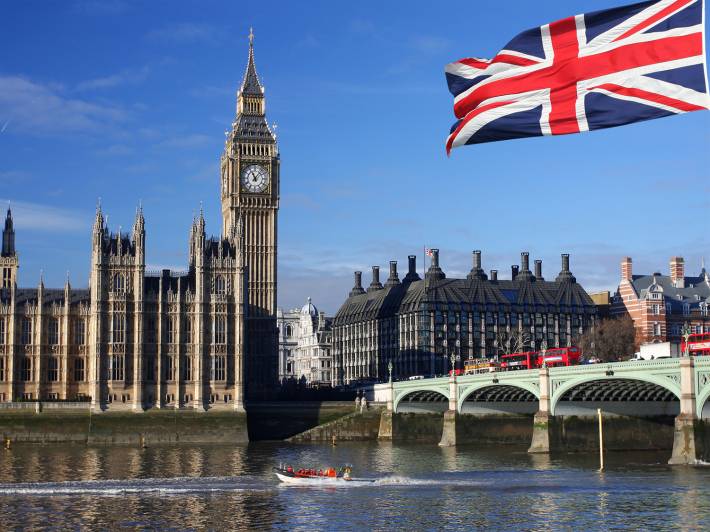
The United Kingdom government plans to expand live facial recognition technology to strengthen immigration enforcement and identify individuals who have violated immigration rules.

The initiative, being developed by the Home Office, could see facial recognition cameras deployed at transport hubs and public events to help immigration officers identify people who have overstayed their visas, entered the country unlawfully or breached their immigration conditions.

According to policy documents published in October and sighted by PUNCH Online on Thursday, the proposed expansion could extend the technology’s use to general immigration enforcement, including civil immigration violations that do not necessarily involve criminal offences.

The development comes as Home Secretary Shabana Mahmood seeks to intensify immigration enforcement through increased funding, additional personnel and expanded deportation operations.

The Home Office said the technology would help officers identify individuals subject to removal proceedings and those attempting to re-enter the UK unlawfully.

The policy documents also suggest that facial recognition could reduce the need for repeated enforcement visits to residential properties and workplaces.

Authorities have already conducted three trials of the technology at Holyhead port in north Wales between November 2025 and February 2026. The trials focused on identifying individuals travelling from Ireland who were subject to deportation orders or wanted over immigration-related criminal offences.

The programme has now entered its formal delivery phase, with officials considering wider deployments at transport hubs and large public gatherings.

A Home Office spokesperson confirmed that further trials were being considered while the government examined the potential benefits and implications of the technology.

See also  Freed 38 Kwara church worshippers still held in Ilorin

U K Home Secretary, Shabana Mahmood, said: “Facial recognition technology has been the biggest breakthrough for catching criminals since DNA matching, already helping police take thousands of dangerous criminals off our streets.

“The benefits are clear, but we must ensure that its use is fair, safe and proportionate.

“It is right we put in place clear laws to ensure that the use of this technology is watertight, so the public can have confidence that these tools, which are vital to our safety, are used responsibly too.”

However, the proposed expansion has raised concerns among civil liberties organisations and migrant rights advocates over privacy, surveillance and the possibility of inaccurate identification.

The Joint Council for the Welfare of Immigrants described the development as a significant escalation of immigration enforcement powers, while the Open Rights Group questioned the transparency of the plans, public consent and the absence of comprehensive legislation governing facial recognition.

Critics have also warned that the technology could disproportionately affect people of colour because of concerns about identification accuracy.

Meanwhile, Biometrics and Surveillance Camera Commissioner William Webster has questioned whether existing regulatory arrangements are sufficient to oversee the expanding use of facial recognition across government agencies.

Under the proposed policy, individuals under 18 will not be included on facial recognition watchlists.

Source: punchng.com

FOLLOW US ON:

FACEBOOK

WHATSAPP CHANNEL

TWITTER

PINTEREST

TIKTOK

YOUTUBE

LINKEDIN

INSTAGRAM

Continue Reading

Trending