Connect with us

Education

FG halts foreign scholarships, redirects funds home

Published

on

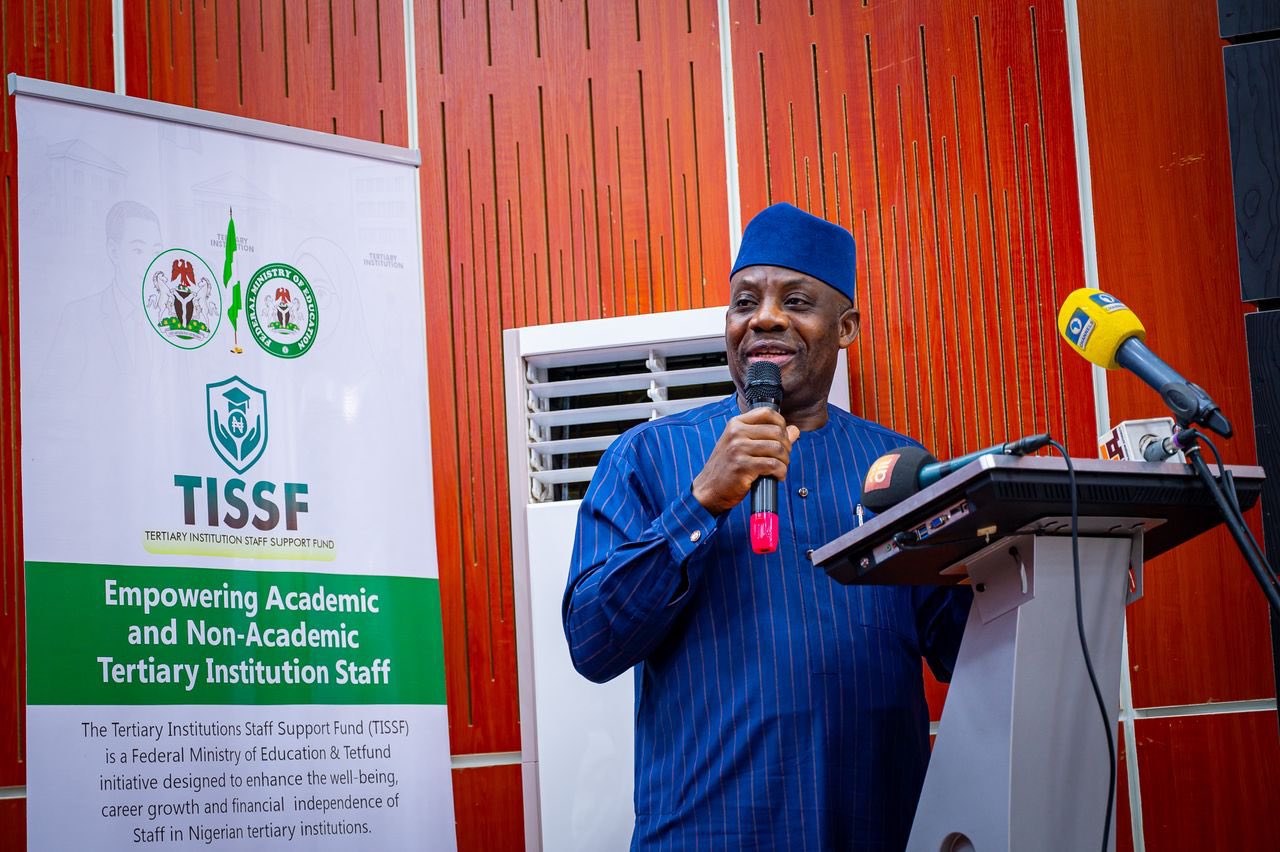
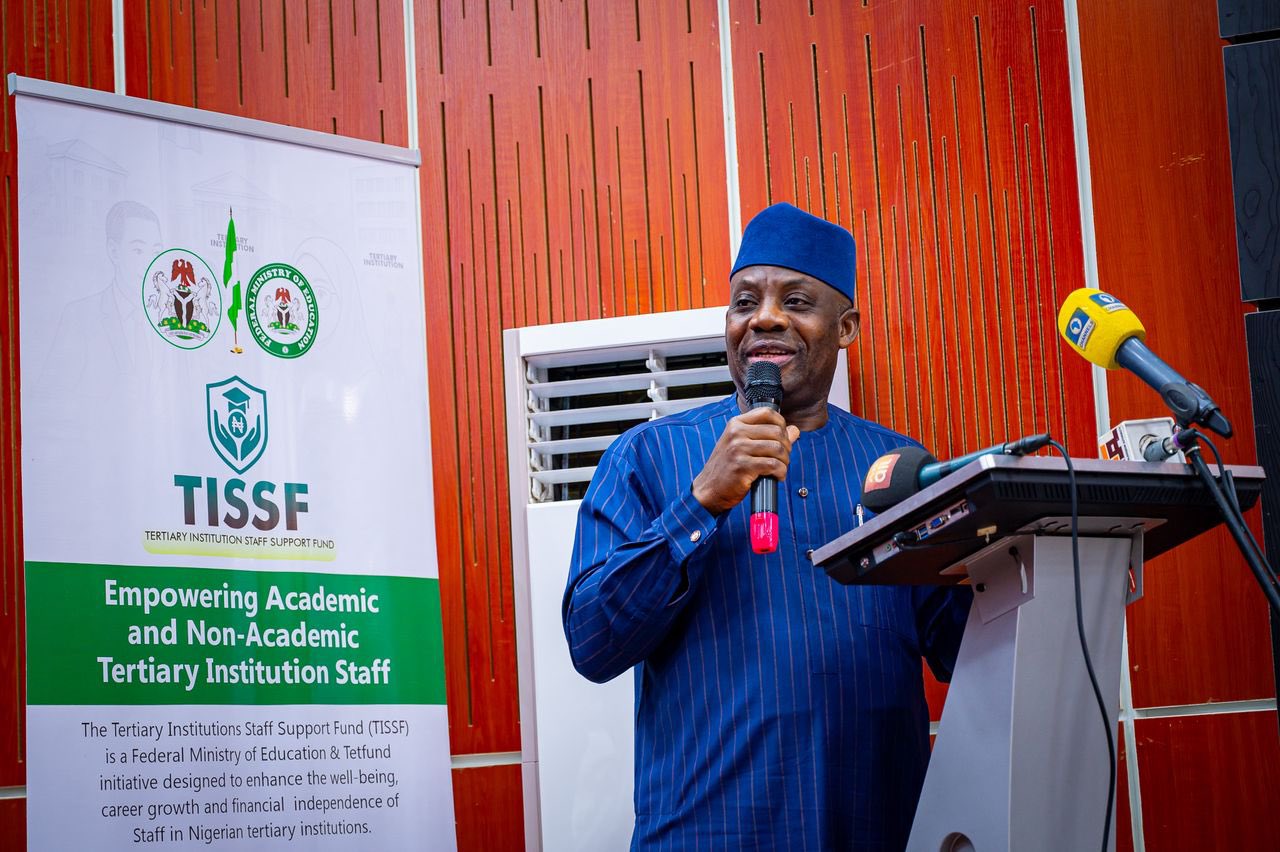
The Federal Government is reviewing its foreign scholarship and bilateral education arrangements as part of efforts to eliminate unnecessary expenditure and redirect public resources towards strengthening Nigerian tertiary institutions, the Minister of Education, Dr Tunji Alausa, has said.

Alausa said the government could no longer justify spending scarce public funds to send students abroad to study programmes that are already available in Nigerian universities, polytechnics and colleges of education.

The minister disclosed this while explaining the rationale behind the Federal Government’s decision to review its overseas scholarship arrangements, stressing that the policy was driven by the need to build domestic capacity and ensure better value for public expenditure.

He recalled that shortly after assuming office, he was presented with a proposal involving about 100,000 Nigerian students travelling to Morocco to study courses taught in English, including mass communication and journalism.

According to him, the proposal raised serious concerns because the courses were already available in Nigeria, while the students would have had to spend their first year learning French before commencing their programmes.

Alausa said, “Number one, we have all those courses in Nigeria. And yet, number two, they were going to spend the first year learning French before they started the programme.”

He added that the cost of supporting such students abroad could not be justified when Nigeria had developed considerable capacity in its tertiary institutions over the years.

“And number three, in the position of a few million to support this in Nigeria, we support thousands of them,” he said.

See also  School not scam, foundation warns pupils

The minister said the government therefore concluded that continuing the arrangement in its previous form would amount to an inefficient use of public resources.

“So the Bilateral Education Agreement was not making sense, again, to us in government. It was a way to waste government funds,” Alausa said.

He added, “And this President will not waste any public funds.”

The latest position builds on the Federal Government’s earlier decision to discontinue government-funded BEA scholarships while retaining support for students already enrolled under the previous arrangements.

The Federal Government has clarified that existing beneficiaries of the bilateral scholarship programme would not be abandoned and would continue to receive support until the completion of their studies, while new government-funded awards under the arrangement were discontinued following a review of the programme.

The policy does not amount to a blanket ban on Nigerians receiving scholarships from foreign governments.


Foreign governments willing to sponsor Nigerian students can continue to offer such opportunities, but the Federal Government intends to be more selective about committing Nigerian public funds to overseas education.

Alausa similarly explained that foreign countries willing to continue sponsoring Nigerian students could do so without necessarily requiring financial support from the Nigerian government.

The minister said the circumstances that justified sending large numbers of Nigerian students abroad decades ago had changed considerably.

“When those programmes were set up 20 years ago, they were meant to get students to go to the government colleges where we did not have capacity.

“But in the last 20 years, we’ve built a number of capacities in the tertiary institutions — universities, polytechnics and colleges,” he added.

See also  Mr President, don’t punish Nigerians again with 15% fuel import tariff

The scholarship review comes amid broader reforms by the Federal Ministry of Education aimed at repositioning Nigeria’s education system under President Bola Ahmed Tinubu’s Renewed Hope Agenda.

The reforms have focused increasingly on strengthening domestic tertiary institutions, expanding technical and vocational education and training, improving digital education, promoting research and innovation, and making education more responsive to the needs of the economy.

The Federal Government has also intensified efforts to strengthen technical and vocational education and training, with emphasis on modernising curricula, developing industry-relevant skills and improving the capacity of institutions to produce graduates who can contribute directly to economic development.

Alausa has repeatedly argued that education spending must produce measurable outcomes, particularly given the country’s competing development needs and limited public resources.

The push to retain more education spending within Nigeria also reflects the government’s broader objective of strengthening local institutions rather than relying excessively on overseas opportunities.

Alausa said the government’s approach was not simply about withdrawing foreign scholarships but ensuring that public resources were deployed where they would have the greatest impact.

He cited an instance involving scholarship beneficiaries who were expected to study abroad but were instead studying in Nigerian universities, saying such situations further demonstrated the need to review the system.

“So we have to start with Nigerians,” the minister said.

The Federal Government has simultaneously been strengthening domestic student support mechanisms, including scholarships and bursaries for Nigerian students and the Nigerian Education Loan Fund, which provides financial support to students in tertiary institutions.

Alausa said the government’s broader objective was to create a tertiary education system capable of producing the skills, research and innovations required for national development.

He recently inaugurated the Tertiary Institution National Gallery Prize Committee to recognise outstanding academic research and innovation, particularly research with potential for commercialisation and industrial application.

“We want undergraduate researchers to see a clear pathway from academic research to industrial application, enterprise, innovation, and national development,” he said.

The minister said Nigeria could no longer afford to measure the success of its education system simply by the number of certificates awarded.

“The most successful nations of the 21st century will not necessarily be those endowed with greater natural resources. They will be those that can systematically transform knowledge into solutions, research and intellectual capital into economic and industrial value,” Alausa said.

Source: punchng.com

FOLLOW US ON:

FACEBOOK

TWITTER

PINTEREST

TIKTOK

YOUTUBE

LINKEDIN

INSTAGRAM

Continue Reading
Click to comment

Leave a Reply

Your email address will not be published. Required fields are marked *

Education

How Nigerians can apply for 2027/2028 UK commonwealth scholarship – FG

Published

on

The Federal Ministry of Education has invited qualified Nigerian university graduates to apply for the 2027/2028 Commonwealth Scholarships and Fellowship Plan, with applications closing on October 20, 2026.

The scholarship notice was shared by the Lagos State Scholarship Board.

The scholarships, which are tenable in the United Kingdom, are available for a one-year taught Master’s programme or doctoral studies of up to three years.

The notice was issued by the ministry’s Department of Scholarship Awards, formerly known as the Federal Scholarship Board, and signed by the Director Overseeing the Office of PSE, Dr Folake Olatunji-David, for the Minister of Education.

According to the notice, applicants for the Master’s category must have a first degree with at least a Second Class Upper Division.

For doctoral studies, applicants are required to possess a relevant Master’s degree in addition to at least a Second Class Lower Division in their first degree.

Applicants for both categories must have secured admission into at least two UK institutions.

Doctoral applicants are also required to provide a supporting statement from a prospective supervisor at their chosen UK institution.

The ministry further listed evidence of participation in the National Youth Service Corps among the eligibility requirements.

The notice stated that the selection process would focus on three key areas.

“Applications will be assessed on Academic merit, Development impact on completion and Quality of Study plan,” it said.

How to apply

The notice said all applications must be submitted through the Electronic Application System.

Applicants are required to register on the EAS portal and complete the application form online.

See also  Mr President, don’t punish Nigerians again with 15% fuel import tariff

They must also upload scanned copies of their passport photographs, university academic transcripts, birth certificates and admission letters received from a UK institution listed in the application form.

Completed applications must be submitted online on or before October 20, 2026.

After submitting the application, candidates are required to create a PDF version of the completed form, download and print one hard copy for submission at the interview venue.

The notice said foreign certificates must be accompanied by official translation and evaluation.

It also advised applicants to consider Nigeria’s developmental priority areas relevant to their fields of specialisation when preparing their study proposals.

The priority areas include education; health; economic growth and the private sector; governance and conflict; climate and environment; water and sanitation; engineering; science and technology; food and nutrition; and humanitarian disasters and emergencies.

The ministry also advised prospective applicants to ensure that their proposed studies align with Nigeria’s development needs.

Prospective applicants were advised to consult the Commonwealth Scholarship Commission website for further information on the scholarship and selection criteria.

Further enquiries may be directed to the Director, Department of Scholarship Awards, through fsb@education.gov.ng, 09124516750 or 09082454557.

Application portal: https://cscuk.fcdo.gov.uk/scholarships-results/?wpv_view_count=13930&wpv-cscukscholarshipcountry=nigeria&wpv_filter_submit=search


Source: punchng.com

FOLLOW US ON:

FACEBOOK

TWITTER

PINTEREST

TIKTOK

YOUTUBE

LINKEDIN

INSTAGRAM

Continue Reading

Education

NELFUND: ‘A Child Should Be Able To Graduate Without Being Buried In Debt’ – Atiku Fires Tinubu’s Aide

Published

on

The African Democratic Congress (ADC) presidential candidate, Atiku Abubakar, has slammed the Special Assistant on Social Media to President Bola Tinubu, Olusegun Dada, over a remark that he hates NELFUND and wants it cancelled.

It was reports that Dada, in a post via 𝕏, said Atiku does not believe that the child of a nobody should have access to education.

He wrote: “Mr @atiku hates NELFUND and wants to cancel it because he does not believe the children of the poor should have access to education.”

Responding to Dada, Atiku, in a statement through his Senior Special Assistant on Public Communication, Phrank Shaibu, via 𝕏 assured that he is not opposed to the education of poor children.

Atiku said he only opposes turning education into a debt trap after the government first allowed fees to skyrocket.

The former Vice President said he wants poor children to graduate without being buried in debt.

The post read, “@DOlusegun, this is simply dishonest. Atiku does not oppose education for poor children. He opposes turning education into a debt trap after the government first allowed fees to skyrocket.

“Imagine a widow selling food by the roadside to send her daughter to university. The government raises the fees beyond what she can afford, then tells the daughter to borrow the money and begin adult life in debt.

“That is not compassion. Atiku’s position is clear: make education affordable again, restore scholarships and grants, and ensure that a child’s future does not begin with a loan burden.

“The child of nobody should not only enter school, that child should be able to graduate without being buried in debt.”

See also  JSS1 minimum age not raised to 12 – Nigerian Govt refutes report

FOLLOW US ON:

FACEBOOK

TWITTER

PINTEREST

TIKTOK

YOUTUBE

LINKEDIN

INSTAGRAM

Continue Reading

Education

ASUU threatens nationwide strike over unpaid salaries, agreement

Published

on

The Academic Staff Union of Universities has threatened to resume its suspended nationwide strike if the federal government and state governments fail to urgently address outstanding issues affecting university lecturers.

ASUU said it could reactivate the strike “without any further notice” over the incomplete implementation of the December 2025 agreement, payment of the remaining 3.5 months of withheld salaries and non-remittance of billions of naira deducted from lecturers’ salaries.

The union’s position was contained in a statement sent to our correspondent in the early hours of Friday by its President, Christopher Piwuna, after an emergency meeting of its National Executive Council held at the University of Abuja.

ASUU said the December 2025 agreement followed more than eight years of negotiations and struggles but had not been fully implemented by the Federal Government and several state governments.

“Unless immediate and concrete steps are taken to FULLY and COMPREHENSIVELY address issues bordering the welfare and well-being of Nigerian academics, ASUU-NEC will not accept any blame for calling out its members on a nationwide strike action within the shortest time possible,” the union warned.

It commended Abia State Governor, Alex Otti, and the governments of Bauchi, Ekiti, Ogun, Benue, Yobe, Adamawa, Kebbi, Katsina and Borno for commencing implementation of the agreement.

The union said Kano, Edo, Plateau, Taraba, Gombe and Bayelsa had also pledged to commence implementation in September or October, while warning other states to act before their universities were plunged into an “industrial crisis of monumental proportions.”

See also  Immigration hikes passport fees to N100,000, N200,000

On withheld salaries, ASUU acknowledged that the Tinubu administration had paid four of the 7.5 months withheld during the Buhari administration but demanded the immediate release of the outstanding 3.5 months.

“We have consistently acknowledged President Bola Ahmed Tinubu for paying four (4) out of the withheld salaries. However, leaving out the unpaid balance does not give his government the full credit of a labour-friendly administration,” it said.

ASUU also alleged that pension contributions, cooperative deductions and union check-off dues running into billions of naira had remained unremitted for several months.

The union warned that the combination of unpaid salaries, unremitted deductions and poor implementation of the agreement was threatening industrial peace in the universities.

“In no mistaken terms, ASUU posits that the non- or haphazard implementation of the 2025 FGN-ASUU Agreement by federal and state governments is a recipe for industrial crisis in Nigeria’s public universities,” it stated.

It urged the Federal Government and state governments to act quickly, insisting that it would not accept responsibility if the suspended strike was reactivated.

“ASUU-NEC resolved to notify all concerned that the Union may activate its suspended strike action without any further notice if the critical issues raised in this release are not speedily addressed,” the union said.

Source: punchng.com

FOLLOW US ON:

FACEBOOK

TWITTER

PINTEREST

TIKTOK

YOUTUBE

LINKEDIN

INSTAGRAM

Continue Reading

Trending