Connect with us

Education

Tinubu moves EFCC recoveries, N242bn unclaimed dividends to NELFUND

Published

on

President Bola Tinubu on Wednesday directed that all liquid funds recovered by the Economic and Financial Crimes Commission, along with unclaimed dividends from the Capital Market Trust Fund and the Dormant Account Trust Fund, be diverted to the Nigerian Education Loan Fund to guarantee its long-term financial sustainability.

Minister of Education, Dr Tunji Alausa, disclosed this while briefing State House correspondents after the Federal Executive Council meeting presided over by Tinubu at the Presidential Villa, Abuja, on Wednesday.

The meeting is the council’s first sitting since June 29.

Alausa said, “The President has now directed that all funds recovered by the Economic and Financial Crimes Commission be diverted to NELFUND to continue to support its funding.

“This was also approved by FEC: that all unclaimed dividends from the Capital Market Trust Fund and the Dormant Account Trust Fund should also be directed to NELFUND, so that NELFUND will be financially buoyant to meet its growing obligations today.

“Note, and the President was very clear, not seized properties, or recovered looted funds, but liquid funds, from the EFCC will now be transferred to NELFUND.”

Unclaimed dividends in Nigeria currently stand at approximately N242bn, according to the Securities and Exchange Commission, having grown steadily from about N158.4bn in 2019 to N190bn in 2023 due to outdated shareholder records, unresolved estate matters for deceased investors, and missing bank account linkages, among other factors.

The EFCC has separately recovered over N566bn and $411m in monetary assets over the years, though Alausa clarified that Wednesday’s directive applies strictly to cash recoveries and excludes seized properties or other non-liquid assets.

See also  Burkina Faso grounds Nigerian military aircraft over airspace violation

Alausa argued that Tinubu had fulfilled his campaign commitment with the establishment of the fund as he disclosed that the Fund has benefitted over 1.2 million Nigerian students.

He said, “Today, we have over 1.2 million Nigerian students benefiting from NELFUND, and NELFUND has disbursed over N93bn as stipends to students all across public institutions in the country, both federal and state.

“NELFUND has also disbursed over N250bn as institutional fees to all public institutions across the country, both federal and state.

“This has been a phenomenal blessing to Nigeria and to every Nigerian child. We thank the President for that.”

Alausa noted that the President had directed the Attorney-General of the Federation, Lateef Fagbemi (SAN), to work with the Ministry of Finance, the Ministry of Education and the Debt Management Office to operationalise the movement of the unclaimed dividend funds.

“That will work, and look at the existing Act that set up these two trust funds on how we can move the money legally to NELFUND, and also work with the chairman of the EFCC to look at the entire basket of recovered funds.

“The President was very clear: not seized properties, or recovered looted properties, but liquid funds recovered by the EFCC will now be transferred to NELFUND,” he said.

He added that any funds still subject to ongoing legal challenges would be excluded from the transfer.

“Every single fund that is still subject to a legal challenge will not be part of the money that will be transferred to NELFUND.

“The funds that will be transferred will be all cleared funds, unencumbered funds, looted funds that legally belong to Nigerians,” Alausa said.

See also  Court voids N110bn National Assembly vehicles, allowances vote

The minister also announced that the council approved the deployment of an Entrepreneurship, Innovation and Business Incubation Certification Programme across 14 federal universities, describing it as a technology-driven initiative designed to equip students with entrepreneurship, innovation, business incubation and enterprise development skills, alongside digital learning certification, mentorship and incubation support.

“This programme will kick off in 14 federal universities this year, and we hope to expand it to all other tertiary institutions.

“It’s a programme that has been tested at the University of Lagos.

“It’s shown to improve students’ ability to be job creators and not job seekers, to make them innovators, to make them entrepreneurs,” Alausa said.

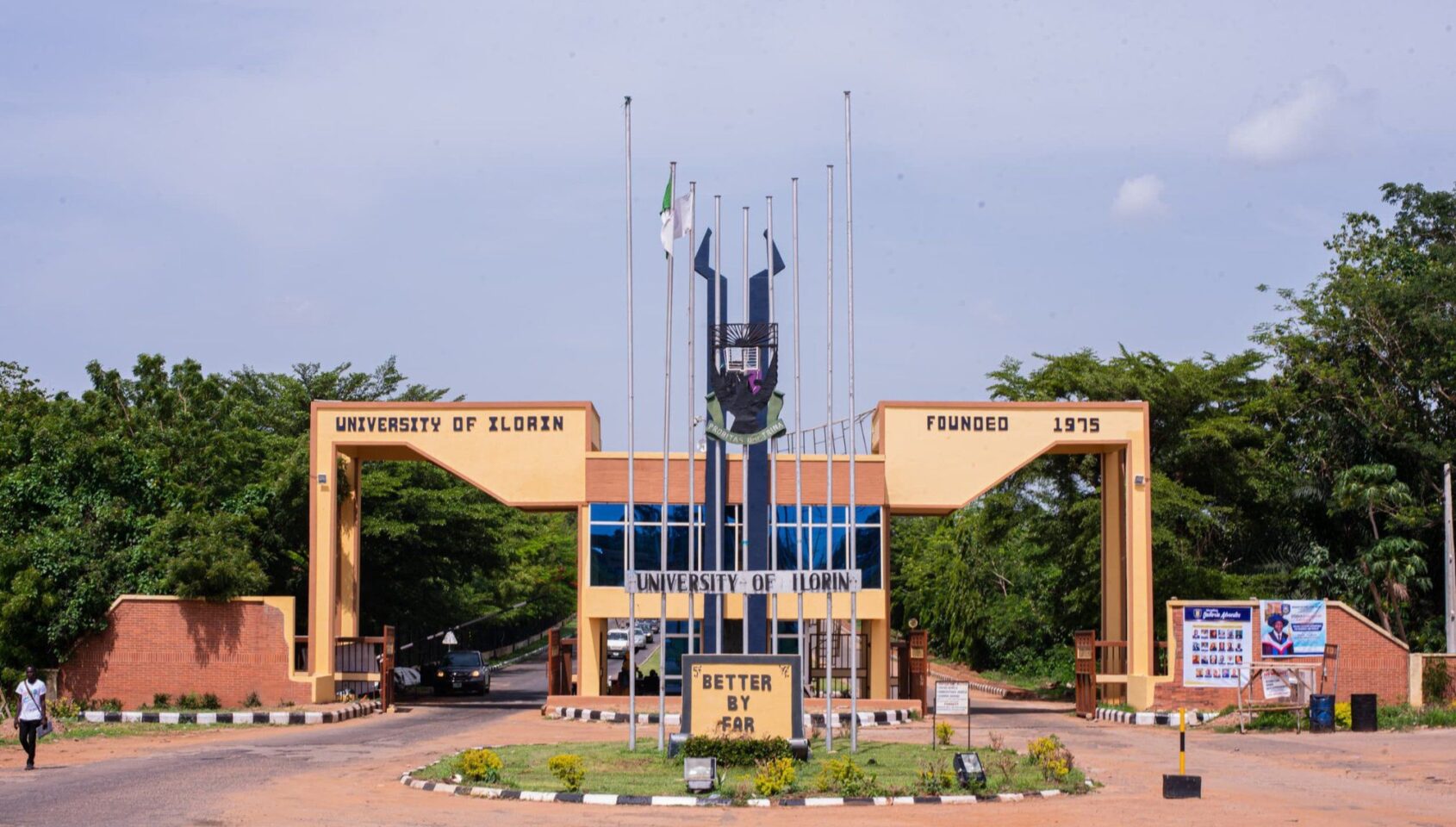
The 14 universities approved for the programme are Ahmadu Bello University, Bayero University Kano, Nnamdi Azikiwe University, Obafemi Awolowo University, University of Abuja, University of Benin, University of Ibadan, University of Ilorin, University of Jos, University of Lagos, University of Maiduguri, University of Nigeria Nsukka, University of Port Harcourt and Usmanu Danfodiyo University.

Council also approved the augmentation of an existing contract for the completion of the National Library of Nigeria headquarters complex in Abuja.

The project was first initiated on April 29, 2006, with an original two-year completion timeline set for February 28, 2008, but construction work stopped in October 2008.

Alausa explained, “President Bola Tinubu, when he came in, mandated that we look for real funds to complete this national library.

“He directed that we source funds from the Tertiary Education Trust Fund. Also, Her Excellency Senator Oluremi Tinubu indicated that all gifts for her last birthday should be directed towards the completion of the National Library. She was able to help us raise about N25bn.”

See also  Meet Nigerian professor appointed dean at Canadian university

He revealed that, combined with TETFund resources, the total augmentation approved for the project stands at approximately N155bn, comprising N118.309bn for construction works and about N37bn for furnishing the complex.

“We’re hoping that construction will flag off in the next few months.

“Abandoned for 18 years, President Bola Tinubu has now been able to mobilise funds together for work to start again at the National Library,” Alausa said.

The council also approved a memo for the establishment of the Academy for Gifted and Talented Children.

The approval transmutes the existing Suleja Academy, originally set up to nurture gifted Nigerian children but which had, over time, been operating merely as a federal government college, into an autonomous institution with its own governing board.

“The academy will now function as an autonomous academy that will have its own board and council. We’ve also diversified how funds will come to the academy from appropriation, from endowment, and from gifts.

“We need to do this because we have to look for every single genius in this country, bring them in, nurture them, and let them help create the Nigeria of tomorrow,” Alausa said, adding that the AGF had been tasked with drafting the executive bill for onward transmission to the National Assembly.

Source: punchng.com

FOLLOW US ON:

FACEBOOK

TWITTER

PINTEREST

TIKTOK

YOUTUBE

LINKEDIN

INSTAGRAM

Continue Reading
Click to comment

Leave a Reply

Your email address will not be published. Required fields are marked *

Education

WAEC results row deepens as police invite official

Published

on

The Nigeria Police Force National Cybercrime Centre has invited a staff member of the West African Examinations Council, Olanrewaju Fadehan, to appear in Abuja on Wednesday over an alleged case of cyberstalking and criminal defamation.

This comes as the Lagos State High Court restrained Fadehan from publishing or circulating alleged defamatory statements concerning the examination body and its Director-General, Dr Amos Dangut.

The police invitation, signed by the Director of the NPF-NCCC, AIG Akaninyene Ezima, directed Fadehan to report to the centre in Abuja at 10 am on Wednesday for an interview over an alleged case of cyberstalking and criminal defamation.

Reacting to the developments, Fadehan said he had received the court papers and was aware of the injunction.

“They’ve even done that already. At least, they sent me a court paper yesterday (Monday). That one is an interim injunction that I should not post anything any longer,” he said.

On the police invitation, he added, “They’re taking me to the cybercrime centre in Abuja. Tomorrow (Wednesday), I’m supposed to appear before them.”

On Monday, Justice Yetunde Adesanya, in an interim order made in Suit No. LD/ADR/6656/2026, restrained Fadehan from “publishing, broadcasting, circulating or disseminating” any “defamatory, maligning and/or injurious falsehood” concerning WAEC, its examinations, results and certificates, or Dangut’s “character and/or integrity.”

The order covers publications in video, audio, written or other formats on any platform, including YouTube and WhatsApp. It is to “abate after seven (7) days” unless renewed by the court.

WAEC and Dangut are seeking N500m general damages for libel, N300m aggravated and exemplary damages and N25m costs, totalling N825m.

See also  Student loan applicants hit one million – NELFUND

They are also seeking an order compelling Fadehan to retract the alleged defamatory publications, issue a public apology and permanently remove them from all platforms.

Fadehan, who is Head of Examinations at WAEC’s office covering Anambra, had, in viral videos, called for a review of the recently released 2026 West African Senior School Certificate Examination results, citing alleged irregularities.

He also made allegations of financial impropriety against the council’s management, including issues concerning the supply of calculators, students’ identification cards and charges imposed on candidates and other service seekers.

Fadehan further alleged that some candidates were not provided with appropriate calculators during the examination, claiming that this contributed to poor performance in Mathematics and other calculation-based subjects.

He subsequently petitioned the WAEC Board, the House of Representatives Committee on Basic Education and Examining Bodies and the Minister of Education, alleging that rather than addressing his complaints, the council subjected him to disciplinary proceedings and placed him on interdiction.

In a separate correspondence to Fadehan, WAEC’s lawyers, Union Attorneys, alleged that he published a series of videos attacking the council and Dangut.

The lawyers referred to publications titled, among others, “Tyranny in WAEC, Nigeria: Dangut must go,” “WAEC: My alleged offence and the overbearing sanctions,” “WAEC’s MND: Petition to ASF, National Assembly and Minister for Education plus appeal,” and “Anomalies in WAEC – Series 1: I won’t wait.”

They further alleged that Fadehan later published another video titled “Dangut is a thief,” describing the publications as containing “inaccurate information and reckless statements.”

The lawyers said the publications continued despite a cease-and-desist letter dated August 24, 2026.

See also  FG releases approved subjects for basic, senior secondary education

In its response to the viral videos, WAEC, through its spokesperson, Moyosola Adesina, accused Fadehan of spreading falsehoods and sensational materials to spite the council.

The council alleged that Fadehan was involved with some staff in the misappropriation and attempted cover-up of hundreds of litres of diesel from its underground tank at the Awka office.

WAEC said Fadehan, following a four-week suspension, began making unsubstantiated allegations against the council under the guise of whistleblowing.

“It is important to also note that Mr Fadehan is still a staff member of the council and his employment has not been determined.

“He has published that his employment has been determined while continuing to earn salaries from the council. His allegations have been investigated at various levels and found to be false. He has been spreading falsehoods and sensational materials to spite the council,” WAEC stated.

However, speaking with The PUNCH on Tuesday, Fadehan disputed the allegations arising from the fuel shortage controversy, saying an internal panel found that nobody stole fuel and that the shortage resulted from leakage.

“The panel resolved that nobody stole anything,” he said.

Fadehan said the fuel controversy was separate from the matter for which he was currently on interdiction, insisting that the latter arose from allegations of defamation.

“So, it was based on the issue of defamation now that I was put on interdiction. It has nothing to do with fuel.

“The fuel issue is gone. The issue of fuel is being brought up when I raised the issue of a calculator that was not given to the candidate. He now set up a panel for me. The same Dangut set up a panel for me, and the query of that panel reads that I defamed him,” he said.

See also  APC seeks cancellation of Kano by-elections over violence

He denied being bitter over the sanctions imposed on him by WAEC, saying he had appealed against them.

“I’m not bitter. I’ve appealed what they did. So I’m not bitter,” he said.

The PUNCH reports that Fadehan made allegations against the examination body in a now viral video, claiming that candidates who sat the computer-based version of the examination were particularly affected.

Fadehan alleged that the problems were noticeable around the release of the results, which he said was initially expected to be announced between August 3 and 5, 2026, adding that WAEC had traditionally released results on Mondays.

He further alleged that rather than addressing his complaints, he was subjected to disciplinary proceedings and subsequently placed on interdiction.

Source: punchng.com

FOLLOW US ON:

FACEBOOK

TWITTER

PINTEREST

TIKTOK

YOUTUBE

LINKEDIN

INSTAGRAM

Continue Reading

Education

‘N355.9bn NELFUND loans face recovery risk’

Published

on

The Federal Government has been urged to integrate the Nigeria Education Loan Fund with Nigeria Revenue Service income data to strengthen student loan recovery.

The recommendation was contained in a policy brief released on Monday by a Nigerian higher education policy think tank, The iRead To Live Initiative.

Since its portal launch in May 2024, it has disbursed a total of N355.87bn in student loans as of September 2026.

The brief titled “Can NELFUND Sustain Itself? Financing Nigeria’s Student Loan Scheme,” warned that the N355.87bn disbursed by NELFUND to about 850,000 beneficiaries could be difficult to recover under the existing repayment architecture.

The think tank argued that Nigeria had roughly 18 months to strengthen the loan recovery infrastructure before beneficiaries who complete the mandatory two-year post-National Youth Service Corps grace period become subject to enforcement.

It recommended the integration of NELFUND with Nigeria Revenue Service income data to enable the government to track and recover loans from self-employed graduates and other borrowers outside formal employer payroll systems.

The initiative said relying principally on employer-based deductions was inadequate in an economy with a large informal workforce.

According to the brief, “The scheme’s ability to recover the disbursed loans remains untested and structurally at risk, raising the same question that sank Nigeria’s three previous student loan attempts. What happens when repayment comes due, and the borrowers cannot be found?

“The central recommendation is straightforward: use the roughly 18 months before the first cohort’s enforcement window opens to integrate NELFUND with Nigeria Revenue Service income data, extending recovery capacity to self-employed graduates rather than relying on employer withholding alone.”

See also  Meet Nigerian professor appointed dean at Canadian university

The think tank warned that without such reforms, the student loan scheme could face the same sustainability problems that undermined Nigeria’s previous attempts at student financing.

“Nigeria has tried student loans three times before. Each one collapsed because loans went out faster than the government could ever recover them,” it said.

It, however, stressed that NELFUND’s performance could not yet be judged by the same standard because no beneficiary cohort had reached the repayment stage.

“No cohort has yet reached the repayment window,” the brief noted, adding that the real test of the scheme would come when repayments begin.

The think tank said the existing repayment framework assumed the availability of formal payroll employment, which it described as a major weakness given Nigeria’s high level of informality.

It noted that employer withholding under Section 28(4) of the Students Loans (Access to Higher Education) Act, 2024, could not adequately capture graduates who are self-employed, underemployed or working outside the formal sector.

The brief stated that the employer-notification provision “is not automatic in the way payroll withholding through a tax authority is, and it does nothing for the self-employed majority Section 28(4) also depends on.”

It cited international experience to buttress its recommendation, noting that Kenya’s Higher Education Loans Board had integrated its recovery system with the Kenya Revenue Authority and credit bureaus, yet 32.5 per cent of its loan portfolio was reportedly in default as of June 2025.

The initiative said the Kenyan experience showed that even tax-authority integration could not eliminate recovery challenges in economies with widespread informality.

See also  Tinubu sends 2026–2028 fiscal framework to Reps

“NELFUND sits closer to grant-like systems than to the tax-integrated models that have achieved the highest recovery rates elsewhere,” the brief said.

It added that NELFUND lacked even the tax-authority integration available in Kenya, despite Nigeria having a significant informal labour market.

The think tank also urged the National Assembly to clarify the status of interest on NELFUND loans, citing an apparent inconsistency in the 2024 Act.

It noted that while the loans had been publicly presented as interest-free, Section 17(1)(c) of the Act lists “repayment of capital and interest” among the Fund’s revenue sources.

According to the brief, the discrepancy “could expose the scheme to legal challenge from borrowers who relied on its public marketing.”

The think tank noted that the future of the student loan scheme would be determined by decisions taken before repayments begin, rather than by the amount already disbursed.

“Whether Nigeria breaks its decades-long pattern of failed student loan schemes will be decided by choices made now, not by the scale of what has already been disbursed,” the brief stated.

Source: punchng.com

FOLLOW US ON:
FACEBOOK

TWITTER

PINTEREST

TIKTOK

YOUTUBE

LINKEDIN

INSTAGRAM

Continue Reading

Education

Meet Nigerian professor appointed dean at Canadian university

Published

on

Nigerian-born law professor, Dr. Ibironke Odumosu-Ayanu, has been appointed dean of the College of Law at the University of Saskatchewan, Canada, for a five-year term beginning October 1, 2026.

Odumosu-Ayanu, who is currently the college’s associate dean of research and graduate studies, has been a member of the University of Saskatchewan College of Law since 2008.

The university announced her appointment on Tuesday, September 1, through a statement on its website by Patti McDougall, interim provost and vice-president, academic and chair of the search committee for the new dean.

“Dr. Odumosu-Ayanu’s appointment as dean reflects a distinguished record of academic excellence, collaborative leadership, and dedication to advancing research and graduate education,” McDougall stated.

“Her work as dean will continue to build on the College of Law’s strong reputation for excellence in legal education and research, while strengthening its leadership in Indigenous legal scholarship and engagement with local and global communities.”

Odumosu-Ayanu will succeed Martin Phillipson, who completed two five-year terms as dean and began administrative leave on July 1.

From Lagos to Canada

According to an article on the college website, Odumosu-Ayanu grew up in Lagos, Nigeria, where she developed an early interest in reading and writing.

Although she initially considered pursuing communications, encouragement from her teachers and support from her parents led her towards law.

By the end of secondary school, she had decided to study law and enrolled at the University of Lagos, where she earned her Bachelor of Laws degree.

She later moved to Canada to pursue a master’s degree at the University of Calgary, drawn by its research strengths in natural resources, energy and environmental law.

See also  FG releases approved subjects for basic, senior secondary education

“Since I started law school, I always knew that I wanted to do a master’s and to do one abroad. But I always thought I would go to England.”

She had initially planned to return to Nigeria after completing her master’s degree and work as a lawyer. Instead, she continued her academic journey by pursuing a PhD at the University of British Columbia.

She said she had not initially intended to pursue a doctorate.


After completing her PhD, Odumosu-Ayanu began considering a career in academia and interviewed for academic positions.

She moved to Saskatchewan in 2008 to join the College of Law. A mentor at the University of British Columbia who grew up in Saskatoon had advised her to prepare for the Canadian winter.

Source: punchng.com

FOLLOW US ON:

FACEBOOK

TWITTER

PINTEREST

TIKTOK

YOUTUBE

LINKEDIN

INSTAGRAM

Continue Reading

Trending