Connect with us

Education

UUTH resident doctors join nationwide strike

Published

on

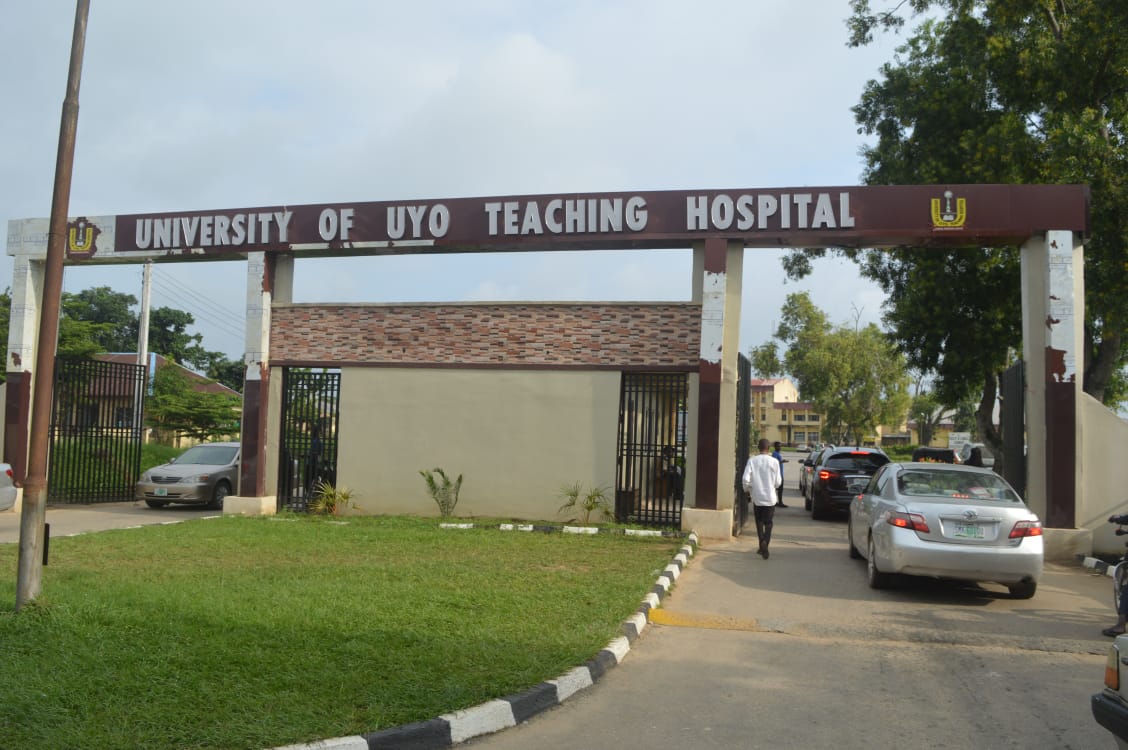
The Association of Resident Doctors, University of Uyo Teaching Hospital, has resolved to join the nationwide strike declared by the National Association of Resident Doctors on Monday, January 12, 2026.

The decision was contained in a communiqué issued after an emergency general meeting of the association held in Uyo, Akwa Ibom State, on Thursday.

The communiqué, endorsed by its President, Dr Ekomobong Udoh, and General Secretary, Dr Kenneth Ikott, and made available to our correspondent in Uyo on Friday, said the centre would undertake a peaceful protest by 9am on Monday within the UUTH premises, in total compliance with the directive of NARD.

It read in part, “Members of the congress gathered for an emergency general meeting to discuss the resolutions issued by the NARD Extra-Ordinary NEC virtual meeting held on Saturday, January 2, 2026. After thorough deliberation and discussion on the resolutions of NARD, the meeting, chaired by the President, resolved as follows.

“The centre fully supports the implementation of the NARD NEC meeting resolutions. The congress immediately agreed to participate in the NARD TIC 2.0 from 12 noon on Monday, in line with the NEC directive, and will undertake a peaceful protest by 9am on Monday within the UUTH premises.”

Udoh said the proposed industrial action followed the failure of the Federal Government to fully implement the Memorandum of Understanding signed with resident doctors in November 2025.

According to him, the strike, tagged TICS (Total, Indefinite and Comprehensive Strike) 2.0, with the slogan, “No Implementation, No Going Back”, would only be suspended after the full implementation of the minimum demands.

See also  OAU has fulfilled founding fathers’ vision, says TETFund boss

He listed the demands to include the reinstatement of the FTH Lokoja Five, payment of promotion and salary arrears, full implementation of the professional allowance table with arrears captured in the 2026 budget, and official clarification on skipping and entry-level issues by the Federal Ministry of Health and circulars to chief executives.

Other demands include the reintroduction and implementation of the Specialist Allowance, resolution of house officers’ salary delays and arrears, including the issuance of a pay advisory, recategorisation of membership certificates, and issuance of certificates after Part I by the NPMCN, commencement of locum and work-hours regulation committees, and resumption and timely conclusion of the Collective Bargaining Agreement process.

punch.ng

FOLLOW US ON:

FACEBOOK

TWITTER

PINTEREST

TIKTOK

YOUTUBE

LINKEDIN

TUMBLR

INSTAGRAM

Continue Reading
Click to comment

Leave a Reply

Your email address will not be published. Required fields are marked *

Education

CBT best way to curb ‘miracle centres’, examination malpractice — WAEC official

Published

on

The West African Examination Council, has called for “strict computer-based testing to curb examination malpractice in some centres,” popularly known as “miracle centres.”

An official with WAEC office in Makurdi, Timothy Manga gave the advice in an interview with the News Agency of Nigeria, on the growing concerns over examination malpractice and its impact on the credibility of public examinations and educational certificates.

NAN on Monday reported that Manga said allegations of the existence of “miracle” examination centres in Benue had become worrisome, though there had not been any official confirmation of the existence of such centres in the state.

In Nigerian education context, PUNCH Online reports that a “miracle centre” is an examination centre where organised examination malpractice is allegedly facilitated, allowing candidates to obtain unauthorised assistance or answers during exams.

He described the development as a threat to the education system, saying schools should be known for quality teaching rather than their ability to facilitate examination malpractice.

“Any system that rewards students for cheating undermines those who have worked hard to prepare for examinations.

“We need an examination system where success is determined by knowledge, preparation, and competence, not by the ability to access assistance during examinations.

” Though WAEC has not gotten any information on any school being a “miracle centre”, we would continue to put our ears to the ground in case we hear of any that we can set an example with,” he said.

Mrs Rebecca Ezekiel, a teacher with NKST Secondary School Makurd, however, said the establishment of independent examination centres could reduce the influence of schools and teachers over examinations such as WAEC and the National Examination Council (NECO).

Ezekiel said the CBT would enable examination bodies to exercise greater control over examination venues, personnel, and security arrangements.

See also  Shun cultism, hooliganism, Babcock varsity VC urges new students

“Candidates should be examined under conditions that are independent of the schools where they receive instructions,” she said.

The teacher also recommended the deployment of biometric verification, Closed-Circuit Television (CCTV) cameras, and other technologies to strengthen examination monitoring.

However, Mr Jude Odeh, a school proprietor in Otukpo Local Government Area (LGA), said admitting sudents in final year in secondary schools did not qualify a school to be labelled as a “miracle” examination centre.

Odeh said he had heard allegations about the existence of such centres in the state but was yet to identify any specific school operating as a miracle examination centre.

He said some parents changed their children’s schools for various reasons such as the high cost of examination registration, school fees, and others.

According to him, some schools charge examination fees arbitrarily, and when combined with school fees, the total cost becomes too high for some parents to bear.

Odeh, however, said he knew some schools in Benue that did not admit new students into SS3, insisting that only students promoted from SS2 were registered for external examinations.
(NAN)

Source: punchng.com

FOLLOW US ON:

FACEBOOK

TWITTER

PINTEREST

TIKTOK

YOUTUBE

LINKEDIN

INSTAGRAM

Continue Reading

Education

Lagos law student dies after jumping from four-storey building

Published

on

The Lagos State Police Command has confirmed the death of a 23-year-old student of the Nigerian Law School, Faith Alayande, who reportedly died after allegedly jumping from the rooftop of a four-storey hostel building at the institution’s campus in Victoria Island, Lagos.

PUNCH Metro learnt in a telephone conversation with the command’s Public Relations Officer, Abimbola Adebisi, that the incident was reported to the police after the deceased was found unresponsive in the hostel premises on Friday.

Adebisi noted that the matron of the institution reported the matter and disclosed that another student and a relative reportedly found a suicide note written by the deceased student, prompting them to search for her.

She noted that before they could locate her, she had allegedly jumped from the rooftop of the four-storey hostel building.

She said, “I can confirm the incident. The deceased reportedly wrote a suicide note and, before her hostel mate and a relative could locate her, she jumped from the rooftop of a four-storey building.

“The matron of the hostel reported the incident, prompting police operatives to visit the scene. Her body has been evacuated to a morgue for preservation.”

Also, a security analyst, Zagazola Makama, who shared details about the incident on X, disclosed that the deceased was found dead within the hostel premises on Friday by another student, who alerted the matron of the institution.

According to Makama, the Chief Matron of the Law School was said to have reported the incident at the Victoria Island Police Division at about 6:30am.

Makama noted that, upon receiving the report, the matron proceeded to the scene, where the deceased was found lying on the ground within the hostel premises.

See also  FG scholars abroad stage protest over unpaid allowances

Makama wrote, “A 23-year-old student of the Nigerian Law School has died in a suspected suicide incident at the school’s hostel in Victoria Island, Lagos.

“The incident occurred in the early hours of Friday, August 7, 2026, when the deceased, identified as Alayande Faith Ajoke, was found dead within the hostel premises.

“The Chief Matron of the Law School, Mrs Igbokwe Juliana, reported the incident at about 6:30am. Preliminary observations indicated that the deceased may have jumped from the rooftop of the four-storey hostel building.”

Meanwhile, the PPRO concluded that an investigation was ongoing into the incident.

This is not the first reported case of a Nigerian Law School student dying by suicide.

PUNCH Metro reported in December 2025 that a Nigerian Law School student, Ayomiposi Ojajuni, reportedly died by suicide after he was allegedly barred from writing the Bar Final examinations at the Yola campus in Adamawa State.

Ojajuni, a graduate of Olabisi Onabanjo University, was said to have received a series of queries from the school authorities and later discovered that he would not be allowed to sit for the professional examinations.

Source: punchng.com

FOLLOW US ON:

FACEBOOK

TWITTER

PINTEREST

TIKTOK

YOUTUBE

LINKEDIN

INSTAGRAM

Continue Reading

Education

Canada updates Visa processing times for Nigerians as study permit wait rises

Published

on

Nigerians applying to study or travel to Canada are facing longer estimated processing times following the latest temporary residence update released by Immigration, Refugees and Citizenship Canada (IRCC).

The immigration department updated its processing-time estimates on August 5, 2026, with the latest figures showing increases across several temporary residence categories. For Nigerian applicants, the estimated processing time for study permits increased from six weeks to seven weeks between July 28 and August 5.

The wait for Canadian visitor visas also increased, rising from 64 days to 68 days. However, the estimated processing time for Nigerians applying for a work permit remained unchanged at seven weeks. There was also a slight increase in the estimated processing time for super visa applications from Nigeria, which rose from 41 days to 43 days.

With these latest figures, Nigerian applicants should now expect an estimated wait of seven weeks for a work permit, seven weeks for a study permit, 68 days for a visitor visa, and 43 days for a super visa.

The changes in Canada’s latest update were not limited to Nigerian applicants. Work permit processing for applicants from Pakistan recorded one of the biggest increases, jumping from 11 weeks to 25 weeks, a rise of 14 weeks.

Study permit processing for applicants from the Philippines also increased by one week, while super visa processing for applicants from the Philippines rose from 73 days to 100 days. Some applicants, however, saw their estimated waiting periods fall.

The biggest reduction among the featured categories was recorded for super visa applications from Pakistan, which dropped from 196 days to 185 days.

See also  PHOTOS: I failed ICAN before qualifying at 16, says Nigeria’s youngest chartered accountant

IRCC’s processing times are estimates and do not represent a guaranteed date for when an application will be completed. The actual time required to process an application can vary depending on factors such as the complexity of the case, the volume of applications awaiting processing, available resources, and whether immigration officials require additional information or documents.

The Canadian immigration department updates temporary residence processing times weekly, meaning the estimates for Nigerian applicants could change again in the next update, which is expected around August 12, 2026.

FOLLOW US ON:

FACEBOOK

TWITTER

PINTEREST

TIKTOK

YOUTUBE

LINKEDIN

INSTAGRAM

Continue Reading

Trending