FOLLOW US ON:
Crime
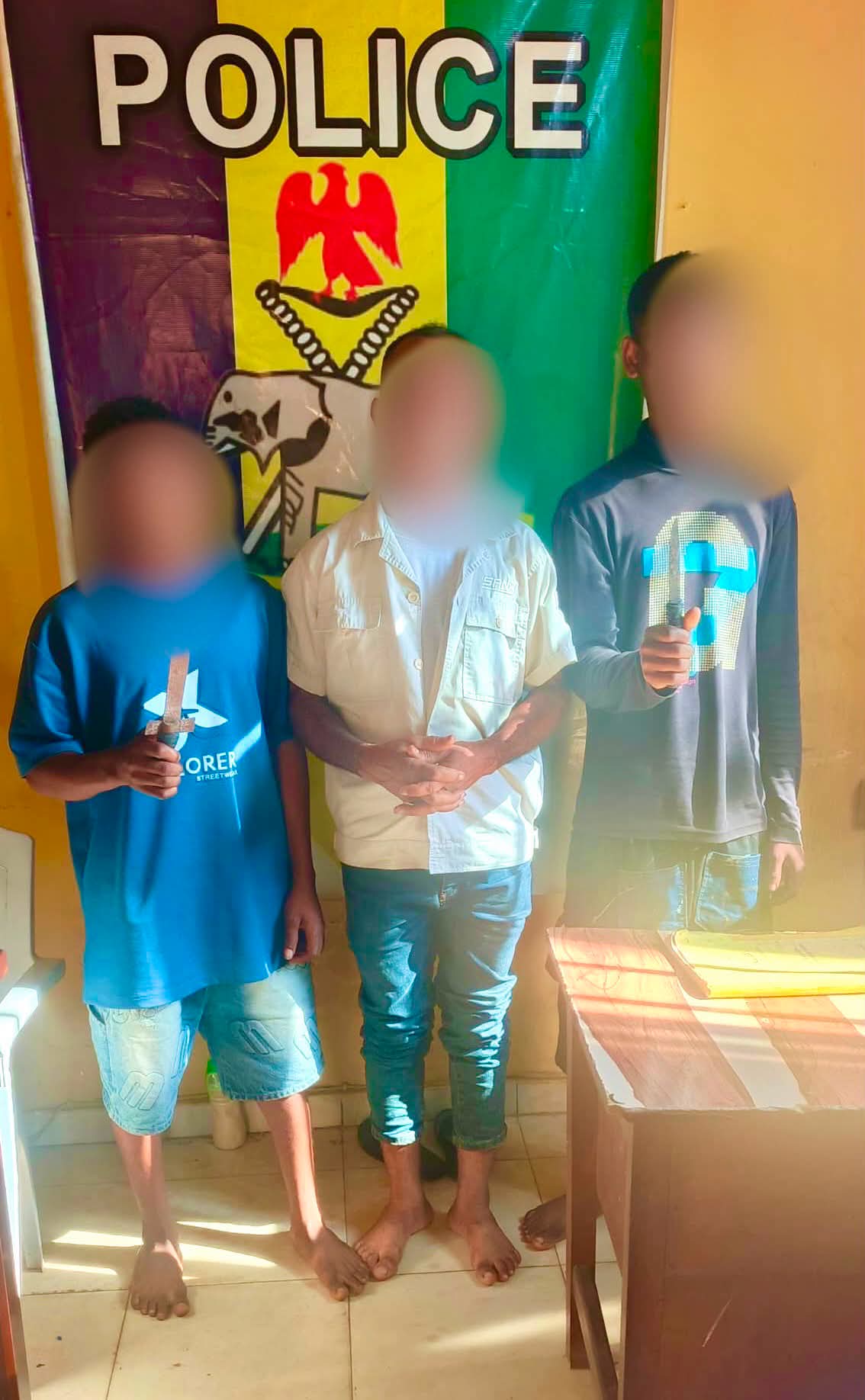
PHOTOS: Ghana arrests 53 Nigerians in large-scale cybercrime operation; laptops and guns recovered

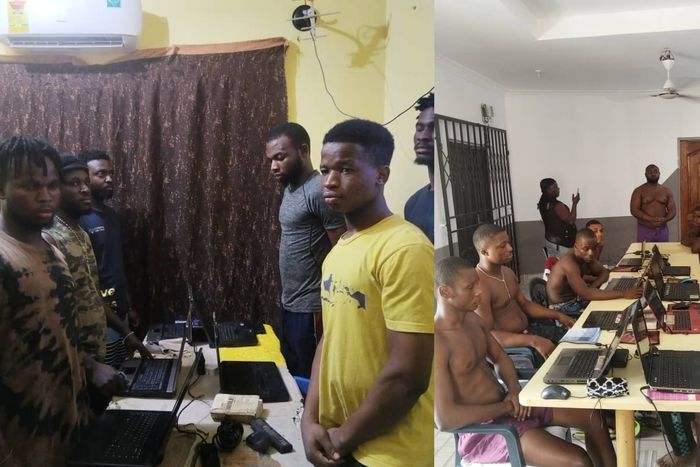
Ghanaian authorities have arrested 53 Nigerian nationals for alleged engagemwnt in cybercrims.
The arrests were made in a sweeping intelligence-driven operation targeting suspected cybercrime hubs across several communities in the Greater Accra Region.
Ghana’s Minister for Communications, Digital Technology and Innovation, Samuel Nartey George, said Sunday, Jan. 18, that the action was part of efforts to safeguard the country’s cyber space and protect its international digital reputation.
According to the minister, intelligence gathered within the last 48 hours by the Cyber Security Authority (CSA) uncovered multiple locations allegedly being used for coordinated cybercrime activities in East Legon Hills, Afienya, Kwabenya, Weija and Tuba.
The intelligence reportedly revealed that several young men, mostly foreign nationals, were being coerced and exploited by suspected ringleaders to carry out cyber-related crimes from these locations.
Acting on the information, a joint security task force comprising operatives from National Security Operations, the CSA, the Criminal Investigations Department (CID) Headquarters and the Ghana Police Service SWAT Unit carried out simultaneous raids on January 16 and 17, 2026.Entertainment center
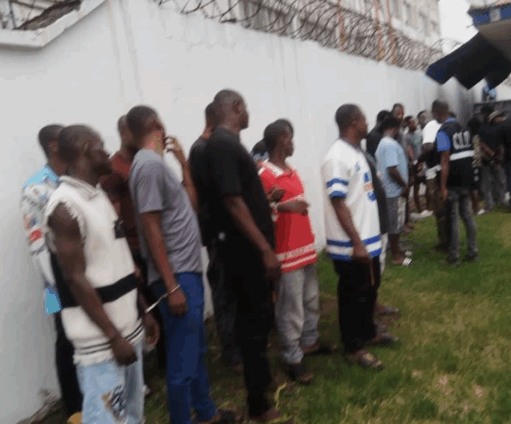
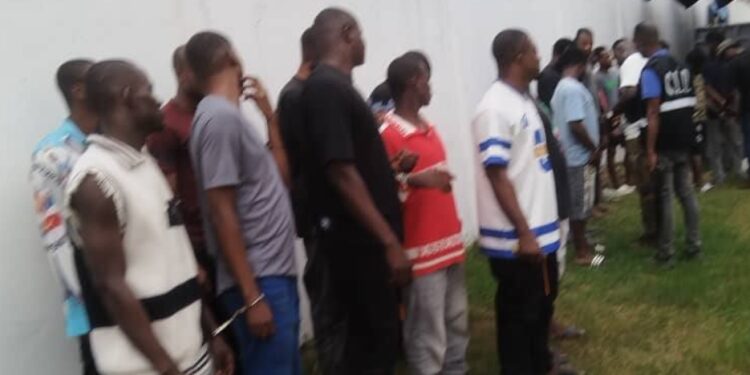
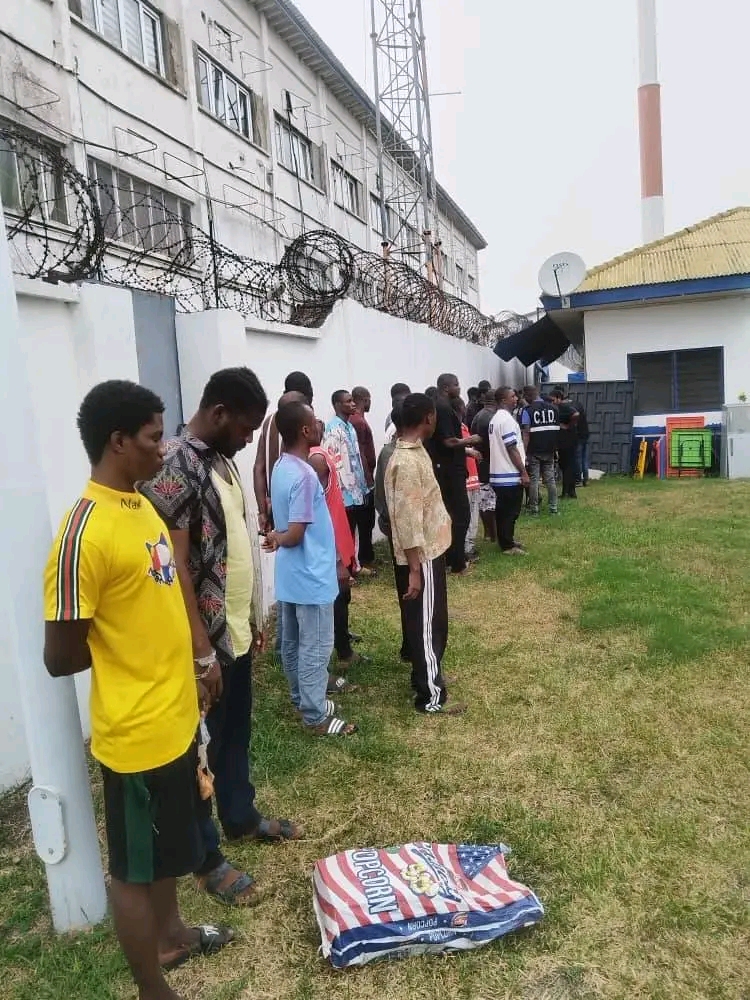
During the operation, nine Nigerians were arrested as key suspects allegedly involved in organising and coordinating the cybercrime network.
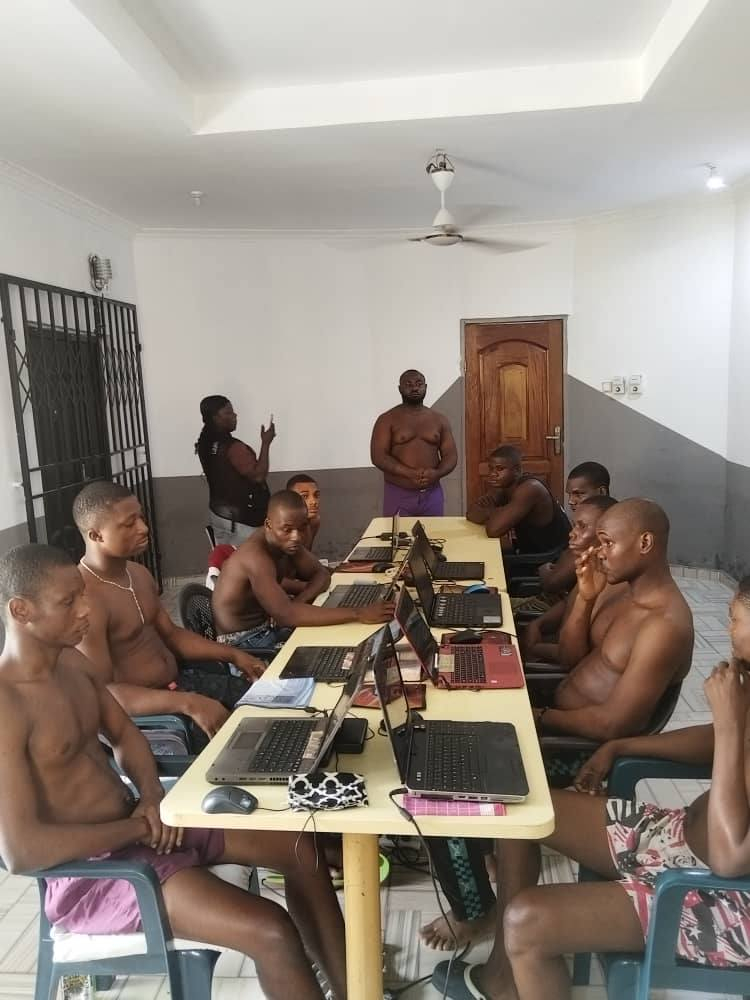
Another 44 Nigerians were rescued from various apartments and are believed to be victims of human trafficking and cybercrime exploitation.
Ghana arrests 53 Nigerians in large-scale cybercrime operation; laptops and guns recovered
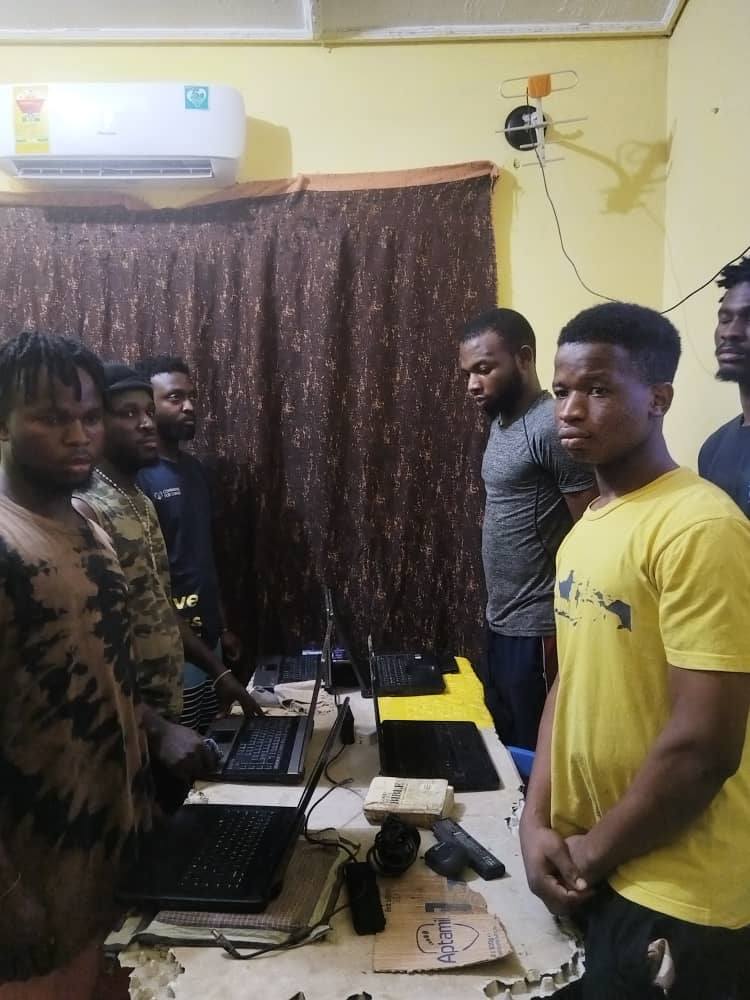
The minister disclosed that the rescued individuals were found operating laptops in multiple apartments, pointing to what authorities described as a well-structured and organised cybercrime syndicate.
Searches conducted at the locations led to the recovery of several items suspected to have been used in carrying out cyber offences, including 62 laptops, 52 mobile phones and two pump-action guns.
A location-by-location breakdown showed that five suspects were arrested in East Legon Hills, 11 in Afienya, 10 in Kwabenya, 10 in Weija and 17 in Tuba, bringing the total number of Nigerians apprehended to 53.
“All the arrested individuals have been duly profiled and handed over to the Ghana Immigration Service for safekeeping and further investigations,” George said.
He cautioned foreign nationals against falling for false promises of jobs or quick financial gains, urging them to verify claims made by people who lure them into Ghana under dubious pretences.
The minister added that suspects arrested in previous operations had been profiled by the Ghana Immigration Service in collaboration with INTERPOL, with some already handed over to Nigerian authorities at the Seme border, while others are facing prosecution in Ghana.
“Protecting Ghana’s cyber image internationally is non-negotiable,” George stated, commending the CSA and partnering law enforcement agencies for the successful operation.

Continue Reading

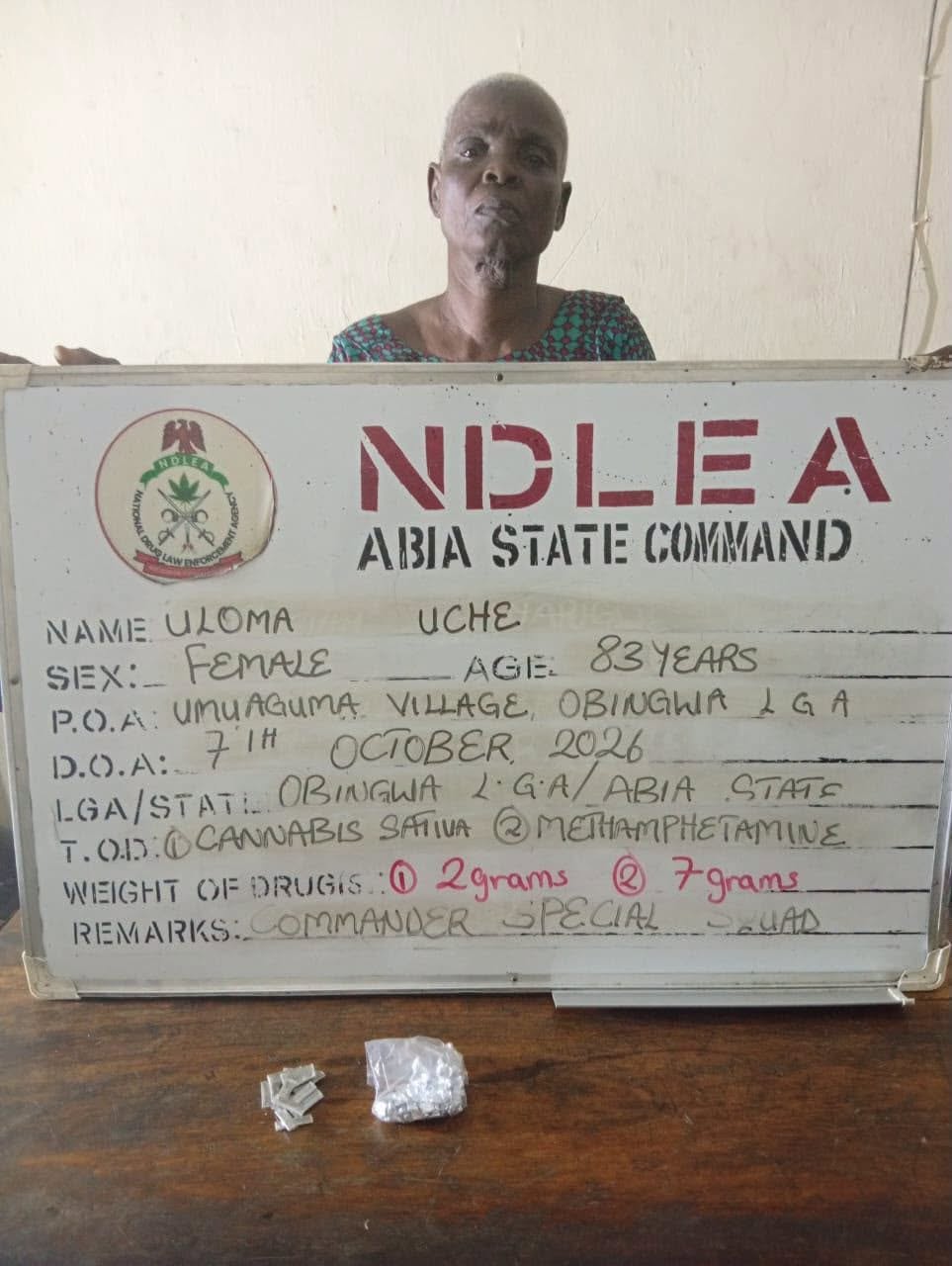
The National Drug Law Enforcement Agency (NDLEA), has rearrested an 83-year-old woman, Uloma Uchechi Sunday for alleged drug trafficking, barely a year after she was convicted for a similar offence.
The octogenarian was arrested on Wednesday, October 7, at her residence in Ite-Uzo, Umuaguma, Obingwa Local Government Area of Abia State, with quantities of methamphetamine and Colorado, a synthetic cannabinoid, allegedly tied around her waist with a wrapper.
According to the NDLEA, her arrest followed intelligence reports indicating that she operated a drug joint where criminal elements allegedly gathered.
The agency said Uloma was first arrested on May 17, 2025, alongside her 32-year-old daughter, Chisom Uchechi, at the same residence. See here
The two women were found with 50 grammes of methamphetamine, 522 grammes of skunk, 260 grammes of fresh cannabis leaves and 12 grammes of tramadol.
They pleaded guilty and were sentenced to 12 months’ imprisonment or a fine of N200,000 each. They opted to pay the fines and were released.
NDLEA spokesperson Femi Babafemi said the latest arrest was among a series of operations conducted by NDLEA operatives across several states, resulting in the seizure of large consignments of illicit drugs, the arrest of suspected traffickers and the recovery of firearms and ammunition in Plateau State.
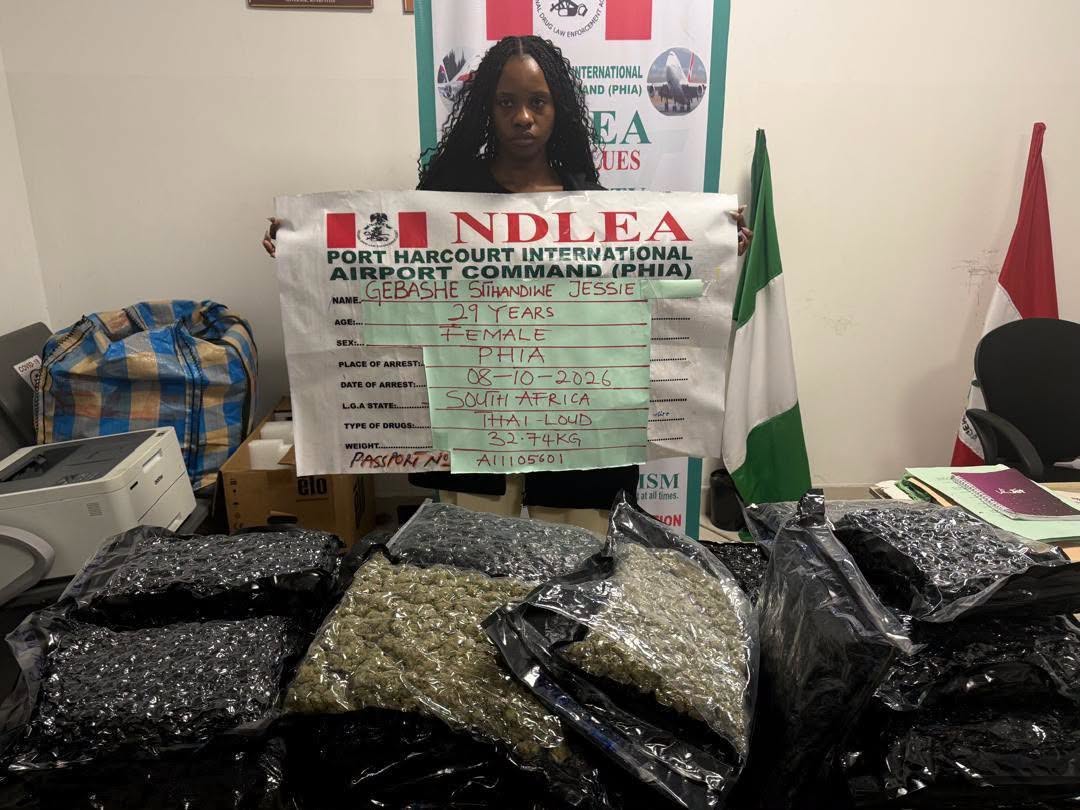
In a related operation, operatives at the Port Harcourt International Airport, Omagwa, Rivers State, arrested a South African national, Gebashe Sithandiwe Jessie, over the alleged importation of 32.74 kilogrammes of Thai Loud, a potent cannabis strain.
The suspect was intercepted with 30 parcels of the substance concealed in two travelling bags after arriving from Thailand through Doha aboard a Qatar Airways flight.
The NDLEA said she admitted to previously trafficking drugs through other African countries and attempting to expand her operations to Port Harcourt.
354,000 Tapentadol Tablets Intercepted In Lagos
At the Murtala Muhammed International Airport, Ikeja, Lagos, NDLEA operatives intercepted 354,000 tablets of Tapentadol, each weighing 250mg, in a shipment from Pakistan.
The consignment, weighing 307.20 kilogrammes, arrived aboard a Royal Air Maroc flight on September 29 and was placed under surveillance.
A joint examination of the nine cartons on October 6 uncovered the pharmaceutical drugs.
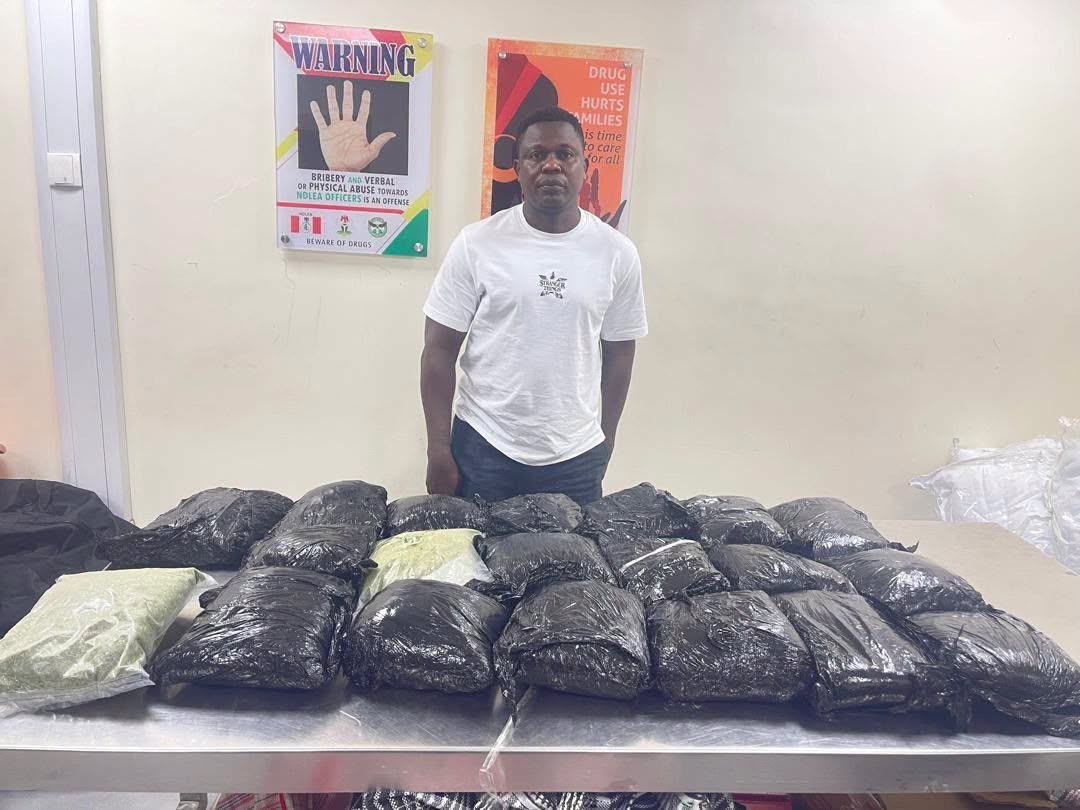
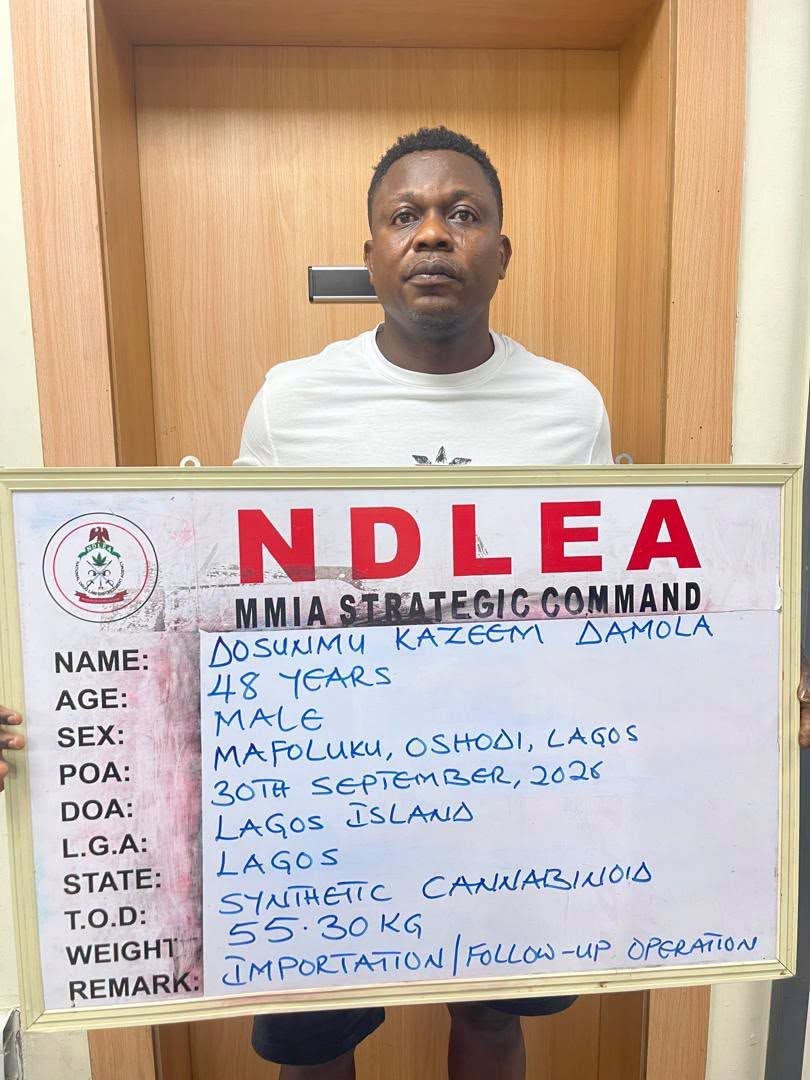
In another operation at the Lagos airport, operatives intercepted 70 parcels of Colorado weighing 75.90 kilogrammes in six Ghana-Must-Go bags contained in a consolidated cargo shipment from the United Kingdom.
The shipment arrived on September 29, after which the agency began monitoring the consignment.
A clearing agent, John Edrah, 54, was arrested on September 30. Other suspects subsequently arrested were Taofiq Ajibola, 54, an Uber driver; Adetunji Adebayo; and Kazeem Damola Dosunmu, 48, a clothing trader.
According to the NDLEA, Ajibola was arrested while attempting to collect one of the bags at a logistics company in the Mafoluku area of Oshodi, while Adebayo and Dosunmu were apprehended when they arrived to collect the remaining five bags.
The agency said Ajibola identified a UK-based associate, Lukman Sa’idu, as the sender of his consignment, while Dosunmu attributed his own shipment to another UK-based individual identified as Yusuf.
Over Two Tonnes of Cannabis Seized in Cross River, Edo, Ondo
In Cross River State, NDLEA operatives, acting on intelligence, raided Iyala Nkun village in Ikom Local Government Area on Sunday, October 4, arresting a 46-year-old suspect, Adama Inuwa.
The operation led to the recovery of 181 bags of cannabis weighing 1,100 kilogrammes and 17.15 kilogrammes of cannabis seeds.
In Edo State, operatives intercepted a black Toyota Camry at Otuo, Owan East Local Government Area, on October 5.
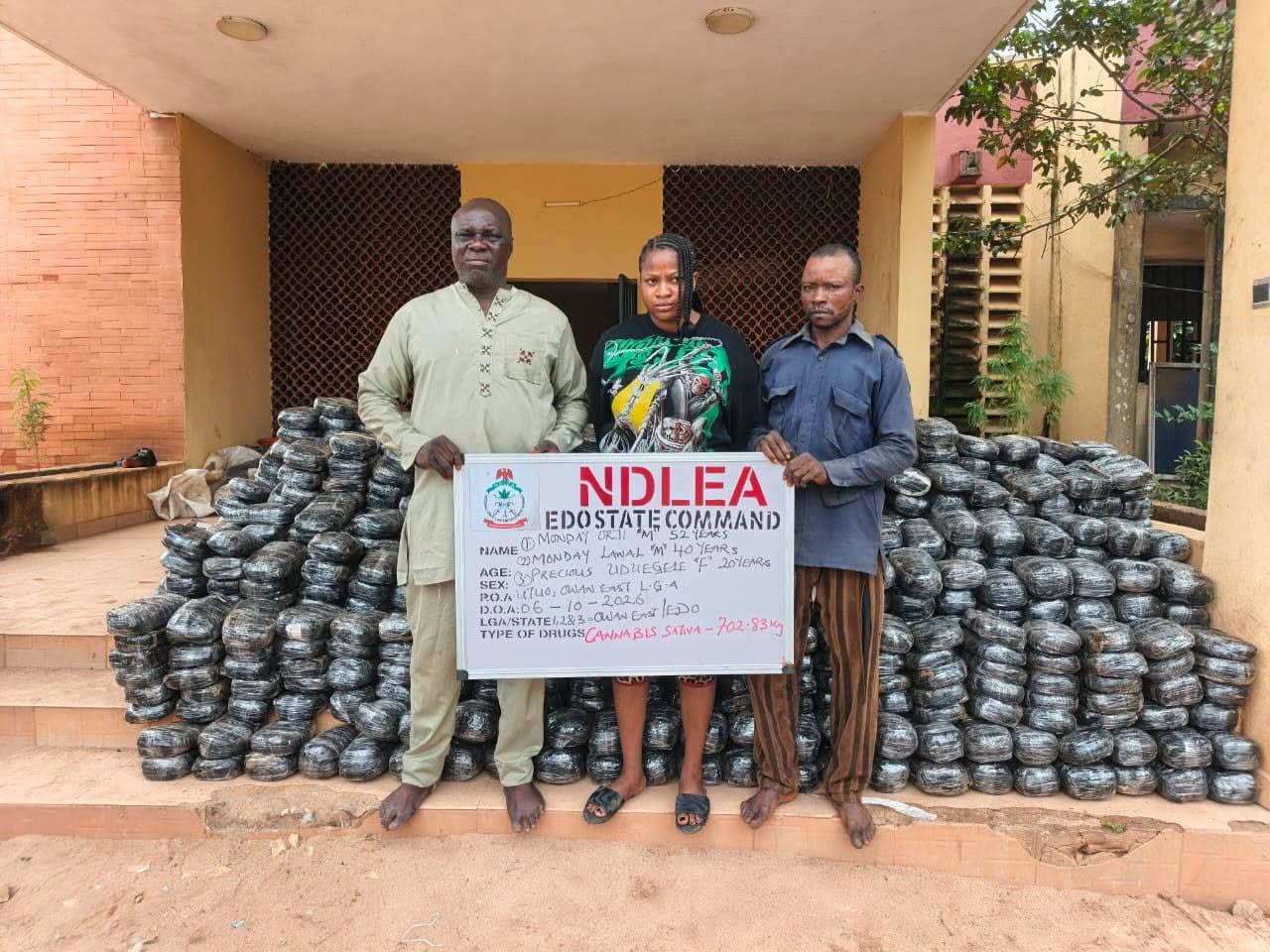
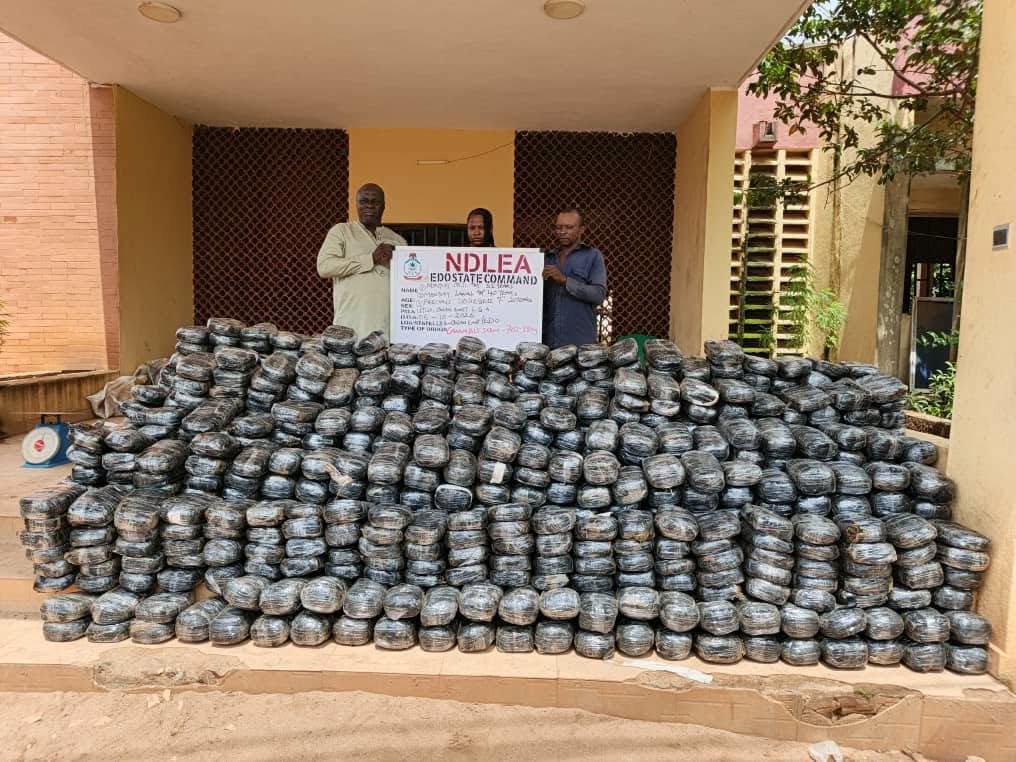
The vehicle was allegedly conveying 1,049 blocks of compressed cannabis weighing 702.83 kilogrammes.
Three suspects — Monday Orji, 52; Monday Lawal, 40; and Precious Uduegele, 20 — were arrested in connection with the seizure.
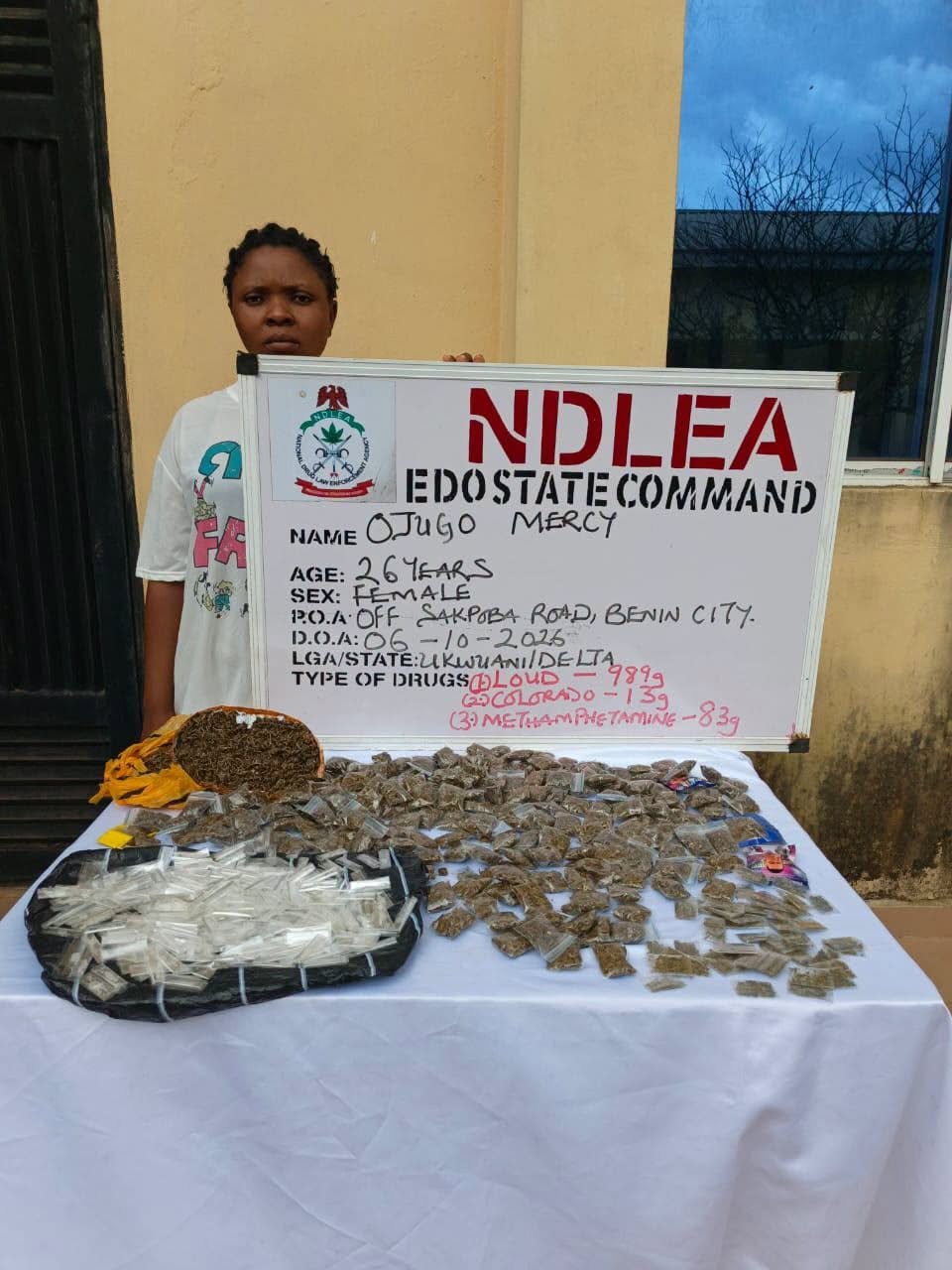
In a separate operation in Benin City, operatives arrested Ojugo Mercy, 26, at Asoro, off Sakponba Road, with 989 grammes of Loud, 13 grammes of Colorado and 83 grammes of methamphetamine.
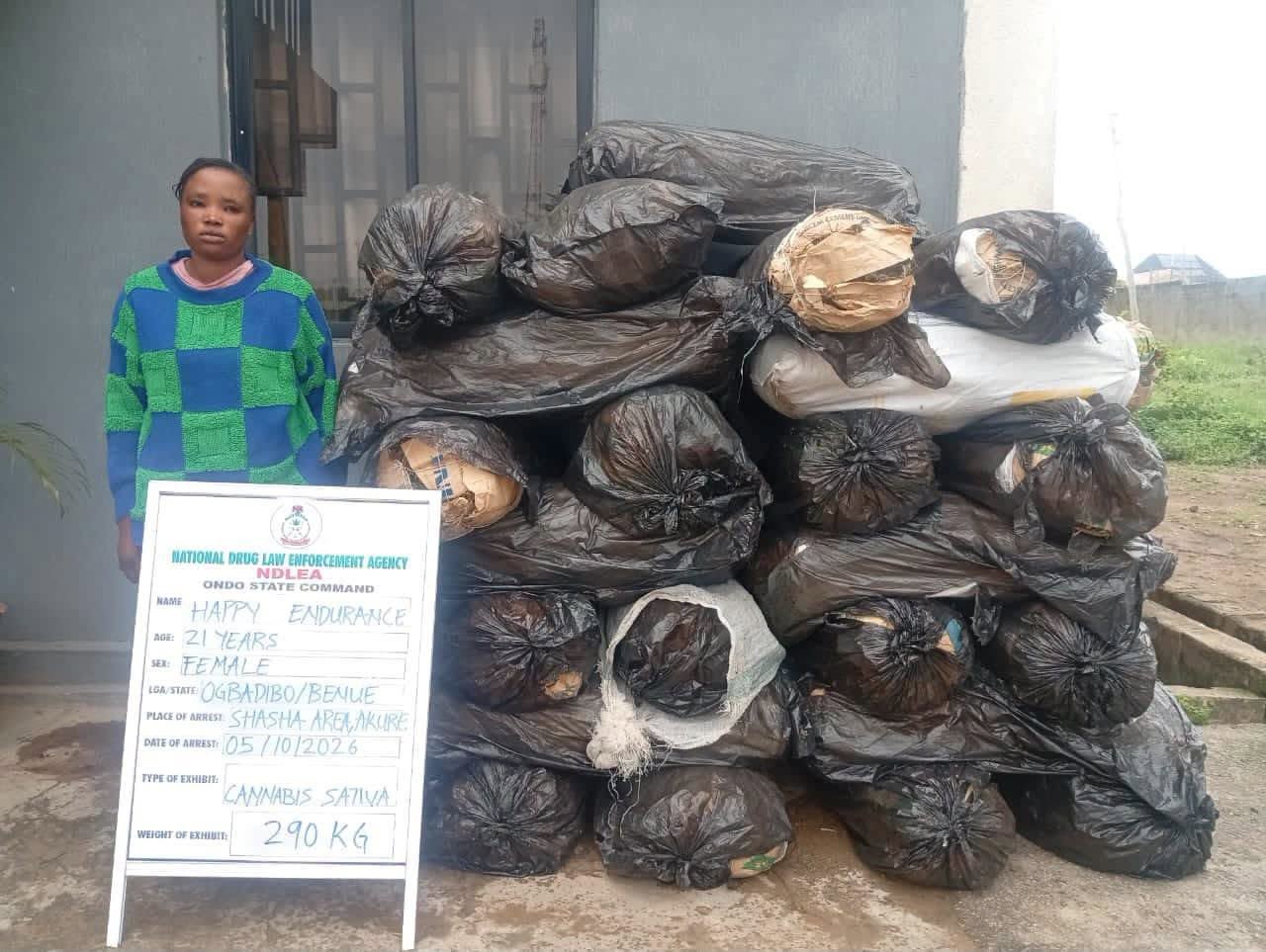
In Ondo State, a 21-year-old suspect, Happy Endurance, was arrested at her hideout in the Shasha area of Akure on October 5, following surveillance by NDLEA operatives.
The operation led to the recovery of 29 bags of cannabis weighing 290 kilogrammes.
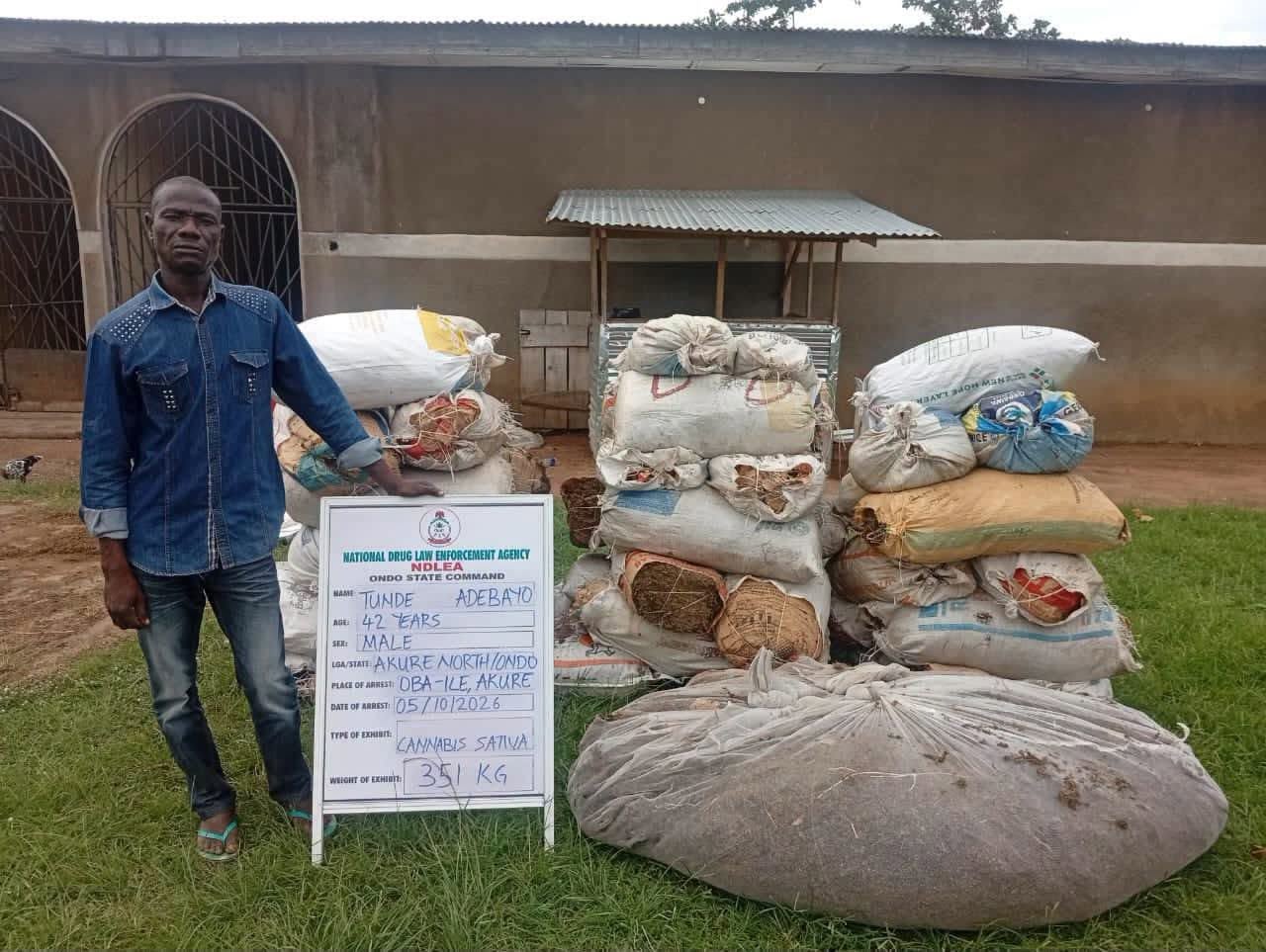
On the same day, another raid at an apartment in Oba-Ile, Akure, resulted in the arrest of Tunde Adebayo, 42, with 35 bags of cannabis weighing 351 kilogrammes.
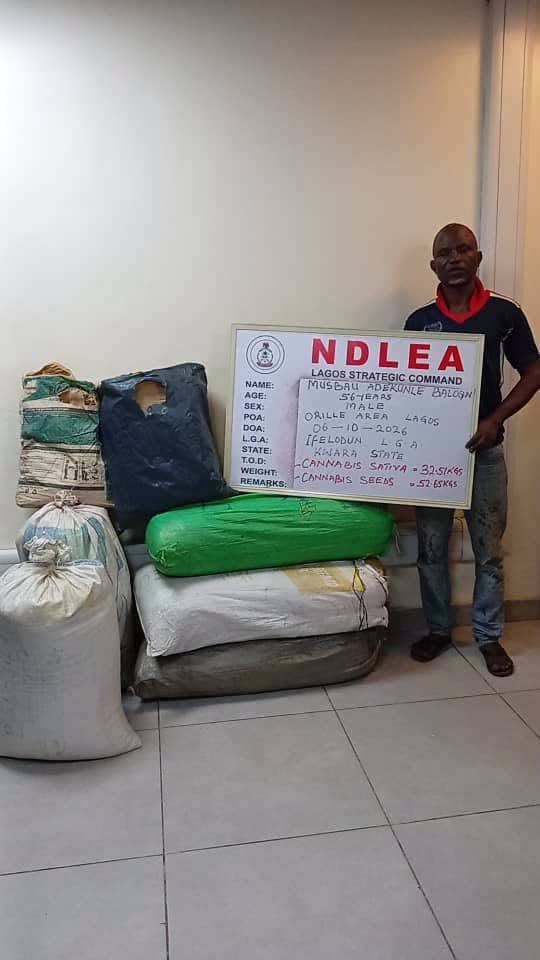
In Orile, Lagos, operatives on October 6 arrested Musbau Balogun Adekunle with 32.51 kilogrammes of skunk and 52.65 kilogrammes of cannabis seeds, bringing the total seizure to 85.16 kilogrammes.
Tramadol, Diazepam Seized in Taraba, Kano
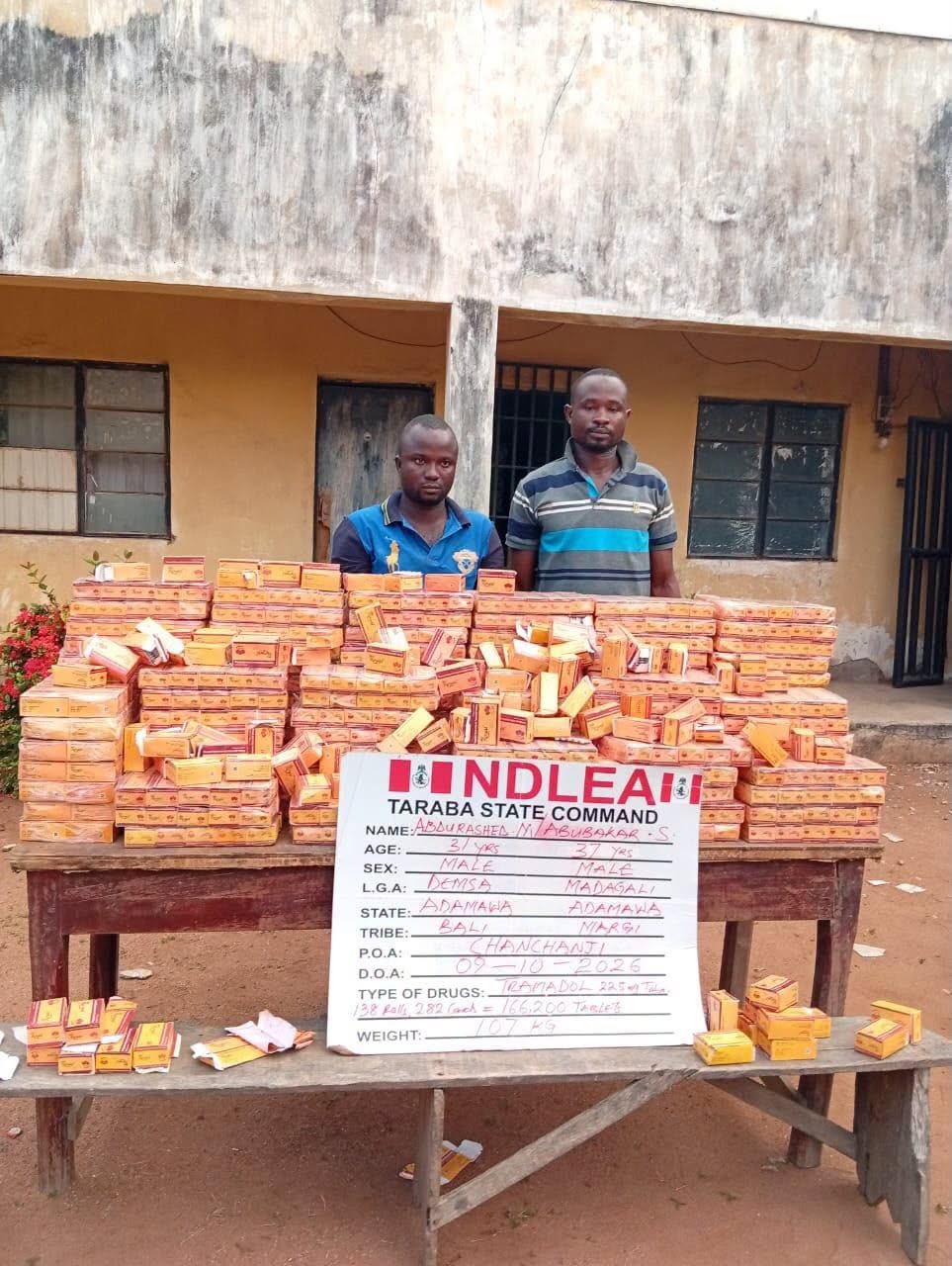
In Taraba State, NDLEA operatives, supported by soldiers, arrested Abdulrasheed Mohamed, 31, and Abubakar Saidu, 37, at Chanchanji village in Wukari Local Government Area on Friday, October 9.
The suspects were allegedly found with 166,200 tablets of tramadol, each weighing 225mg, with a combined weight of 107 kilogrammes.
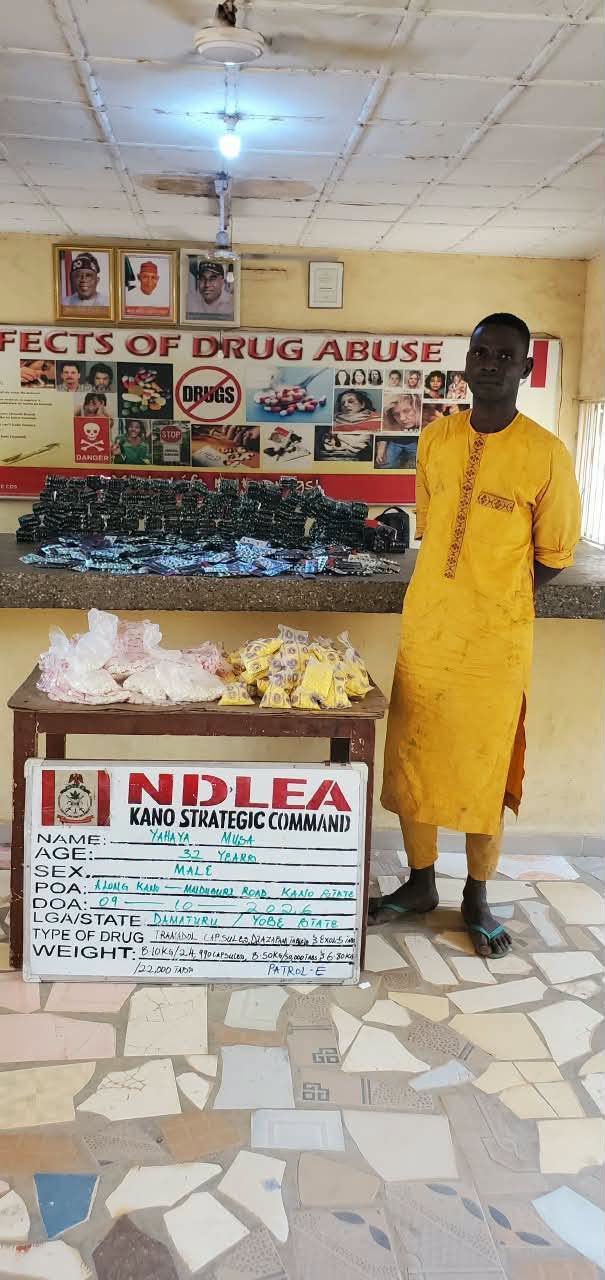
In Kano State, a stop-and-search operation along the Kano-Maiduguri Road on the same day led to the arrest of Yahaya Musa, 32.
The agency said 24,990 capsules of tramadol, 50,000 tablets of diazepam and 22,000 tablets of Exol-5 were recovered from him.
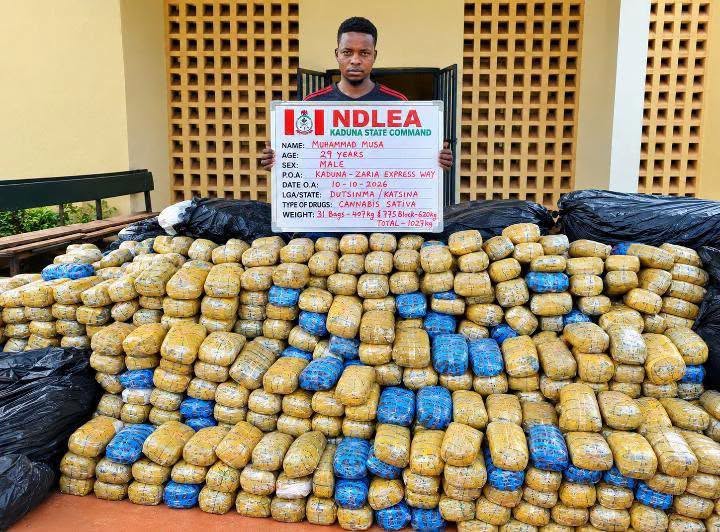
In Kaduna State, operatives on patrol along the Zaria-Kaduna Expressway arrested Mohammed Musa, 29, with 31 jumbo bags and 775 blocks of skunk weighing a combined 1,027 kilogrammes.
Rifles, Ammunition Recovered in Plateau
Meanwhile, NDLEA operatives recovered firearms and ammunition during a raid on the residence of Christian Chukwudi Uju, 45, at Rukuba Road, Jos, Plateau State, on Thursday, October 8.
The agency said the suspect was found with 47 grammes of methamphetamine, two pump-action rifles, one locally made gun, 199 live cartridges, five rounds of 7.62mm ammunition and one round of 9mm ammunition.
The recovery adds a firearms dimension to the series of drug-related operations carried out by the agency during the period.
Rifles, Ammunition Recovered in Plateau
Beyond the arrests and seizures, the agency said its commands and formations continued public enlightenment activities under its War Against Drug Abuse (WADA) campaign.
The sensitisation exercises were conducted in schools and communities across Oyo, Ebonyi, Niger, Kano, Lagos and Ogun states, among other locations.
Beneficiaries included students and staff of Progressive Grammar School, Tede, Oyo State; Ehugbo Technical College, Afikpo, Ebonyi State; Baptist High School, Lambata, Niger State; and Ipara Senior and Junior Community Secondary School, Badagry, Lagos State.
Other institutions reached included Madarasatul Tarbiyatul Islamiya in Tudun Wada, Kano State, and Manbahu Ridwanullah Nursery and Primary School in Olomore, Abeokuta, Ogun State.
Speaking on the operations, NDLEA chairman and chief executive officer, Brig. Gen. Mohamed Marwa (retd.), commended personnel of the Lagos, Murtala Muhammed International Airport, Port Harcourt International Airport, Taraba, Kano, Kaduna, Edo, Cross River, Ondo and Plateau commands.
Marwa urged officers across the country to sustain what he described as a balanced approach to drug control, combining intelligence-led enforcement with public education and preventive measures.
The agency said the operations formed part of its ongoing efforts to disrupt drug trafficking networks, intercept illicit substances and reduce the circulation of dangerous drugs across the country.
FOLLOW US ON:


Business12 hours ago
Four Nigerians among Forbes Africa’s 15 icons for 2026, see full list

Politics12 hours ago
2027: PWD group pledges five million votes for Tinubu, Kano gov

Education12 hours ago
Kwara gov boosts Islamic education, research with ₦180m grant

News1 year ago
‘Sleeping Prince’ of Saudi Arabia dies after 20 years in coma

Politics1 year ago
2027: Atiku delays ADC membership card collection amid rumoured Jonathan comeback

Education1 year ago
How A Class Of 24 Students Produced 2 Presidents, 4 Governors, 2 Ministers, 4 Emirs, 3 Justices, 4 Ambassadors and Other Influential Leaders

Videos14 hours ago
🚨 ISAAC FAYOSE SPEAKS OUT: “APC HAS WEAPONIZED POVERTY!” — WHAT HAPPENED TO YORUBA PROSPERITY?

Videos14 hours ago
🚨 PUBLIC HEALTH ALERT? MULTICOLOURED THREADS DISCOVERED INSIDE A SEALED SYRUP WITH A NAFDAC NUMBER!

Videos6 days ago
🚨 PARENTS, PLEASE PAY ATTENTION TO YOUR CHILDREN! | A SERIOUS WARNING FOR EVERY FAMILY
-

 Videos14 hours ago
🚨 PUBLIC HEALTH ALERT? MULTICOLOURED THREADS DISCOVERED INSIDE A SEALED SYRUP WITH A NAFDAC NUMBER!
-
Politics14 hours ago
Missing names, party disputes cloud INEC list ahead of 2027 elections
-
Business14 hours ago
Nigeria’s debt interest soars 124% above revenue, read details
-
Videos14 hours ago
🚨 ISAAC FAYOSE SPEAKS OUT: “APC HAS WEAPONIZED POVERTY!” — WHAT HAPPENED TO YORUBA PROSPERITY?
-
Crime13 hours ago
Motorcycle rider shot dead near YABATECH
-
Business13 hours ago
Tinubu reveals that World Bank report affirms reform gains
-
Politics14 hours ago
Atiku, ADC fault INEC over ballot contracts, postings
-
Lifestyle13 hours ago
WHEN A MARRIAGE BREAKS DOWN, CHILDREN OFTEN BEAR THE GREATEST EMOTIONAL PAIN