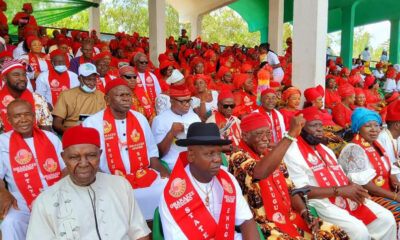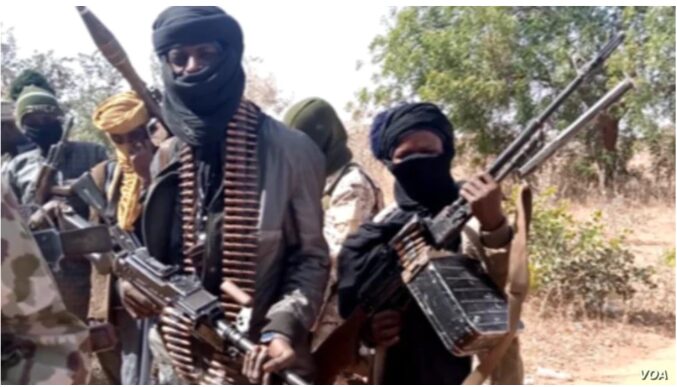
Prominent socio-political organisations, including Afenifere, Arewa Consultative Forum, Ohanaeze Ndigbo, the Middle Belt Forum, and others, have expressed outrage over a plan by the Katsina State Government to release 70 bandits as part of measures to patch up a floundering peace pact with bandit leaders.
The groups, in separate interviews with The PUNCH, described the move as reckless and a danger to national security, calling on the Federal Government to halt the provocative action.
Also, religious and community leaders in Katsina State voiced strong opposition to the proposed amnesty for the bandits, whom they described as a grave threat to the state.
Katsina State is dealing with a surge in bandit attacks, with over 1,500 civilians killed between 2021 and 2025. Recently, the state government approved the release of 70 suspected bandits as part of a peace deal with armed groups. The move has sparked controversy, with critics arguing it undermines justice and emboldens criminals.
This newspaper couldn’t confirm on Monday whether the bandits had been released or not after one of our correspondents visited the office of the Katsina State Commissioner for Justice and Attorney-General to confirm if the bandits were still in custody and verify the authenticity of the alleged documents, including signatures reportedly linked to the release of the suspects.
However, the ministry officials declined comments on the issue, neither confirming nor denying the allegations.
The silence from the government further fueled speculations and public anxiety, particularly in a state that has endured years of violent attacks, kidnappings, and other criminal activities linked to banditry.
However, the government claims the planned release is part of efforts to consolidate peace and secure the freedom of abducted persons. Over 1,000 people have been released through similar negotiations. The state Commissioner for Internal Security and Home Affairs likened the release to prisoner exchanges during wartime.
Many Nigerians, including security experts, condemned the move, citing concerns about impunity and renewed attacks.
Defence Minister Christopher Musa warned that negotiating with bandits only emboldened them and complicates security efforts.
Afenifere kicks
Speaking with The PUNCH on Monday, pan-Yoruba socio-political organisation Afenifere’s Organising Secretary, Abagun Omololu, said the proposal amounted to an unacceptable appeasement of violent criminals.
He further described the move as reckless, unconstitutional and a grave threat to national security.
“Afenifere Think Tank unequivocally rejects the reported plan by the Katsina State Government to release seventy bandits under the guise of a so-called peace arrangement. This proposal is reckless, irresponsible and profoundly dangerous to national security,” he said.
Omololu warned that state governments lacked the constitutional authority to negotiate with terrorists, especially without full disarmament, accountability and judicial closure.
“We are deeply concerned that certain governors and local government chairmen have arrogated to themselves powers they neither possess nor are constitutionally equipped to exercise. Negotiating with terrorists, let alone granting them freedom without accountability, emboldens criminality, undermines the rule of law and places innocent Nigerians at grave risk,” he stated.
“Negotiations with terrorists, where unavoidable, must be led exclusively by the Federal Government through the military and duly constituted security agencies, and must culminate in the unconditional surrender of arms, verifiable disengagement from violence, and lawful reintegration processes. Anything short of this is a betrayal of the state’s primary duty to protect life and property,” Omololu stated.
He cautioned that insecurity in one state could easily spread to others.
“Bandits freed in Katsina today may resurface tomorrow in neighbouring states or migrate southwards, continuing their murderous activities with renewed impunity. This is not peace-building; it is the redistribution of insecurity,” Omololu added.
According to him, any negotiation with armed groups must be led solely by the Federal Government through recognised security agencies and must end in unconditional surrender.
“Anything short of verifiable disarmament, lawful prosecution and structured reintegration is a betrayal of the state’s primary duty to protect life and property,” he said.
ACF expresses concern
The Arewa Consultative Forum expressed similar concerns, warning that the reported plan could embolden criminal groups and weaken the state’s authority.
Speaking in Kaduna, the forum’s National Publicity Secretary, Prof. Tukur Muhammad-Baba, urged caution.
“Banditry constitutes heinous crimes with devastating impacts on communities. Any decision to release suspected perpetrators must place justice for victims at the centre,” he said.
Muhammad-Baba warned that such gestures could be misinterpreted by criminal elements. “The danger is that they may develop a sense of invincibility and feel encouraged to return to criminal activities. Government actions must reflect strength, not weakness,” he added.
He also raised concerns about broader implications.
“There is the risk of a contagion effect, where similar demands are made in other states. Security is a federal responsibility, and it is important to know whether the Federal Government was adequately consulted,” he said.
Katsina leaders react
Religious and community leaders in Katsina State also voiced strong opposition. A religious leader in Katsina metropolis, Malam Umar Usman, urged the government to reconsider the decision.
“How can we, as religious leaders, support this dangerous move? Those who killed and destroyed communities should face the full wrath of the law. Honestly, we are not in support,” he said.
Similarly, Aminu Jafaru, a ward head in the Modoji area of Katsina, warned of possible reprisals.
“If these bandits are released, they will go after security operatives and those who gave information against them — village heads, ward heads and traditional leaders. Our people believe they will not stop their nefarious activities,” he said.
A youth leader in Kankara, who spoke on condition of anonymity, said residents were preparing legal action.
“These bandits killed, raped and collected millions in ransom from us. The government cannot just set them free. If this release goes ahead, we will seek redress in court,” he said.
An Islamic cleric, who only gave his first name as Mallam Umar, described the plan as risky, but potentially beneficial, if properly managed.
“Like many others, I feared that we have no way of knowing whether they have truly changed or what they might bring back into our communities,” he said, noting that public anger and a sense of betrayal are natural when people who have inflicted pain are forgiven and freed.
He, however, said further reflection led him to reconsider his position, especially given that the release followed peace dialogues in which the bandits’ counterparts specifically requested their freedom.
CNG condemns plan
The Coalition of Northern Groups also condemned the planned amnesty, describing it as a dangerous capitulation disguised as peace-building.
In a statement signed by its National Coordinator, Jamilu Charanchi, the coalition rejected the government’s justification for freeing suspected and convicted bandits.
“While CNG recognises the urgent need to end the bloodshed, kidnappings and destruction ravaging Katsina State and the wider North-West, we maintain that peace built on appeasement, judicial compromise and concessions to violent criminals is neither sustainable nor just,” the statement read.
The coalition dismissed comparisons between the release of bandits and wartime prisoner exchanges.
“Nigeria is not engaged in a conventional war with a recognised adversary. Bandits are criminal terrorists who have murdered citizens, raped women, razed communities and displaced families. Treating them as negotiating partners without first breaking their capacity for violence undermines the authority of the state,” CNG said.
It warned that releasing suspects facing trial as part of peace arrangements sent a dangerous signal.
“This approach tells criminals that violence pays, justice is negotiable, and the state lacks resolve. Communities continue to suffer renewed attacks even as concessions are made,” the group added.
The coalition also lamented what it described as the government’s silence on the fate of victims.
“Thousands of citizens have lost loved ones, farms and homes. Releasing suspects without truth-telling, restitution and compensation amounts to a grave injustice. Peace that ignores justice does not heal; it deepens fear and resentment,” CNG said.
Katsina State Govt
Defending the policy, the Katsina State Commissioner for Internal Security and Home Affairs, Dr Nasir Mu’azu Danmusa, said the move was aimed at consolidating the community-driven peace deal.
“At least 15 local government areas entered into peace agreements, and repentant bandits have released about 1,000 abducted persons. The release of the 70 suspects is similar to prisoner exchanges that occur during wars,” he said.
He further argued that ‘repentant bandits’ had released about 1,000 persons during the peace deal, and that the release of the 70 detained persons was like a “prisoner exchange.”
“For example, in Safana Local Government Area, they (repentant bandits) released 36 persons; in Kurfi, they released 42 persons; in Sabuwa, they released 310 persons; in Faskari, they released 36 persons; in Danmusa, they released 60 persons.
“In Malumfashi, they released 36 persons; in Musawa, they released 28 persons; in Matazu, they released 33 persons. In Dutsinma, they released 62 persons, in Jibia, they released 31 persons, in Bakori, they released 125 persons.”
The commissioner added, “World over, everyone knows that after a war is fought, there are usually prisoner exchanges. If you take Nigeria, for example, during the civil war, many prisoners were set free and exchanged between the Nigerian side and the Biafran side.
“If you look at the issue of Boko Haram, prisoners were also released after an agreement was reached. Even the Chibok girls who were released also saw some Boko Haram members who were in prison, set free too.
“Both warring groups have prisoners they set free for the other. So, it is not an issue of whether an offence has been committed or not, so long as there is pace. The issue is that prisoner exchange is not a new thing in the history of war and peace.”
He added that what the Ministry of Justice and the High Court did did not violate existing laws in the country, and that anyone not satisfied could go to the courts to seek redress.
Similarly, Bala Zango, the State Commissioner for Information and Culture, in a personal opinion piece titled, ‘Katsina Community Driven Peace Deal: When People Are Not Victims,’ argued that criticism often comes from those who have not directly suffered the horrors of banditry.
He maintained that communities ravaged by kidnapping, killings, and displacement are more inclined to support unconventional measures if they promise immediate relief and safety.
But the Katsina State Coordinator of CNG, Abdullahi Kabir, in a telephone conversation with our correspondent, argues that bandits are criminals and terrorists, stating that comparing their release to a prisoner exchange in war is misleading.
Releasing them before justice is served weakens the state, rewards violence, and encourages more attacks, he further submitted.
“While CNG supports dialogue and reintegration in principle, it insists that negotiations must come only after the government has shown the ability to defeat and control violent groups. In Katsina, however, suspects are being freed while communities are still under attack, proving the peace deals are failing.
“The coalition also criticises the government for ignoring victims whose families were killed, farms destroyed, and communities displaced. Releasing bandits without truth, justice, compensation, and accountability is seen as a betrayal of these victims,” he said.
Reacting, a retired Nigerian Navy officer, Commodore Omatseye Nesiama (retd.), said discussions on the implications of releasing bandits facing trial must begin with an appreciation of the enormous psychological, emotional and economic toll banditry has taken on the country.
He noted that the prolonged violence had severely undermined national aspirations and everyday life, stressing that no Nigerian would want the situation to persist.
According to him, addressing the crisis requires decisive and sustained security countermeasures to regain the initiative and weaken the resolve of bandit groups.
“Such actions should lead to casualties and arrests, including the prosecution of high-profile figures or a critical mass of bandit members. This is what creates the conditions for negotiation from a position of strength,” Nesiama said.
He added that the Katsina State Government might now be attempting to navigate this difficult balance.
“If that is the case, then limited trade-offs could be considered to secure the release of captives on both sides, especially where innocent civilian lives are involved,” he said.
Nesiama emphasised, however, that any negotiation must be anchored on the state’s ability to first establish dominance.
“The key issue,” he said, “is creating a favourable environment in which negotiations are conducted from a position of strength, not weakness.”
‘FG must intervene’
Meanwhile, the Middle Belt Forum described the plan as “encouraging banditry” and called for federal intervention.
Speaking in Jos, MBF National President, Dr Bitrus Pogu, said, “People are killing, maiming and displacing innocent citizens, and instead of prosecuting them, the government is negotiating with them. This is unfortunate and dangerous. The Federal Government must intervene because Nigeria cannot continue on this path.”
Ohanaeze Ndigbo leaders also warned that the decision could have ripple effects across the country.
A former Vice-President of the Igbo socio-cultural group, Ohanaeze Ndigbo, Chief Silas Okeke, said, “We strongly condemn this unacceptable decision by the Katsina State Government. It amounts to inviting more security threats in the country.
“Whatever happens in the North will affect other regions. Some of the bandits might run to other regions on being released and continue with their criminality.
“I believe the release will embolden the bandits, leading to increased terror attacks on communities, farmers, and travelers. This approach will embolden these bandits to spread to other regions and with their groups and continue to terrorize the people.”
Also, the Abia State chapter of Ohanaeze Ndigbo, through its head, Dr. C. C. Okwuonu, stated, “When they release some of them (bandits), they train them and recruit them into the Army and all that, which is hopeless. That is not the right thing to do.”
Also reacting, President of the Ijaw People’s Development Initiative, Austin Ozobo, described the move as dangerous and unacceptable.
“We strongly condemn this unacceptable decision by the Katsina State Government. It amounts to inviting more security threats to the state,” he said.
He warned that the planned release would further undermine public safety, stressing that the government could not be trusted to prioritise the protection of residents if the move went ahead.
“I believe the release will embolden the bandits, leading to increased terror attacks on communities, farmers and travellers. This approach to peace will only create more chaos,” Ozobo said.
“We reject this move and demand that the government prioritise the safety of residents. The planned release poses a serious threat to peace and security in Katsina State and requires immediate action,” he added.
punch.ng
FOLLOW US ON: