Connect with us

Business

Wale Tinubu champions Africa’s energy priorities at Davos

Published

on

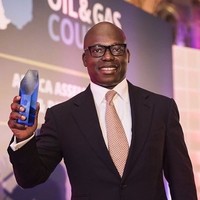
Wale Tinubu, Group Chief Executive of Africa’s leading indigenous energy solutions provider, Oando Plc, is set to participate in the 2026 World Economic Forum Annual Meeting in Davos, Switzerland, to champion Africa’s energy priorities.

A statement on Tuesday stated that Tinubu’s engagements will focus on critical issues such as Africa’s energy security, the role of finance in catalysing growth within the energy sector, and the contribution of indigenous companies to delivering bankable projects amid a decarbonising global economy.

Discussions will also explore how technology—including artificial intelligence—and South-South partnerships can unlock efficiencies, improve project economics, and attract long-term capital into Africa’s energy sector.

He will speak at the debut of Nigeria House at Davos, marking the first time the country is hosting a dedicated national platform at the WEF.

Nigeria House reflects a strategic shift in presenting the country at global investment forums, moving from fragmented representation to a coordinated national narrative that aligns policy direction with private sector execution.

Tinubu’s participation highlights the role of credible local operators in bridging policy ambitions with investor expectations.

In addition, Tinubu will join a panel of renowned business executives and top government officials at a high-level Africa Collective session, focusing on African multilateral financial institutions.

The session brings together senior policymakers and leaders of development finance institutions to discuss capital mobilisation, risk-sharing, and financing structures required to support large-scale infrastructure and energy investments across the continent.

Panellists include Dr George Elombi, President and Chairman of Afreximbank; Samaila Zubairu, President and CEO of Africa Finance Corporation; Thierno Habib Hann, Managing Director of Shelter Afrique; Marco Arcelli, CEO of ACWA Power; Matteo Patrone, Vice President Banking and Executive Committee Member at the European Bank for Reconstruction and Development; and H.E. Chief Adebayo Olawale Edun, Nigeria’s Minister of Finance and Coordinating Minister of the Economy.

See also  Constituency meeting: Lagos lawmaker empowers residents

Oando’s presence at Davos underscores its commitment to advancing Africa’s energy agenda on the global stage. At a time of constrained global financing, the company is emphasising the importance of supportive policy environments, strong public–private partnerships, and targeted capital to deliver bankable energy solutions and strengthen the continent’s energy security.

punch.ng

FOLLOW US ON:

FACEBOOK

TWITTER

PINTEREST

TIKTOK

YOUTUBE

LINKEDIN

TUMBLR

INSTAGRAM

Continue Reading
Click to comment

Leave a Reply

Your email address will not be published. Required fields are marked *

Business

FX for business travels soar by 366% to $672m

Published

on

More Nigerians gained access to foreign exchange, boosting their spending on business travels by 366 per cent to $672.27m in the first nine months of 2025, up from $144.19m recorded in the corresponding period of 2024.

The figures, contained in the Balance of Payments section of the December 2025 Central Bank of Nigeria’s Quarterly Statistics, showed that spending stood at $231.7m in the first quarter of 2025, rose slightly to $234.56m in the second quarter, and moderated to $205.97m in the third quarter, bringing the nine-month total to $672.27m.

In contrast, business travel expenditure was $77.33m in Q1 2024, fell to $46.62m in Q2, and further decreased to $20.24m in Q3, culminating in $144.19m for the same period.

Business travel refers to expenditures made by Nigerian residents when they travel abroad for business purposes, such as attending meetings, conferences, training sessions, or other work-related activities.

Payments linked to these trips, including for accommodation, local transport, and meals, are captured as outflows of funds in the BoP. Since money leaves Nigeria to pay for these services abroad, they show up as debits (negative entries) in the current account under services. Tickets and airfares are not included.

Data from the CBN indicate that travellers had more access to FX for business trips in the period under review. In turn, this reflected stronger international business engagement.

In separate interviews with The PUNCH, economic analysts and experts familiar with the matter explained that the development signalled renewed business confidence and improved foreign exchange stability.

See also  Fuel war brews as Dangote presses Tinubu to ban imports

The Director of the Centre for Promotion of Private Enterprise, Dr Muda Yusuf, said the jump in travel spending reflected improved confidence in international trade and stronger economic stability.

He explained: “An increase in business travel costs is a reflection of an improvement in confidence in international trade because there is a relationship between the frequency of travel and the volume of international business, whether it is services or merchandise, there’s always a relationship. If there is no trade, there will not be travel. If there are no international transactions that require physical movement, there will not be any travel.”

Yusuf added that the trend underscored Nigeria’s growing connectivity with the global economy, stating, “This is a reflection of the wider stability and confidence that we are seeing in the economy. And this has enabled more Nigerians to travel, to meet their business partners, and vice versa. I think this figure with respect to business travel, this is what it indicates.”

CPPE’s director observed that the country’s improved foreign exchange liquidity and exchange rate stability strengthened international trade flows in 2025 compared to previous years.

He asserted that given that the dollar is stable, there’s more liquidity in the foreign exchange markets. “So that has also given a big boost to international trade and investments,” Yusuf remarked.

A former Chairman of the Chartered Institute of Bankers of Nigeria, Prof Segun Ajibola, explained how this relationship plays into the recent figures.

Corroborating CPPE’s Yusuf, the economist noted that the increase could reflect both expanded business activities and higher travel costs.

See also  Nigeria’s rent crisis deepens as two-bedroom flats hit N2.5m

He said, “The 366 per cent jump in expenditure could be a positive and negative development at the same time. Firstly, business travel is a cost item. It is an expense for each business organisation which could be driven by an increased level of activities, which pushes executives and others to travel purely for new business contracts, new business dealings, or by increased expansion of existing businesses, which may take them out of the country, or might involve them inviting business partners to the country at their own expense.”

The former CIBN leader added that if driven by business expansion, the rise would positively impact economic output. “It must reflect, if that is the case, it must reflect by way of enhanced business volumes, which means businesses incurring the cost. You also have higher business volumes, which will contribute to the country’s Gross Domestic Product,” he remarked.

Meanwhile, the Director-General of the Nigerian Employers’ Consultative Association, Adewale Oyerinde, said business travel spending impacts the country’s net cash outflows. He urged proportional or increased export earnings to balance the spending, which could deplete foreign reserves and widen current account deficits.

He explained, “The increased business travel prices impacting the BOP services account, which is a major part of the transaction that occurs and therefore affects the net cash outflows, could lead to depletion of foreign reserves and widening of current account deficits if not offset by a corresponding level of exports or remittances.”

Oyerinde observed that with respect to foreign exchange volatility risks, the naira remains devalued, and high prices for hotels add to the overall value to be transferred to US dollars.

See also  Electricity subsidy: FG to deduct N3.6tn from Federation Account

He added, “Despite the Q3 2025, BOP surplus of $4.60bn, total services’ net cash outflows increased from $3.74bn last quarter, to now $4.07bn, while cash outflows associated with travel alone from Q3, now total $1.67bn, and therefore putting pressure on the external buffers with the foreign reserves now growing to $42.77bn.”

On how this improved access to FX for business travel impacts the broader economy, NECA’s DG stated that high costs lead to shrinking profit margins for companies in Nigeria.

He said, “Multinationals and exporters that depend on a global supply chain face extreme pressure due to rising hotel rates (+40 per cent in Lagos/Abuja) due to the scarcity of fuel and the unstable foreign exchange market.”

He stated that companies have two options, “either to eliminate physical travel through virtual alternatives or absorb the financial loss of high transportation inflation. Both options are likely to decrease a company’s investment capital.”

Oyerinde explained that large companies approaching significant expenditures with significant increases indicated a persistent strain on their investments.

“The continued rising cost of doing business may impact the expansion of the company or its ability to remain competitive in a high-growth Purchasing Managers Index (57.6 December 2025) but cost-compressed economy,” he concluded.

punch.ng

FOLLOW US ON:

FACEBOOK

TWITTER

PINTEREST

TIKTOK

YOUTUBE

LINKEDIN

TUMBLR

INSTAGRAM

Continue Reading

Business

FG seals Plateau mine after gas leak kills 37

Published

on

The Federal Government has ordered the immediate closure of a mining site in Plateau State after about 37 villagers reportedly died from inhaling toxic gases during artisanal mining activities.

PUNCH Metro gathered from a post by security analyst Zagazola Makama on X on Wednesday that 25 other persons were hospitalised after exposure to suspected carbon monoxide at the mining site in Zurak, located in Wase Local Government Area.

According to the report, the victims—mostly young men aged between 20 and 35—were carrying out routine underground mining operations when they inhaled toxic gases believed to have accumulated in poorly ventilated tunnels.

Following the incident, the Minister of Solid Minerals Development, Dele Alake, directed that all activities within Mining Licence 11810, operated by Solid Unit Nigeria Limited, be suspended after the tragedy in the Zurak community of Wase LGA.

The licence, owned by Abdullahi Dan-China, lies between longitudes 10.34.45 and 10.35.50 and latitudes 9.13.45 and 9.14.40.

The minister gave the directives in a statement issued on Wednesday by the Special Assistant on Media to the minister, Segun Tomori, in Abuja.

Tomori said the minister was on a condolence call to the Plateau State Governor, Caleb Mutfwang, where he expressed deep sorrow over the loss of lives and described the victims as “innocent citizens trying to earn a living.”

Alake urged the governor to convey his solidarity to the affected community.

“The minister sympathised with the governor over the loss of the innocent citizens who died while trying to earn a living and urged him to convey his deep sorrow and solidarity with the people of Wase over the irreparable loss,” the statement read.

See also  Medical tourism spending drops by 52% under Tinubu – CBN report

The minister has also dispatched a high-level investigative team led by the permanent secretary in the ministry, Yusuf Yabo, to determine both the immediate and remote causes of the incident and recommend sanctions.

The team, according to the statement, includes experts in mining, environmental compliance and artisanal and small-scale mining cooperatives.

“The minister has dispatched a team of officials and investigators to probe the remote and immediate causes of the incident and recommend appropriate sanctions,” the statement noted.

“The team also includes experts in mining, environmental compliance and artisanal cooperatives. The minister is coordinating the team and support services to ensure effective management of the situation.”

Officials said the Federal Government would make further disclosures as investigations progress.

Preliminary findings indicated that the company had allegedly ceded the abandoned pit to the host community following agitation by villagers seeking economic opportunities and empowerment.

The area, it was gathered, was an abandoned lead mining site containing mineral deposits prone to emissions of sulphuric oxide gas.

Unaware of the toxic nature of the site, the villagers reportedly engaged in manual extraction while inhaling the poisonous emissions, leading to the fatal incident.

The tragedy highlights the growing risks associated with abandoned mining pits across Nigeria, especially in rural communities where economic hardship pushes residents into informal mining without adequate safety awareness.

PUNCH Metro reports that this development further underscores the persistent challenge of illegal and artisanal mining in Nigeria, which has become both an economic lifeline for many communities and a major safety and environmental concern.

See also  Stop exporting crude, OPEC tells Nigerian producers

Over the years, abandoned mining sites in parts of Plateau, Zamfara and Niger states have posed environmental and public health threats, with experts warning of exposure to heavy metals, toxic gases and contaminated water.

Nigeria’s mining industry has witnessed renewed government attention under the Ministry of Solid Minerals Development, which has intensified efforts to formalise artisanal mining, enforce environmental compliance and attract foreign investment.

However, the latest incident suggests that gaps remain in monitoring host communities and enforcing mine closure and rehabilitation obligations.

Licensed operators fail to fully reclaim sites after operations, leaving hazardous pits that communities later exploit informally.

In recent months, the ministry has launched initiatives aimed at integrating artisanal miners into cooperatives and strengthening environmental and safety oversight.

Alake has repeatedly warned that illegal mining and unsafe practices threaten not only lives but also Nigeria’s efforts to build a globally competitive mining industry.

The Plateau tragedy could accelerate reforms on abandoned mine management, community engagement and environmental remediation.

punch.ng

FOLLOW US ON:

FACEBOOK

TWITTER

PINTEREST

TIKTOK

YOUTUBE

LINKEDIN

TUMBLR

INSTAGRAM

Continue Reading

Business

GenCos deny NLC’s ‘extortion’ claims, warn of looming power crisis

Published

on

Power generation companies in Nigeria have dismissed allegations by the Nigeria Labour Congress that electricity firms were engaged in “institutionalised extortion,” describing the claims as misleading and damaging to efforts aimed at stabilising the country’s fragile power sector.

The reaction was contained in a statement issued on Wednesday by the Chief Executive Officer of the Association of Power Generation Companies, Joy Ogaji.

Ogaji faulted recent remarks by the President of the NLC, Joe Ajaero, saying they did not reflect the realities of the Nigerian Electricity Supply Industry.

Ogaji stated, “While we acknowledge the frustrations of Nigerians regarding unstable electricity supply, we must firmly reject the characterisation of the sector’s challenges as robbery and a grand deception. Such allegations are a misrepresentation of the facts and a disservice to ongoing efforts to stabilise the power sector.”

According to the association, power generation companies remain the most financially exposed segment of the electricity value chain because they generate electricity that is not fully paid for due to revenue shortfalls across the market.

She added, “GenCos face the greatest risk in the electricity value chain, with outstanding unpaid invoices now exceeding N6tn. Rather than castigate operators, attention should be focused on addressing the liquidity crisis that threatens the sustainability of electricity supply.”

The association also rejected claims that proposed government financial support for the sector amounted to a political arrangement, insisting that intervention funds were necessary to prevent further deterioration.

“We strongly refute the insinuation that proposed government support for the sector is a clandestine plan to settle the boys. Such claims are baseless and undermine the critical liquidity interventions required to keep the lights on,” the statement added.

See also  Constituency meeting: Lagos lawmaker empowers residents

The GenCos said they were open to scrutiny and willing to subject their financial records to independent forensic examination if required.

“If the NLC or any other institution considers it necessary, our books are available for any form of investigation. What is important is to identify the real causes of the sector’s challenges and work collaboratively toward sustainable solutions,” Ogaji said.

The development follows recent comments by the NLC accusing electricity firms of exploiting Nigerians through tariff adjustments and alleged hidden subsidies.

The power generators urged organised labour to engage constructively with stakeholders, warning that inflammatory rhetoric could discourage investment and worsen electricity shortages.

punch.ng

FOLLOW US ON:

FACEBOOK

TWITTER

PINTEREST

TIKTOK

YOUTUBE

LINKEDIN

TUMBLR

INSTAGRAM

Continue Reading

Trending