Connect with us

News

Oshiomhole, Tambuwal on Senate’s high-stakes Electoral Act review panel ahead of 2027

Published

on

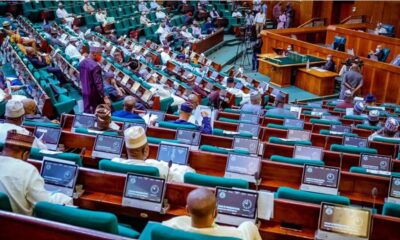
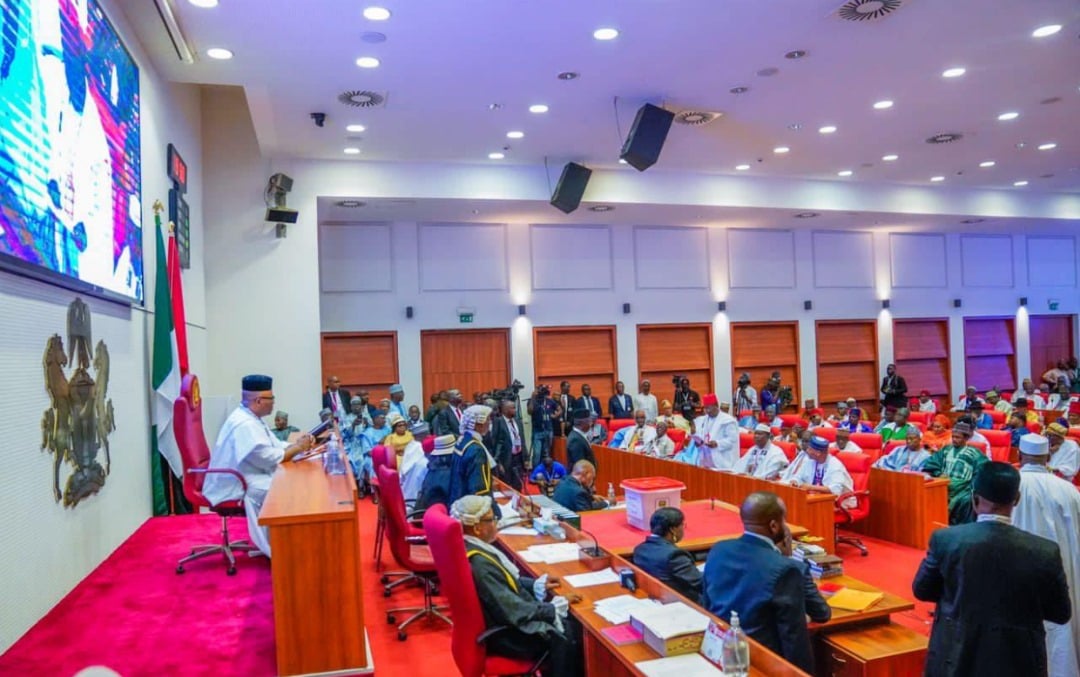
The Senate has constituted a seven-member ad hoc committee to harmonise and distil senators’ inputs on the proposed amendment to the Electoral Act, as lawmakers intensify efforts to strengthen Nigeria’s electoral framework ahead of the 2027 general elections.

The decision followed a three-hour closed-door executive session held on Thursday, during which senators further scrutinised the Electoral Act (Repeal and Enactment) Bill currently before the National Assembly.

Announcing the outcome of the session, the Senate President, Godswill Akpabio, said the committee was set up to synthesise lawmakers’ views and address outstanding concerns on the proposed amendments. He said the panel was “mandated to contribute, galvanise and distil the opinion of senators on the bill.”

“In no particular order, the committee will be led by Niyi Adegbonmire, chairman of the Senate Committee on Judiciary, Human Rights and Legal Matters,” Akpabio said.

Other members of the committee are Adamu Aliero, Aminu Tambuwal, Adams Oshiomhole, Danjuma Goje, Tony Nwoye and Titus Zam.

Akpabio added that the committee has a maximum of three days to conclude its assignment and submit its report to the Senate by Tuesday.

The Senate had on Wednesday stepped down consideration of the report on the Electoral Act Amendment Bill, opting instead for an executive session to allow for deeper examination of the proposed legislation.

The move followed deliberations on the report of the Senate Committee on Electoral Matters, which was presented in the absence of its chairman, Simon Lalong.

Lawmakers agreed to suspend debate to give senators additional time to study the bill, citing its far-reaching implications for Nigeria’s electoral process.

See also  Preacher who falsely predicted the Rapture awkwardly asks viewers to be patient

Although the House of Representatives has already passed the bill, Akpabio stressed that the Senate must exercise due diligence before concurrence.

“This is a very important bill, especially as it is election time. We must take our time to ensure justice is done to all, so that we do not end up at the tribunal,” he said.

According to the report of the Senate Committee on Electoral Matters, a clause-by-clause review indicates that the proposed amendments would strengthen electoral integrity, enhance transparency and boost public confidence in the electoral system.

The committee consequently recommended the passage of the Electoral Act (Repeal and Enactment) Bill, 2025, as amended, noting that the reforms would expand voter participation, curb electoral malpractice and strengthen the institutional capacity of the Independent National Electoral Commission.

Earlier, the Senate Leader, Opeyemi Bamidele, outlined key components of the proposed amendments, describing the bill as a major step towards improving electoral credibility and safeguarding institutional independence.

He said the bill introduces stiffer sanctions for electoral offences such as vote-buying, including fines of up to N5m, a two-year jail term, and a 10-year ban from contesting elections.

The proposed law also prescribes tougher penalties for result falsification and obstruction of election officials, introduces electronically generated voter identification — including a downloadable voter card with a unique QR code — and mandates the electronic transmission of polling unit results.

Bamidele further disclosed that the bill recognises the voting rights of prisoners, mandates INEC to register eligible inmates, standardises delegates for indirect party primaries, and requires the release of election funds at least one year before polling day.

See also  Tinubu orders manhunt as terrorists kill over 40 in Niger

According to him, the reforms are aimed at guaranteeing credible, transparent and secure elections beginning with the 2027 general polls, subject to approval by at least two-thirds of state Houses of Assembly, in line with constitutional requirements.

“At the end of it all, good governance, enhanced security and the welfare of our constituents shall remain our cardinal objectives,” Bamidele said.

punch.ng

FOLLOW US ON:

FACEBOOK

TWITTER

PINTEREST

TIKTOK

YOUTUBE

LINKEDIN

TUMBLR

INSTAGRAM

Continue Reading
Click to comment

Leave a Reply

Your email address will not be published. Required fields are marked *

News

Ex-military chief gives reasons bandits kidnap people

Published

on

Former Field Commander of Operation Safe Haven, OPSH, Maj. Gen. Anthony Atolagbe, rtd, says bandits kidnap people to use them as human shields from the military.

General Atolagbe made this revelation on Tuesday when he featured in an interview on Arise Television’s ‘Prime Time’.

He was speaking about the rising insecurity confronting the country.

“The bandits have a pattern of taking people into their enclave, just to use them as sex slaves, but also as shields for negotiation.

“What I can say also is that I will not be able to dwell on specifics. But in Sambisa, some abducted people were freed. In fact, the first thing that happened was that over 100 of them escaped, based on the heat that was brought on the adversary.

“Now, what is playing out is that these guys are being dislodged, and when they are dislodged, and they lose contact with all these women and these men that are running, who are sex slaves and liberals for them within the theater or wherever they are in their enclaves, what happens is that they try to move to other locations where they think they will be safe.

“And the next thing is to start looking for who they can also grab and bring into their new locations.

“The other side is that it is also another strategy by those that are expecting the arrival of the military that are coming into their enclaves to come and chase them out by using some of these people as human shields when the military approach their location.

See also  Trailer kills Kogi varsity lecturer

“So you see that the analysis has brought it out that they have a pattern that they always want to take people into their enclave, not just to use them as slaves or whatever, but they will also want to use them to negotiate,” the retired military officer said.

FOLLOW US ON:

FACEBOOK

TWITTER

PINTEREST

TIKTOK

YOUTUBE

LINKEDIN

TUMBLR

INSTAGRAM

Continue Reading

News

War: Federal govt begins evacuation of Nigerians from Iran

Published

on

The Federal Government has commenced the evacuation of Nigerians who wish to leave Iran, escorting them across the Armenian border to ensure their safety as tension continues to escalate in the Middle East.

The development was disclosed on Tuesday by the Chairman and Chief Executive Officer of the Nigerians in Diaspora Commission (NiDCOM), Abike Dabiri-Erewa, in a post shared on her X handle.

According to her, officials of the Nigerian Embassy in Tehran are coordinating the evacuation process and assisting Nigerians willing to depart the country.

The evacuees are being escorted to the Armenian border where arrangements have been made to facilitate their safe passage.

The evacuation comes amid growing concerns over the security situation in the region following a series of coordinated military strikes on Iran by the United States and Israel on February 28.

The strikes reportedly triggered retaliatory missile and drone attacks across parts of the Middle East, raising fears of a broader regional conflict.

Despite the rising tension, Dabiri-Erewa reassured that no Nigerian in Iran has been affected by the ongoing hostilities.

She also noted that embassy officials remain stationed at the border to receive and assist Nigerians who decide to leave the country.

“Willing Nigerians being escorted across the Armenian border by officials of the Nigerian embassy in Iran for safe passage. No Nigerian in Iran has been affected by the war as officials remain at the border to receive all who want to leave,” she wrote.

This comes due to the ongoing military strikes between U.S, Israel and Iran.

See also  Petrol battlefield: ICPC plans NMDPRA boss probe after Dangote petition

FOLLOW US ON:

FACEBOOK

TWITTER

PINTEREST

TIKTOK

YOUTUBE

LINKEDIN

TUMBLR

INSTAGRAM

Continue Reading

News

Insurgency: FG knows every terrorist by name, says Gumi

Published

on

Kaduna-based Islamic scholar Sheikh Abubakar Gumi has stirred debate by claiming that the Nigerian government already knows the identities and hideouts of terrorists across the country. Speaking in a recent DRTV interview, he said his interactions with armed groups are coordinated closely with security agencies.

Gumi addressed rumours that he negotiates with bandits on his own, stressing the involvement of police, military, and other officials. “The government knows every terrorist by name and by location. I don’t go alone to negotiate I go with the police, military, and other security agencies,” he said.

The cleric revealed that some of his efforts take him deep into forests and remote communities, sometimes even accompanied by local women. “I would go to the Emirs. In fact, when we went to one forest, I even went with women into the bush,” he added.

Gumi has long advocated dialogue as a tool to reduce violence, often sparking controversy for interacting with groups considered enemies of the state. He argued that these efforts complement security operations rather than replace them, highlighting the importance of negotiation alongside law enforcement.

Observers note that Gumi’s approach underscores the complexity of addressing Nigeria’s insecurity, where military action alone may not suffice. His collaboration with traditional leaders and security agencies demonstrates a hybrid strategy aimed at curbing violence and encouraging disarmament.

Despite these efforts, insecurity remains high in several northern states, prompting debate on whether dialogue initiatives have tangible results. Critics argue that without accountability and transparency, negotiations could inadvertently legitimise armed groups.

See also  Preacher who falsely predicted the Rapture awkwardly asks viewers to be patient

Gumi’s statements have reignited national conversations on counterterrorism strategies, with many Nigerians discussing the balance between dialogue, intelligence gathering, and military action. His insights suggest that tackling terrorism in Nigeria may require innovative approaches that merge community engagement with formal security measures.

thesun.ng

FOLLOW US ON:

FACEBOOK

TWITTER

PINTEREST

TIKTOK

YOUTUBE

LINKEDIN

TUMBLR

INSTAGRAM

Continue Reading

Trending