Connect with us

News

N432bn probe: EFCC detains El-Rufai, DSS on standby

Published

on

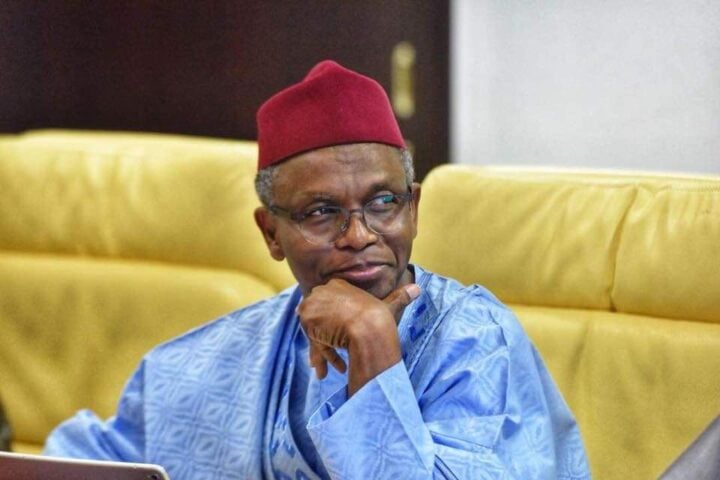
Former Kaduna State Governor, Nasir El-Rufai, was detained at the headquarters of the Economic and Financial Crimes Commission in Abuja on Monday night after hours of interrogation over an alleged N432 billion corruption probe.

El-Rufai, a chieftain of the African Democratic Congress, is also expected to face criminal prosecution over the alleged bugging of the National Security Adviser, Nuhu Ribadu’s phone.

Multiple sources within the anti-graft agency confirmed to The PUNCH that the former governor, who arrived at the commission’s Jabi headquarters around 10am in response to an invitation, was grilled over allegations arising from the 2024 report of the Kaduna State House of Assembly which accused his administration of misappropriating loans, violating due process in contract awards and plunging the state into heavy debt.

“The commission has been investigating him for about a year now. As a commission, we don’t just rush to invite suspects. Persons accused are always the last; that is after we might have done our investigation to an advanced stage.

“We are investigating him on the allegations against him by the Kaduna State Assembly,” a senior EFCC source told one of our correspondents.

Asked late Monday night whether El-Rufai would regain his freedom, the source responded bluntly, “He is still in our custody and wouldn’t be released today (Monday).”

The EFCC spokesman, Dele Oyewale, confirmed that the former governor honoured the commission’s invitation but declined further comments on the nature of the interrogation or the next line of action.

The detention marks a dramatic escalation in the legal troubles confronting the outspoken former Minister of the Federal Capital Territory, whose recent public criticism of the Federal Government and security agencies has triggered fresh political tensions.

Alleged N423bn misappropriation

The EFCC interrogation is rooted in the report of the Kaduna State House of Assembly’s ad hoc committee constituted in 2024 to investigate finances, loans and contracts awarded between 2015 and 2023 under El-Rufai’s administration.

Presenting the committee’s report during plenary last year, the committee chairman, Henry Zacharia, alleged that most of the loans obtained by the El-Rufai administration within the eight years were not utilised for the purposes for which they were secured.

While receiving the report, the Speaker of the House, Yusuf Dahiru Leman, alleged that about N423bn was siphoned under the El-Rufai administration, leaving Kaduna State with heavy financial liabilities and a rising debt profile.

The committee recommended the investigation and prosecution of the former governor and several members of his cabinet over alleged abuse of office, award of contracts without due process, diversion of public funds, money laundering and reckless borrowing.

The Assembly subsequently endorsed a petition to the EFCC and the Independent Corrupt Practices and Other Related Offences Commission, urging them to take up the matter.

Beyond the headline N423bn allegation, the legislative report also referenced disputed cash payments and contracts amounting to over N155m, as well as the alleged diversion of N1.37bn earmarked for a light rail project. It also cited the purported laundering of N64.8m by senior aides.

El-Rufai has consistently denied the allegations, describing the probe as politically motivated and insisting that all loans obtained during his tenure were duly appropriated and applied to infrastructural development, education reforms, healthcare upgrades and security interventions.

However, Monday’s detention suggests that anti-graft agencies have moved beyond preliminary review to active interrogation.

Ribadu’s bugged phone

As the EFCC grilled the former governor over financial allegations, the Federal Government filed criminal charges against him before the Federal High Court in Abuja over alleged unlawful interception of the phone communications of the National Security Adviser, Nuhu Ribadu.

The three-count charge, marked FHC/ABJ/CR/99/2026 and filed under the Cybercrimes (Prohibition, Prevention, etc) Amendment Act, 2024 and the Nigerian Communications Act, 2003, accused El-Rufai of admitting during a television interview that he and unnamed associates unlawfully intercepted Ribadu’s communications.

According to the charge sheet, the alleged admission was made on February 13, 2026, when El-Rufai appeared as a guest on Arise TV’s Prime Time Programme in Abuja.

In Count One, the Federal Government alleged that El-Rufai “did admit during the interview that you and your cohorts unlawfully intercepted the phone communications of the National Security Adviser, Nuhu Ribadu,” an offence said to be contrary to and punishable under Section 12(1) of the Cybercrimes (Prohibition, Prevention, etc) Amendment Act, 2024.

See also  UK to replace paper documents with eVisas from February 25

Count Two accused him of stating during the same interview that he knew and was associated with an individual who unlawfully intercepted the NSA’s phone communications without reporting the person to relevant security agencies, contrary to Section 27(b) of the Act.

Count Three alleged that El-Rufai and others still at large, sometime in 2026 in Abuja, used technical equipment or systems that compromised public safety and national security by unlawfully intercepting Ribadu’s phone communications, an offence punishable under Section 131(2) of the Nigerian Communications Act, 2003.

The prosecution claimed that the alleged act, which the defendant reportedly admitted to during the television interview, instilled “reasonable apprehension of insecurity among Nigerians.”

No date had been fixed for his arraignment as of press time.

The criminal charges stem directly from El-Rufai’s appearance on Arise TV last Friday, where he claimed he learnt of an alleged plan to arrest him through a leaked conversation from the NSA’s phone.

“Ribadu made the call, because we listened to their calls. The government thinks that they are the only ones who listen to calls. But we also have our ways. He made the call, he gave the order that they should arrest me.

“That technically is illegal. I know, but the government does it all the time. They listen to our calls all the time without a court order. But someone tapped his phone and told us that he gave the order,” he said.

The disclosure sent shockwaves through political and security circles, with analysts warning that if substantiated, the interception could amount to a grave breach of national security protocol.

Presidential aides were quick to react. The Special Adviser to the President on Information and Strategy, Bayo Onanuga, accused El-Rufai of attempting to create political tension and divert attention from corruption allegations in Kaduna State.

He wrote that the former governor’s actions were meant to “create political tension in the country, create an atmosphere of fear and unrest, and then damage the government through deliberate misinformation” and “divert attention from his domestic problems in Kaduna State, where he is facing massive corruption allegations.”

In Nigeria, unauthorised phone tapping is a serious offence.

According to the Cybercrimes (Prohibition, Prevention, etc.) Act 2015, offenders can face up to 10 years imprisonment, fines of up to N10m or both.

Under Section 12 on unauthorised interception, individuals who illegally intercept non-public communications (phone calls, emails, etc.) face a prison term of up to two years, a fine of up to N5m or both.

Recent interpretations, however, suggest that in cases involving related, more serious access offences, penalties could be extended to five years.

Unauthorised recording of private conversations, on the other hand, can lead to up to two years in prison while failure to report an illegal interception can lead to charges under the Act.

Dadiyata case reopened

In a parallel development, the Department of State Services has reopened investigations into the 2019 disappearance of Abubakar Idris, popularly known as Dadiyata, and has begun probing El-Rufai and his sons over the case.

Dadiyata, a lecturer at the Federal University Dutsinma, Katsina State, was declared missing on August 1, 2019, after gunmen reportedly took him from his residence in Kaduna. His whereabouts remain unknown nearly seven years later.

A security source told The PUNCH that the DSS recently seized El-Rufai’s passport at the Nnamdi Azikiwe International Airport, Abuja, to prevent him from travelling abroad while investigations are ongoing.

“The DSS has reopened the case of the 2019 disappearance in Kaduna of a renowned government critic, Abubakar Idris, better known as Dadiyata, and several other cases of missing persons.

“El’Rufai is fully aware that the DSS is investigating him and his two sons for Dadiyata’s kidnapping. That was why he rushed to the ARISE news channel to cook up stories about (Umar) Ganduje and the confessions of a ghost police officer, all in a bid to divert attention.

See also  Obasanjo reveals why NNPC refineries will never work again; read details

“He is aware of the security implications of seizing his passport. He knows he can’t officially leave the country, which is very bad for him. Several laws place a responsibility on citizens to assist with crime reporting and prevention.

“Section 123 of the Criminal Code Act prohibits the willful destruction or concealment of evidence, while the Criminal Code Act and the Penal Code, applicable to Kaduna State, deals with covering up treason, destroying evidence, or aiding suspects,” the source said.

Another source said investigators were examining social media posts made by El-Rufai’s sons, Bello and Bashir, following Dadiyata’s disappearance.

“Former governor El’Rufai claimed that until Dadiyata’s disappearance he didn’t know that anybody with such a name existed. However, social media posts by his sons, Bello and Bashir, suggest otherwise. Posts by his sons on ‘X’ clearly showed that Dadiyata was a problem for their family.

“That is why Bello and Bashir will be invited along with their father to help in our investigations,” the source added.

El-Rufai has maintained publicly that he neither knew Dadiyata personally nor had any reason to target him, insisting that the missing lecturer was a critic of the Kano State Government at the time.

Abuja, Kaduna protests

Monday’s developments triggered street actions in both Abuja and Kaduna.

At the EFCC headquarters, hundreds of demonstrators under the aegis of the Mega National Movement for Good Governance stormed the commission’s premises, demanding a thorough probe into the alleged N432bn corruption case.

Carrying placards with inscriptions such as “Answer the charges El-Rufai” and “El-Rufai not above the law,” the protesters attempted to march into the commission’s premises but were stopped by security operatives.

Addressing journalists, the group’s spokesman, Muhammad Abdullahi, said, “We reiterate its firm position that the ongoing prosecution of former Kaduna State Governor, Nasir El-Rufai, remains a lawful and constitutional matter strictly between him and the Government of Kaduna State. This issue should not be reduced to a mere political drama or emotional manipulation.

“It is a question of accountability and stewardship of public trust. The Kaduna State House of Assembly Ad-Hoc Committee Report (2024) raised serious concerns regarding financial management, public debt profile, and contract procedures under the previous administration.

“It is also a matter of public record that some former appointees and close allies — including Jafaru Sani, Jimmy Lawal, Bashir Saidu, and Samuel Aruwa — are already in custody or undergoing investigation in connection with these allegations.”

He added, “We emphasise that this is not about persecution; it is about prosecution grounded in law. The courtroom remains the proper venue for vindication. If El-Rufai is confident in his integrity, he should allow the judicial process to run its full course. Let integrity, not rhetoric, determine the outcome.”

Responding, EFCC spokesman Dele Oyewale said, “The EFCC recognises the right of Nigerians to lawful protest… As far as the EFCC is concerned, the right thing will be done. Our processes and procedures will be followed.”

At the same time, El-Rufai’s supporters gathered near the commission, chanting solidarity songs and holding placards reading, “El-Rufai is a citizen, not a subject” and “We stand with El-Rufai. We stand for law.”

In Kaduna, hundreds of protesters under the Coalition of Civil Society Organisations stormed the State House of Assembly demanding updates on the legislative probe.

“We are here to ask a legitimate question on behalf of the people: What progress has been made in the ongoing legislative probe, and what steps are being taken to ensure that justice is not delayed?” said Aliyu Muhammad, one of the conveners.

Responding, Speaker Yusuf Dahiru Leman said, “We share your pains and stand by our documented findings… Anybody found wanting will face the full wrath of the law. No one is above the law.”

Victims demand accountability

Adding another layer to the crisis, a coalition of terror victims in Kaduna State issued a statement calling for accountability over alleged human rights abuses during El-Rufai’s eight-year tenure.

See also  See the travails of Nigerian parents struggling to raise children abroad

The statement was signed on behalf of the victims by human rights defenders, including former chairman of the National Human Rights Commission, Professor Chidi Odinkalu.

He said, “We speak today (Monday) as representatives of countless individuals, families, and communities who endured eight years of profound hardship, terror, fear, and loss under the governorship of Nasir El-Rufai in Kaduna State (2015–2023).

“Our sole demand is accountability under the rule of law: thorough, independent investigations; prosecutions where evidence warrants; and closure for traumatized victims and families.”

The coalition cited cases, including the abduction and killing of Dr. Maiwada Galadima and the disappearance of Dadiyata, insisting that justice must be pursued.

Opposition reacts

The arrest and charges have drawn sharp reactions from opposition figures.

The National Publicity Secretary of the New Nigeria People’s Party, Ladipo Johnson, said, “I expect that there will be more of this drama towards the 2027 elections. They haven’t even investigated the matter. The FG is probably acting on his open admission. It will also depend on whether he meant what he said or not.

“But I felt they should have invited him before making a statement on the matter.”

The Interim National Chairman of the Labour Party, Senator Nenadi Usman, also shared a similar sentiment.

Usman spoke through her media aide, Ken Asogwa.

She said, “I think the Federal Government is taking the legal means to get him to explain the source of his stories.

“But I am surprised that the Federal Government went ahead to file charges without inviting him first to shed more light on the source of the information he gave out. What it means is that the Federal Government is already indicting him.”

Tinubu hails Ribadu

President Bola Tinubu on Monday praised Nuhu Ribadu, describing him as an illustrious son of Adamawa State who is “honest, bold, courageous and committed.”

Tinubu, who spoke at the Adamawa State Government House in Yola during a one-day visit, declared that Ribadu, “a son of the soil”, was doing “an excellent job” in the fight against terrorism and banditry, and vowed that together they would defeat the nation’s security threats.

“With you (Ribadu), we will defeat the bandits and terrorists.

“You’re a good National Security Adviser; honest, bold, courageous and committed to the job.

“I believe the state of Adamawa is strongly, strongly proud of you, because I am too,” the President said.

Tinubu’s declaration came days after El-Rufai, in a letter dated January 30, 2026, accused the ONSA of procuring approximately 10 kilogrammes of thallium sulphate, a colourless, odourless and highly toxic compound capable of causing death even in small doses, from a supplier in Poland.

In the letter titled “Request for Clarification on the Procurement of Thallium Sulphate,” El-Rufai demanded that Ribadu explain the purpose of the chemical, its storage arrangements, and whether NAFDAC and the Nigeria Centre for Disease Control were notified.

ONSA, in a response dated February 13, 2026 and signed by Brigadier-General O.M. Adesuyi on behalf of the NSA, denied procuring or initiating any purchase of thallium sulphate, and referred the allegation to the Department of State Services for investigation.

The unfolding developments represent one of the most consequential legal and political confrontations involving a former governor in recent years.

Once a key figure within the ruling establishment and a prominent voice in national policy debates, El-Rufai now faces simultaneous investigations into alleged financial impropriety, cybercrime and a reopened disappearance case.

The convergence of EFCC detention, fresh criminal charges, DSS investigations and street protests underscores the high stakes.

Whether the cases ultimately amount to lawful prosecution grounded in evidence or political persecution, as his allies allege, will likely be tested in the courtroom.

 For now, the former governor remains in EFCC custody, his political future hanging in the balance as Nigeria inches closer to another election cycle.


Continue Reading
Click to comment

Leave a Reply

Your email address will not be published. Required fields are marked *

News

Coup plotters reached out for spiritual cover — Cleric

Published

on

The Federal High Court in Abuja on Monday watched a video recording in which an Islamic cleric, standing trial over the coup plot, told investigators that he warned the suspected conspirators that their plan would fail and that they would eventually be betrayed.

Justice Joyce Abdulmalik also ordered a joint trial-within-trial to determine the voluntariness of statements and video recordings the prosecution sought to tender against the six defendants.

The ruling followed objections by defence lawyers, who argued that the statements were obtained in violation of the Administration of Criminal Justice Act and the Anti-Torture Act.

The Federal Government had on April 22 arraigned six defendants, including a retired major-general, over allegations of treason, terrorism, money laundering and conspiracy to overthrow President Bola Tinubu’s government.

The defendants are Maj-Gen Mohammed Ibrahim Gana (retd.); Navy Capt Erasmus Ochegobia Victor (retd.); police inspector Ahmed Ibrahim; Presidential Villa electrician Zekeri Umoru; Bukar Kashim Goni; and a Zaria-based Islamic cleric, Sheikh Abdulkadir Sani.

They all pleaded not guilty to the 13 charges.

At Monday’s proceedings, prosecution counsel, Rotimi Oyedepo (SAN), informed the court that the fourth prosecution witness remained in the witness box and applied for the playback of a video recording containing the alleged statement of the sixth defendant, Sani.

In the video played in open court, Sani said he knew the alleged ringleader, Col Maaji, for less than one year and was introduced to him through a man identified as Sanda.

The cleric said Sanda approached him for prayers concerning a planned coup and informed him that his “oga” needed spiritual guidance and divination over the success of the operation.

According to Sani, after conducting prayers, he informed them that the operation would fail.

“I warned them the coup would fail,” he said in the recording.

He added that he also told them that two persons involved in the alleged conspiracy would eventually betray the group.

Sani further stated that Sanda later returned with another request for prayers “so that the two individuals would not betray the group.”

The cleric said money was subsequently transferred to him for prayers and charity, while the names of persons allegedly involved in the plot were also sent to him for inclusion in the prayers.

According to him, shortly after the prayers commenced, Sanda informed him that Col Maaji had not been seen for four days.

He added that he later learnt through media reports that arrests had been made over an alleged coup plot.

See also  See the real story behind failed police communications system

Sani, however, maintained in the video that the money transferred to him was not payment for supporting a coup.

“The money was meant for prayers,” he told investigators.

He also admitted that he understood a coup to mean a military overthrow of government, but claimed he did not report the alleged plot because he did not know who to report to.

The cleric narrated that he was later arrested after visiting the Economic and Financial Crimes Commission over restrictions placed on his bank account.

According to him, he discovered that the account had been flagged when he attempted to make withdrawals from the money sent to him.

He said that after contacting an EFCC deputy director, he was invited to the commission’s office, where he explained that the funds were meant for prayers.

Sani also stated in the recording that he did not make any statement relating to a coup while in EFCC custody.

Before the end of the video, the cleric confirmed that nobody assaulted or tortured him and that his “statements were made voluntarily.”

Following the playback, Oyedepo applied to tender extra-judicial statements allegedly made by the first to fifth defendants before a Special Investigation Panel and military police authorities, alongside Sani’s statement before military investigators.

The move was strongly opposed by lawyers representing all six defendants.

Muhammed Ndayako (SAN) appeared for the first defendant, while Paul Erokoro (SAN), A.H. Shehu, C.D. Okafor, M.A. Ibrahim, Olalekan Ojo (SAN), and Sanusi Musa (SAN) represented the other defendants.

The defence lawyers argued that the statements and accompanying video recordings were not voluntarily made and failed to comply with safeguards provided under the ACJA.

Some of the lawyers also relied on provisions of the Anti-Torture Act, 2017, alleging oppression, inducement and coercion during interrogation.

Counsel for the second defendant argued that his client was neither informed of his right to legal representation nor granted access to counsel before his statement was recorded.

The fourth defendant’s lawyer further argued that the video failed to establish whether his client’s legs were free during interrogation, insisting that coercion could not be ruled out.

Ojo, counsel for the fifth defendant, urged the court to order separate trial-within-trial proceedings for each defendant since all the accused persons were disputing the voluntariness of their statements.

Responding, Oyedepo said the prosecution was “not afraid of a trial within a trial.”

See also  Nigeria Must Stop Normalising Past Evils – Farotimi Knocks ‘Statesman’ Label For IBB

He, however, urged the court to conduct a single joint proceeding instead of separate hearings for each defendant.

After listening to the arguments, Justice Abdulmalik ruled that the court would conduct “a joint trial within a trial to determine the voluntariness of the statements.”

The judge subsequently adjourned the matter till May 12 for continuation of proceedings.

The prosecution had alleged that the defendants planned to attack the Presidential Villa, detain Tinubu and other top government officials, and take control of strategic institutions.

Investigators also alleged that no fewer than 32 vehicles were procured for covert operations linked to the alleged plot.

Relatives protest

Meanwhile, relatives and sympathisers of military officers standing trial over the coup plot staged a peaceful protest at the Federal Ministry of Justice in Abuja on Monday, demanding an open trial and the release of the detained suspects.

The demonstrators, who converged on the ministry’s entrance, chanted solidarity songs and displayed placards bearing inscriptions such as “Tinubu Release Our Heroes,” “Lt Col C Chima 419 Witness,” and “AGF, Stop the Kangaroo Court Martial Now.”

Security personnel, including operatives of the Nigeria Police Force, however, prevented the protesters from gaining access to the ministry premises, restricting them to the entrance gate.

The protest comes amid growing criticism over the handling of the coup trial, particularly after journalists were barred last week from covering proceedings involving some of the accused officers.

Addressing journalists during the protest, the leader of the demonstrators, Justice Isimili, said many of those present were relatives of the detained officers who travelled from different parts of the country.

“Many of the people who turned out today are relatives of our heroes. Some of them came from Jos, Kano and Sokoto to protest the continued detention of the alleged coup suspects who are our fathers, uncles and brothers.

“All we are asking is for the President, who is our father, to temper justice with mercy. We want him to come to our aid. Many of us have not been able to rest or do anything because of our loved ones who are still being held.”

He condemned what he described as the secretive nature of the ongoing court-martial proceedings.

“We want an open trial instead of what they are doing in the name of court martial, where family members, journalists and the public are denied access to the court proceedings. All we are interested in is their freedom,” he added.

See also  UK to replace paper documents with eVisas from February 25

Another protester, Abdullahi Kale, who claimed he travelled from Sokoto for the demonstration, alleged that the continued detention of the suspects was creating the impression that northern military officers were being targeted.

“No freedom, no second term. If the President and the AGF fail to release them, we will mobilise the North against Tinubu’s re-election,” he threatened.

A female protester, Habibat Muhammad, who carried her one-year-old child, Abba, on her back, also appealed for leniency.

Speaking in Hausa, she lamented that life had become difficult for many of the affected families since the suspects were arrested about eight months ago from their homes and military formations.

Responding to the protesters, a director in the ministry, who declined to disclose her name, urged the demonstrators to remain calm and orderly.

According to her, the ministry had yet to receive any formal letter detailing their grievances and demands.

“This is what we told them. They should go back and put their house in order before coming back.

“When you return, let only two persons come with your letter. But if you insist on coming as a group like you did today, it will be misrepresented to mean another thing.”

When pressed to reveal her identity, the official declined.

“On this issue, I can’t give a name. I am just a director in the ministry. What I have only come to offer them is an explanation, which has been done. That is all,” she stated.

The latest protest adds to earlier demonstrations by families of the detained officers, who have repeatedly demanded either their release or immediate arraignment in a transparent and public court process.

The controversy surrounding the trial deepened two weeks ago when journalists were barred from covering bail proceedings involving six of the suspects at the Federal High Court in Abuja.

Court officials, backed by operatives of the Department of State Services, reportedly ordered reporters out of the courtroom shortly before proceedings began.

The suspects are facing charges bordering on treason, terrorism, money laundering and failure to disclose information.

While some serving military officers are being tried before a court-martial in Abuja, others are facing trial in civilian courts.

punch.ng

FOLLOW US ON:

FACEBOOK

TWITTER

PINTEREST

TIKTOK

YOUTUBE

LINKEDIN

INSTAGRAM

Continue Reading

News

ISIS moves operations to West Africa, US warns

Published

on

The United States has identified Nigeria and the Lake Chad Basin as critical fronts in its 2026 counterterrorism strategy, warning that extremist groups operating across Africa remain a growing threat to global security.

In the strategy document, the US government said parts of Africa, including West Africa, the Sahel region, the Lake Chad Basin, Mozambique, Sudan and Somalia, have witnessed a resurgence of terrorist activities following the collapse of ISIS strongholds in Iraq and Syria.

The document noted that remnants of the Islamic State and affiliated jihadist groups had relocated to Africa and Central Asia, exploiting ungoverned spaces and weak security structures.

“President Trump unleashed the greatest fighting force the world has ever seen, and within a matter of weeks, a Jihadi insurgency which controlled vast territories across Iraq and Syria was gone.

“Subsequently, the surviving remnants of the world’s most dangerous terrorist group of the modern age were forced to relocate to Africa and Central Asia, in turn exploiting the ungoverned spaces there.

“As a result, today, there are parts of Africa where a resurgent terror threat is the reality. These include in West Africa, the Sahel region, the Lake Chad Basin, Mozambique, Sudan, and of course Somalia, where parts of ISIS have re-established themselves and Al Shabaab maintains its tribal-based Islamist insurgency,” it read.

The US said its major objective in Africa would be to prevent extremist groups from establishing operational bases capable of launching attacks against American interests.

“We will continue to work together with governments threatened by groups like ISIS and al Qaeda affiliates who threaten us as well, and assist them with actionable intelligence and CT partner-force development until our shared foes no longer pose a serious threat to either them or us,” it added.

See also  Bayelsa deputy gov sues Assembly over impeachment plot

The document also declared that the protection of Christians targeted by terrorist groups would remain a key priority of the administration.

According to the strategy, Washington would continue rebuilding bilateral counterterrorism relations with African governments while reducing direct military deployments on the continent.

“We will continue to work together with governments threatened by groups like ISIS and al Qaeda affiliates who threaten us as well, and assist them with actionable intelligence and CT partner-force development,” the document stated.

The strategy criticised previous US foreign policies under former President Joe Biden, claiming they weakened counterterrorism efforts and allowed extremist organisations to regroup across Africa.

Referencing Nigeria specifically, the document praised recent actions taken by President Donald Trump over attacks on Christians in the country.

“With the decisive action President Trump recently took in Nigeria, he made it clear that the slaughter of Christians will not go unchecked,” the document stated.

It quoted Trump as saying on Christmas Day in 2025, “I have previously warned these terrorists that if they did not stop the slaughtering of Christians, there would be hell to pay, and tonight, there was.”

The US also said it would maintain a “light military footprint” in Africa while expecting regional partners to shoulder more of the counterterrorism burden through intelligence sharing and coordinated operations.

According to the strategy, African nations possess “almost limitless potential” if governments are able to exercise effective territorial control and deny safe havens to terrorist organisations and violent extremist groups.

punch.ng

FOLLOW US ON:

FACEBOOK

TWITTER

PINTEREST

TIKTOK

YOUTUBE

LINKEDIN

INSTAGRAM

Continue Reading

News

Ramaphosa slams xenophobic violence, vows illegal immigrants arrest

Published

on

South African President Cyril Ramaphosa has condemned recent violent protests and attacks targeting foreign nationals in parts of the country, describing those behind the unrest as “opportunists” exploiting legitimate socio-economic grievances.

In a public address issued on Monday, Ramaphosa said the violent acts being recorded in some communities do not represent the South African government or the majority of citizens.

He stressed that individuals involved in stopping people, conducting searches, or checking identities without legal authority were engaging in unlawful conduct.

“These are the acts of opportunists who are exploiting the legitimate grievances, particularly those of the poor, under the false guise of ‘community activism.

“Some of these people are assuming functions that only state officials are permitted to perform. Such lawlessness will not be tolerated, regardless of who the perpetrators or victims are,” he said.

The president, however, maintained that South Africa must continue to address illegal immigration in a lawful and structured manner, warning that undocumented migration places pressure on public services and worsens unemployment.

“In a country with high unemployment, some employers are exploiting undocumented, cheaper foreign labour over hiring citizens and paying them legal wages.

“This is fuelling social tension and undermining labour protection laws,” he said.

Ramaphosa noted that the government was strengthening border security through the Border Management Authority and deploying the military to curb illegal crossings.

According to him, about 450,000 attempted illegal entries were intercepted in the past financial year.

He also confirmed ongoing immigration enforcement actions, including arrests and deportations of undocumented migrants, alongside reforms to the country’s migration system.

See also  Obasanjo, Fayose reignite old enmity, trade insults

“We are stepping up workplace enforcement against employers who hire undocumented foreign nationals in violation of labour and immigration laws,” he said.

The president added that South Africa would also deploy up to 10,000 labour inspectors to improve compliance with employment and immigration regulations.

He urged both citizens and foreign nationals to comply with South African laws, warning that illegal activities involving fake documentation, bribery, or exploitation of public services would be prosecuted.

“Everyone in South Africa is bound by the same laws,” he said.

“We must make it clear that there is no place for xenophobia, ethnic mobilisation, intolerance or violence.”

Ramaphosa also defended South Africa’s refugee and migration framework, noting that the country continues to uphold human rights while managing immigration pressures.

He highlighted South Africa’s role in African integration, saying millions of visitors from across the continent enter the country annually for tourism, education, and trade.

“South Africa continues to play its part in deepening African integration and solidarity,” he said.

He called for cooperation between countries to address migration challenges and urged restraint amid rising tensions.

The remarks come amid renewed anti-foreigner protests and reported incidents of looting and violence in parts of Durban, Cape Town, East London, and KwaZulu-Natal.

Recall that the Nigerians in Diaspora Commission has advised Nigerians in South Africa to avoid confrontations, stay alert, and monitor official updates as authorities continue to manage the situation.

The commission further urged Nigerian business owners to take precautionary measures.

NiDCOM noted that the Nigerian Consulate in Johannesburg remains operational and is working with South African authorities to ensure the safety of citizens.

See also  PHOTOS: Protesters storm NASS, demand Senate confirmation of NERC Chairman nominee

The commission also disclosed that the Minister of State for Foreign Affairs, Bianca Odumegwu-Ojukwu, is engaging with her South African counterpart over the situation.

punch.ng

FOLLOW US ON:

FACEBOOK

TWITTER

PINTEREST

TIKTOK

YOUTUBE

LINKEDIN

INSTAGRAM

Continue Reading

Trending