Connect with us

Business

SERAP Sues NNPC Over Alleged Missing $49.7 Million, ₦22.3 Billion Oil Revenue

Published

on

The Socio‑Economic Rights and Accountability Project (SERAP) has filed a lawsuit against the Nigerian National Petroleum Company (NNPC) Limited, accusing the oil firm of failing to account for billions of naira and foreign currency revenue allegedly missing or diverted from the nation’s oil earnings.

The suit stems from findings documented in the 2022 audited report of the Auditor‑General of the Federation, which was published on September 9, 2025.

In the suit number FHC/ABJ/CS/195/2026 filed last Friday at the Federal High Court in Abuja, SERAP is seeking: “an order of mandamus to direct and compel the NNPCL to account for the alleged missing or diverted N22.3 billion, USD$49.7 million, £14.3 million, and €5.2 million oil money.”

SERAP is asking the court to “direct and compel the NNPCL to disclose the specific financial transactions carried out in respect of the alleged missing or diverted N22.3 billion, USD$49.7 million, £14.3 million and €5.2 million oil money, including details of disbursement, the contractors, and other individuals who collected the money.”

In the suit, SERAP is arguing that, “The diverted or misappropriated oil revenues reflect a failure of NNPCL accountability more generally and are directly linked to the institution’s continuing failure to uphold the principles of transparency and accountability.”

SERAP is also arguing that, “granting the reliefs sought would strike a blow against the impunity of those responsible for the missing or diverted oil money, and ensure that the money is returned for the sake of NNPCL’s victims, Nigerians.”

SERAP said, “The allegations have also undermined the economic development of the country, trapped the majority of Nigerians in poverty, and deprived them of opportunities.”

According to SERAP, “The Auditor-General has for many years documented reports of disappearance of oil money from the NNPCL. Nigerians continue to bear the brunt of this missing oil money meant to provide essential public services for Nigerians.”

SERAP is also arguing that, “Combating the corruption epidemic in the oil sector would alleviate poverty, improve access of Nigerians to basic public goods and services, and enhance the ability of the government to meet its human rights and anti-corruption obligations.”

The lawsuit filed on behalf of SERAP by its lawyers, Oluwakemi Agunbiade and Valentina Adegoke, read in part: “The diverted or misappropriated oil revenues have further damaged the already precarious economy and contributed to very high levels of deficit spending and borrowing by the government.”

See also  N5.6tn debt: Energy crisis looms as gas firms cut supply

“Despite the country’s enormous oil wealth, ordinary Nigerians have derived very little benefit from oil money primarily because of the widespread grand corruption, including in the NNPCL, and the entrenched culture of impunity of perpetrators.”

“The grim allegations by the Auditor-General suggest a grave violation of the public trust and the provisions of the Nigerian Constitution, national anticorruption laws, and the country’s international human rights and anticorruption obligations.”

“According to the 2022 audited report by the Auditor General of the Federation, published on 9 September 2025, the Nigerian National Petroleum Corporation Limited (NNPCL) failed to account for over ₦22.3 billion, $49.7 million, £14.3 million and €5.2 million oil money.”

“The NNPCL in 2020 reportedly paid over ₦292 million [₦292,609,972.29] ‘for a contract to construct an Accident and Emergency Facility along Airport Road, Abuja.’ But ‘the contractor has abandoned the contract, and failed to execute the job, despite collecting the fee.’”

“The Auditor-General fears the contract money may have been ‘diverted’. He wants the money ‘recovered from the contractor and remitted to the treasury.’”

“The NNPCL in 2021 also reportedly spent over GBP£14 million [£14,322,426.59] ‘to repair its London office.’ But ‘there was no evidence to show that the money was actually spent, and no documents of any spending’.”

“The NNPCL also ‘irregularly paid’ over USD$22 million [$22,842,938.28] to a contractor for lifting 9 cargoes of crude oil.’ The NNPCL ‘failed to explain why the amount due to it from crude from January to October 2019 was only $4,858,997.22 and why the contractor got over $22 million for crude for the same period.’”

“The NNPCL in 2021 ‘irregularly paid ₦2.3 billion [₦2,379,488,622.99] as car cash option to 100 staff’ but ‘without the approval of the National Salaries, Incomes and Wages Commission’, and ‘without any document to show that the 100 staff applied for the cash options and any rationale for the payments.’”

“The NNPCL in 2021 also reportedly ‘failed to deduct statutory taxes of over ₦247 million [₦247,181,597.92] from payments made to contractors and service providers.’ The NNPCL also ‘failed to deduct statutory taxes of over USD$529,000 [$529,863.24] from payments made to contractors and service providers.’”

See also  Nigeria’s World Bank debt to hit $9.65bn

“The NNPCL ‘paid over ₦3bn [₦3,445,022,107.40] for various services’ but ‘without any documents or trace’. The Auditor-General fears ‘the money may have diverted’.”

“The NNPCL irregularly renewed a contract for over USD$1 million [$1,801,500.00] for charter hire of coastal vessel.’ The money was paid ‘before the consummation of a formal contract ratification.’”

“The NNPCL also ‘irregularly paid a contractor over N355 million [N355,436,310.42] as consultancy fees for negotiating and securing a waiver to avoid demurrage on abandoned cargoes.’”

“The NNPCL paid over ₦474 million [₦474,462,744.53] to a contractor for the connection of Kaduna Refining and Petrochemical Company Limited to the National Grid.’ The Auditor-General is concerned ‘the money may have been lost’.”

“The NNPCL ‘paid over USD$2 million [$2,006,293.20] to a contractor for the rehabilitation and upgrade of system-depot project’, but ‘without any documents’. The NNPCL also ‘paid over ₦478 million [₦478,505,300.00] to a contractor for the rehabilitation and upgrade of system-depot project’, but ‘without any documents’.”

“The NNPCL in 2019 ‘awarded a contract for over USD$8 million [$8, 211,432.00] ‘for the emergency procurement and installation of custody transfer meters on crude oil and product pipelines at eleven locations.’ The Auditor-General fears that ‘the payments may be for work not executed.’”

“The NNPCL ‘irregularly paid over €5 million [€5,165,426.26] to a contractor for the operation and maintenance of Atlas Cove Jetty Facility’ but ‘without any documents.’ The Auditor-General fears that ‘the money may have been diverted’.”

“The NNPCL ‘paid over USD$1 million [$1,035,132.81] as legacy debt for charter hire of coastal vessels to a company without power of attorney.’ The Auditor-General fears that ‘the money may have been diverted’.’”

“The NNPCL ‘inflated a contract for over USD$1 million [$1,926,497.38] to hire a Time Charter for Carriage of Petroleum Products.’ The Auditor-General fears that ‘the money may have been diverted’.”

“The NNPCL ‘paid $156,000.00 to a consultant as outstanding fee for advising on the financing of the rehabilitation of PHRC’, but ‘the payment is doubtful’’. The Auditor-General fears that ‘the money may have been diverted’.”

“The NNPCL ‘failed to deduct USD$8,355.18 as taxes from the payment of outstanding fees to a consultant for advising on the financing of the rehabilitation of PHRC.’”

“The NNPCL ‘irregularly paid over ₦82 million [₦82,647,151.00] to a consultant for geotechnical/geophysical investigations of the proposed Independent Power Plant Project site.’ But ‘there was no document showing any evidence of payment’. The Auditor-General fears that ‘the money may have been diverted.’”

See also  NNPC links cooking-gas price hike to PENGASSAN strike

“The NNPCL ‘paid over ₦246 million [₦246,196,566.00] for a contract for the purchase and supply of 2400 meters of seamless carbon steel pipe to Warri Refinery Petrochemicals Company Limited.’ But ‘the contract was not never executed and the items were not supplied.’”

“The NNPCL ‘failed to deduct over ₦46 million [₦46,244,033.79] as taxes from a consultancy contract in December 2020 and 2021.’ The Auditor-General wants ‘the money recovered and remitted to the treasury.’”

“The NNPCL ‘irregularly paid ₦200 million [₦200,000,000.00] as settlement for tax renegotiation.’ The Auditor-General fears that ‘the money may have been diverted.’”

“The NNPCL ‘failed to remit over ₦12 billion [₦12,721,000,000.00] into the general reserve fund its operating surplus for December 2020.’ The Auditor-General fears that ‘the money may have been diverted.’”

“The NNPCL ‘irregularly paid ₦152 million [₦152,000,000.00] to a company to execute a procurement contract requested from the Office of the Inspector-General of Police’, but ‘without any documents.’”

“The NNPCL ‘irregularly paid ₦25,000,000.00 as additional consultancy fee on a contract for accounting support.’ The Auditor-General fears that ‘the money may have been diverted.’ He wants ‘the money recovered and remitted to the treasury.’”

“The NNPCL ‘paid over USD$12 million [$12,444,313.22] to a contractor to buy and install new diesel generation set at Mosimi Depot.’ But there is no evidence that the project has been fully executed, despite the fact that the contract specified that the project awarded in 2020 should be completed within 15 months.’”

“The NNPCL irregularly paid over N145 million [N145,933,833.00] for a contract for the operation and maintenance of Electro-Mechanical Facilities in the NNPC Towers. The contract was automatically renewed on a yearly basis without creating room for a fresh contract, where other consultants would be given an opportunity to be considered. The Auditor-General wants the money accounted for.”

“The NNPCL ‘paid 13 contractors over ₦1 billion [₦1,212,192,409.97] for various works between 2020 and 2021’, but ‘there is no evidence of any work done by the contractors as there were no supporting documents.’”

No date has been fixed for the hearing of the suit.

FOLLOW US ON:

FACEBOOK

TWITTER

PINTEREST

TIKTOK

YOUTUBE

LINKEDIN

TUMBLR

INSTAGRAM

Continue Reading
Click to comment

Leave a Reply

Your email address will not be published. Required fields are marked *

Business

DisCos earn N603bn as power offtake drops

Published

on

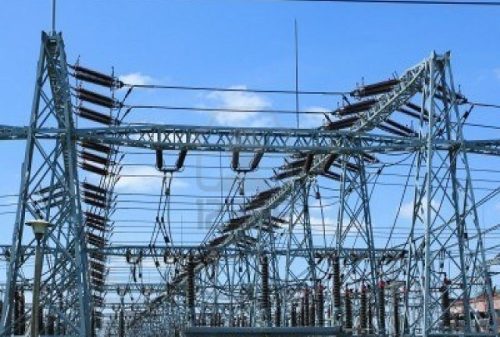
Electricity distribution companies collected N603.64bn from customers in the second quarter of 2026, despite a decline in the volume of electricity they received from the power market.

The figure was contained in the Nigerian Electricity Regulatory Commission’s second-quarter 2026 report, which showed that the average energy offtake by the DisCos at their trading points fell to 3,197.03 megawatt-hours per hour in the quarter.

The Q2 figure represented a 112.45MWh/h, or 3.40 per cent, decline from the 3,309.48MWh/h average recorded in the first quarter. Despite the decline in offtake, the DisCos recorded an overall offtake performance of 94.07 per cent during the quarter, against available partially contracted capacity of 3,398.41MWh/h.

According to the report, the DisCos received a total of 6,982.32 gigawatt-hours of electricity during the quarter but billed customers for only 5,812.31GWh. It stated, “This translates to an overall energy accounting efficiency of 83.24 per cent and represents a 0.24pp decrease compared to 2026/Q1 (83.48 per cent).”

The report further revealed that the naira value of electricity off-taken by the DisCos stood at N946.57bn, while the total value of energy billed to customers was N744.67bn.

This translated to a billing efficiency of 78.67 per cent, representing a decline of 0.57 percentage points from the 79.24 per cent recorded in the first quarter. At the collection stage, the DisCos recovered N603.64bn from the N744.67bn billed to customers, translating to a collection efficiency of 81.06 per cent.

The report said this represented an improvement of 2.11 percentage points from the 78.95 per cent recorded in Q1. However, the difference between the amount billed and the amount collected stood at N141.03bn during the quarter.

See also  Dangote official revealed that Nigeria’s petrol, diesel are subsidised

The report also disclosed that the weighted average Aggregate Technical, Commercial and Collection losses across the 11 DisCos stood at 36.23 per cent in Q2.

It stated, “The ATC&C loss of 36.23 per cent is 19.31pp higher than the 2026 MYTO target (16.92 per cent) and translates to a cumulative revenue loss of N129.07 billion across all DisCos.”

The 36.23 per cent loss, however, represented a 1.21 percentage-point improvement from the 37.44 per cent recorded in Q1.

The report noted that all the DisCos failed to meet their ATC&C targets during the quarter, with “Kaduna DisCo recording the worst underperformance relative to the target (Actual – 67.70 per cent vs target – 18.18 per cent),” it stated.

On market obligations, the report said the cumulative upstream invoice payable by the DisCos stood at N410.38bn in Q2.

The amount comprised N326.46bn for generation costs from the Nigerian Bulk Electricity Trading Company and N83.92bn for transmission and administrative services provided by the market operator.

The DisCos collectively remitted N385.44bn, comprising N306.62bn to NBET and N78.82bn to the market operator, leaving an outstanding balance of N24.94bn. This represented a market remittance performance of 93.92 per cent, slightly lower than the 94.08 per cent recorded in Q1.

The report added that the Federal Government had taken responsibility for about 50 per cent, or N321.26bn, of the total generation costs through subsidies arising from the freezing of end-use customer tariffs at the rates applicable in July 2024.

Meanwhile, three international bilateral customers purchasing electricity from grid-connected generating companies paid $8.67m against an $18.84m invoice issued by the market operator during the quarter.

See also  Customs hand over seized N40.7m petrol to NMDPRA

This represented a remittance rate of 46.02 per cent. Domestic bilateral customers, on the other hand, paid N6.91bn against an invoice of N7.55bn, representing a remittance rate of 91.54 per cent.

Source: punchng.com

FOLLOW US ON:

FACEBOOK

TWITTER

PINTEREST

TIKTOK

YOUTUBE

LINKEDIN

INSTAGRAM

Continue Reading

Business

Personal loans rise to N2tn as Nigerians borrow more

Published

on

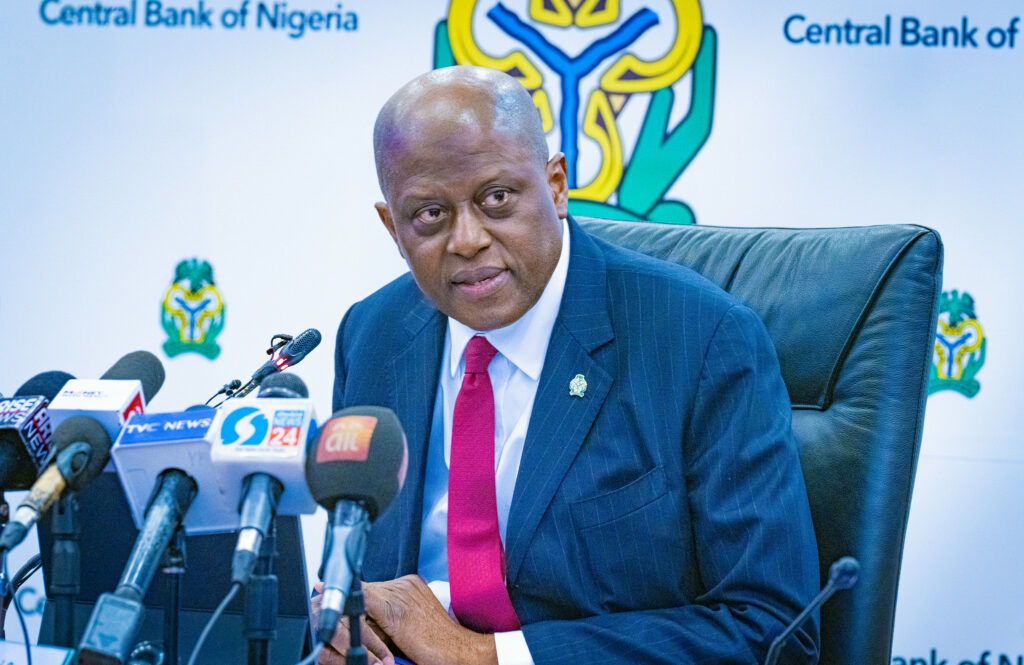
Personal loans obtained by Nigerians rose to an estimated N2.06tn in May 2026, as consumer credit continued to expand amid persistent cost pressures and weak consumer spending, according to the latest Economic Report of the Central Bank of Nigeria.

The figure, calculated from data contained in the CBN’s May 2026 Economic Report, represents about 64.78 per cent of the N3.18tn total consumer credit outstanding during the month. The report covers developments in the real, fiscal, financial and external sectors of the economy.

The apex bank said consumer credit increased by 1.60 per cent from N3.13tn in April to N3.18tn in May, indicating that Nigerians borrowed an additional N50bn within one month.

It said, “Consumer credit outstanding increased by 1.60 per cent to N3.18tn from N3.13tn in the preceding month, driven by growth in personal and retail loans, which rose by 1.98 and 0.90 per cent, respectively.”

The CBN added, “Personal loans remained the dominant component of consumer credit, accounting for 64.78 per cent, while retail loans constituted 35.22 per cent.”

Based on the proportions reported by the apex bank, personal loans stood at approximately N2.06tn at the end of May, while retail loans amounted to about N1.12tn.

The 1.98 per cent month-on-month increase in personal loans suggests that the balance rose by roughly N40bn during the period. Retail loans, which include credit tied more directly to the purchase of goods and services, recorded a slower increase of 0.90 per cent.

The figures show that personal borrowing remained the main driver of Nigeria’s consumer-credit market, accounting for nearly two-thirds of outstanding credit.

See also  Customs hand over seized N40.7m petrol to NMDPRA

The increase came against a challenging operating environment for households and businesses. The CBN reported that economic activity remained weak in May, with its composite Purchasing Managers’ Index at 49.60 points, slightly higher than 49.40 points in April but still below the 50-point threshold separating expansion from contraction.

According to the bank, the contraction reflected subdued demand, declining new orders and elevated production costs. It also identified weak consumer spending and higher energy-related costs as pressures on the industry and services sectors.

Inflation also remained elevated during the period. Headline inflation increased to 15.93 per cent in May from 15.69 per cent in April, which the CBN attributed to persistent cost pressures and higher energy prices. However, month-on-month inflation slowed to 1.75 per cent from 2.13 per cent.

The combination of rising consumer credit and weak consumer spending suggests that households were increasingly accessing credit at a time when living and operating costs remained under pressure.

A recent report Enhancing Financial Inclusion & Advancement noted that four in every 10 Nigerians borrowing from formal financial institutions now take loans mainly for consumption and coping needs, as rising financial pressures increasingly push credit away from productive activities.

The 2026 Access to Financial Services in Nigeria Survey revealed that 40.8 per cent of formal borrowers used loans for coping and consumption, up sharply from 31.7 per cent in 2023.

The 9.1 percentage-point increase made coping and consumption the largest purpose of formal credit, overtaking productive enterprise borrowing, which fell from 40.2 per cent to 34.3 per cent during the same period.

See also  NNPC links cooking-gas price hike to PENGASSAN strike

Borrowing for household assets also declined from 25.2 per cent to 23.4 per cent. The report warned, “Coping/consumption purposes rose from 31.7 per cent to 40.8 per cent; productive purpose fell from 40.2 per cent to 34.3 per cent. We need to ensure that credit builds productive capacity and does not produce distress.”

Formal credit use increased from six per cent of adults in 2023 to 10 per cent in 2026, with about 11.9 million Nigerians borrowing from regulated providers. When informal sources were included, 36 per cent of adults had access to some form of credit.

Credit use among informally employed Nigerians tripled from five per cent to 15 per cent, while borrowing among people aged 18 to 35 rose from four per cent to 10 per cent. Business owners recorded an increase from four per cent to 10 per cent, while farmers rose from two per cent to six per cent.

However, the report found significant distress among borrowers. About 45.8 per cent of formal-credit users reported some or serious repayment stress, while 83.8 per cent experienced ongoing financial stress.

Source: punchng.com

FOLLOW US ON:

FACEBOOK

TWITTER

PINTEREST

TIKTOK

YOUTUBE

LINKEDIN

INSTAGRAM
Continue Reading

Business

NAFDAC seizes N300m banned drinks in Lagos

Published

on

The National Agency for Food and Drug Administration and Control has seized alcoholic beverages worth an estimated N300m packaged in sachets and PET bottles below 200ml during enforcement operations in Lagos State.

NAFDAC disclosed this in a statement shared on its Facebook page on Sunday, adding that some distributors and retailers involved in the sale of the prohibited products were arrested.

The agency said the enforcement operations were carried out at Ile-Epo Market, Ojuwoye Market in Mushin and Oke-Arin Market on Lagos Island.

“Officials evacuated several cartons of alcoholic beverages packaged in sachets and PET bottles below 200ml from these locations.

“Distributors and retailers were arrested during operations at Ile-Epo Market, while raids were also conducted at Ojuwoye Market, Mushin, and Oke-Arin Market, Lagos Island,” the statement said.

NAFDAC said investigations revealed that some distributors and retailers were hoarding the prohibited products amid increased demand and rising prices.

The agency said the enforcement was part of efforts to ensure compliance with the ban on the sale and distribution of alcoholic beverages packaged in sachets and PET bottles below 200ml.

It warned distributors, retailers and other operators against selling, distributing or hoarding the prohibited products.

“NAFDAC emphasises that the ban remains in force and warns distributors, retailers and other operators against the sale, distribution or hoarding of the prohibited products.

“The value of the seized products is estimated at N300m,” it stated.

PUNCH Metro reported on August 25 that NAFDAC ordered manufacturers of banned alcoholic beverages packaged in sachets and polyethylene terephthalate bottles below 200ml to recall the products nationwide or risk closure of their facilities.

See also  IMF raises Nigeria’s growth to 3.9%

NAFDAC had also vowed to fully enforce the Federal Government-approved prohibition of alcoholic beverages packaged in sachets and PET or plastic bottles below 200ml, warning that the ban was irrevocable.

The agency had stated that the years of grace given to manufacturers by the Federal Government to stop producing the products had expired.

Source: punchng.com

FOLLOW US ON:

FACEBOOK

TWITTER

PINTEREST

TIKTOK

YOUTUBE

LINKEDIN

INSTAGRAM

Continue Reading

Trending