Connect with us

Lifestyle

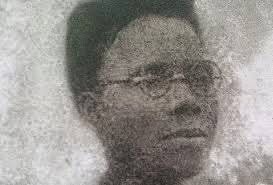
Adunni Oluwole: The Fearless Yoruba Woman Who Warned Nigeria Against Independence

Published

on

Adunni Oluwole remains one of the most controversial and intriguing figures in Nigeria’s late colonial political history. At a time when nationalist leaders were mobilising the masses for immediate self-rule, Oluwole stood almost alone as a vocal opponent of rapid independence, arguing that Nigeria was not yet prepared for the responsibilities and dangers that would follow the departure of British colonial administration.

Born in 1905 into the family of an Ibadan warrior, Adunni Oluwole’s reputation for fearlessness was rooted in both her upbringing and her temperament. Her early life was partly spent under the care of Bishop Howells of St John’s Church, Aroloya, Lagos, after which she grew up in Mushin. From a young age, she showed signs of independence and creativity. As a youth, she wrote a highly successful play for the Girls’ Guild of St John’s Church, Lagos, which was directed by Herbert Macaulay, one of Nigeria’s foremost nationalists. She later distinguished herself as the only woman to found a professional theatre company in Western Nigeria, using drama as a tool for social and political commentary.

Oluwole rose to national prominence during the General Strike of 1945, a defining moment in Nigeria’s labour and nationalist movements. When the colonial government withheld workers’ salaries, she mobilised women to support the striking workers and personally donated funds to trade unions to help them cope with the crisis. Her actions earned her recognition as a powerful grassroots organiser with strong appeal among ordinary people, particularly women and rural dwellers.

Politically, Adunni Oluwole was a committed unitarist and a fierce critic of the Nigerian political elite. In 1954, she founded the Nigerian Commoners Party, a movement that opposed the rapid transfer of power to Nigerians, which she believed would only replace British colonialism with what she described as “internal colonialism” by indigenous elites.

See also  Adeboye, Oyedepo seek stronger US support against terrorism

Despite being a woman in a male-dominated political space, she won a seat in Ikirun, in present-day Osun State, during the 1954 Western Region House of Representatives election, defeating candidates from both the NCNC and the Action Group led by Nnamdi Azikiwe and Obafemi Awolowo respectively.

Her views shocked many Nigerians. Among Yoruba-speaking communities, her movement became mockingly known as Egbe Koyinbo Máílò—“The White Man Must Not Go”. Yet her message resonated with sections of the rural population who were already burdened by taxation and wary of elite politics. Oluwole argued that independence, if poorly managed, would lead to dictatorship, corruption and the oppression of the masses.

Her confrontational style brought her into direct conflict with powerful figures. On 25 August 1955, she presented her views at the palace of the Olubadan of Ibadan, where she was publicly insulted and threatened by Ibadan politician Adegoke Adelabu.

Following her banishment from Ibadan, she continued her activism in Akure, staging dramatic public demonstrations in which she tied ropes around her waist and had hired men pull her through the streets as a symbol of the suffering she believed ordinary Nigerians would endure under post-colonial leadership.

Adunni Oluwole died in 1957 from complications related to whitlow, three years before Nigeria attained independence. Though widely dismissed and ridiculed in her lifetime, her warnings have since been revisited by historians and commentators who see in her activism an early critique of post-colonial governance in Nigeria. Today, she is remembered as a fearless woman who dared to challenge the dominant nationalist narrative and paid a heavy personal price for her convictions.

See also  Chief Nathaniel Folarin Coker (1923–2020): A Legacy of Service and Culture

Source:
– Toyin Falola, The Political Economy of a Pre-Colonial African State: Ibadan, 1830–1900 (and related essays on Yoruba political culture).

– Tekena N. Tamuno, Nigeria and Elective Representation, 1923–1947.

– Nigerian historical archives and secondary literature on late colonial politics in Western Nigeria.

FOLLOW US ON:

FACEBOOK

TWITTER

PINTEREST

TIKTOK

YOUTUBE

LINKEDIN

TUMBLR

INSTAGRAM

Continue Reading
Click to comment

Leave a Reply

Your email address will not be published. Required fields are marked *

Lifestyle

He Has Not Seen Food To Eat – Ibiyeomie Reveals Why Hell Message No Longer Works

Published

on

Founder and presiding Pastor of Salvation Ministries, David Ibiyeomie, has stated that Nigerians are no longer afraid of the message of hell due to economic hardship.

According to him, they should preach a message of love and compassion instead.

It was reports that the clergyman made the remarks while addressing his congregants.

Ibiyeomie said many Nigerians are already struggling with severe economic challenges, making messages focused solely on the consequences of hell less effective in winning them to Christ.

“Just tell them God loves you; He can change your story. Come to Jesus. But if you say, ‘You’ll go to hell,’ the man will say, ‘The suffering wey I dey suffer now, na wetin e be?’

“That kind of message can’t convert one soul. You go there and say, ‘If you don’t convert to Jesus, you are going to hell.’ The man will say he has not even seen food to eat, he has not bought petrol; already, he is in hell,” he said.

Ibiyeomie said compassion should motivate Christians to tell people that Jesus loves them regardless of what they are going through and that God can show them mercy.

“Compassion will make you tell them Jesus loves you. In spite of what you’re going through, He will show you His mercy. Compassion is the greatest tool that brings people to Christ. It is from your heart,” he said.

The pastor said God himself is compassionate and urged Christians to extend the same quality to others.

See also  Oruko Amutorunwa (Pre-Destined Names) In Yorubaland

Citing Psalm 103:8, he said: “The Lord is compassionate and gracious, slow to anger, abounding in loving devotion.”

He added that God does not treat people according to their past mistakes and failures, saying those who have received God’s compassion should also show compassion to others.

Ibiyeomie, who cited Ephesians 4:32, said: “Be kind and compassionate to one another, forgiving each other, just as in Christ God forgave you.”

He described compassion as one of the most powerful expressions of God’s nature, stressing that it goes beyond merely feeling sorry for another person.

FOLLOW US ON:

FACEBOOK

TWITTER

PINTEREST

TIKTOK

YOUTUBE

LINKEDIN

INSTAGRAM

Continue Reading

Lifestyle

Igbos built Nollywood, but Yorubas have become dominant” — Francis Duru

Published

on

Veteran actor Francis Duru has sparked debate after saying Igbos played a major role in building modern Nollywood, but Yoruba filmmakers have become more dominant.

Speaking in an interview on Gbam, Duru said Igbo entrepreneurs helped build the home-video industry but argued that the Yoruba community has been more successful at supporting and promoting its own people.

“We [Igbos] created Nollywood, but if you go to Netflix today, you hardly see one movie that speaks of Igbo heritage,” he said.

Duru urged Igbos to learn from the Yoruba community’s ability to protect and project its culture, stressing that his comments were not an attack on Yoruba filmmakers.

FOLLOW US ON:

FACEBOOK

TWITTER

PINTEREST

TIKTOK

YOUTUBE

LINKEDIN

INSTAGRAM

See also  PHOTOS: Haunting photographs of Patrice Lumumba, Congo’s first Prime Minister, alongside his closest allies, Maurice Mpolo and Joseph Okito
Continue Reading

Lifestyle

🔥 A HARD QUESTION FOR CHRISTIAN WIVES: WHY DO YOU RESPECT YOUR PASTOR MORE THAN YOUR HUSBAND?

Published

on

Some wives can stand before their pastor with a gentle voice, a respectful attitude, and complete attention. They will never speak to their pastor the way they speak to their husband at home.

But when they get home, the respect disappears.

Is that really the kind of Christian character God wants?

Before you get angry with this question, examine yourself.

📖 Ephesians 5:33 (KJV) says:

“…and the wife see that she reverence her husband.”

The Bible does not tell a wife to reverence her pastor while treating her husband with contempt.

But let us also be fair: God did not command husbands to demand respect while refusing to love their wives.

📖 Ephesians 5:25 (KJV):

“Husbands, love your wives, even as Christ also loved the church, and gave himself for it.”

Marriage is not a competition between husband and pastor.

Your pastor may preach to you, counsel you, and pray for you—but your husband is the person you chose to build a life with.

If you can speak politely to your pastor, why can’t you speak politely to your husband?

If you can listen patiently to your pastor, why can’t you listen patiently to your husband?

If you can honor your pastor publicly, why must your husband receive disrespect privately?

And husbands, this message is for you too:

You cannot demand the respect you refuse to give.

📖 1 Peter 3:7 (KJV):

“Likewise, ye husbands, dwell with them according to knowledge, giving honour unto the wife…”

A Christian home should not be a place where one person demands submission while the other refuses to show love.

See also  Minister, deputy senate president mourn Sheikh Dahiru Bauchi

Respect should go both ways. Love should go both ways. Honor should go both ways.

📖 1 Corinthians 16:14 (KJV):

“Let all your things be done with charity.”

🔥 THE REAL QUESTION IS THIS:

If your pastor saw the way you speak to your husband at home, would he recognize the same Christian character you display in church?

👇 BE HONEST:

Do you think some Christians give their pastor more respect than they give their spouse?

YES or NO? Tell us why in the comments.

And if this message challenged you, share it with someone who needs to hear it.

FOLLOW US ON:

FACEBOOK

TWITTER

PINTEREST

TIKTOK

YOUTUBE

LINKEDIN

INSTAGRAM

Continue Reading

Trending