Connect with us

News

Big money, small impact: Governors face fire over N9tn FAAC windfall

Published

on

Despite receiving an estimated N9tn in Federation Account Allocation Committee inflows in 2025, state governors are facing mounting criticism from labour unions, civil society groups and opposition parties over what many describe as a widening gap between soaring revenues and limited improvements in citizens’ welfare.

FAAC allocations to states surged by over N2tn in one year, according to an analysis of Federation Account disbursement data published by the National Bureau of Statistics and collated by The PUNCH, highlighting the scale of the revenue windfall that flowed to subnational governments in 2025 amid higher federation inflows.

The sharp rise has triggered criticism from organised labour and opposition political parties, with the Nigeria Labour Congress warning that higher allocations have failed to deliver meaningful improvements in citizens’ welfare due to weak governance, misplaced priorities, and corruption at the state level.

Civil society organisations have also faulted state governments, accusing them of mismanaging the inflows and failing to translate increased revenues into visible development outcomes, while calling for stronger accountability and oversight.

Economists, meanwhile, say the surge has expanded states’ fiscal space but caution that heavy dependence on federally shared revenue and poor revenue management continue to undermine sustainable development at the subnational level.

The Federation Account disbursement data show that state governments received a total of N7.315tn from the Federation Account Allocation Committee in 2025, compared with N5.186tn in 2024. The year-on-year increase of roughly N2.13tn represents a jump of about 41 per cent in direct FAAC allocations to states.

When the constitutionally mandated 13 per cent derivation revenue is added, total inflows attributable to states climbed to N8.934tn (about N9tn) in 2025, up from N6.533tn in 2024, a rise of N2.4tn or 36.74 per cent.

This surge came against the backdrop of a sharp expansion in total FAAC distributions. Aggregate allocations to the three tiers of government, including derivation, rose from N15.259tn in 2024 to N21.897tn in 2025.

States therefore captured a substantial share of the overall increase, both in absolute terms and as a proportion of total federation revenues. Without the 13 per cent derivation component, states’ N7.315tn allocation in 2025 accounted for about 33.4 per cent of the N21.897tn total FAAC disbursement for the year, compared with roughly 34.0 per cent in 2024.

When derivation revenue is included, total state-linked receipts of N8.934tn represented about 40.8 per cent of total FAAC disbursements in 2025, down from around 42.8 per cent in 2024, indicating that while inflows grew in nominal terms, their relative share declined as allocations to all tiers expanded.

A closer look at monthly disbursements shows that state allocations improved steadily throughout 2025. States received N498.50bn in January, well above the N396.69bn recorded in January 2024.

Monthly allocations continued to trend higher, peaking at N727.17bn in October before easing to N601.73bn in December. By contrast, only two months in 2024 recorded allocations above N500bn, with the highest monthly figure being N549.79bn in December.

By the end of June 2025, states had already received over N3.32tn, compared with about N2.33tn in the first half of 2024, easing short-term liquidity pressures, particularly for states with heavy wage bills and debt service obligations.

Derivation revenue also played a critical role. In 2025, derivation payments rose to N1.619tn from N1.347tn in 2024, an increase of about N272bn or just over 20 per cent. Monthly derivation inflows were especially strong in September 2025, when oil-producing states shared N183.01bn, compared with N99.47bn in September 2024.

See also  Sultan backs Sharia law in Oyo, Ekiti

Despite the surge, states did not disproportionately outpace other tiers. Federal Government allocations rose from N4.951tn in 2024 to N7.613tn in 2025, while local government allocations increased from N3.774tn to N5.351tn.

Nevertheless, the impact on states is particularly significant given their responsibility for delivering education, healthcare, and infrastructure. The additional N2.4tn received in 2025 alone is equivalent to nearly half of what states received from FAAC in total in 2024.

The 10th edition of the BudgIT State of States Report, titled ‘A Decade of Subnational Fiscal Analysis: Growth, Decline and Middling Performance’, revealed that over 30 states rely heavily on FAAC allocations.

An executive of BudgIT said on Channels Television’s Politics Today programme, “At least thirty states, excluding Lagos, Ogun, and Enugu, relied on FAAC for more than sixty per cent of their recurrent revenue. Lagos remains an outlier, but Ogun and Enugu also seem to be performing quite well.

“In total, 31 states depended on FAAC for at least 80 per cent of their current revenue, which shows just how challenging the fiscal situation has become for many of them.

“For example, Lagos’s FAAC allocation rose from N4.24bn to N11.38bn, a massive increase that highlights how significant federation account transfers have become within a single fiscal year. Still, credit should go to the states that recorded strong year-on-year growth, as well as those that grew consistently over the ten-year period we reviewed.”

The report added that 29 states relied on FAAC receipts for at least half of their total revenue, 28 relied on it for at least 55 per cent, and 21 relied on it for over 70 per cent.

The BudgIT executives expressed concern that rising FAAC inflows were discouraging states from expanding internally generated revenue. This is “concerning because the more FAAC money states receive, the less incentive some of them have to develop their own internal revenue sources”.

They noted that “the proportion of IGR within total recurrent revenue declined slightly from 25.27 per cent in 2023 to 20.27 per cent in 2024, indicating continued dependence on federal transfers”.

The Managing Director of Optimus by Afrinvest, Dr Ayodeji Ebo, said, “These revenues are volatile and largely outside state control, making budgets vulnerable to oil price shocks. Over time, this approach also discourages ingenuity, as states become dependent on external inflows rather than building durable local revenue sources.”

A development economist and Chief Executive Officer of CSA Advisory, Dr Aliyu Ilias, said subnational governments are creating challenges for the federation through how they manage FAAC allocations.

He suggested “counterpart funding,” where states that increase their IGR receive proportional benefits, warning that without incentives, states would continue to rely heavily on Abuja. Ilias said, “While FAAC allocations are at unprecedented levels, they are not necessarily translating into improved living standards.”

NLC speaks

The country’s biggest labour union said rising FAAC allocations have failed to deliver meaningful benefits to citizens, blaming weak governance, misplaced priorities, and persistent corruption at the state level.

“Very few states are doing well in terms of how they deploy what they receive,” Assistant Secretary-General of the NLC, Onyeka Christopher, told The PUNCH. “The idea behind federal allocations is to bring the government closer to the grassroots, but unfortunately, in many states, this has not translated into the desired results for well-known reasons.”

See also  ‘Service Chiefs Can Be Hired And Fired By The President’ – Tinubu’s Adviser

The NLC added that, “Once people know there are no consequences, they will continue to steal public funds,” warning that kleptocracy continues to undermine development. “For FAAC to truly benefit the people, the issue of kleptocracy must be addressed. What are the EFCC and ICPC doing?” it asked.

CSOs react

Chairman of the Centre for Accountability and Open Leadership, Debo Adeniran, described subnational governments as “meddlesome interlopers”.

“Because we have been so complacent, we in the civil society, and maybe the media, have not been following the money from the point of release to the point of expenditure,” he said.

“The increase in allocations to states has just increased the financial opportunity for the state governors, not percolating to the level of the people that are supposed to be the final recipients of government charities,” Adeniran added.

The Executive Director of CISLAC, Auwal Musa Rafsanjani, said, “There’s no physical, verifiable, tangible evidence to show that the monies the governments are receiving are touching lives in terms of healthcare, electricity, physical infrastructure, or even agriculture.”

“What you see in the states is that these monies are collected, but it is about decamping, defections, and strategising for 2027,” he said.

Opposition parties lament

As federal allocations to states continue to rise, opposition parties, civil society actors and government officials across several states have expressed sharply differing views on whether the increased revenue has translated into tangible development and improved living conditions for citizens.

In Lagos State, the Chairman of the opposition African Democratic Congress, George Ashiru, said rising federal allocations and internally generated revenue had failed to ease hardship among residents.

According to him, inflationary pressures triggered by federal policies have outweighed gains from increased funding.

“Rents have gone up between 200 and 400 per cent in many areas. Social services have not matched inflationary trends, while infrastructure development still focuses on legacy projects instead of overcrowded inner-city areas,” Ashiru said.

He added that ongoing demolitions appeared to favour high-end housing projects, while public schools, healthcare facilities, intra-city roads and the overall cost of governance continued to suffer neglect.

The Peoples Democratic Party in Sokoto State rated the current development in the state as zero when compared to the huge allocations received from the federal government.

The spokesman of the party in the state, Hassan Sahabi Sanyinnawal, while speaking with our correspondent on the telephone, said the state government, led by Governor Ahmad Aliyu of the All Progressives Congress, only concentrates on two out of the 23 local government areas in the state.

“There is nothing on the ground to show for the huge allocation. We have 23 LGs in the state, but there is absolutely nothing going on in 21 LGs. In the two LGs within the metropolis, they are busy doing roundabouts, street fencing, and beautification.

“They did not do anything that the people of the state needed. Water is no longer running in the metropolis, the health sector is not getting attention, our education is not getting the necessary attention, among many others, but they are beautifying the metropolis.

“The beautification has no economic impact on the people of the state. They need to do better when you compare it with the money being received now,” he added.

See also  Trump’s Christmas missiles strike fear in northern Nigeria

On his part, the Kano State Chairman of the Social Democratic Party, Ali Shettima, said the absence of clear information on state allocations made it difficult to carry out a fair assessment of the government’s performance.

“I don’t even know how much is allocated to the state. I can’t give an accurate assessment based on something I don’t know,” he said.

In Plateau State, the Chairman of the Alternative Democratic Party (ADP), Bitrus Boyi, questioned the visibility of development projects despite claims of increased federal allocation.

“If truly there has been an increment in federal allocations, it has not translated to development. Most of the projects we see are funded by development partners,” he said, urging the state government to ensure that increased revenue benefits residents.

Similarly, the Peoples Redemption Party (PRP) in Bauchi State accused the state government of prioritising “luxury and white elephant projects” over education and healthcare.

The party’s chairman, Abbas Abba, described the condition of schools and hospitals as “poor and alarming,” alleging that government spending focused more on propaganda than sustainable impact.

However, the ruling Peoples Democratic Party in Bauchi rejected the claims, insisting that development was evident in regular salary payments, road projects, healthcare revitalisation and school renovations across the state.

In Zamfara State, politicians Alhaji Musa Yankuzo and Mohammed Sani said the state had little to show despite higher federal allocations, accusing governors of mismanaging funds for selfish interests rather than development.

The ADC in Kebbi State also dismissed the achievements of Governor Nasir Idris, with the party’s chairman, Sufiyanu Bala, citing unemployment, dilapidated schools, out-of-school children and weak healthcare services as evidence that increased allocations had failed to improve living standards.

In Gombe State, the PDP said development remained “one-sided,” alleging that the ruling APC focused mainly on capital projects with little direct impact on citizens’ welfare.

“The essence of democracy is to improve education, health, water supply and security. That is not what we are seeing,” PDP spokesman Abdulkadir Ahmad said.

Contrasting views

In contrast, the Labour Party in Nasarawa State commended the Governor Abdullahi Sule-led APC government for infrastructure development, particularly the completion of the over N16bn Lafia flyover and ongoing projects in Akwanga, Keffi and Karu.

LP chairman Alexander Ombugu praised the administration’s prudence and commitment, urging the governor to do more. President Bola Tinubu had commissioned the Lafia flyover in June 2025 alongside other projects, including roads, a new secretariat complex and a solar mini-grid.

In Kwara State, the PDP and APC traded blame over the impact of rising federal revenue.

The PDP accused the state government of concentrating spending in limited areas of Ilorin, the capital city, and neglecting insecurity, workers’ welfare and rural communities.

“We have had huge allocations since 2019, yet the people have benefited close to nothing,” PDP spokesman Olusegun Adewara said, calling for improved security, better wages and investment in the informal sector.

The APC dismissed the claims, insisting that the AbdulRahman AbdulRazaq administration had deployed resources across infrastructure, education, healthcare and social investment programmes in all senatorial districts.

punch.ng

FOLLOW US ON:

FACEBOOK

TWITTER

PINTEREST

TIKTOK

YOUTUBE

LINKEDIN

TUMBLR

INSTAGRAM

Continue Reading
Click to comment

Leave a Reply

Your email address will not be published. Required fields are marked *

News

Suicide bill: Akpabio defends remarks as psychiatrists demand apology

Published

on

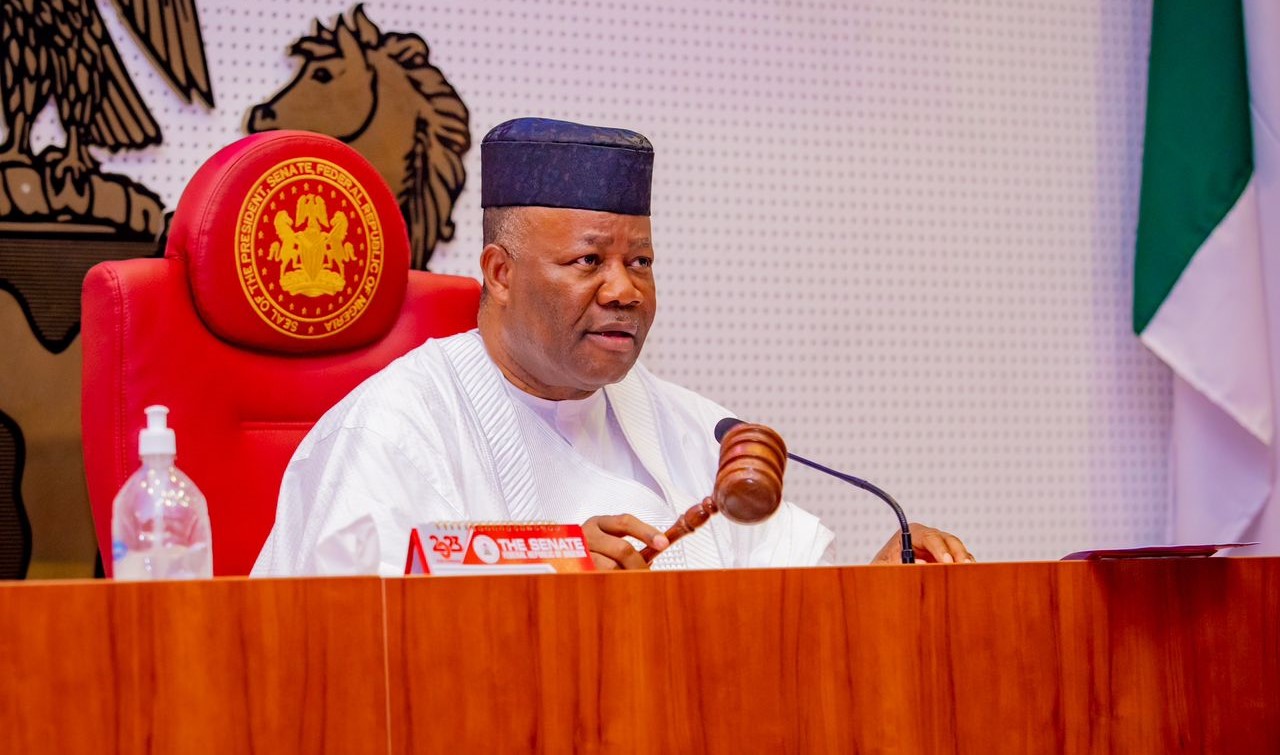
Senate President Godswill Akpabio has defended his remarks on the proposed suicide bill, insisting on his position amid growing criticism from psychiatrists, who have demanded an apology.

The psychiatrists faulted Akpabio’s comments, warning that they could reinforce stigma against people experiencing suicidal thoughts and discourage those struggling with mental health challenges from seeking professional help.

Akpabio was quoted as saying during the Senate debate on October 13, 2026, that, “If you attempt it [suicide], you better succeed. If you don’t succeed, we will send you to prison.”

However, the Association of Psychiatrists in Nigeria, in a statement signed by its President, Dr Veronica Nyamali, and Secretary, Prof Mayowa Okonoda, said its statement was prompted by reports that the Senate was considering a bill by Senator Asuquo Ekpenyong seeking to establish a framework for suicide prevention, decriminalise attempted suicide, and provide support for survivors, with Sections 327 and 231 of Nigeria’s Criminal Code and Penal Code, respectively, identified as provisions currently used to criminalise attempted suicide.

The association maintained that a person who survived a suicide attempt should be regarded first and foremost as an individual experiencing severe psychological distress, and that the appropriate response was urgent medical care, compassionate assessment, treatment, safety planning, and follow-up care, not a threat of imprisonment.

“APN respectfully but firmly rejects the proposition that a person who survives a suicide attempt should be punished for surviving. Public officials have a particular responsibility to communicate in ways that protect life, reduce stigma and encourage people at risk to seek help.

“The association acknowledges that suicide and attempted suicide are serious public health concerns requiring urgent and comprehensive intervention.

“However, a person who survives a suicide attempt should be regarded first and foremost as an individual experiencing severe psychological distress.

“The appropriate response is urgent medical care, compassionate assessment, treatment, safety planning and follow-up—not a threat of imprisonment,” the association said.

Continuing, the APN warned that threatening imprisonment for surviving a suicide attempt could deter people from seeking help, discourage families from disclosing attempts, delay access to emergency medical and psychiatric care, and intensify the stigma that already made help-seeking difficult in Nigeria, all of which would undermine rather than strengthen suicide prevention.

“The APN respectfully calls upon the National Assembly to give careful consideration to the evidence and international public-health guidance concerning the criminalisation of attempted suicide and to engage mental health professionals, people with lived experience, human-rights experts and other stakeholders in the legislative process,” the statement noted.

See also  Adelabu Family Speaks On Rescue Of Sister, Twins Sons

The association called on the National Assembly to enact legislation removing criminal penalties for attempted suicide and called on the Senate President to retract and apologise for the reported statement.

It added, “The National Assembly should enact legislation that removes criminal penalties for attempted suicide and establishes a clear, funded framework for prevention, care, rehabilitation and continuing support.

“The Senate President and all public office holders should use language that protects life, avoids stigma and encourages people in distress to seek help; APN calls for a clarification or retraction of the reported statement by the Senate President and an apology to Nigerians.”

The APN said public officials had a particular responsibility to use language that protected lives, reduced stigma and encouraged people at risk to seek help.

The association cited a landmark 2008 study by Omigbodun, Dogra, Esan and Adeodun, which studied 1,429 adolescents aged 10 to 17 years attending secondary schools in south-west Nigeria and found that more than one in five reported suicidal ideation, with approximately 12 per cent reporting a suicide attempt in the preceding year.

It said the study associated suicidal behaviour in adolescents with sexual abuse, exposure to physical violence, hunger, parental divorce, and living in a polygamous family, and that the authors had called on Nigerian policymakers and health providers to address the problem urgently.

The APN also cited global data showing that suicide was responsible for approximately 727,000 deaths worldwide in 2021 and remained among the leading causes of death for young people.

It said the World Health Organisation’s 2023 Policy Brief on the Health Aspects of Decriminalisation of Suicide and Suicide Attempts recommended that countries identify and repeal legislation and policies that criminalised suicide and suicide attempts, noting that decriminalisation was not the same as endorsing suicide but was intended to reduce barriers to help-seeking and enable a person in crisis to receive care rather than punishment.

The association further said children and adolescents required particular protection because their mental health and coping skills were still developing.

The statement said, “A child or young person who survives an attempt should be supported and assessed, with safeguarding measures where abuse, exploitation or other risks are suspected.”

Among its specific recommendations, the association called on the National Assembly to enact legislation establishing a clear, funded framework for prevention, care, rehabilitation, and continuing support for survivors.

See also  See 175 Beneficiaries of Tinubu’s Pardons (Full List)

It also called on federal and state authorities to strengthen access to mental health care in primary care, emergency departments, schools, and communities; and on families, schools, faith leaders, community organisations, the media, and civil society to be supported to recognise warning signs, respond without blame, and connect people at risk with professional help.

Speaking on the development, Akpabio warned Nigerians against taking lawmakers’ contributions during plenary out of context, insisting that individual opinions expressed during debates should not be mistaken for the Senate’s final position.

His response followed public reactions to his opposition to a bill seeking to decriminalise attempted suicide and replace imprisonment with medical treatment, rehabilitation and psychological support.

The bill, sponsored by Ekpenyong, scaled second reading during Tuesday’s plenary, triggering debate over whether survivors of suicide attempts should be prosecuted or treated as people requiring medical and mental health intervention.

Akpabio had opposed the proposed decriminalisation, insisting that attempted suicide should remain a criminal offence, a position that drew attention and criticism following his remarks that survivors should be jailed.

Addressing the issue during Thursday’s plenary, the Senate President said legislative debates were characterised by opposing views, adding that public commentators should wait for the chamber’s final decisions before concluding.

“When we discuss here, we discuss for and against, and in the course of our discussions, whatever we say should not anger anybody outside this chamber, because at the end, what matters is our final decision,” he said.

He added that lawmakers must be allowed to disagree during deliberations without their contributions being misrepresented or used to damage their reputations.

“We want to make the best laws, so we are bound to oppose each other, and we are also bound to support each other,” he said.

Akpabio specifically cautioned television panellists and other public commentators against interpreting legislative proceedings through political considerations rather than the substance of the issues under consideration.

“No matter the discussion, please consider the final decision of the Senate. Don’t go and sit down in panels and try to do politically motivated discussions,” he added.

The Senate President also addressed the relationship between terrorism and religion, rejecting attempts to associate violent acts with any particular faith.

See also  El-Rufai: DSS detains five over airport incident, N1bn suit hangs

“Terrorists are not Muslims. Terrorists are not Christians. Terrorists are human beings who believe in taking their lives and the lives of others,” he said.

Akpabio maintained that Islam prohibits suicide and killing, arguing that claims about suicide bombers expecting rewards in paradise should not be used to misrepresent the religion.

He further argued that discussions on suicide legislation should distinguish between people experiencing mental health challenges and those who deliberately take their own lives or kill others.

“You have to distinguish between suicide committed by people who are mentally disturbed and suicide intentionally committed by people who are physically sound,” Akpabio said.

He said the Senate’s responsibility was to make laws that addressed societal challenges while taking relevant circumstances into account.

To reinforce his position on religious tolerance, Akpabio cited his record of supporting both Muslim and Christian pilgrims during his tenure as governor, saying he had sponsored 5,800 Muslims to the Holy Land and more than 10,000 Christians to Rome and Jerusalem.

He also referred to his longstanding relationship with Muslim members of his staff, saying he regarded them as family rather than defining them by their religious affiliations.

“My ADC for 19 years is a Muslim. I don’t recognise him as a Muslim. I recognise him as a brother,” he said.

Akpabio added that more than 65 per cent of his staff were Muslims, insisting that he had no reason to speak disparagingly of Islam.

“There’s no way I will talk down on Muslim religion,” he said.

The Suicide Prevention Bill 2026 seeks to address what its sponsor described as inconsistencies in Nigeria’s legal framework, under which the National Mental Health Act recognises attempted suicide as a psychiatric emergency requiring intervention, while provisions of the Criminal Code and Penal Code continue to criminalise the act.

Presenting the bill, Ekpenyong argued that survivors should receive medical assessment, treatment, rehabilitation and follow-up support rather than face imprisonment.

The proposed legislation also seeks to establish crisis helplines, promote public awareness, train police officers, teachers and health workers, and create a national data system to strengthen suicide prevention efforts.

The bill has been referred to the Senate Committees on Judiciary and Health for further legislative action, including a public hearing.

Source: punchng.com

FOLLOW US ON:
FACEBOOK

WHATSAPP CHANNEL

TWITTER

PINTEREST

TIKTOK

YOUTUBE

LINKEDIN

INSTAGRAM

Continue Reading

News

Tinubu orders rescue of kidnap victims, safe 2027 polls

Published

on

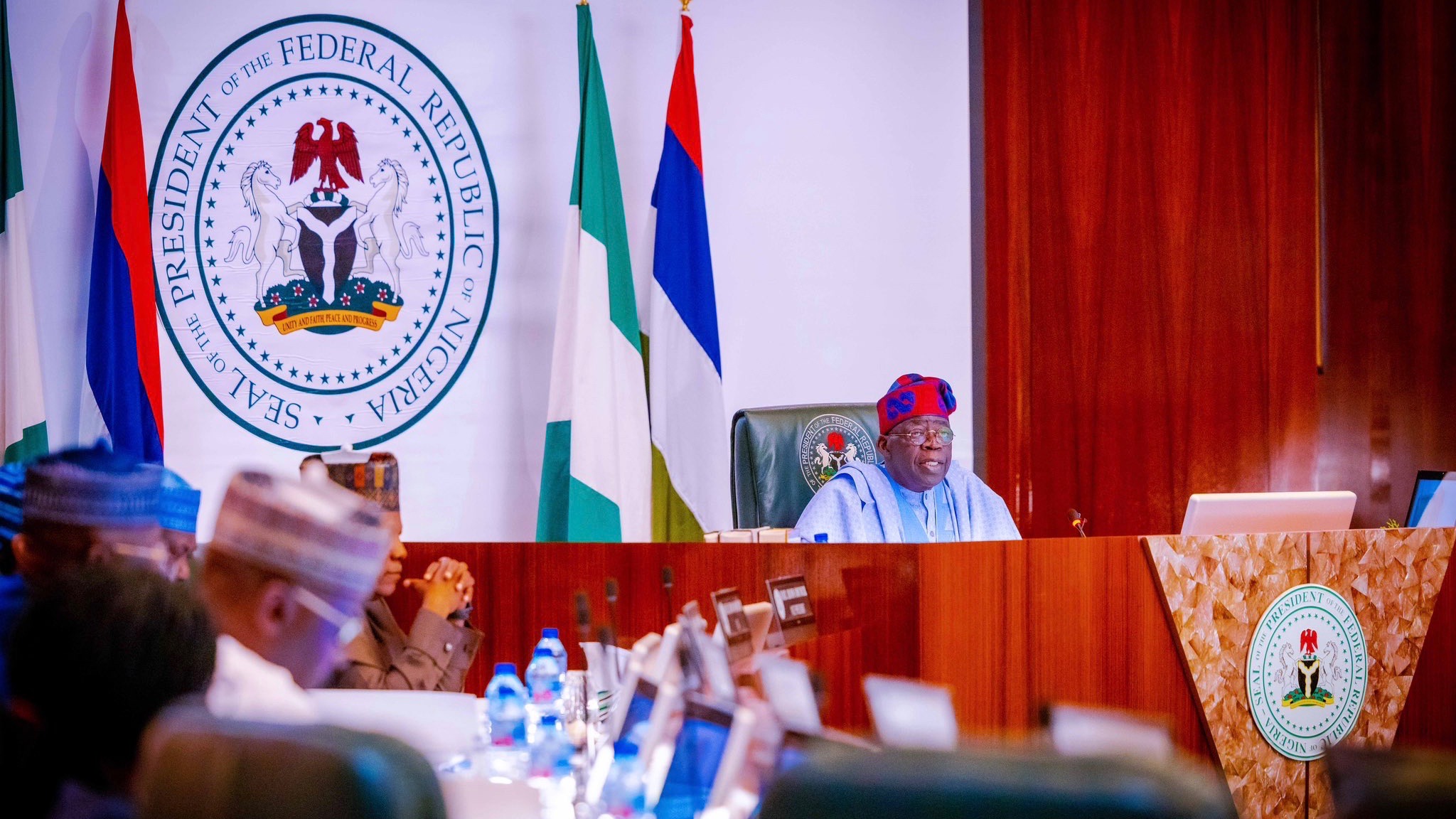
President Bola Tinubu has directed heads of security agencies to rescue all abducted persons and ensure that no terrorist or bandit camp remains anywhere in Nigeria, the Minister of Defence, Gen. Christopher Musa (retd.), said on Thursday.

Musa, who spoke to State House correspondents after a security meeting presided over by the President at the Presidential Villa, Abuja, said Tinubu also asked the service chiefs and other security heads to guarantee a safe environment for Nigerians to vote in the elections scheduled for January.

The minister said the meeting was convened to brief the President on the security situation ahead of the polls, with all heads of security agencies in attendance.

“The directive from the President is: all of us must go all out to fish out and rescue all those that have been abducted, kidnapped, wherever they are.

“There shouldn’t be any camp of any terrorists or bandits anywhere in Nigeria,” he stated.

Musa said Tinubu made it clear that he wanted a free, fair and credible election, and assured political parties that the security forces would not take sides.

Musa stated, “Mr President made it very clear he wants a free, fair and credible election. We must do everything possible to ensure that the country is safe and secure for the citizens to go out and vote.

“We are going to ensure that we give everybody the opportunity to go and serve, so they have nothing to worry about, nothing to be afraid of, and nobody is going to intimidate them for whatever reasons.”

He added that it was “important for all other political parties to understand that the security forces are going to be neutral.”

The minister rejected suggestions that underage persons were being recruited into the armed forces, saying the concern related to the use of children by terrorists.

According to Musa, “There is nobody that is underage that is being brought here. I think the discussion that was made was that the accusation was on the terrorists using underage.

“We know that we don’t have control over what they do, and that’s why we need to understand that we must not allow them to remain wherever they are.”

On efforts to boost the capacity of the security forces, Musa cited increased recruitment, training and procurement.

See also  Adelabu Family Speaks On Rescue Of Sister, Twins Sons

He said Tinubu would soon inaugurate about 10 newly acquired aircraft and helicopters.

“Mr President is coming to commission a set of new aircraft and helicopters that have been bought.

“I think almost about 10 of them in number, and to show Nigerians that despite the economic issue, the issue of security is on the front burner of Mr President’s view,” he announced.

He pointed to the recent salary increase for members of the armed forces and said improvements for the police, other agencies and pensioners were being addressed.

“Nobody is going to be left behind,” he said.

On August 4, Tinubu approved salary increases of between 30 and 80 per cent for about 250,000 armed forces personnel, effective September 1.

Privates to staff sergeants got the highest rise, at 80 per cent, while officers above the rank of colonel got 30 per cent. The yearly salary bill rose from N660bn to N924bn.

In October 2025, the Defence Ministry said 24 aircraft, including 10 AW109 Trekker attack helicopters and M-346 fighter jets, were being built for Nigeria by Leonardo in Italy, for delivery in four batches.

The minister urged Nigerians to support the security agencies, including by reporting wrongdoing by security personnel.

He argued, “Security is everybody’s responsibility. It’s not only for members of security forces. Everyone has a role to play.

“Whatever you see that is going wrong, even with our members that are not doing what is right, please don’t hesitate to report. Action will be taken.”

The meeting was attended by the National Security Adviser, Nuhu Ribadu; the Minister of Police Affairs, Ibrahim Gaidam; the Minister of State for Defence, Bello Matawalle; and the Special Adviser to the President on Homeland Security, Maj Gen Adeyinka Famadewa (retd.).

Others present were the Chief of Army Staff, Lt Gen Waidi Shaibu; the Chief of Naval Staff, Vice Adm Idi Abbas; the Chief of Air Staff, Air Marshal Sunday Aneke; the Chief of Defence Intelligence, Lt Gen Emmanuel Undiandeye; the Inspector-General of Police, Olatunji Disu; the Director-General of the National Intelligence Agency, Mohammed Mohammed; and the Director-General of the Department of State Services, Adeola Ajayi.

Thursday’s meeting comes 90 days before Nigerians head into the January 2027 general elections, with the presidential poll scheduled for January 16.

See also  See presidency response to opposition faulting Tinubu's ambassadorial nominations

Impeccable sources familiar with the discussions held at the meeting told our correspondent that the President ordered the deployment of forest guards in all reclaimed territories from terrorists and bandits, to prevent them from reoccupying areas from where the military had dislodged them.

The sources also said the council discussed the designation of power facilities as critical national assets, following repeated vandalism, and that the President asked for a review of possible restrictions to stem the risk of Ebola entering Nigeria.

One of the sources said the military, by the nature of its operations, clears areas and moves on, often leaving retaken swaths of land open for reoccupation by terrorists.

“The President has directed that we deploy forest guards to hold the grounds that the military has taken. The military does not hold ground. They simply clear the place and move.

“When the military clears the place, these insurgents, they run. And once we take it, we can’t stay there, so they come back.

“The plan now is to deploy forest guards to hold some of these territories,” one high-ranking official stated.

However, the official did not say how many guards would be deployed, in which states, or when.

The Presidential Forest Guards Initiative, coordinated by the Office of the National Security Adviser, was launched in May 2025.

It was conceived in February 2024 after a meeting with state governors, who were asked to recruit between 2,000 and 5,000 guards each.

On December 10, 2025, Tinubu directed the NSA, Nuhu Ribadu, to begin the “immediate training, arming, and deployment of additional forest guards nationwide.”

The President said, “We need all the forces we can utilise.”

On December 27, 2025, more than 7,000 guards graduated after three months of training and were deployed in seven states including Borno, Sokoto, Yobe, Adamawa, Niger, Kwara and Kebbi.

Ribadu described them as a “force multiplier” and said they would “identify hot spots” in forests.

He stated that the Department of State Services and the National Park Service will handle operational coordination.

After the May 15, 2026 abduction of pupils and teachers in Oriire Local Government Area of Oyo State, the Federal Government said Tinubu had approved the recruitment of 1,000 more guards for the state.

See also  Trump’s threats: FG engages diplomats, rallies military commanders

In August, the programme grew to 10 states, with over 2,000 more trained in Kaduna, Edo and Kogi, reportedly bringing the total to about 9,000.

On February 19, 2016, the Chief of Defence Staff, Gen Olufemi Oluyede, inaugurated Operation Savannah Shield in Kwara, vowing that forests and ungoverned spaces “will no longer serve as safe havens” for terrorists.

Another official familiar with Thursday’s deliberations said the council discussed attacks on electricity infrastructure.

“Because of the problems of vandalism of power facilities, we are already working to designate it as a critical national asset. It was brought up at the meeting to be designated.

“It has to be designated before we can now take appropriate action on it,” the official said.

On June 24, 2024, Tinubu signed the Critical National Information Infrastructure Order, which listed power generation and distribution among 13 sectors and tasked the NSA with protecting them.

In October 2024, vandalism of the Shiroro–Kaduna line plunged about 17 northern states into darkness.

Tinubu at the time said the government would no longer tolerate sabotage of public utilities and ordered security cover for repair crews.

A third source said the council also reviewed the Ebola outbreak in Central Africa, which he said was rising.

According to the official, “We looked into this Ebola crisis. We have to look at it because it’s rising. Beyond what we’re doing now, the President said we have to look at it and see whatever restrictions we might need to make to safeguard Nigerians. We cannot afford to fold our arms.”

When pressed for specific measures to be taken by the Federal Government, the official declined to speak.

The recent Bundibugyo strain outbreak was first reported in the Democratic Republic of Congo on May 15, 2026.

The World Health Organisation declared a public health emergency of international concern.

The DRC said it recorded 9,066 confirmed cases and 4,381 deaths, according to the DRC, making it the world’s second-deadliest Ebola outbreak.

On October 6, Kenya confirmed an imported fatal case on October 6.

The Nigeria Centre for Disease Control and Prevention said that, as of that day, Nigeria had no confirmed case.

Source: punchng.com

FOLLOW US ON:

FACEBOOK

WHATSAPP CHANNEL

TWITTER

PINTEREST

TIKTOK

YOUTUBE

LINKEDIN

INSTAGRAM

Continue Reading

News

Five Assemblies say yes, 31 yet to decide on state police bill, read details

Published

on

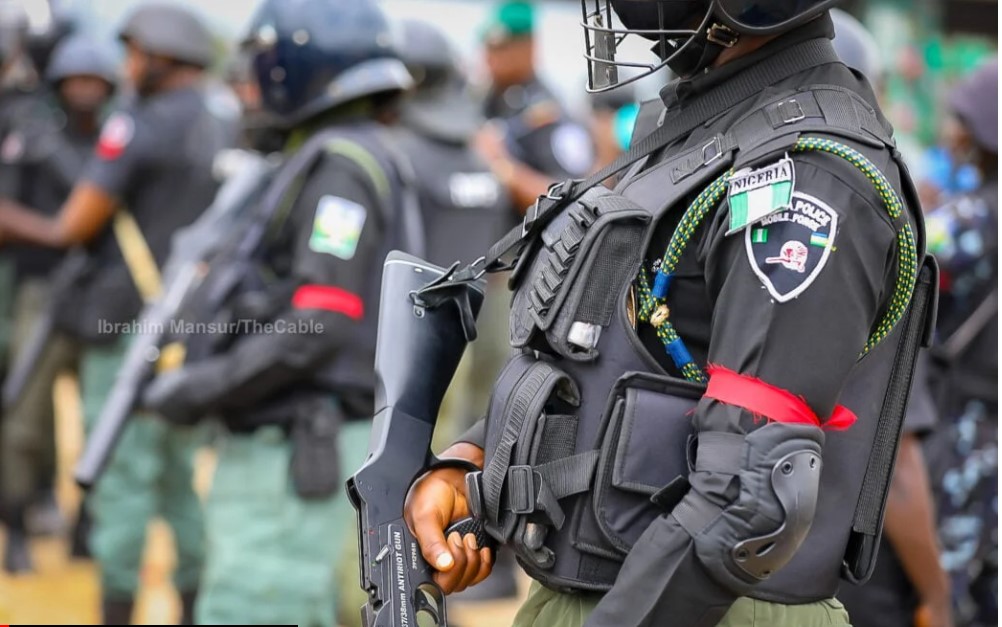
The proposed constitutional amendment to establish State Police has suffered a setback, with only five of the 36 State Houses of Assembly having approved the bill as of Thursday, October 15, despite a 30-day deadline set by the National Assembly for the state legislatures to communicate their positions.

The Assemblies of Edo, Osun, Oyo, Rivers and Zamfara have passed the proposed amendment, which seeks to decentralise Nigeria’s policing system and provides a constitutional framework for the establishment and operation of state police services.

However, several other state legislatures are still studying the bill, consulting stakeholders or waiting to begin deliberations, leaving the proposed reform far short of the constitutional requirement for approval by at least 24 state Houses of Assembly.

The bill was transmitted to the state legislatures on September 16, 2026, following its passage by the Senate on June 24 and the House of Representatives on July 23. The 30-day period given to the Assemblies was due to expire on October 16 (today).

Despite the deadline, the leadership of the House of Representatives has yet to make a formal statement on the status of the exercise or explain the next steps following the limited number of approvals.

The development raises questions about the pace of the constitutional amendment process, which requires broad support from state legislatures before the proposed changes can take effect.

Section 9(2) of the 1999 Constitution requires a constitutional alteration to be approved by resolutions of at least two-thirds of all state Houses of Assembly, representing 24 of the 36 states, before it can be presented for presidential assent.

With only five states having approved the proposal, the bill remains a considerable distance from the required threshold.

The establishment of state police has featured prominently in Nigeria’s security debate amid persistent challenges involving banditry, kidnapping, terrorism, communal violence and other criminal activities.

However, supporters argue that decentralised policing would enable states to respond more effectively to local security threats, while concerns have been raised over the possible political misuse of state-controlled security agencies.

The proposed amendment provides for a Federal Police Service alongside state police services, with each state empowered to establish its own service through legislation. It also outlines arrangements for the administration, oversight and accountability of state police personnel.

States back Bill

Zamfara State House of Assembly confirmed passing the bill, joining the legislatures of Osun, Oyo, Rivers and Edo in supporting the proposed constitutional amendment.

The spokesperson for the Zamfara Assembly, Malam Nasiru Biya-Buki, told The PUNCH that the House had completed the process and forwarded the bill to the National Assembly.

“The Zamfara State House of Assembly has since passed the bill regarding the creation of the state police,” he said.

“The bill has been sent to the National Assembly, Abuja, as requested. So, we are waiting for the next line of action to take.”

The Speaker of the Osun State House of Assembly, Adewale Egbedun, similarly, read a letter from the National Assembly requesting state legislatures to consider and approve the proposed constitutional alteration.

During deliberations, lawmakers, including Lawrence Adeoti, representing Ife South State Constituency, and Taofeek Olayiwola, representing Ede South, supported the proposal, arguing that state police would improve security across the country.

Adewumi Adeyemi, representing Obokun State Constituency, and Jeremiah Awoyeye, representing Ife Central, also described the proposal as timely.

They argued that the establishment of state police would strengthen security at state and local government levels by enabling authorities to respond more effectively to threats within their jurisdictions.

The motion supporting the amendment was moved by the Majority Leader, Babajide Kofoworola, representing Ede North, and seconded by Tajudeen Adeyemi, representing Ifelodun.

In Oyo, the House of Assembly passed the Constitution of the Federal Republic of Nigeria (Sixth Alteration) Bill, 2026 on September 29 after clause-by-clause consideration.

The session was presided over by the Speaker, Adebo Ogundoyin, following the receipt of a letter from the Clerk to the National Assembly, Kamoru Ogunlana, transmitting the bill for consideration and approval.

See also  ‘Service Chiefs Can Be Hired And Fired By The President’ – Tinubu’s Adviser

Ogundoyin said the passage of the amendment would have significant legislative implications for the state, particularly the need to enact a comprehensive law to guide the operation of its police service if the constitutional alteration is completed.

He explained that the proposed framework would provide for a Federal Police Service alongside state police services, with each state empowered to establish its own service through legislation.

According to him, state police would be responsible for enforcing state laws, maintaining public safety and order, preventing and detecting offences, protecting lives and property, and performing other local policing functions prescribed by state law.

The proposal also provides for State Police Service Commissions to oversee appointments, promotions, transfers, discipline, complaints and accountability.

A State Commander of Police would head each state service, with the governor appointing the commander on the recommendation of the National Police Council, subject to confirmation by the State House of Assembly.

The framework would also empower the National Assembly to prescribe minimum policing standards for federal and state police services, while allowing states to establish higher or additional standards.

Others undecided

While five states have approved the proposed amendment, several others are yet to take a definitive position, with some still examining the bill and others planning consultations or public hearings before voting.

In Ogun State, the former Speaker of the House of Assembly and Chairman of the House Committee on Constitutional Amendment, Olakunle Oluomo, said the legislature was considering holding a public hearing on the proposed changes.

Oluomo said he had proposed a public hearing to familiarise residents with the contents of the bill and allow them to contribute before the Assembly reached a decision.

“The Speaker is working round the clock to ensure success of everything. As the House Committee Chairman on Constitution Amendment, I have proposed that we should have public hearing about it.

“I look forward to meeting the Speaker this week so that we can fix a date for public hearing about it, so that our people can get familiarised with the content of the bill and then we take it up from there,” he said.

The Speaker, Oludaisi Elemide, also confirmed that the Assembly was still working on the proposal.

In Delta, the House of Assembly received the bill but has yet to announce whether it will support or reject it.

The Chief Press Secretary to the Speaker, Nkem Nwaeke, confirmed this to The PUNCH, saying that the Assembly was following due legislative process.

“I can confirm that the bill has been received by the House and due legislative process is being followed,” he said.

Nwaeke said the Speaker, Emomotimi Guwor, who also chairs the Conference of Speakers of State Legislatures of Nigeria, would announce the House’s position after consultations with relevant stakeholders.

“The interest of Delta people remains uppermost to the Assembly, hence the need for due diligence,” he added.

However, he did not disclose when the bill would be debated or voted on.

In Abia, the Speaker, Emmanuel Emeruwa, confirmed that the House had received the constitutional amendment proposal and that it had been brought before members.

“We have this on the floor,” Emeruwa said.

Asked whether a public hearing had been scheduled and when the Assembly would vote, the Speaker said, “I don’t have a position yet on the matter.”

In Anambra, the Clerk of the House of Assembly, Tony Ughenu, said the bill had been communicated to lawmakers but had not been formally listed for consideration.

“It has been communicated on the floor that Anambra State House of Assembly is in receipt from the National Assembly a Bill on State Police Constitution Amendment. It was announced two sessions ago,” Ughenu said.

He noted that the Assembly could not alter the provisions of the proposed constitutional amendment but was required to vote in support of or against it.

“The House normally is expected to vote ‘yes’ or ‘no’ on it,” he said.

Ughenu attributed part of the delay to ongoing deliberations at the Speakers’ Forum, adding that the position of the Assembly would become clearer in the coming weeks.

In Imo, the Chairman of the House Committee on Information and Judiciary, Dominic Ezerioha, said the bill arrived as lawmakers were proceeding on recess.

See also  See presidency response to opposition faulting Tinubu's ambassadorial nominations

He said the House was expected to resume on Thursday, expressing hope that the proposal would be listed for consideration.

“The bill came when we were going for recess. But we resumed on Thursday and it was presented,” Ezerioha said.

He explained that lawmakers would examine the provisions and deliberate on their implications before reaching a decision.

Also, the Kaduna State House of Assembly has begun examining the proposed amendment and plans to organise a public hearing before taking a final position.

The Chairman of the House Committee on Information, Henry Marah, said lawmakers were reviewing the provisions to determine how they would apply to the state’s security situation.

“We are still studying the bill. We are looking at the underlying clauses and everything that is peculiar, in particular, to Kaduna State,” Marah said.

He said the Assembly would bring the bill to the floor after completing its review and would subsequently engage members of the public and other stakeholders.

“The public hearing is important because we need to hear from the people and stakeholders. Their contributions will also guide us when we consider the bill further,” he added.

Reps mum

The leadership of the House of Representatives has declined to comment on the status of the state police bill as the deadline for the state legislatures to communicate their decisions elapsed on Thursday.

In a telephone conversation with our correspondent, spokesperson for the House, Akin Rotimi, told our correspondent that not picking his calls was an indication that he was not interested in speaking on the subject matter.

“If you asked me a question and you did not get an answer, it means I don’t want to answer. You cannot be pressurising me like this,” he said, adding, “You know that question is not for me.”

The insistence of our reporter for an official comment notwithstanding, Rotimi stood his ground and subsequently ended the call.

The silence leaves unresolved questions about whether the National Assembly will extend its deadline, issue a fresh directive or take any other step to advance the constitutional amendment process.

Senate pledges passage

However, the Senate was more accommodating as it assured Nigerians that the proposed establishment of state police would be completed before the tenure of the 10th National Assembly elapsed, despite delays in securing the approval of state legislatures for the constitutional amendment.

The Chairman of the Senate Committee on Media and Public Affairs, Senator Yemi Adaramodu, gave the assurance in an exclusive interview with The PUNCH, dismissing fears that the process could be prolonged until the inauguration of the 11th National Assembly.

Despite the slow pace of approvals, Adaramodu said the Senate was not under pressure, noting that the constitutional amendment required the consent of at least 24 state Houses of Assembly, representing two-thirds of the 36 states.

He said, “We are still waiting after transmitting to the states. We only need 24 State Houses of Assembly to consent. That’s two-thirds of 36. So, once we get that, we will go ahead and promulgate.”

The senator also allayed fears that the constitutional amendment could be delayed until the 11th National Assembly, insisting that the current 10th Senate would complete the process before the next legislature takes over before the end of July 2027.

“There is no need for fear. This is the 10th Senate, isn’t it? I can assure you that it will be done in the life of this 10th Senate before the next one comes on board,” he assured.

Asked whether the National Assembly had set another deadline for the state legislatures to approve or reject the bill, Adaramodu said the federal lawmakers expected their responses soon.

See also  See how FG moves to recover unremitted funds before April

The proposed amendment comes amid persistent security challenges and growing calls for the decentralisation of policing, with proponents arguing that state-controlled police formations would enable authorities to respond more effectively to local security threats.

The National Assembly had, on September 16, 2026, transmitted the Constitution of the Federal Republic of Nigeria 1999 (Sixth Alteration) Bill, 2026, titled, “A Bill for an Act to Alter the Constitution of the Federal Republic of Nigeria, 1999 to Provide for the Establishment of State Police Services; and for Related Matters,” to the 36 state Houses of Assembly.

The transmission followed widespread demands for a review of the country’s centralised policing structure to address insecurity across the federation.

The Clerk to the National Assembly, Kamoru Ogunlana, subsequently clarified that the State Police Bill was the only constitutional amendment proposal that had so far been transmitted to the state legislatures.

The bill’s prospects ultimately depend on securing approval from at least 24 state Houses of Assembly, as required by the Constitution.

Until that threshold is met and the remaining constitutional procedures are completed, the proposed establishment of state police will remain a proposal rather than an operative constitutional arrangement.

National Policing Bill

Meanwhile, the Presidency said on Thursday that the National Policing Bill, the proposed law to give effect to the planned state police system, is 90 per cent ready and would be transmitted to the National Assembly within two weeks, on October 29.

The Chief of Staff to the President and Chairman of the Presidential Working Group, Femi Gbajabiamila, disclosed this while speaking to State House correspondents after a steering committee meeting at the Aso Rock Villa, Abuja.

He said, “The National Policing Bill is more or less ready for transmission to the National Assembly. We will probably have one more meeting after this to cross the t’s and dot the i’s and make sure every area is covered. So, we are 90 per cent ready.

“The governors have one or two observations, and we should be ready in about a week or so.”

Gbajabiamila described the proposal as “the most consequential Bill of the administration so far”.

He said it had gone through intense deliberation in the weeks since the steering committee began work on August 3.

Asked whether states might delay approving the constitution amendment on state police, particularly as only five states had passed it, Gbajabiamila said there was a national consensus among Nigerians on the need for the change.

“I see no reason why anyone will want to have a rethink on it,” he stated.

The meeting was attended by the Chairman of the Nigeria Governors’ Forum and Governor of Kwara State, AbdulRahman AbdulRazaq; Governors Dapo Abiodun (Ogun) and Uba Sani (Kaduna); and the Inspector-General of Police, Tunji Disu.

The Attorney-General of the Federation was represented by the Solicitor-General and Permanent Secretary, Federal Ministry of Justice, Beatrice Jedy-Agba.

Other members present included the Chairman of the Policy Advisory Committee, Justice Abdullahi Liman (retd); the Head of the Nigeria Police Reform Secretariat, Prof. Olu Ogunsakin; the Special Adviser to the President on National Assembly Matters (House of Representatives), Lanre Smart; the committee secretary, Nnadubem Moghalu; and a representative of the Nigerian Bar Association president.

President Bola Tinubu inaugurated the seven-member Presidential Working Group on July 7, with Gbajabiamila presiding on his behalf.

It was mandated to produce a “technically robust, implementation-ready draft National Policing Bill.”

Tinubu said the bill would cover minimum policing standards, state readiness certification, federal-state coordination, accountability, human rights safeguards and fiscal conditions.

“The Constitution Amendment Bill establishes the framework for dual policing, but it does not operationalise it,” Tinubu said, according to a speech read on his behalf.

On Wednesday, at the inauguration of the APC Presidential Campaign Council, Tinubu told the gathering that state police “will be a reality.”

Source: punchng.com

FOLLOW US ON:

FACEBOOK

WHATSAPP CHANNEL

TWITTER

PINTEREST

TIKTOK

YOUTUBE

LINKEDIN

INSTAGRAM

Continue Reading

Trending