The Federal Government has proposed a N3.6tn deduction from the Federation Account to fund electricity subsidies in 2026, 2027, and 2028, a move designed to distribute the financial burden across federal, state, and local governments, The PUNCH reports.
The move represents a decisive step by the Federal Government to confront the rapidly mounting electricity subsidy debt, which has severely constrained liquidity across the power sector, while also strengthening fiscal transparency by making subsidy obligations explicit and better accounted for.
The deduction proposal, detailed in the Medium-Term Expenditure Framework Fiscal Strategy Paper for 2026–2028, analysed by one of our correspondents on Tuesday, reflects a strategic shift toward distributing the financial burden of the power sector across all tiers of government, amid growing concerns over unsustainable debts and systemic inefficiencies.
According to Table 6.2 of the MTEF document, which outlines “Other FAAC Deductions” under the Federation Account Revenue – Main Pool, VAT, and Stamp Duty, the electricity subsidy for 2026 is pegged at N1.2tn.
It is projected to remain at this level through 2027 and 2028, signalling the government’s commitment to stabilising the sector while preventing hidden liabilities from ballooning into a fiscal crisis.
“The document read, “Transfer to NBET (Electricity Subsidy) is estimated at N1.2tn in the 2026 budget proposal and projected to remain at N1.2tn each in 2027 and 2028.”
The proposed approach aligns with earlier statements by the Budget Office of the Federation, which indicated plans to end the practice of the Federal Government bearing electricity subsidy costs alone.
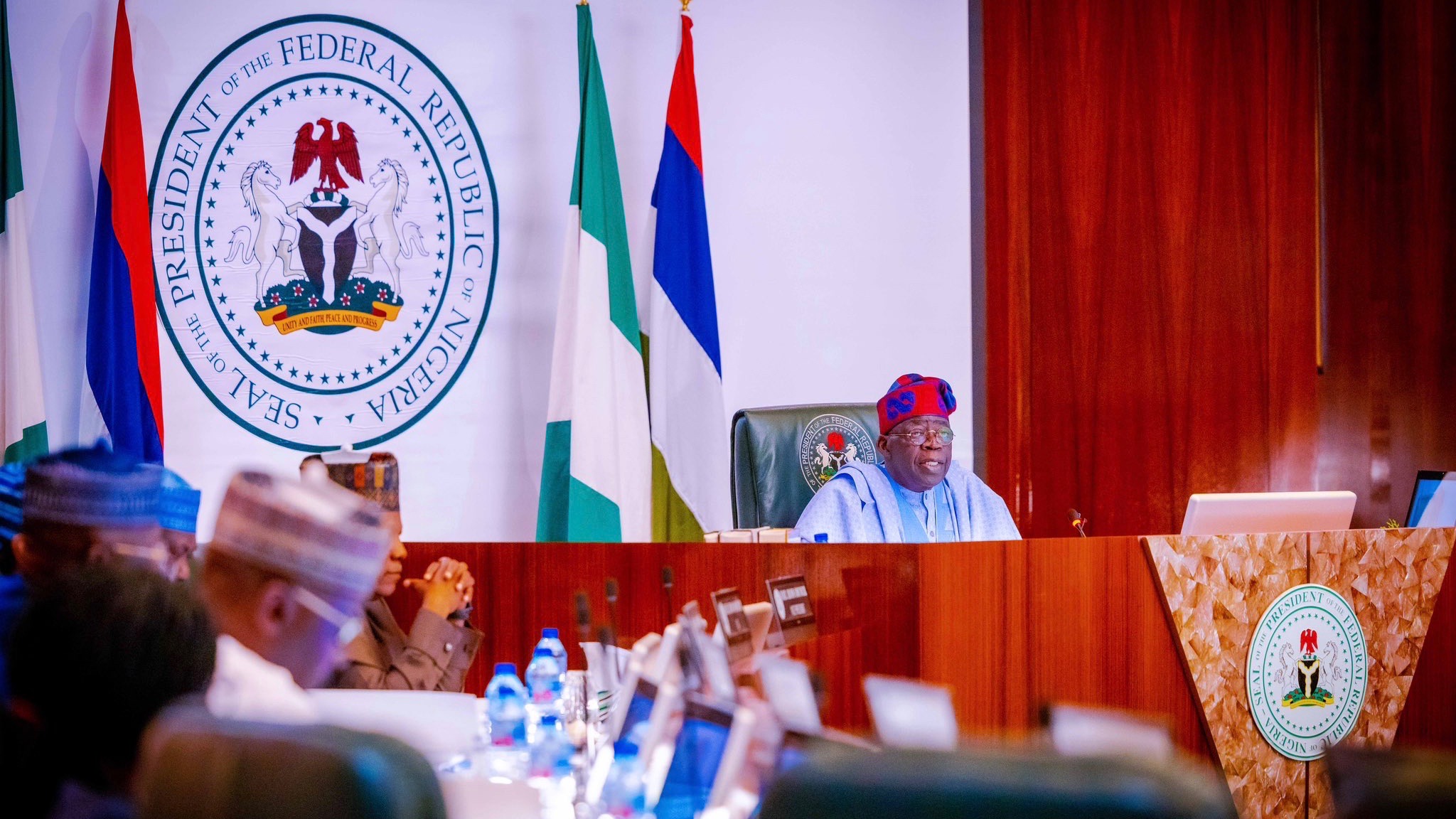
The Budget Office DG, Tanimu Yakubu, during a training and sensitisation workshop for ministries, departments, and agencies on the 2026 post-budget preparation process using the Government Integrated Financial Management Information System Budget Preparation Sub-System, said President Bola Tinubu had directed that electricity subsidy costs be made explicit, tracked, and fairly shared across tiers of government.
“If we want a stable power sector, we must pay for the choices we make,” he said. “When tariffs are held below cost, a gap is created. That gap is a subsidy. And a subsidy is a bill.”
He added that from 2026, the Federal Government would no longer treat electricity subsidies as an open-ended obligation borne solely by the centre, especially where policy decisions and political benefits are shared.
“In 2026, we will stop pretending that this bill can be left to the Federal Government alone, especially where the policy choice or the political benefit is shared across tiers of government,” Yakubu said.
According to him, the President has instructed that the existing electricity sector legal framework be invoked to ensure that subsidy sharing is practical, transparent, and enforceable.
“This means subsidy costs must be explicit, tracked, and funded, so they do not return as arrears, liquidity crises, or hidden liabilities in the market,” he said. “If any tier of government chooses affordability interventions, the funding responsibilities must be clear, agreed, and enforceable,” he stated.
Currently, the Federal Government finances electricity subsidies through direct budgetary allocations, primarily channelled via the Federal Ministry of Finance to the Nigerian Bulk Electricity Trading Plc.
NBET acts as an intermediary, purchasing electricity from generation companies (GenCos) and selling it to distribution companies (DisCos) at regulated tariffs, often lower than the actual cost of production.
The gap between the regulated tariff and the cost of electricity generation is effectively covered by government subsidies, which are meant to shield consumers from the full cost of electricity while maintaining stability in the power market.
However, this subsidy framework has placed a growing strain on federal finances, and accumulating unpaid obligations has caused a drastic increase in sector debt.
By the end of 2025, total outstanding sector debt, including unpaid obligations to generation and other power companies, is projected to rise to about N6.5tn, up from around N4tn earlier in the year, as a result of unfunded subsidy shortfalls and low payments to power producers.
This has prompted the proposed 2026 measure to deduct N1.2tn directly from the Federation Account for electricity subsidies, which aims to make payments explicit, transparent, and shared among federal, state, and local governments, a strategy intended to address both fiscal sustainability and operational efficiency in NESI.
By deducting funds directly from the Federation Account, the central revenue pool managed by the Federation Account Allocation Committee before revenue distribution, the government aims to encourage states and local governments to prioritise efficiency and provide targeted support for vulnerable households.
Providing further insight into the Federal Government’s proposed electricity subsidy funding framework, energy policy expert Habu Sadeik explained that the N1.2tn earmarked in the Medium-Term Expenditure Framework and Fiscal Strategy Paper will be deducted directly from the Federation Account Allocation Committee pool before revenues are shared among the three tiers of government.
According to Sadeik, the MTEF document clearly captures the N1.2tn electricity subsidy as a first-line deduction from gross FAAC revenue, meaning the amount will be removed before distributable revenue is calculated for the Federal Government, states, and Local Governments.
He explained that the MTEF-FSP, which is prepared every three years, sets the strategic direction for government budgeting and spending across the federation, including how revenues are shared and which obligations are treated as priority deductions.
“What the government has done is to provide for a deduction at source from the gross FAAC revenue to the Nigerian Bulk Electricity Trading Plc (NBET) amounting to N1.2tn,” Sadeik said.
He noted that the approach is similar to the funding structure adopted for the Presidential Metering Initiative, under which about N800bn has been carved out from FAAC over time to fund nationwide metering, thereby reducing estimated billing and commercial losses in the power sector.
Under the new electricity subsidy framework, Sadeik explained, any deduction made from the gross FAAC pool effectively reduces what states and local governments eventually receive.
“For example, if total FAAC revenue in a particular month is N1tn and N200bn is deducted upfront, it means every state and local government has indirectly contributed to that N200bn,” he said.
He clarified that the proposed N1.2tn is not an ad-hoc payment but a planned transfer to NBET beginning in 2026, to be executed before revenue is distributed to sub-national governments.
“This money is planned to be paid to NBET ahead of distribution. It is no longer something the Federal Government will try to settle later through its own budget,” Sadeik explained.
Historically, electricity subsidies have been funded solely through federal budgetary allocations, placing the full burden on the Federal Government. However, Sadeik noted that the new arrangement represents a fundamental shift in responsibility.
“The key difference is the burden,” he said. “Before now, the burden of electricity subsidy was on the Federal Government alone. Under this new framework, the burden is shared by the entire federation, the Federal Government, states, and Local Governments.”
He added that previous budgetary provisions for electricity subsidies were grossly inadequate when compared with the scale of liabilities in the Nigerian Electricity Supply Industry.
“In 2024, only about N450bn was provided in the budget. In 2025, it increased to N900bn, but these amounts were still far below the level of accumulated subsidy obligations,” he said.
The planned FAAC deduction, according to Sadeik, is intended to close this funding gap by making subsidy payments explicit, predictable, and sustainably funded, while ending the long-standing practice of masking electricity subsidies within federal fiscal operations.
Commenting on the proposal, the Executive Director and Convener of PowerUp Nigeria, Adetayo Adegbemle, applauded the initiative, describing it as consistent with the principles of federalism.
Adegbemle said the arrangement reflects a system in which all federating units actively participate in governance, noting that the Federal Government, states, and local governments would collectively contribute to the cost of electricity subsidies.
“This is in the spirit of federalism, where all federating units are involved in government. Under this arrangement, the Federal Government, the states, and the local governments will all contribute to the payment of electricity subsidy,” he said.
While noting that the full implementation details were still unclear, Adegbemle described the proposal as a positive development that allows all tiers of government to share responsibility for the power sector.
“I don’t know if the government has already worked out all the details, but this is a good development because all levels of government can come in and make their own contributions,” he added.
He explained that the policy would apply mainly to states that have yet to establish their own electricity markets under the amended Electricity Act. “As earlier mentioned, this will involve all states that have not created their state electricity markets. States that have already set up functional local electricity markets will be exempted,” Adegbemle said.
Although he reiterated his long-standing position that electricity subsidies should ideally be phased out completely, Adegbemle noted that the proposed framework would significantly ease the financial burden on the Federal Government while improving accountability across the sector.
“Even though some of us have advocated for the complete removal of the electricity subsidy, this move will drastically reduce the burden on the Federal Government and also bring more accountability,” he said.
According to him, shared responsibility would compel each tier of government to properly audit its electricity customer base and closely monitor connections to the national grid, thereby reducing inefficiencies and revenue leakages in the power sector.
“This will force every level of government to take responsibility for auditing their customer base and their connections to the national grid,” he added.
Ministry backs moves
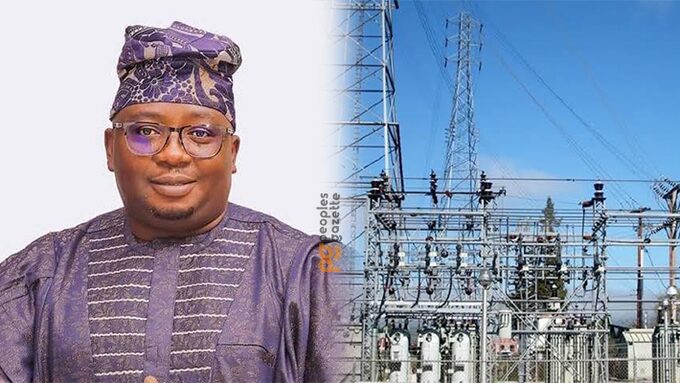
When contacted, the Minister of Power, Adebayo Adelabu, speaking through his media aide, Bolaji Tunji, said the ministry supports the proposed electricity subsidy funding framework, describing it as a step in the right direction for the power sector.
He explained that while the announcement was made by the Director-General of the Budget Office, the Ministry of Power aligns with the initiative and agrees with its underlying objectives.
“This announcement was made by the Director-General of the Budget Office, and his office should be contacted for further clarification on the implementation strategy. However, we agree with him on this,” Tunji said.
The implications of the proposed N1.2tn FAAC deduction for electricity subsidies are significant for state and local governments.
Under the current FAAC revenue-sharing formula, states are entitled to 26.72 per cent of the Main Pool, while local governments receive 20.60 per cent. With projected FAAC revenue for 2026 at about N41.06tn, this would translate to roughly N10.97tn for states and N8.45tn for Local Governments.
However, because the electricity subsidy is to be deducted upfront from the gross FAAC revenue, the amount available for distribution to subnational governments will effectively be reduced.
The deduction means governors may need to reassess allocations for critical sectors such as infrastructure, education, and healthcare to accommodate their share of the subsidy payment.
State energy commissioners react
Meanwhile, the Forum of State Commissioners of Power and Energy in Nigeria has said that it believes that President Bola Tinubu would not do anything against the interests of the masses.
FOCPEN Chairman, Prince Eka Williams, who also serves as the Commissioner for Power and Renewable Energy in Cross River State, told The PUNCH that the forum would make known its positions on the matter later after thorough understanding.
“If that’s what the Federal Government has said, we have to look at it and digest it very well. We have to look at the pros and cons. For now, we have not seen a copy of what the president said.
“But I’m sure what the government would do would be in the interest of Nigerians. I know he’s a President who cares about the masses. We have not seen him sign into law an anti-people bill,” Williams said.
He said FOCPEN would listen to the analysis of experts before making its decision known to the public.
“Let experts look at the policy very well, not just relying on what people have interpreted it to be. Let experts look at it, and in no distant time, we will make a public statement,” he submitted.