Connect with us

Business

Foreign debt servicing gulps almost $1bn in two months

Published

on

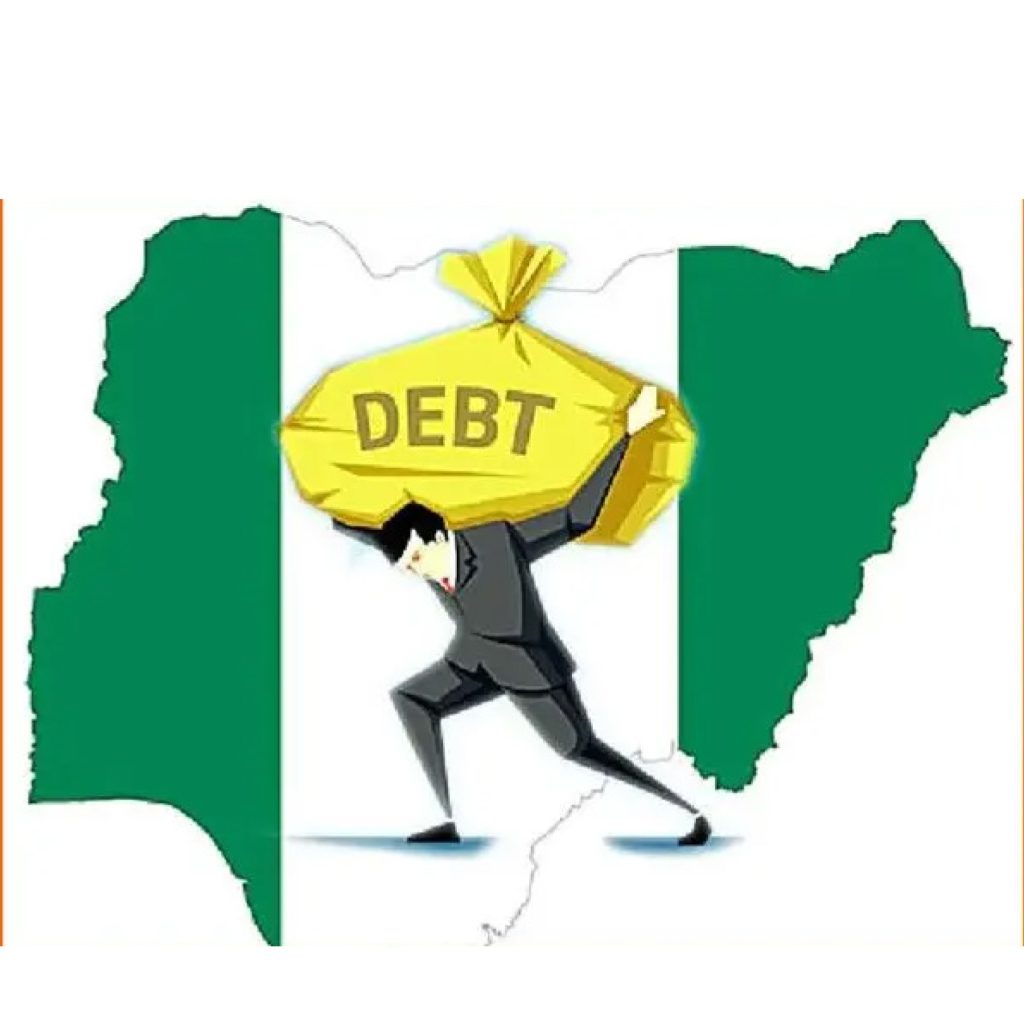
Nigeria spent nearly $1bn servicing its foreign loans in the first two months of 2026, as external debt repayments rose amid increasing capital outflows from the economy.

The figure, obtained from the Central Bank of Nigeria’s February 2026 Economic Report, showed that the country spent $440m on foreign loan repayments in January and $480m in February, bringing the total debt servicing bill for the two months to $920m.

The report showed that total capital outflows rose significantly in February, driven largely by higher capital transfers and increased loan repayments. According to the CBN, “Capital outflows increased, mainly on account of higher capital transfers in the review period. Total capital outflow rose to $2.75bn, from $1.63bn in the preceding month.”

The apex bank attributed the increase primarily to a sharp rise in capital transfers, although debt repayments also contributed to the higher outflows. It stated, “The development was driven mainly by a 91.53 per cent increase in capital transfers to $2.26bn, relative to the level in the preceding month. Outflow through loan repayments also rose to $0.48bn from $0.44bn in January 2026.”

The report added that dividend repatriation declined during the review period. “In terms of share, capital transfers accounted for 82.18 per cent of total capital outflows, loan repayments (17.45 per cent), while repatriation of dividends constituted the balance,” the CBN noted.

An analysis of the figures showed that debt repayments accounted for nearly one-fifth of Nigeria’s total capital outflows in February, highlighting the growing burden of servicing the country’s external obligations.

See also  Petrol remains pricey as crude crashes to $73

The report also indicated that the banking sector accounted for the largest share of capital outflows at 45.96 per cent, followed by the financing sector at 26.10 per cent, oil and gas at 15.72 per cent, telecommunications at 3.51 per cent, and production/manufacturing at 2.62 per cent, while other sectors made up the balance.

It also showed that Lagos accounted for 62.90 per cent of capital outflows, followed by the Federal Capital Territory at 37.04 per cent, with Ondo, Ogun and other states accounting for the remainder.

Despite the increase in capital outflows, the CBN said Nigeria’s external position remained strong during the period. In its summary of economic developments, the bank stated that “despite heightened geopolitical risks and trade tensions, the external sector recorded a higher trade surplus and capital inflows, due largely to lower import bills and increased capital transfers.”

It added that foreign reserves rose to $50.12bn in February from $48.88bn in January, providing import cover of 9.61 months, well above the international benchmark of three months.

The PUNCH earlier reported that Nigeria spent about $5.21bn servicing external debt obligations in 2025, accounting for more than 72 per cent of the country’s total international payments during the year, according to the data obtained from the Central Bank of Nigeria.

Figures published on the CBN website indicated that external debt service rose from $4.66bn in 2024 to $5.21bn in 2025, representing an increase of $551.86m or about 11.9 per cent year-on-year.

Nigeria’s public external debt is projected to rise by $20.7bn by 2027, according to the International Monetary Fund. The IMF disclosed this in its 2026 Article IV Consultation report on Nigeria, projecting that public external debt would increase from $51.9bn in 2025 to $72.6bn by 2027.

See also  Bread prices: No significant drop in flour price, variables — Bakers

The projected increase represents a 39.9 per cent rise within two years and underscores growing concerns over the country’s debt burden despite recent improvements in macroeconomic stability.

According to the Fund’s Balance of Payments projections, public external debt is expected to rise from $51.9bn in 2025 to $66.5bn in 2026 before climbing further to $72.6bn in 2027.

The IMF’s projection broadly aligns with the latest Debt Management Office data, which showed that Nigeria’s public external debt stood at $51.86bn as of December 31, 2025. Based on the Fund’s forecast, the debt stock would increase by about $20.74bn between the end of 2025 and 2027.

Public external debt service due is expected to increase from 8.1 per cent of exports of goods and services in 2025 to 8.8 per cent in 2027, after easing to 5.0 per cent in 2026. The Fund further projected that interest payments on public debt would rise from $2bn in 2025 to $3bn by 2027.

At the Federal Government level, debt servicing is expected to continue consuming more than half of government revenue. The IMF estimated that interest payments absorbed 53.2 per cent of Federal Government revenue in 2025 and projected the ratio at 53.7 per cent in 2026 before easing marginally to 52.4 per cent in 2027.

The Minister of Finance and Coordinating Minister of the Economy, Taiwo Oyedele, earlier faulted Nigerians, especially analysts and commentators, for criticising government borrowing without considering the purpose, cost and expected returns of such debt.

Oyedele spoke in Abuja at the Fellowship Award Ceremony and 2nd Biennial Conference of the Capital Market Academics of Nigeria. He said, “When analysts go on TV and join the populist view to accuse the government of borrowing, you are doing a disservice. The relevant question is never simply how much debt.

See also  133-year old photography company Kodak says it might have to cease operations

“It is always debt for what and at what cost, against what return, and repaid on what terms. A nation, a state, or a business that borrows to finance a productive asset generating returns above the cost of that capital is not behaving recklessly; it is behaving rationally.”

punch.ng

FOLLOW US ON:

FACEBOOK

TWITTER

PINTEREST

TIKTOK

YOUTUBE

LINKEDIN

Continue Reading
Click to comment

Leave a Reply

Your email address will not be published. Required fields are marked *

Business

Banks deposit N4.15trn with CBN as excess liquidity persists

Published

on

NIGERIA’S banking sector deposited a total of N4.15 trillion with the Central Bank of Nigeria (CBN) through the Standing Deposit Facility (SDF) during the week, highlighting persistent excess liquidity in the financial system, despite ongoing monetary tightening measures.

Market data showed that deposits at the SDF surged by nearly 60 percent from N2.60 trillion recorded in the previous week. In contrast, borrowing through the CBN’s Standing Lending Facility (SLF) remained marginal at N36.10 billion, indicating that banks faced little pressure in meeting short-term funding needs.

The liquidity glut was largely driven by substantial inflows from maturing Open Market Operation (OMO) bills valued at N2.21 trillion and Treasury bills maturities amounting to N269.36 billion. Although the settlement of N1.06 trillion from the Debt Management Office’s Treasury bills auction moderated system liquidity towards the end of the week, banking system balances remained firmly positive, closing at N4.32 trillion.

The improved liquidity environment pushed down interbank funding rates across key tenors. Overnight Nigerian Interbank Offered Rate (NIBOR) declined by 10 basis points to 22.19 percent while the one-month, three-month and six-month rates fell by 24 basis points, 38 basis points and 39 basis points to 22.35 percent, 22.56 percent and 22.83 percent, respectively.

Analysts said the decline in interbank rates reflected reduced demand for short-term funds among banks amid ample liquidity conditions.

In the fixed-income market, the Nigerian Treasury Bills True Yield (NITTY) curve recorded mixed movements. While yields on the one-month and 12-month instruments rose slightly to 16.46 percent and 21.05 percent, respectively, yields on the three-month and six-month tenors declined to 16.78 percent and 18.01 percent, reflecting stronger investor demand for medium-term government securities.

See also  States to earn over N4tn yearly from VAT reforms

The secondary Treasury bills market also maintained a bullish tone as investors continued to seek attractive sovereign instruments. Demand across short-, medium- and long-dated maturities drove the average Treasury bill yield down by 22 basis points to 18.51 percent from 18.73 percent in the previous week.

The latest figures extend a trend seen in recent weeks. In the third week of June, excess liquidity in the banking system surged by 37 percent, with banks’ placements at the CBN’s deposit window rising above N5 trillion as lenders parked surplus funds amid limited lending opportunities and the absence of aggressive liquidity mop-up operations by the apex bank.

tribuneonlineng.com

FOLLOW US ON:

FACEBOOK

TWITTER

PINTEREST

TIKTOK

YOUTUBE

LINKEDIN

Continue Reading

Business

Nigerians now hold $59bn in Cryptocurrency assets —FDC

Published

on

NIGERIANS have accumulated an estimated $59 billion in cryptocurrency holdings, according to data released by Financial Derivatives Company (FDC) Limited during its July breakfast session. The figure highlights the country’s emergence as one of Africa’s and the world’s major players in digital assets.

This is just as BTC declined 0.92 percent in 24 hours to $59,368.

The earlier disclosure reflects a profound shift in Nigeria’s financial landscape. In Africa’s largest economy, crypto has moved from a fringe activity to a mainstream tool amid persistent inflation and naira volatility. Citizens and businesses are increasingly turning to dollar-pegged stablecoins and decentralised platforms, building a parallel financial system with significant economic influence.

Nigeria continues to rank among global leaders in adoption. According to Chainalysis’ 2024 Global Crypto Adoption Index, the country placed second worldwide for grassroots adoption, driven by widespread use in everyday transactions and cross-border commerce.

Despite these impressive statistics, a notable contradiction remains in public perception. While stocks, real estate, mutual funds, and foreign currency are openly discussed, many Nigerians still approach cryptocurrency with caution, often downplaying their involvement. Observers note that this hesitation stems more from perception than actual adoption levels.

Bitcoin (BTC), the leading cryptocurrency, traded at $59,368 after declining 0.92 percent in 24 hours, underperforming a softer broader market. The drop was driven by strong correlation to sell-offs in traditional tech stocks and persistent institutional outflows. U.S. spot Bitcoin ETFs recorded nearly $1.8 billion in net outflows last week, stripping away key support.

Analysts say Bitcoin is acting as a high-beta risk asset, mirroring rotations out of technology and semiconductor stocks rather than crypto-native catalysts. Aggregate open interest rose 5.11 percent while BTC trades below its 7-day simple moving average of $60,430 with an RSI of 34, signalling oversold conditions. A reclaim of $60,430 or a break below the $58,035 swing low will be critical in the near term.

See also  Access Holdings appoints Innocent Ike new GMD/CEO

In a parallel development, Bitcoin experienced a sharp decline in millionaire addresses during the first half of 2026. According to Finbold’s H1 2026 Cryptocurrency Market Report, addresses holding at least $1 million fell from 148,084 to 121,431 — a loss of 26,653 addresses or 18%. This came as BTC’s price dropped approximately 34.2% from $88,700 to $58,315. The largest decline was in the $1–10 million bracket.

Jordan Major, Chief Editor at Finbold, said: “The data shows how quickly Bitcoin’s on-chain wealth distribution can shift when prices fall. This does not necessarily point to widespread selling, but rather a price-driven reclassification of wallets.”

On the regulatory front, Nigeria’s Securities and Exchange Commission (SEC) on July 2 approved seven additional digital asset and fintech companies for its regulatory sandbox under the Accelerated Regulatory Incubation Programme (ARIP). The firms granted Approval-in-Principle are Bitbarter Technologies, Luno Fintech Nigeria, GetEquity, Koinkoin Global Network, Wrapped CBDC, Trovotech, and Blockvault Custodian.

These conditional approvals, which do not constitute full licences, signal a gradual formalisation of the sector as authorities balance innovation with oversight.

tribuneonlineng.com

FOLLOW US ON:

FACEBOOK

TWITTER

PINTEREST

TIKTOK

YOUTUBE

LINKEDIN

Continue Reading

Business

Nigeria’s oil output hits 74-month high, beats OPEC quota

Published

on

Nigeria’s crude oil production has climbed to its highest level in more than six years, with the country exceeding its Organisation of the Petroleum Exporting Countries production quota for the fourth consecutive month, buoyed by improved operational stability and fewer disruptions to oil infrastructure.

Latest figures released on Sunday in Abuja by the Nigerian Upstream Petroleum Regulatory Commission showed that the country’s average crude oil production rose to 1.56 million barrels per day in June 2026, while condensate output stood at 0.18 million barrels per day, bringing total crude oil and condensate production to 1,735,398 barrels per day.

The production level represents 104 per cent of Nigeria’s 1.5 million barrels per day crude oil production quota approved by OPEC and marks the country’s highest crude oil output since April 2020, making it a 74-month high.

The figures, contained in the commission’s latest production report and conveyed in a statement issued by its Head of Media and Corporate Communications, Eniola Akinkuotu, showed that June also marked the fourth consecutive month of production growth, reinforcing the recovery of Nigeria’s upstream oil sector after years of production losses caused by crude theft, pipeline vandalism and operational disruptions.

The statement read, “Nigeria’s crude oil and condensate production soared to an average of 1,735,398 barrels per day in the month of June 2026, representing positive growth for a 4th consecutive month. In the month under review, crude oil production hit 1.56mbpd while 0.18mbpd of condensates was produced. This means Nigeria met 104 per cent of the 1.5mbpd crude oil production quota set by the Organisation of Petroleum Exporting Countries.”

See also  The president and his power sector burdens explicitly explained

According to the commission, total crude oil and condensate production increased from 1.700 million barrels per day recorded in May to 1.735 million barrels per day in June, representing a 2.2 per cent month-on-month increase.

The report showed that combined production had earlier stood at 1.483 million barrels per day in February before rising steadily to 1.564 million barrels per day in March, 1.663 million barrels per day in April, 1.701 million barrels per day in May, and 1.735 million barrels per day in June.

The NUPRC attributed the improved performance to stable production activities across major oil-producing assets and the absence of significant pipeline outages during the review period.

“The improved performance was primarily driven by stable production operations across most producing assets and the absence of any major pipeline outages during the period under review.

“This enhanced operational stability supported improved production uptime and crude evacuation efficiency. Although a limited number of assets experienced short-duration operational shutdowns, the overall impact on national production was minimal.

“In addition, scheduled turnaround maintenance activities were effectively managed and completed without significant disruption to production operations.

“The sustained growth recorded in June reflects the continued commitment of operators and industry stakeholders towards improving operational efficiency, maintaining asset integrity, and enhancing production reliability across the Nigerian upstream petroleum sector,” the statement added.

The commission also disclosed that Nigeria’s highest daily combined crude oil and condensate production during the month reached 1.89 million barrels per day, while the lowest daily production stood at 1.57 million barrels per day.

See also  ‘It’s not only akara,’ Remi Tinubu defends comments, says FG also supports tomato, pepper sellers

The peak production level underscores Nigeria’s growing potential to achieve the Federal Government’s medium-term ambition of producing two million barrels of oil per day, a target that has remained elusive for years due to insecurity in oil-producing communities, crude theft and ageing infrastructure.

An analysis of production by export terminals showed that Bonny Terminal retained its position as Nigeria’s highest-producing terminal, recording an average daily production of 318,280 barrels, compared with 293,880 barrels in May.

Forcados Terminal ranked second with 306,360 barrels per day, up from 289,900 barrels recorded in the previous month.

However, production at Qua Iboe Terminal declined to 164,730 barrels per day from 173,360 barrels per day in May.

Similarly, Escravos Terminal recorded a slight increase to 138,030 barrels per day, compared with 135,470 barrels per day in the previous month, while Bonga Terminal maintained steady output, producing 103,660 barrels per day, slightly above the 102,540 barrels per day recorded in May.

The sustained production growth is expected to strengthen Nigeria’s oil export earnings, improve foreign exchange inflows and provide additional fiscal revenues for the Federal Government at a time authorities are seeking to increase crude output and attract fresh investment into the upstream sector.

Nigeria has struggled in recent years to meet its OPEC production allocation because of widespread crude oil theft, pipeline vandalism, underinvestment, and prolonged operational challenges. However, reforms introduced under the Petroleum Industry Act, enhanced security around critical oil infrastructure, and closer collaboration between government agencies and oil producers have contributed to the gradual recovery in production.

See also  Marketers warn against disruption as Dangote plans direct fuel supply

Maintaining production above the OPEC quota and sustaining operational stability will be critical if Nigeria is to realise its target of producing two million barrels per day and maximise the benefits of favourable global oil market conditions.

punch.ng

FOLLOW US ON:

FACEBOOK

TWITTER

PINTEREST

TIKTOK

YOUTUBE

LINKEDIN

Continue Reading

Trending