Connect with us

News

INEC assures Nigerians of readiness for 2027 polls

Published

on

The Independent National Electoral Commission has assured Nigerians of its full readiness for the 2027 General Election despite delays in the passage of the amended Electoral Act at the National Assembly.

INEC chairman, Prof. Joash Amupitan (SAN), stated this on Wednesday at the Commission’s first quarterly consultative meeting with Civil Society Organisations in Abuja.

The Commission said it has already finalised its election timetable and schedule of activities in line with existing legal provisions.

Amupitan explained that while INEC has submitted its recommendations to the National Assembly, the timing and content of the amended Act could affect some aspects of the election schedule.

“While we have made our submissions to the National Assembly, the passage of the amendment may have implications for certain items in our timetable. However, for now, the Commission has no choice but to operate within the framework of the subsisting Electoral Act,” he said.

At the meeting, the INEC chairman also called on CSOs to intensify efforts to mobilise residents of the Federal Capital Territory to collect their Permanent Voter Cards ahead of the Area Council elections scheduled for Saturday, February 21, 2026.

“The ongoing PVC distribution in the FCT will end on 10th February 2026, and we do not want anyone to be disenfranchised. As partners, we urge you to help mobilise FCT residents to go out and collect their PVCs,” he said.

Beyond PVC collection, Amupitan urged CSOs to help monitor political parties’ conduct during campaigns and promote peaceful participation.

See also  Fani-Kayode demands justice as two more Nigerians killed in South Africa

“Let’s work together to monitor the activities of the political parties, especially their campaigns and general conduct in the election. Let’s sensitise the public, particularly party members, to refrain from hate speech, vote buying, misinformation, disinformation and violence, and to conduct their activities strictly within the framework of the law,” he added.

Providing an update on preparations, Amupitan said the FCT Area Council elections would involve 1,680,315 registered voters across 2,822 polling units in Abaji, AMAC, Bwari, Gwagwalada, Kuje and Kwali.

“A total of 570 candidates will contest the chairmanship, vice-chairmanship and councillorship positions,” he said.

According to him, INEC has delivered and batched non-sensitive materials at Area Council offices, concluded recruitment and training of ad hoc staff, and is configuring BVAS devices for accreditation and upload of results to the IReV portal.

He said sensitive materials would be delivered a day before the polls.

He announced a mock accreditation exercise scheduled for Saturday, February 7, in 289 selected polling units across the six Area Councils, adding that 83 domestic and five foreign observer groups had been accredited to monitor the FCT elections.

Amupitan also confirmed that bye-elections would hold the same day in Ahoada East II and Khana II State Constituencies in Rivers State, as well as in Kano Municipal and Ungogo State Constituencies in Kano State.

In Rivers State, he said 41,085 registered voters would vote in Ahoada East II across 87 polling units in six wards, while 71,865 voters would cast their ballots in Khana II across 155 polling units in eight wards.

See also  Nigerian Injured In Qatar Gas Explosion – FG Confirms

In Kano State, he said 330,228 registered voters would vote in Kano Municipal constituency across 630 polling units in 13 wards, while 205,418 voters would participate in the Ungogo constituency poll across 384 polling units in 11 wards. Ten political parties, he noted, are participating in both bye-elections.

Looking ahead to 2027, Amupitan urged the National Assembly to speed up work on the Electoral Act amendment.

“We seek your support in urging the National Assembly to expedite action on the ongoing amendment of the Electoral Act,” he said.

He also announced plans for a nationwide voter revalidation exercise ahead of the 2027 General Election to strengthen the integrity of the voters’ register.

“A credible register of voters remains the bedrock of free, fair and transparent elections. Accordingly, the Commission will be embarking on a nationwide Voter Revalidation Exercise ahead of the 2027 General Election,” Amupitan said.

Continue Reading
Click to comment

Leave a Reply

Your email address will not be published. Required fields are marked *

News

SEE FULL LIST: NJC recommends 28 candidates for judicial appointments

Published

on

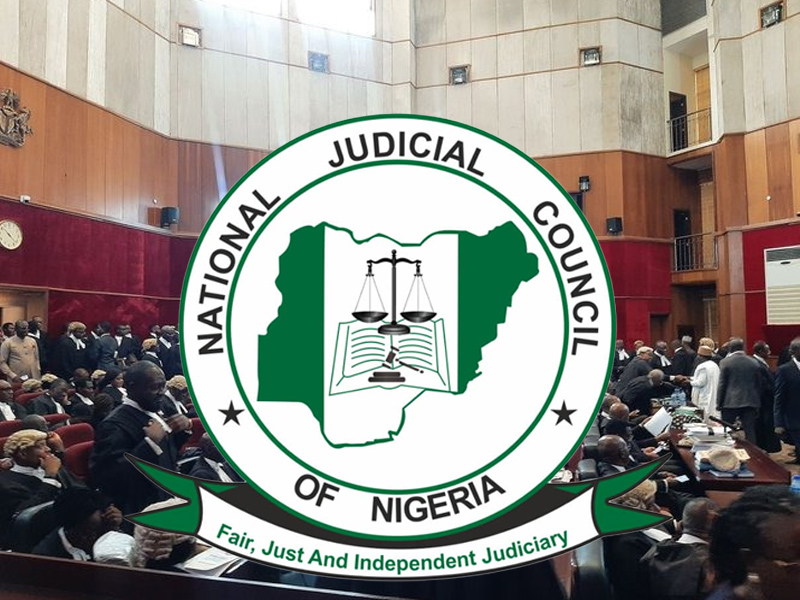
The National Judicial Council (NJC) has recommended 28 candidates for appointment as judicial officers across six states, including 24 candidates for various State High Courts.

The recommendations cover the High Courts of Kano, Ebonyi, Edo, Adamawa and Ogun states, the Plateau State Sharia Court of Appeal, Adamawa State Sharia Court of Appeal and Adamawa State Customary Court of Appeal.

The Council announced the recommendations in a statement issued on Wednesday by its Deputy Director of Information, Kemi Babalola-Ogedengbe.

It said the decisions were taken at its 112th meeting held on November 3, 2026, under the chairmanship of the Chief Justice of Nigeria, Justice Kudirat Motonmori Olatokunbo Kekere-Ekun.

According to the Council, one candidate was recommended as Grand Kadi of the Plateau State Sharia Court of Appeal, while another was recommended as Kadi of the Adamawa State Sharia Court of Appeal.

Two others were recommended as judges of the Adamawa State Customary Court of Appeal.

The appointment includes “24 High Court candidates and four candidates for the Sharia and Customary Courts of Appeal.”

The full list of the 28 recommended candidates is as follows:

PLATEAU STATE SHARIA COURT OF APPEAL (GRAND KADI)

1. Tijjani Jibrin Zololo

KANO STATE HIGH COURT

2. Nafisah Yusuf Hassan
3. Halima Yahuza Ahmad
4. Abdullahi Abdulsalam Bature
5. Musa Ibrahim Umar

EBONYI STATE HIGH COURT

6. Dickson Edmund Amaga

EDO STATE HIGH COURT

7. Benson Osagie Osawaru
8. Taiye Osayanmon Omoruyi
9. Dorothy Ibhade Adamaigbo
10. Festus Osagie Usiobaifo
11. Pius Idemudia Oiwoh
12. Majebi Samuel Amune
13. Emike Jessica Imuekemhe

See also  Wike saga: Throwback to military impunity

ADAMAWA STATE HIGH COURT

14. Aminu Sa’ad
15. Ibrahim Ulenda Musa
16. Sadiq Giwa
17. Musa Bala Mijinyawa
18. Japhet Ibrahim
19. Aliyu Bakari
20. Yakubu Ahmadu

OGUN STATE HIGH COURT

21. Olakulehin Luqman Abiola Oke
22. Adebimpe Folusho Obienu
23. Fatimat Adeola Daudu
24. Rafiat Bolanle Kadiri
25. Oludotun Olaniyi Osho

ADAMAWA STATE SHARIA COURT OF APPEAL (KADI)

26. Abubakar Ishaku

ADAMAWA STATE CUSTOMARY COURT OF APPEAL

27. Elshama Gwama Dimas
28. David Benjamin Pembi

The NJC said all the recommended candidates were expected to be sworn in by their respective state governors without delay.

Source: punchng.com

FOLLOW US ON:

FACEBOOK

WHATSAPP CHANNEL

TWITTER

PINTEREST

TIKTOK

YOUTUBE

LINKEDIN

INSTAGRAM

Continue Reading

News

JD Vance reveals Iran war cost Republicans midterm elections, read details

Published

on

United States Vice President JD Vance has blamed the Iran war for the Republican Party’s poor performance in the 2026 midterm elections, saying many supporters of President Donald Trump switched allegiance to Democrats over dissatisfaction with the conflict.

Vance said this in a post on his X handle on Wednesday, arguing that the party’s defeat was not primarily caused by poor voter turnout but by the defection of voters who supported the Trump-Vance ticket in 2024.

He said data analysis conducted by his team before the elections had shown that Republican supporters were turning out in significant numbers, despite opinion polls predicting a major Democratic victory.

“One of the things the data analysts on our side obsessed over was ‘composition’—whether the electorate looked close enough to 2024 for Republicans to win,” he said.

Vance explained that although turnout was encouraging in several states, a member of his data team had warned him that many Republican voters were angry and might not vote for the party.

“Well, that looks prophetic now. Our voters did show up. In Florida, for example, the electorate was nine points more Republican than Democrat, just a couple points worse than 2024,” he said.

“But the main problem is not turnout. The main problem is that many people who voted for Trump/Vance in 2024 voted for Democrats in 2026.”

The Vice President acknowledged that the party might have failed to communicate its economic policies effectively, particularly on the cost of living and inflation.

However, he said the major reasons voters abandoned the Republicans were concerns about the war, economic hardship, America’s foreign policy priorities and its relationship with Israel.

See also  FG slammed as medical tourism hits $550m annually

According to Vance, a pollster who accurately predicted the election outcome identified four major demands among former Republican supporters who switched to the Democrats.

The demands were to end the war, prioritise the cost of living and inflation, put America first and change the country’s relationship with Israel.

“The reason we lost is the war. The president himself said so last night,” Vance stated.

He also defended television personality Rachel Campos-Duffy, saying her earlier call for a diplomatic resolution to the conflict had proved politically sound.

Vance warned against attempts by Republican establishment figures to attribute the party’s electoral setback to other issues, particularly immigration policy.

He said he was open to reviewing immigration enforcement strategies, including targeting businesses that employ undocumented workers, but rejected calls for amnesty.

“Anyone pushing amnesty is lying to you,” he said.

The Vice President challenged those who believed the war was worth the political cost to defend that position openly, noting that the defeat could cost Republicans control of the Senate for the next six years.

“If you’d like to argue it was worth it, that losing the Senate for the next six years was worth it, then do so. Argue it was a worthwhile cost to pay,” he said.

“Agree or disagree, that’s at least honest.”

Despite the setback, Vance expressed optimism about the country’s future, urging disappointed Republican supporters to channel their anger into rebuilding the party and electing candidates who share their political views.

“Let’s take that anger and get back to the work of saving our country,” he added.

See also  US court upholds Trump administration’s $100,000 visa fee for tech workers

Source: punchng.com

FOLLOW US ON:

FACEBOOK

WHATSAPP CHANNEL

TWITTER

PINTEREST

TIKTOK

YOUTUBE

LINKEDIN

INSTAGRAM

Continue Reading

News

UK to strengthen immigration enforcement with facial recognition

Published

on

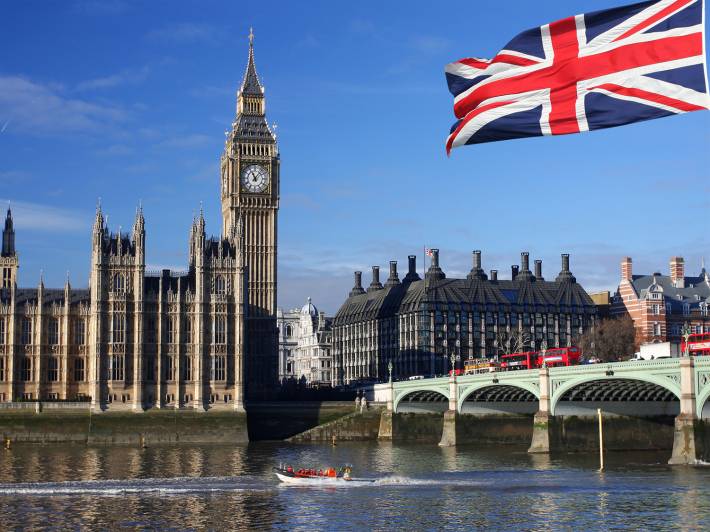
The United Kingdom government plans to expand live facial recognition technology to strengthen immigration enforcement and identify individuals who have violated immigration rules.

The initiative, being developed by the Home Office, could see facial recognition cameras deployed at transport hubs and public events to help immigration officers identify people who have overstayed their visas, entered the country unlawfully or breached their immigration conditions.

According to policy documents published in October and sighted by PUNCH Online on Thursday, the proposed expansion could extend the technology’s use to general immigration enforcement, including civil immigration violations that do not necessarily involve criminal offences.

The development comes as Home Secretary Shabana Mahmood seeks to intensify immigration enforcement through increased funding, additional personnel and expanded deportation operations.

The Home Office said the technology would help officers identify individuals subject to removal proceedings and those attempting to re-enter the UK unlawfully.

The policy documents also suggest that facial recognition could reduce the need for repeated enforcement visits to residential properties and workplaces.

Authorities have already conducted three trials of the technology at Holyhead port in north Wales between November 2025 and February 2026. The trials focused on identifying individuals travelling from Ireland who were subject to deportation orders or wanted over immigration-related criminal offences.

The programme has now entered its formal delivery phase, with officials considering wider deployments at transport hubs and large public gatherings.

A Home Office spokesperson confirmed that further trials were being considered while the government examined the potential benefits and implications of the technology.

See also  Makinde signs executive order regulating vigilante, security groups

U K Home Secretary, Shabana Mahmood, said: “Facial recognition technology has been the biggest breakthrough for catching criminals since DNA matching, already helping police take thousands of dangerous criminals off our streets.

“The benefits are clear, but we must ensure that its use is fair, safe and proportionate.

“It is right we put in place clear laws to ensure that the use of this technology is watertight, so the public can have confidence that these tools, which are vital to our safety, are used responsibly too.”

However, the proposed expansion has raised concerns among civil liberties organisations and migrant rights advocates over privacy, surveillance and the possibility of inaccurate identification.

The Joint Council for the Welfare of Immigrants described the development as a significant escalation of immigration enforcement powers, while the Open Rights Group questioned the transparency of the plans, public consent and the absence of comprehensive legislation governing facial recognition.

Critics have also warned that the technology could disproportionately affect people of colour because of concerns about identification accuracy.

Meanwhile, Biometrics and Surveillance Camera Commissioner William Webster has questioned whether existing regulatory arrangements are sufficient to oversee the expanding use of facial recognition across government agencies.

Under the proposed policy, individuals under 18 will not be included on facial recognition watchlists.

Source: punchng.com

FOLLOW US ON:

FACEBOOK

WHATSAPP CHANNEL

TWITTER

PINTEREST

TIKTOK

YOUTUBE

LINKEDIN

INSTAGRAM

Continue Reading

Trending