Connect with us

News

Russia denies recruitment of Nigerians for Ukraine war

Published

on

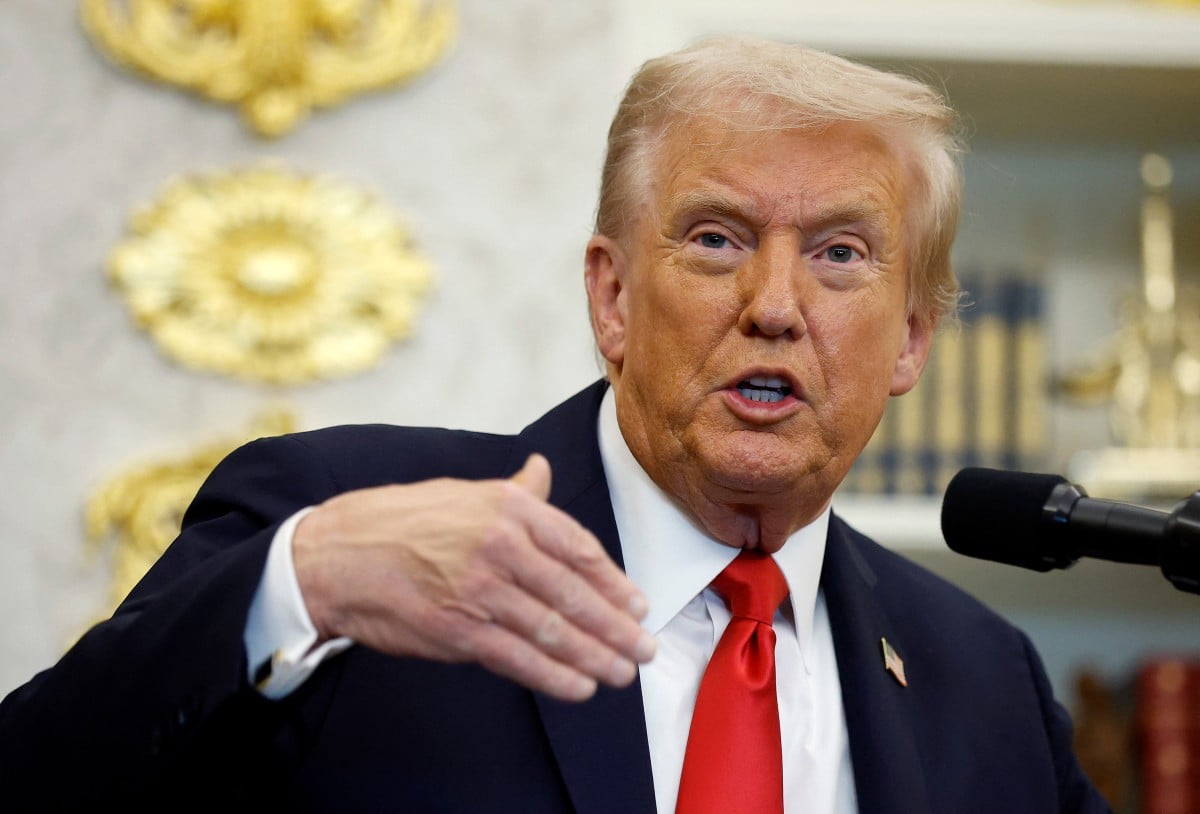
Russia has denied any government-backed programme to recruit Nigerians to fight in the war in Ukraine, insisting that any such activity, if it exists, is not connected with the Russian state.

The Russian Ambassador to Nigeria, Andrey Podyolyshev, stated this on Tuesday in Abuja while responding to reports that Nigerians had been recruited to fight on the frontlines.

Reports and videos have alleged that some Nigerians and other Africans were recruited under the pretext of security jobs in Russia and later deployed to the war front after brief training.

Denying any official involvement in this, Podyolyshev said, “There is no government-supported programme to recruit Nigerians to fight in Ukraine. If there are illegal organisations or individuals trying to recruit Nigerians by unlawful means, this is not connected with the Russian state.”

He said Moscow was ready to investigate any credible information.

“If anybody has this information, we are ready to send it to Russian law enforcement authorities so they can investigate those cases,” he added.

Podyolyshev also questioned reports by Western media, including a recent CNN investigation, which alleged that some Nigerians were deceived into joining the conflict.

“You are receiving information from Western sources. Their main task is to demonise Russia. If you want to know the real situation, you should send journalists to Russia to understand what is really happening,” the Ambassador said.

While acknowledging that some Nigerians may be in the conflict zone, he maintained there was no official Russian policy behind it.

See also  Iran security chief vows continued support for Lebanon

“There are such Nigerians, I know, but there is no government-supported programme to recruit them. If there are agencies, including Russian agencies, violating Russian law, we are ready to transmit this information to our law enforcement authorities,” he said.

On Security and military cooperation, he said Russia and Nigeria were discussing closer defence ties, including arms supplies and training.

“We are discussing the possibilities of supplying Russian weaponry and training military personnel in Russia, maybe here in Nigeria. We are ready to develop cooperation with Nigeria in the military field to the extent the Nigerian side wishes.

“This strengthens Nigeria’s ability to fight terrorism and piracy,” he said.

The ambassador also called for stronger economic engagement between both countries, noting that the last session of the Russia–Nigeria Intergovernmental Commission on Economic Cooperation was held about 10 years ago.

“We need the support of our governments if we want to realise some big projects. Without that support, it is very difficult to move forward,” he added.

Podyolyshev also outlined Moscow’s broader foreign-policy view of Nigeria, describing the country as a strategic partner and a potential global centre of influence in a multipolar world.

“When we speak about Africa, we must speak about Nigeria. Nigeria is one of the key states on the continent and the leading link in West Africa. It has major political and economic weight in Africa and globally.

“Nigeria is the most populous country in Africa and one of the continent’s largest economies. It is a major OPEC member and a key regional energy player,” he said.

See also  Tinubu unveils NRS corporate headquarters

On politics and security, he praised Nigeria’s leadership role on the continent.

“Politically, Nigeria is a regional leader, playing a pivotal role in security in West Africa and making a significant contribution to the work of the African Union,” he said.

“For Russia, Nigeria is a partner of strategic importance. Cooperation with Nigeria largely shapes our prospects in West Africa,” he added.

Podyolyshev also highlighted Nigeria’s influence within ECOWAS and the African Union, recalling its peacekeeping roles in Liberia, Sierra Leone and The Gambia.

“Nigeria showed readiness to take responsibility for regional stability. Within ECOWAS, Nigeria is the core of the organisation in terms of population, economy and military potential,” he said.

On bilateral relations, he said Russia–Nigeria ties, which date back to Soviet times, were entering a new phase.

“On November 25, 2025, we marked the 65th anniversary of diplomatic relations. Today, bilateral cooperation is entering a new phase, driven by our mutual wish to diversify international ties,” he said.

Education, he added, remains a key pillar of the relationship.

“Thousands of Nigerians studied in the Soviet Union in engineering, medicine and other fields, and this continues today. Each year, Nigerian students enter Russian universities on state quotas. Russian diplomas are highly valued in Nigeria,” Podyolyshev said.

In the energy sector, he disclosed that both countries were working on long-term projects, including nuclear cooperation.

“An intergovernmental agreement has been signed on building a Centre for Nuclear Science and Technology in Nigeria with a research reactor and, in the longer term, a nuclear power plant,” he said.

Looking ahead, Podyolyshev described Nigeria as a future global power.

See also  Confusion hits trial of suspected coup plotters

“Demography, resources and regional leadership give Nigeria a real chance to become one of the global centres of power in the multipolar world.

“Russia is interested in Nigeria’s rise, and as Nigeria’s influence grows, the scope for a global Russia–Nigeria partnership will expand,” he said.

Speaking further, he linked Russia’s foreign-policy vision to a broader push for a multipolar international order.

Stating that the essence of multipolarity is to ensure development without domination.

Adding that, “An international order free from dictatorship and neo-colonialism creates conditions for stability, development and security for all.”


Continue Reading
Click to comment

Leave a Reply

Your email address will not be published. Required fields are marked *

News

South Korean judge who hiked ex-first lady’s jail sentence found dead

Published

on

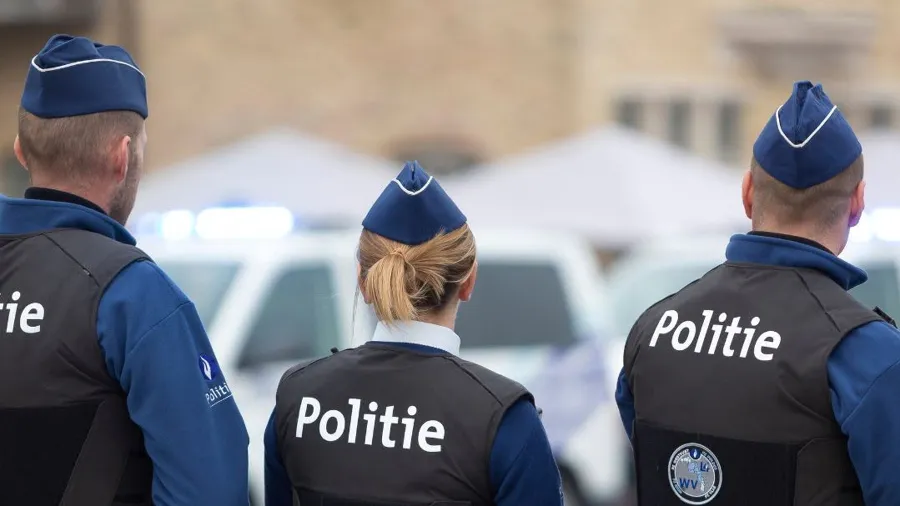
A South Korean judge who more than doubled the former first lady’s prison sentence last month was found dead on Wednesday, police said.

Shin Jong-o was “found unconscious around 1:00 am (1600 GMT on Tuesday)… at the Seoul High Court building”, an investigator at Seocho district police station told AFP.

Shin was taken to the hospital and pronounced dead, he said, adding: “There is no sign of foul play in the death.”

Local media reported that Shin had left a suicide note, but the investigator said there was none.

Last month, Shin presided over 53-year-old Kim Keon Hee’s appeal trial, finding her guilty of stock manipulation and bribery, and increasing her sentence to four years from 20 months.

The heavier sentence came after her acquittal by a lower court on the stock manipulation charge was overturned.

Shin said at the time that Kim had “failed to acknowledge her culpability and has instead consistently resorted to excuses”.

The police investigator said on Wednesday that the judge’s “bereaved family is stricken by the incident” and requests privacy.

AFP

See also  Confusion hits trial of suspected coup plotters
Continue Reading

News

Court frees ex-HOS Oyo-Ita in N570m money laundering case

Published

on

The Federal High Court in Abuja on Tuesday discharged and acquitted former Head of Service of the Federation, Winifred Oyo-Ita, of alleged N570m money laundering charges filed against her by the Economic and Financial Crimes Commission.

The trial judge, Justice James Omotosho, upheld the no-case submissions filed by Oyo-Ita and eight co-defendants, holding that the EFCC failed to establish a prima facie case against them after about six years of trial.

“The case presented by the prosecution has no weight whatsoever,” the judge ruled.

Justice Omotosho described the anti-graft agency’s case as one “built on the quicksand of speculations, suspicions and shoddy investigation.”

He added that the prosecution failed to establish the predicate offences required to prove money laundering allegations.

“Crucial elements of money laundering offences, which are the establishment of a predicate offence, were glaringly absent in this case presented by the prosecution,” he said.

The judge held that the prosecution failed to prove that funds allegedly traced to Oyo-Ita were proceeds of unlawful activities.

According to him, evidence before the court showed that contracts linked to the allegations were duly approved and executed.

He also held that estacodes, duty tour allowances and air tickets allegedly received by Oyo-Ita were properly approved.

“There is no proof before the court that estacodes or duty allowances were approved and subsequently collected without the corresponding trips being undertaken,” the judge said.

He faulted the prosecution for failing to tender travel approvals, official memos, audit queries or other documentary evidence to support its allegations.

“The prosecution has, in effect, invited the court to engage in speculation,” he added.

See also  Tears, drama, strategies, What you missed on first week of BBNaija S10

Justice Omotosho further held that Oyo-Ita was neither a director nor shareholder in the companies allegedly linked to the transactions under investigation.

“The prosecution did not provide any shred of evidence to show that the monies are tainted with illegality,” the judge ruled.

He subsequently upheld the no-case submissions filed by all the defendants and discharged and acquitted them on the 18-count charge.

The EFCC had arraigned Oyo-Ita and others in March 2020 over allegations bordering on fraud involving duty tour allowances, estacodes and contract kickbacks amounting to about N570m.

During the trial, the commission called eight witnesses and tendered documentary exhibits.

However, the defendants argued that the prosecution failed to establish any ingredient of the offences to warrant them entering a defence.

Justice Omotosho also rejected confessional statements allegedly obtained from Oyo-Ita and some co-defendants, ruling that they were not obtained in compliance with provisions of the Administration of Criminal Justice Act.

He held that the prosecution failed to produce video recordings of the statement-taking sessions as required by law and consequently expunged the statements from evidence.

Oyo-Ita was removed from office by the administration of the late President Muhammadu Buhari in September 2019, amid corruption allegations.

Continue Reading

News

Missing Ebonyi engineers’ families demand fresh probe

Published

on

Wives of five engineers linked to NELAN Consulting have rejected recent comments by the Minister of Works, David Umahi, accusing him of attempting to “sweep the truth under the carpet” over the disappearance and presumed killing of their husbands in 2021.

In a strongly worded rejoinder signed by the wives of the engineers, namely Mrs Patricia Onyemeh, Mrs Lovette Edeani, Mrs Ifeoma Ejiofor, Mrs Esther Aneke, and Mrs Nwazulum, the women said Umahi’s response failed to address “grave factual and moral concerns that have persisted for nearly five years.”

The statement follows Umahi’s March 16, 2026, response in which he reportedly linked the engineers’ disappearance to communal unrest.

But the families disputed this, insisting that “the characterisation of the disappearance of the five engineers… as a general consequence of communal crisis is completely outrageous, misconceived, misrepresented, and flawed.”

The engineers, who were supervising an African Development Bank-backed ring road project in Ebonyi State, went missing on November 3, 2021, during Umahi’s tenure as governor.

According to the families, their husbands had travelled for an official meeting arranged by the state government, and were last seen in connection with the project.

“Credible accounts indicate that the victims were last seen in connection with official engagements linked to the Ebonyi Ring Road project,” the statement read, raising “legitimate questions” about attempts to attribute the incident to communal violence.

The wives alleged irregularities in the handling of the case by security agencies, particularly the Department of State Services and the Nigeria Police Force.

See also  Electoral Act : El-Rufai backs protest, blasts senate

They questioned why a DSS investigator, identified as Victor Chijioke Onyesom, was “suddenly sacked at the peak of his investigation,” alleging that he had been tracking communications linked to the case.

“Who influenced the conspiracy to terminate the investigation at DSS?” they asked.

The families also faulted the police for presenting skeletal remains without conducting DNA verification.

“The police presented them to the family as remains of the victims, but refused to do a DNA test.

“The test further showed that one of the five skeletal remains belonged to a female, whereas the five missing engineers are all men,” the statement said.

It further accused authorities of rushing to file charges against six suspects without concluding investigations or producing bodies.

“Without a doubt, the conspiracy in hurriedly filing the purported charge… was to tactically close the investigation… and shield the real culprits,” the wives said.

They added: “Where are the bodies of our husbands? You arrested their killers.”

The families also alleged intimidation after petitioning top government officials, including President Bola Tinubu, Senate President Godswill Akpabio, and House Speaker Tajudeen Abbas.

According to them, “an undisclosed person… threatened us not to push further for the reinvestigation of the case.”

Rejecting Umahi’s position outright, the wives said: “We totally reject David Umahi’s responses as misconceived and unfounded,” citing “interference in the investigative process, the sudden termination of the investigation, the removal of key investigators, and the suppression of critical evidence.”

They described the case as a “whitewash, cover-up, mischief, conspiracy, and plot to use the court to foreclose investigation.”

See also  Labour tasks states, LGAs on insecurity

The families called on the President, National Assembly leadership, and civil society groups to compel security agencies to reopen the case.

“We will have no option but to embark on another protest if the investigation is not reopened.

“The blood of our dear husbands will never go in vain,” the wives said.

punch.ng

FOLLOW US ON:

FACEBOOK

TWITTER

PINTEREST

TIKTOK

YOUTUBE

LINKEDIN

INSTAGRAM

Continue Reading

Trending