Connect with us

Politics

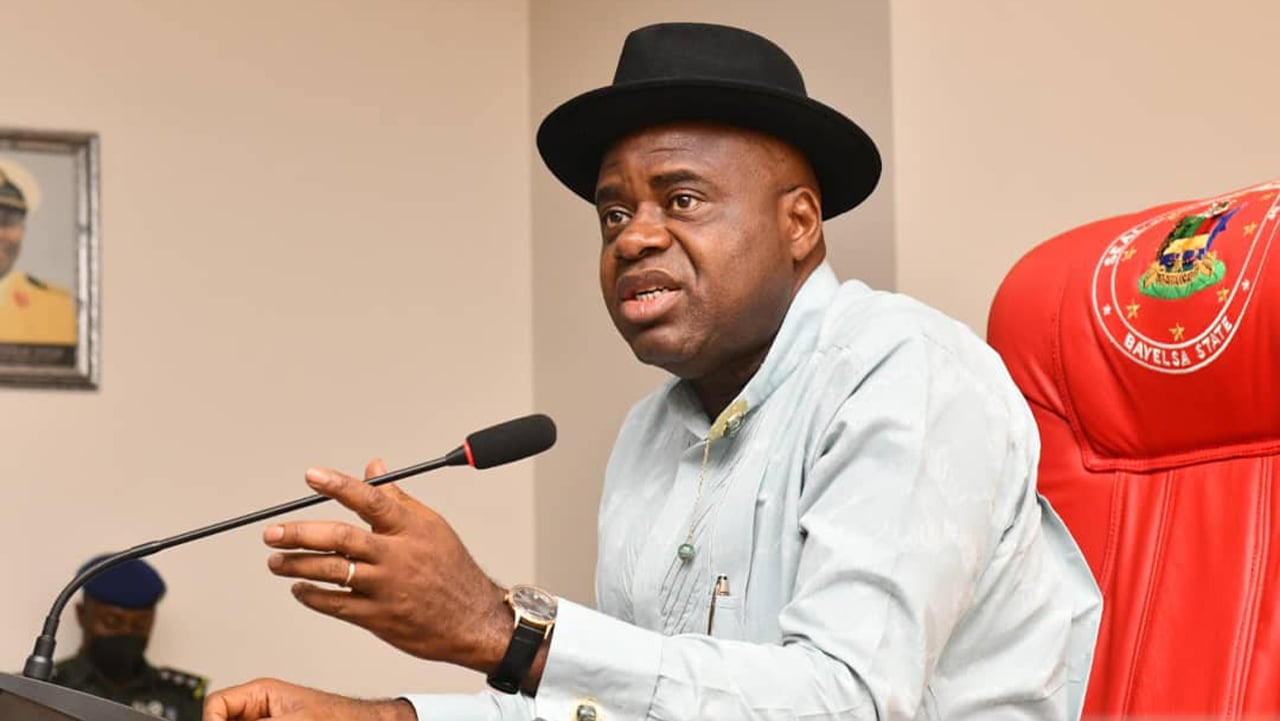
Pressure mounts on Bayelsa gov over choice of deputy

Published

on

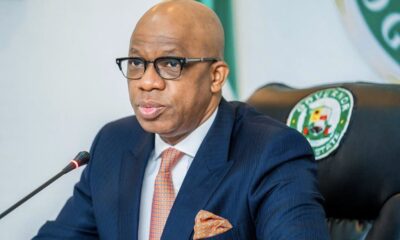
Political lobbying and consultations intensified in Bayelsa State as attention shifted to who emerges as successor to the late deputy governor, Lawrence Ewhrudjakpo.

Even before the burial of the late deputy governor, political consultations and lobbying had been ongoing, following his refusal to join his principal, Governor Douye Diri, to defect from the Peoples Democratic Party to the All Progressives Congress.

Ewhrudjakpo died on December 11, 2025, at the age of 60, after collapsing in his office in Yenagoa.

He was rushed to the Federal Medical Centre, Yenagoa, where he was pronounced dead.

His death sparked a debate over whether the next deputy governor should come from Sagbama Local Government Area, where he hailed from, or the existing zoning arrangements within Bayelsa West Senatorial District should prevail.

Some stakeholders argued that fairness demanded that Sagbama produce the replacement to complete the tenure.

One of the stakeholders, Ayebakuro Igbeta, said Sagbama Constituency I should be allowed to complete the term, given that Ewhrudjakpo was from the area.

Others, however, insisted that zoning and broader representation across the senatorial district should guide the decision, warning against upsetting the existing political balance in the state.

Under the Constitution, Diri has the power to nominate a replacement, subject to confirmation by the state House of Assembly.

Names being mentioned as possible replacements included the Chief of Staff to the Governor, Dr Peter Akpe, who is from Sagbama Local Government Area; Christopher Ewhrudjakpo, elder brother of the late deputy governor and a retired permanent secretary; Speaker of the state House of Assembly, Abraham Ingobere, from Brass Local Government Area; and the Bayelsa State chairman of the APC, Dr Dennis Otiotio, from Nembe (Bassambiri).

See also  Electoral reforms: Senate pushes INEC to defend election results

Former governor and senator representing Bayelsa West, Seriake Dickson, criticised what he described as intense lobbying for Ewhrudjakpo’s replacement even before his burial, held on January 30.

He said that with the burial concluded, the responsibility of nominating a successor rested squarely with the governor.

“There is no contention about who should nominate a replacement for the late deputy governor.

“Even though I produced the governor and his deputy, I have neither interfered with the government nor sought any favours.

“For the six years so far, I have not put Diri under any pressure and will remain so for the remaining two years,” he said.

Also speaking, the chairman of the Civil Liberties Organisation in Bayelsa State, Mr David West, argued that for reasons of equity and political balance, the deputy governor’s position should remain in Sagbama.

He said, “Before the emergence of the governor and his late deputy, there was a political arrangement many people referred to as zoning. This arrangement should be maintained for the next two years of Governor Diri’s administration.

“Keeping the appointment of the deputy governor too long is an aberration of the constitution. The new deputy ought to have been named at least 24 hours after the demise of the deputy governor. That does not mean we are not mourning him.

“The governor is not always in the state, and most times the late deputy governor represented him at various political gatherings.

“As I speak to you now, the governor is not in the state, and state activities are at a standstill, which is not proper.”

See also  2027: Nigeria needs Jonathan more than ever, says ex-presidential aspirant

West advised the governor to prioritise character, competence and acceptability in nominating a replacement and cautioned against political compensation.


Continue Reading
Click to comment

Leave a Reply

Your email address will not be published. Required fields are marked *

Politics

National Convention: APC Elects New National Working Committee (Full List)

Published

on

The exercise was carried out in the ongoing 8th national convention of the party at the Eagles Square in Abuja, the nation’s capital city.

The All Progressives Congress has elected new members into its National Working Committee (NWC) ahead of the 2027 general elections.

The exercise was carried out in the ongoing 8th national convention of the party at the Eagles Square in Abuja, the nation’s capital city.

The elected National Working Committee, NWC, include:

• National Chairman – Prof. Nentawe Yilwatda

• Deputy National Chairman (North) – Ali Bukar Dalori

• Deputy National Chairman (South) – Dr. Benjamin Obi Nwoye

• National Secretary – Sen. Surajudeen Ajibola Basiru

• Deputy National Secretary – Prof. AbdulKarim Abubakar Kana

• National Legal Adviser – Murtala Aliyu Kankia

• National Treasurer – Uguru Mathew Ofoke

• National Financial Secretary – Amb. Haruna Ginsau

• National Organising Secretary – Muhammad Sulaiman Argungu

• National Welfare Secretary – Donatus Enyinnah Nwankpa

• National Publicity Secretary – Felix Morka

National Auditor – Sen. Abubakar Maikafi

• National Women Leader – Dr. Mary A. Idele

• National Youth Leader – Dayo Israel

• National Leader (Persons with Disabilities) – Aare Durotolu Oyebode Bankole

• Deputy National Financial Secretary – Hammam Adamu Ali Kumo

• Deputy National Organising Secretary – Barr. Emeka Okafor

• Deputy National Women Leader – Zainab Abubakar Ibrahim

• Deputy National Publicity Secretary – Hon. Meseko Durosinmi Josiah

• Deputy National Welfare Secretary – Dr. Christopher Michael Akpan

See also  ‘Leave Social Media, Join Politics’, Ex-Lawmaker Shehu Sani Tells Young Nigerians

• Deputy National Auditor – Mr. Olugbenga Olayemi

• Deputy National Legal Adviser – Barr. Ibrahim Salawu

• Deputy National Treasurer – Engr. Ben Akak

• Deputy National Youth Leader – Jamaludeen Kabiru

• National Ex-Officio (North Central) – Dr. Opawoye Oluwatoyin Bunmi

• National Ex-Officio (North East) – Adamu Jallah

• National Ex-Officio (North West) – Kano Muhammed Jamu Yusuf

• National Ex-Officio (South East) – Hon. Ikechukwu Umeh

• National Ex-Officio (South South) – Mr. Francis Kolokolo

• National Ex-Officio (South West) – Hon. Bunmi Orinowo

FOLLOW US ON:

FACEBOOK

TWITTER

PINTEREST

TIKTOK

YOUTUBE

LINKEDIN

Continue Reading

Politics

Atiku meets ADC stakeholders in Adamawa, expresses confidence in party’s progress

Published

on

Ex-Vice President Atiku Abubakar met with stakeholders of the Adamawa State African Democratic Congress for a strategic engagement to review the party’s current state and map out plans for its future growth in the state.

The meeting, which took place on Thursday night, brought together party leaders, influential members, and grassroots coordinators from across Adamawa State.

Atiku emphasised the importance of strong organisational structures and active engagement with party members at all levels.

He noted that while political parties often face challenges in mobilising support and maintaining membership enthusiasm, these hurdles can be overcome with clear planning, inclusive leadership, and sustained effort.

“We reviewed the current state of our party, particularly regarding the ongoing registration of members and mobilisation efforts. “We are confident about where we stand now and enthusiastic about prospects,” he wrote on X on Friday.

According to him, effective party organisation is not just about numbers but about creating systems that encourage participation, foster accountability, and ensure that members feel connected to the party’s vision and mission.

He encouraged party leaders and stakeholders to continue building networks within communities, engaging young people, and ensuring that the ADC’s message reaches every corner of the state.

punch.ng

FOLLOW US ON:

FACEBOOK

TWITTER

PINTEREST

TIKTOK

YOUTUBE

LINKEDIN

See also  EFCC orders arrest of dismissed officer on Lege Miami’s show
Continue Reading

Politics

Inside Kwara APC’s consensus dilemma

Published

on

Unlike Lagos, Ogun and Oyo where quiet moves toward consensus candidates are emerging, deep-rooted rivalries, competing power blocs and zoning disputes threaten to derail any similar arrangement in Kwara State, DARE AKOGUN and TOYEEB OMOTAYO write

As Nigeria’s ruling party quietly experiments with consensus candidacy in parts of the South-West, the situation in Kwara State presents a sharp contrast one defined by intense internal rivalry, overlapping interests and a political culture resistant to easy compromise.

The PUNCH reported on Tuesday that the All Progressives Congress was exploring consensus arrangements in Lagos, Ogun and Oyo states in n the western part of the country, with names such as Obafemi Hamzat, Olamilekan Adeola (Yayi), and Sharafadeen Alli said to be favoured after high-level consultations involving President Bola Ahmed Tinubu and party stakeholders.

The consensus model, long preferred within the APC for its ability to minimise internal conflict and project unity, has been credited with stabilising party structures in several states.

However, attempts to replicate such arrangement in Kwara are already running into turbulence.

Investigations by The PUNCH reveal that unlike the relatively coordinated South-West political machinery, Kwara APC is grappling with deep-seated factional interests, personal ambitions and ideological divides that may make consensus not only difficult but potentially destabilising.

Illusion of consensus

At first glance, the idea of a consensus candidate appears attractive.

It reduces the cost of primaries, prevents post-primary litigation and allows the party to rally early behind a single flagbearer.

It also aligns with the Electoral Act provisions that permit political parties to adopt consensus arrangements.

But in Kwara, insiders say the situation is far more complicated.

A chieftain of the APC in the state Alhaji Babatunde Waheed said it will be difficult for anyone to impose a consesus candidate on the party without protest.

“There is no single power centre that can impose consensus without resistance.

“Every major aspirant has a structure, and more importantly, has backers who are unwilling to step down,” he said.

This is where Kwara diverges sharply from Lagos or Ogun, where political hierarchies are more clearly defined and largely aligned with presidential influence.

In Kwara APC, at least four distinct power blocs are already jostling for control of the party’s 2027 governorship ticket.

At the centre is Governor AbdulRahman AbdulRazaq, whose incumbency gives him significant leverage in shaping succession dynamics.

Then comes the silence influence of President Bola Ahmed Tinubu, whose names many aspirants have thrown around and political calculations in the North-Central may not necessarily align with local preferences.

See also  ‘Leave Social Media, Join Politics’, Ex-Lawmaker Shehu Sani Tells Young Nigerians

A third bloc comprises established politicians and aspirants figures like Saliu Mustapha, Yahaya Seriki who both contested with the current governor in 2019 who actively has a long standing   grassroots and elite alliances.

The fourth bloc includes legacy political structures like former APC chairman in the state Hon. Bashir Bolarinwa and opposition forces linked to Bukola Saraki, whose shadow continues to loom over the state’s political landscape.

The coexistence of these competing centres of influence has created a volatile environment where consensus is easier proposed than achieved.

Governor vs Aspirants

At the heart of the unfolding drama is the question of who controls the APC structure in Kwara.

While Governor AbdulRazaq is expected to play a major role in determining his successor, several aspirants are already positioning themselves as independent power centres.

Speculation about the governor’s alleged preference for the Speaker of the State House of Assembly, Salihu Danladi, has further complicated matters.

Although the  Governor, has dismissed speculations that he has endorsed or promised to anoint a successor ahead of the 2027 governorship race, insisting that the All Progressives Congress will conduct an open and merit-based primary.

The governor spoke in Ilorin at the State Congress of the APCbhekd in March, amid growing political rumours that he had concluded plans to back a candidate from Kwara North Senatorial District to succeed him.

“For those who will contest and whoever eventually emerges, it is not about anyone anointing anybody.

“We are not here to build a dynasty; we are here to build a legacy. Whoever succeeds me will build on this foundation and strive to do better,” he said

For supporters of other aspirants, such a reassurance does not hold water as it is believed that there is as an attempt to impose a candidate an idea that clashes with the post-2019 political consciousness in Kwara.

A senior party stakeholder who doesn’t want one named said the ‘Otógé’ movement was about ending imposition.

“If the party goes back to that, it could create serious internal crisis,” he said.

This tension reflects a broader dilemma: how to balance incumbency influence with internal democracy.

Battle lines drawn

Unlike in Lagos where consensus discussions reportedly followed consultations among stakeholders, Kwara’s aspirants are already locked in subtle but intense competition.

See also  PDP consensus deal shatters as Lamido rejects Turaki as chairman

Supporters of leading contenders have taken positions, often engaging in behind-the-scenes lobbying, media campaigns and grassroots mobilisation.

Senator Saliu Mustapha’s recent outreach efforts including donations beyond his senatorial district are widely interpreted as strategic moves to consolidate support.

Similarly, Yahaya Seriki’s philanthropic engagements and donations during the just concluded Ramadan have strengthened his political visibility and grassroots appeal.

Senator Sadiq Umar also recently  organized a football competition on Kwara central recently which is seen as many as trying to make in roads into the central senatorial districts.

Other aspirants, including party loyalists and technocrats, are also building alliances quietly.

A political observer Ranti Adesola said the result is a crowded field where each camp believes it has a legitimate claim to the ticket.

“In this kind of environment, asking people to step down for consensus is not realistic, as everyone believes he stands the better chance of emerging the candidate.

“We are back to the same scenario in 2019 where all the gladiators didn’t stepped down for each other and also went to claim victory after the primaries, which the result was not announced until three days in Abuja, “ she said.

Zoning

If internal rivalry is one challenge, zoning is another major obstacle to consensus.

Kwara North’s long-standing demand for the governorship has gained renewed momentum ahead of 2027.

Leaders from the region argue that since the brief tenure of Shaaba Lafiagi in the early 1990s, Kwara North has been largely excluded from power.

For them, zoning is not just a political strategy it is a matter of equity and justice.

However, this position is strongly contested by stakeholders from Kwara Central, the state’s political and demographic stronghold.

Given that Kwara Central and Kwara South accounts for a significant share of the state’s voting strength, many argue that zoning the ticket away from the region could weaken the APC’s electoral chances.

This argument has been echoed by figures like Professor Abubakar Suleiman, who warned against repeating what he described as the PDP’s miscalculation in 2023.

The clash between zoning advocates and merit proponents has created a deep fault line within the party one that consensus alone may not easily resolve.

Tinubu factor

While President Tinubu’s influence is expected to be significant, analysts say it may not be absolute in Kwara.

A political analyst, Segun Adeola, said in the South-West, Tinubu’s political authority is largely uncontested, making it easier to broker consensus among stakeholders.

See also  UK to bar eligible visitors without ETA from February 25

“In Kwara, although he is the President and leader of the party in the country, nevertheless his influence and foot soldiers must contend with local dynamics, entrenched interests and competing loyalties.

“Tinubu can guide, but he cannot outrightly dictate in Kwara the way he might in Lagos.

“Moreover, recent developments suggest that even in the South-West, the consensus narrative is not without controversy,” he said.

Lessons from the West

The emerging consensus model in Lagos, Ogun and Oyo offers important lessons but also highlights the uniqueness of Kwara.

In those states, the process whether fully agreed or still evolving has been driven by structured consultations, strong party leadership and a shared interest in maintaining unity.

In Kwara, however, the absence of a single dominant structure means that consensus, if pursued, would require extensive negotiations, concessions and possibly compensations.

As one party insider put it: “Consensus is easy when everyone agrees. In Kwara, the challenge is that everyone believes they should be the consensus”.

On one hand, consensus offers a pathway to unity and early mobilisation.

On the other, the realities of internal competition, zoning disputes and multiple power centres make such an arrangement difficult to implement.

For now, consultations are ongoing, alliances are shifting and ambitions remain firmly intact.

Even then, there is no guarantee of success.

The biggest risk facing the APC in Kwara is not just the difficulty of achieving consensus but the possibility that attempts to enforce it could deepen internal divisions.

In several states, contentious primaries and imposition of candidates have led to defections, parallel structures and electoral losses.

With the opposition Peoples Democratic Party still a formidable force under Saraki’s influence, any internal crisis within the APC could prove costly.

What is clear, however, is that unlike Lagos, Ogun and Oyo, where consensus may be gradually taking shape, Kwara’s path to a candidate is likely to be far more turbulent.

In the end, the question is not whether the APC will attempt a consensus in Kwara but whether the state’s complex political ecosystem will allow it.

That reality may ultimately define not just the APC’s internal dynamics, but the outcome of the 2027 governorship election itself.

punch.ng

FOLLOW US ON:

FACEBOOK

TWITTER

PINTEREST

TIKTOK

YOUTUBE

LINKEDIN

Continue Reading

Trending