Connect with us

News

N432bn probe: EFCC extends El-Rufai detention as lawyer pushes for bail

Published

on

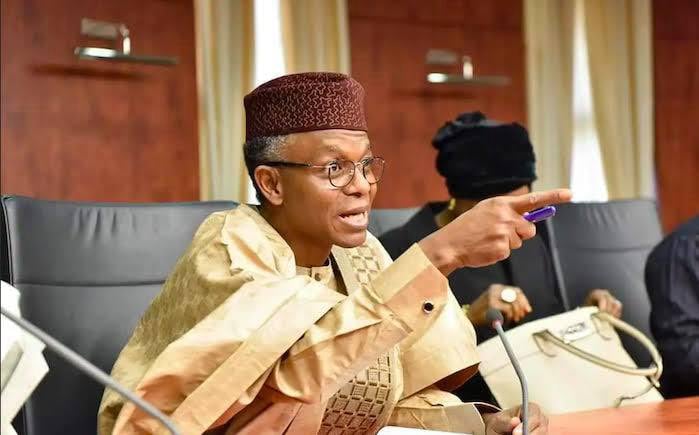
Former Kaduna State Governor, Nasir El-Rufai, on Tuesday spent the second night in the custody of the Economic and Financial Crimes Commission, as his lawyer, A.U Mustapha (SAN), pushes for his release on bail.

There are, however, indications that the commission may seek a remand order to extend his stay in custody to enable him to respond to questions posed by investigators handling his matter.

The former governor arrived at the EFCC headquarters in Abuja on Monday around 10 a.m. for questioning in connection with an alleged N432bn corruption probe. He was, however, detained at the commission, where investigators continued to grill him.

An official of the commission who pleaded anonymity said the anti-graft agency was considering obtaining a remand order after the expiration of the hours allowed by law to enable investigators conclude questioning him.

“Forget the speculations being peddled on social media that he has been released. He has not. El-Rufai is still with us and will be spending another night in custody.

“He is very much with us and will remain so because the investigators are considering getting a remand order after the expiration of the 48 hours allowed by law.

“The investigators need some time with him to answer questions arising from his eight years as governor in Kaduna State,” the source said.

Speaking in a telephone conversation with The PUNCH on Tuesday, El-Rufai’s counsel, Mustapha, confirmed that the former governor remained with the anti-graft agency, while insisting that his client had fully cooperated with investigators.

See also  ‘I’m Not A Criminal, They Are In Your Offices And Corridors Of Power’ – Baba-Ahmed Recounts DSS Invitation

He described his client as a responsible citizen who is not a flight risk if granted bail.

Mustapha said, “Well, as a responsible citizen, he was invited and, true to his word, he honoured the invitation.

“As we speak, he is still with the EFCC. He is cooperating to the best of his capacity, and we hope that the EFCC, given its integrity, will be kind enough to admit him to bail because he is presumed innocent, and I am sure if he is granted bail, he will not jump bail.

“He is a responsible citizen, and everybody knows him. He came to Nigeria on his own volition. He wrote a letter that he was going to honour the EFCC invitation, and he kept his word as a man of integrity. We’re hopeful that very soon he will be granted bail.”

When asked about the specific allegations against his client, Mustapha declined to offer details.

“You’re asking the right question from the wrong person. That question can only be answered by the EFCC and not by me. I would just be speculating, and lawyers don’t do that.”

Pressed further on whether he witnessed parts of the interrogation and what it was about, Mustapha responded, “That would be prejudicial. It’s a confidential matter and not meant for public consumption.”

The EFCC’s interrogation is linked to the report of an ad hoc committee of the Kaduna State House of Assembly set up in 2024 to probe finances, loans, and contracts awarded between 2015 and 2023 during El-Rufai’s administration.

The committee, chaired by Henry Zacharia, had alleged that several loans obtained during the period were not utilised for their intended purposes.

See also  FG plans 500 CNG stations to cut petrol use

While presenting the report, the Speaker, Yusuf Dahiru Leman, claimed that about N423bn was allegedly siphoned under the former governor’s administration.

The committee recommended the investigation and prosecution of El-Rufai and some former cabinet members over alleged abuse of office, diversion of public funds, money laundering, contract awards without due process, and reckless borrowing.

The Assembly subsequently forwarded petitions to the EFCC and the Independent Corrupt Practices and Other Related Offences Commission.

El-Rufai has denied the allegations, describing the probe as politically motivated, and insisted that loans obtained during his tenure were properly appropriated and used for infrastructure, education, healthcare, and security.

On Monday, an EFCC source said the commission had been investigating the matter for about a year, noting that suspects are usually invited after investigations have reached an advanced stage.

“The commission has been investigating him for about a year now. As a commission, we don’t just rush to invite suspects. Persons accused are always the last; that is, after we might have done our investigation to an advanced stage.

“We are investigating him on the allegations against him by the Kaduna State Assembly,” the source said.

Meanwhile, in a separate development, the Department of State Services has filed criminal charges against El-Rufai before the Federal High Court in Abuja over alleged unlawful interception of the phone communications of the National Security Adviser, Nuhu Ribadu.

The three-count charge, marked FHC/ABJ/CR/99/2026, was filed under the Cybercrimes (Prohibition, Prevention, etc.) Amendment Act, 2024, and the Nigerian Communications Act, 2003.

According to the charge sheet, El-Rufai allegedly admitted during a February 13, 2026, appearance on Arise TV’s Prime Time Programme that he and unnamed associates unlawfully intercepted Ribadu’s communications.

See also  Ex-minister Alison-Madueke’s corruption trial to begin in London

Count One alleged that El-Rufai “did admit during the interview that you and your cohorts unlawfully intercepted the phone communications of the National Security Adviser, Nuhu Ribadu,” an offence said to be punishable under Section 12(1) of the Cybercrimes Amendment Act.

Count Two accused him of acknowledging knowledge of an individual involved in the alleged interception without reporting it to security agencies, while Count Three alleged that he and others still at large used technical equipment that compromised public safety and national security.

The prosecution further claimed that the alleged act, reportedly admitted during the television interview, caused “reasonable apprehension of insecurity among Nigerians.”

He is yet to be arraigned.

punch.ng

FOLLOW US ON:

FACEBOOK

TWITTER

PINTEREST

TIKTOK

YOUTUBE

LINKEDIN

TUMBLR

INSTAGRAM

Continue Reading
Click to comment

Leave a Reply

Your email address will not be published. Required fields are marked *

News

ICPC disowns viral ₦50bn bribe video, warns of legal action

Published

on

The Independent Corrupt Practices and Other Related Offences Commission (ICPC) has dismissed as false a viral video alleging a ₦50 billion bribery scandal, describing the content as fabricated and, in parts, artificially generated to mislead the public.

In a statement issued on Monday, the commission said the video, which has been widely circulated online, has no connection whatsoever to the agency and does not reflect any ongoing investigation.

“The images, names, and content in the video are fabricated and, in some instances, AI-generated, designed solely to mislead unsuspecting members of the public,” said ICPC spokesperson J. Okor Odey.

The anti-corruption body stressed that it has not issued any report or statement backing the claims in the video, including the alleged involvement of any individual, Senior Advocate of Nigeria, group of lawyers, or judicial officer.

“For the avoidance of doubt, the ICPC is not investigating any individual, SAN, group of lawyers, or judicial officer in connection with the fictitious ₦50 billion bribe referenced in the video. No such case, transaction, or investigation exists within the records of the commission,” the statement added.

The commission warned those behind the production and circulation of the video to cease immediately, vowing to take decisive legal action against perpetrators.

“The ICPC will not tolerate the misuse of its name and institutional credibility to spread disinformation in the name of ‘content creation”, Odey said, adding that those responsible “will face serious legal consequences.”

The agency urged members of the public to disregard the video and rely only on its official communication channels for verified information, reiterating its commitment to “credible, evidence-based investigations in line with the law.”

See also  Ghanaian Protest: Branding Nigerians As Criminals Amounts To Defamation – Obono-Obla Blows Hot

punch.ng

FOLLOW US ON:

FACEBOOK

TWITTER

PINTEREST

TIKTOK

YOUTUBE

LINKEDIN

INSTAGRAM

Continue Reading

News

IG restructures Police Monitoring Unit, appoints new head

Published

on

The Inspector-General of Police, Olatunji Disu, has approved the restructuring of the Police Monitoring Unit as part of efforts to strengthen discipline and improve operational efficiency within the Nigeria Police Force.

The Force Public Relations Officer, Anthony Placid, disclosed this in a statement on Monday in Abuja.

He said the move was part of ongoing reforms aimed at refocusing the unit on its core mandate and enhancing oversight across commands and formations.

“As part of the reorganisation, the unit has been streamlined and strengthened to enhance proactive monitoring, intelligence-driven inspections, and real-time oversight of police personnel and operations across Commands, Formations, and Departments.

“The restructured framework also harmonises key investigative and monitoring functions in line with the force’s reform agenda,” he said.

He said the initiative was targeted at promoting professionalism, discipline and accountability within the force.

He added that the Monitoring Unit would play a central role in identifying operational lapses, enforcing standards, and ensuring accountability at all levels.

As part of the changes, the IG approved a leadership transition, appointing Aliyu Abubakar, a Deputy Commissioner of Police, as head of the restructured unit.

Abubakar previously served as Deputy Commissioner of Police in charge of the State Criminal Investigation Department in both the Federal Capital Territory and Rivers State.

He said Abubakar played critical roles in high-profile investigations where he worked closely with state leadership to modernise investigative techniques and strengthen operational effectiveness.

NAN

punch.ng

FOLLOW US ON:

FACEBOOK

TWITTER

PINTEREST

TIKTOK

YOUTUBE

LINKEDIN

INSTAGRAM

See also  Tinubu’s Executive Order: FG, states, LGs allocation may increase by N15tn
Continue Reading

News

Forensic report reveals Amupitan has no X account, says INEC

Published

on

All the alleged posts, replies, or statements attributed to Prof. Joash Amupitan, Chairman of the Independent National Electoral Commission (INEC), on X (Twitter) are fraudulent, forensically unverifiable, technically impossible, and part of a coordinated disinformation campaign, an independent forensic investigation report has revealed.

The report conclusively established that he does not operate any personal X (Twitter) account.

In a detailed forensic report released on Monday by INEC, investigators identified several anomalies. According to the report, one of the most critical pieces of evidence was a timestamp anomaly.

The alleged reply credited to the fake account was posted 13 minutes before the original tweet it supposedly responded to, a scenario described as technically impossible on any digital platform. This finding strongly indicates digital manipulation.

Investigators carried out extensive verification using platform recovery tools, email linkage checks, and phone number analysis.

The findings confirmed that there is no connection between the fake X account and Prof. Amupitan’s verified email or phone number. Claims based on BVN and OPay data were described as misleading and logically flawed. Data breach records circulated online were also found to be unrelated and lacked any direct link to the alleged account.

Further checks using the Wayback Machine showed no record of the account or its posts before April 2026, contradicting claims that it had been active since 2022. In addition, the alleged reply does not exist on the live X platform, reinforcing the conclusion that it was never posted.

INEC also disclosed that on the same day the screenshots went viral, the account was renamed from @joashamupitan to @sundayvibe00, set to private, and labelled a “Parody Account.” This sequence of actions was identified as a deliberate attempt to erase digital traces and evade detection.

See also  PHOTOS: Ex-president Shehu Shagari’s last surviving widow d!es at 89

The investigation uncovered a broader impersonation network, including multiple fake Facebook and Instagram accounts using Prof. Amupitan’s identity, recycled profile images across platforms, and systematic misuse of publicly available personal data. INEC concluded that the incident is part of a coordinated effort to manipulate public perception.

The Commission urged Nigerians and media organisations to verify social media content before sharing, emphasising that viral content is not necessarily authentic. It also highlighted the growing risks posed by artificial intelligence and digital manipulation.

The case has been referred to law enforcement agencies for further investigation and possible prosecution under Nigeria’s Cybercrimes Act. Authorities are expected to trace those responsible for creating and circulating the fake content.

INEC reiterated that all official communications are issued only through its verified platforms, adding that any account claiming to represent Prof. Amupitan in a personal capacity should be treated as fraudulent unless officially confirmed.

Providing background to the report, Adedayo Oketola, Chief Press Secretary/Media Adviser to the INEC Chairman, recalled that on 10 April 2026, Prof. Amupitan’s attention was drawn to posts and screenshots on social media claiming he operated an X (Twitter) account (@joashamupitan) and made a partisan post (“Victory is sure”) in reply to @dayoisreal.

He said shortly after, more screenshots appeared online showing emails, phone numbers, OPay, and BVN verification data, and data breach records linking Prof. Amupitan to the X (Twitter) account. These records were widely shared across traditional and online media as corroborating proof.

Oketola said after discovering the disinformation, Prof. Amupitan, through him, issued an official statement to debunk the falsehood and clearly stated that he had never owned or operated an X (Twitter) account.

See also  Wike cancels 485 Abuja land titles after failed verification

Thereafter, he said INEC committed to a full forensic investigation and commissioned an independent forensic cybersecurity expert, who conducted a multi-layered forensic and digital investigation using X platform data, internet archive records, OSINT tools, identity forensics, and cross-platform analysis.

“A combination of INEC’s internal review and the independent investigations by digital forensic and cybersecurity experts have reached the same conclusion with high confidence. The forensic evidence is comprehensive, multi-sourced, and unambiguous. The posts attributed to Prof. Amupitan on X are fabricated. The account is a clear case of impersonation, and the surrounding activity points to a coordinated disinformation effort intended to manipulate public perception. One of the independent investigators described it as ‘a coordinated digital impersonation and disinformation campaign,” the statement read in part.

tribuneonline.ng

FOLLOW US ON:

FACEBOOK

TWITTER

PINTEREST

TIKTOK

YOUTUBE

LINKEDIN

INSTAGRAM

Continue Reading

Trending