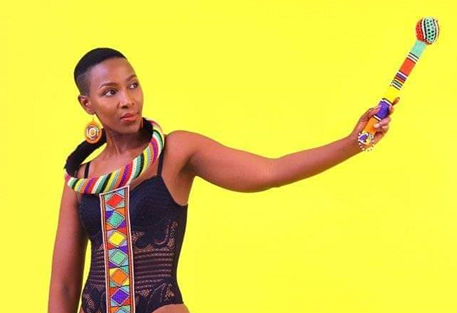
South African model and beauty queen, Phumzile Ntashabele, tells BIODUN BUSARI about the circumstances surrounding the murder of a 22-year-old Nigerian e-hailing driver, Isaac Satlat, in South Africa and the struggle to get justice for him
Can you introduce yourself?
I’m Phumzile Grace Nsabele. I’m a widow and a mother of two. I’m a model, an international queen with a master’s in business administration. I’m a motivational speaker and an author. I’m Mrs Global Universe South Africa 2025, who is always standing for justice.
Who was Isaac Satlat to you?
He was my son’s friend. My son is Kagiso. I’m like a godmother to him. Isaac was one of my son’s friends, so I take all of them as my boys. Contrary to what many think, I’m not his biological mother. I liked him because he was my son’s best friend.
So, they grew up under me. I went with them everywhere that had to do with modelling, though I stayed in Johannesburg, while they stayed in Pretoria. There were like 10 of them, because I helped them in modelling; all of them, including Ugandans and other nationalities.
I met Isaac in 2024. We met at Soweto Fashion Week. He accompanied his friends, who were models. I saw him as they were taking pictures with his other model friend, Emmanuel.
I told him that he could be a model too, and he said, ‘Mummy, I’m short.’ I encouraged him that his height didn’t matter because he was confident. He appreciated me, and that was how we knew each other and got along.
How would you describe him?
He was a young man who was full of life. He had a promising future. He was a 22-year-old young man. Isaac was studying Mechanical Engineering at Divine Favour Progressive College. He was due to graduate next month. His next birthday would be on March 12.
He was going to be 23 next month. Isaac was a loving and jolly boy. He was a champion to all his friends. He was respectful everywhere.
He attended schools from primary to tertiary level in South Africa and was leading a church. He was a God-fearing child, and he was just awesome.
What do you know about his parents?
His father is a Nigerian. He lives in South Africa. Isaac was staying with his dad because he raised him. His mother and two sisters are in Nigeria. There is another man, Mr Solomon; he’s a family member and their spokesperson. We’ve been working together to get justice for him.
Where was Isaac before he received a message that led to his death?
He was with his friends, including my son, because they stayed together. He came back from work, then went into the gym. After the gym, that was when he got a notification to go and pick somebody for his e-hailing business.
His friends even asked him when he would be back and he told them that it was a short trip and that he would be back in 15 minutes. That was the last time his friends saw him.
You said he came back from work; did he have another job?
He was an intern. He was working as an intern at St. Julian. That’s where he was studying. He was not a full-time Uber driver. He was doing Uber only part-time and was also a model.
Was there any time he was attacked by criminals before the one that took his life?
No, I don’t think there was any record of such. These killers just acted like normal people and requested any Uber driver who was available.
He picked up the call and went to attend to them. So, he wouldn’t know they were criminals; he just got a notification from his place to the other place. It was a very short distance.
Do you think it was one of the xenophobic attacks on Nigerians?
It was not a xenophobic crime. It was not Nigeria versus South Africa. It was just a crime that happened here in South Africa; it’s happening to people in many places, especially in Cape Town and Durban.
It’s been happening a lot. Apparently, this was the first time in Pretoria. Even the way they killed him was just so uncalled for.
Are you saying this was the first time a Nigerian would be killed in Pretoria?
Not only a Nigerian, but this was also the first time anyone that I know in the e-hailing business was killed. They’ve been robbing Uber drivers, but it was the first time in Pretoria where an Uber driver was killed.
Remember, nobody knew that Isaac was a Nigerian. I don’t think they targeted him because he was Nigerian. Nobody knew that he was Nigerian. They just wanted an e-hailing driver. They requested one, and it was so unfortunate that it was Isaac.
The sad part was that they did not even take anything, not even his phone. They only took his life. They found the phone near his wallet and his passport; everything was in the car.
Apart from this incident, why do you think Nigerians in South Africa are being killed by South Africans?
The truth is that a lot of Nigerians in South Africa are drug dealers. That’s what the South Africans are fighting against. They say that Nigerians sell drugs to their children. They are angry that Nigerians are destroying their children.
Many South Africans hate Nigerians because of drug dealing in South Africa. Meanwhile, it is not all Nigerians who are criminals. As a South African, I’ve been friends with Nigerians for the past 25 years.
My late husband was Ugandan. My whole life, I’ve been surrounded by foreigners, and they’ve been good friends to me. There was not even one Nigerian who ever disrespected me or did me any harm or wrong. They are my family.
That’s why most Nigerians are my family. It was the reason I liked Isaac. It is the reason I want justice for him. He was such a good young man. He was hardworking and focused.
Even with what I was doing for him and his family, my own South African people have called me names on social media. I’m told to leave South Africa because I am siding with drug dealers and drug lords.
The problem with South Africans is that they think all foreigners are criminals in South Africa. I tell my people that the Nigerians I see around me are hardworking. They are specialists and professionals like doctors, filmmakers, and brilliant people. They have legitimate businesses.
So, that’s why I cannot relate to my fellow South Africans when they are painting all Nigerians as drug dealers. I always tell them that drugs were in South Africa even before Nigerians arrived here. South Africans are just using Nigerians as scapegoats.
Do you think South Africans hate Nigerians because they are successful in their country?
Not all Nigerians are doing bad things in South Africa. The same applies to South Africans. We have rapists who are South Africans. We have murderers, just like those who killed Isaac. But there are good people, too.
I’m South African, and we have many good people like me. I used to say that if we blame foreigners for our problems and pursue them, South Africans will still have internal problems. It will start as racial grudges. It will be white and black.
After that, it is going to be tribal. It would be, ‘This one is Ndebele, and this one is Zulu’. We are always having something to fight about. It’s not foreigners. It’s not Nigerians. We, as South Africans, have our issues to deal with. I think it is self-hate or something like that.
But when we talk and when we side with foreigners, we are told that we are sleeping with Nigerians or foreigners. They will say we must leave the country. I’m taking all the insults. But I know that I’m an African queen. I am the queen that I am today because of foreigners.
It was when I represented South Africa as Mrs Universe South Africa that I won Mrs Worldwide South Africa. I represented South Africa in Singapore. The people who were with us were Nigerians. There were white people also; there were Congolese. So, I became the queen that I am because of foreigners.
When I reached Singapore, I did not represent South Africa. I represented all Africans, and they supported me. That’s why I support Africa in all the things I do. There are just these little people who are hurt. They are painting all Nigerians with the same brush.
How are the South African authorities treating the case?
Initially, a 25-year-old lady handed herself over to the police. Then, two other guys were arrested and there was a court case yesterday (Monday, February 16). It was adjourned till Monday, February 23, when they are going to appear again in the Pretoria Court.
The fourth suspect handed himself over yesterday. So, he appeared in court today (Tuesday, February 17). So, we have suspects. They are in the age group of 25 to 30.
In what ways have you sought justice for Isaac?
I posted Isaac’s pictures as seen in the video because if it were not for that video that was circulating on social media, we would not have been able to arrest these guys.
It was through this video that we managed to get this girl to hand herself in. People already saw who she was. That’s why she handed herself in. We are still circulating all the pictures and asking people to support.
We are asking Africans who are in South Africa to support, because this concerns all nations. It’s not only South Africans and Nigerians.
We are pleading with all Africans who are here to support us to get justice for Isaac. We are also pleading for financial assistance to take Isaac back home. There’s already a link where the connection has been made. We’ve been sharing that.
We designed something where people can make payments to help the father and Isaac go back home.
What kind of justice do you have in mind from the court?
First of all, they don’t deserve bail, which they were not granted. They are criminals. They deserve life imprisonment.
Unfortunately, in South Africa, there’s no death penalty. But if it were any other country, they would deserve the death penalty. Since there is no death penalty in South Africa, I think it should be life imprisonment. They do not deserve parole.
How can you be a woman and do this? If you see the video, Isaac fought for his life. He wanted to get out of the car. But for that woman to even hold his legs until his last breath, she is wicked.
Mind you, she didn’t even show any remorse, even yesterday in court. There was another guy among them who was smiling. They were not remorseful. That’s why their place shouldn’t be in society.
punch.ng
FOLLOW US ON: