Connect with us

News

Nigeria’s rising insecurity: Don’t expect immediate results from U.S. military – Security expert

Published

on

Renewed violence across parts of Northern Nigeria has heightened fears among residents, even as debate continues over the potential impact of recent United States military support and deployment to the country.

In Zamfara State, residents of Dan Jibga and Keta communities in Tsafe Local Government Area say their towns remain under siege by armed bandits who have allegedly prevented security operatives from accessing the area.

According to accounts given , an attempt by security personnel to enter the affected communities last week resulted in casualties. Residents said a bomb was detonated between Keta and Dan Jibga, leading to the death of some operatives and injuries to others, as attempt to break the siege failed.

The development has left villagers in fear, with many unable to move freely as tension persists.

In Plateau State, violence has also escalated. In Barkin Ladi and Riyom local government areas, at least twelve people were reportedly killed in separate attacks blamed on armed assailants.

The killings have triggered fresh displacement, as families fled to neighboring communities considered relatively safer.

In another incident, suspected Berom militia members allegedly carried out a reprisal attack, killing four Muslim travelers along the road to Pankshin while they were heading to a local market.

The attack has further inflamed tension in the area, which has witnessed cycles of communal violence over the years.

Security concerns have also been reported in parts of Kebbi State, where bandits in the southern axis of the state reportedly demanded N100 million from residents of Utouno in Ngaski Local Government Area, threatening to attack if the money is not paid.

See also  Court grants Malami, son N200m bail in terrorism financing case

The ultimatum has forced several families to flee to nearby villages for safety.

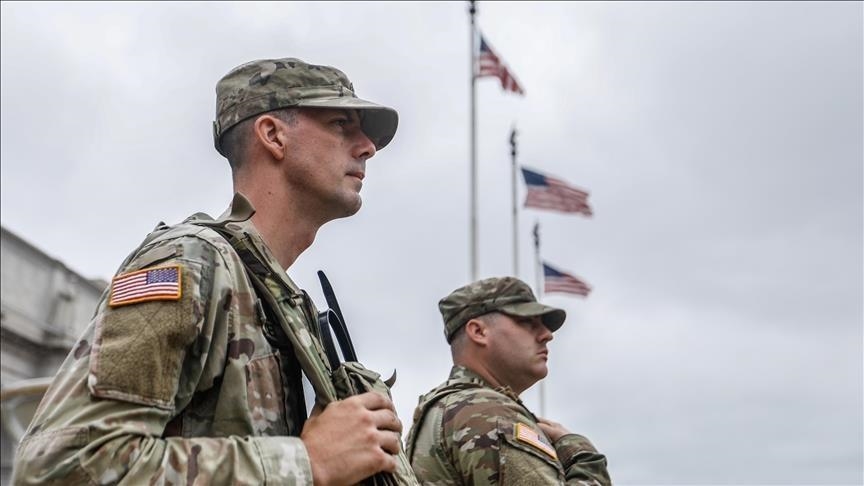
Amid the worsening situation, the recent arrival of personnel from the United States to support Nigeria’s security efforts has sparked public debate about whether the move will bring immediate relief.

However, in an exclusive interview , A retired military officer and security analyst, Major Muhammad Bashir Galma (Rtd), said it is unrealistic to expect instant results from the foreign military presence.

“You cannot expect to see the impact of their arrival immediately, they have said they are here primarily for training. Training involves equipping our personnel with certain skills, strategies, and possibly technical equipment. These are processes that take time before their effects can be felt.” Galma said.

He explained that even if new tactical knowledge or equipment is introduced, months may pass before measurable improvements are visible.

“If those resources are to be deployed effectively, it requires planning and coordination. They are not here to enter unfamiliar forests and start fighting battles. That is not their mandate,” he stated.

According to him, the focus of the U.S. mission is capacity building rather than direct combat engagement.

“The question people should ask is, when does training begin to show results? Certainly not now. It may take several months, if at all, before we begin to see its impact. So, patience is necessary,” he added.

Galma also acknowledged the efforts of Nigerian security forces, particularly in the North-East, noting that they continue to play their roles despite operational challenges.

However, he warned that political interference and vested interests benefiting from prolonged insecurity could undermine progress.

See also  Coup: Benin Republic arrests Ex-president’s son

“Whenever there is interference, especially from political actors or individuals who profit from instability, it complicates the fight. People may think the public does not understand what is happening, but many are aware,” he said.

On reports alleging ransom payments in certain rescue operations, Galma described the claims as unverified, cautioning against drawing conclusions without credible evidence.

In the meantime, residents across affected states continue to demand urgent and sustainable measures to restore peace. While international cooperation may strengthen Nigeria’s security architecture over time, communities grappling with daily threats say their immediate concern remains survival.

FOLLOW US ON:

FACEBOOK

TWITTER

PINTEREST

TIKTOK

YOUTUBE

LINKEDIN

TUMBLR

INSTAGRAM

Continue Reading
Click to comment

Leave a Reply

Your email address will not be published. Required fields are marked *

News

NYSC announces schedule for 2026 Batch ‘A’ Stream II orientation

Published

on

The National Youth Service Corps has announced the timetable for the 2026 Batch ‘A’ Stream II orientation course, with activities scheduled to commence on April 22 across the country.

In a statement on Wednesday signed by the Director, Information and Public Relations, Caroline Embu, the scheme said the 21-day exercise would be held simultaneously in all 36 states and the Federal Capital Territory.

According to the statement, “the Orientation Course will commence with reception and registration of Prospective Corps Members on Wednesday, 22nd April 2026, and end at midnight of Friday, 24th April 2026.”

The NYSC added that “Prospective Corps Members mobilised for the 2026 Batch ‘A’ Stream II service year will be sworn-in on Friday, 24th April, 2026,” while the orientation exercise is expected to end on Tuesday, May 12, 2026.

The scheme also advised corps members to prioritise their safety while travelling to orientation camps.

It warned against night journeys, urging that “Prospective Corps Members are advised to break their journeys once it’s 6.00 pm, and pass the night at any available Corps Members’ Lodge, military formation, police station/outpost or palace of a traditional ruler anywhere in the country, then continue the following morning.”

NYSC further wished the prospective corps members safe travels to their respective camps across the country.

The announcement follows an earlier update by the scheme that supplementary online registration for recently uploaded prospective corps members would take place from April 9 to April 11, 2026.

The exercise, according to NYSC, is for candidates whose details were recently uploaded to its portal but who have not completed their registration.

See also  Gbenga Daniel narrates how he went through hell under Amosun

“Supplementary online registration for recently uploaded prospective corps members commences Thursday, 9th – Saturday, 11th April 2026,” the scheme stated in a post on its X account.

Prospective corps members were also advised to prepare all necessary documents and personal information in advance to ensure a smooth registration process.

punch.ng

FOLLOW US ON:

FACEBOOK

TWITTER

PINTEREST

TIKTOK

YOUTUBE

LINKEDIN

Continue Reading

News

Pipeline vandals deploy CCTV, advanced tactics to evade arrest – Expert

Published

on

Pipeline vandals and crude oil thieves operating in the Niger Delta have escalated their operations, deploying surveillance technology and setting up coordinated command systems to evade security agencies, Tantita Security Services Nigeria Limited has said.

The Executive Director, Operations and Technical Services of the firm, Captain Warrendi Enisuoh, disclosed this on Wednesday at a one-day parliamentary roundtable on pipeline security and crude oil theft held at the National Assembly Complex, Abuja.

Enisuoh said criminal networks now mount closed-circuit television cameras deep within forests and along pipeline corridors to monitor troop movements and track enforcement activity.

“These criminals now install CCTV to monitor the movement of security agents who are on a mission to catch and take them out of their illegal business. Despite this, we have been making progress in the mandate of securing our pipelines and ensuring seamless production of crude oil in the country,” he said.

He further revealed a troubling evolution in the operational structure of the groups, noting that some now run coordinated field systems.

According to him, the vandals have established command-and-control centres across oil-producing areas and have acquired sophisticated weapons.

He said they are “having acquired missile launchers with which they can shoot down any aircraft flying across the area.”

Despite these developments, Enisuoh maintained that the surveillance framework introduced in 2022 has helped stabilise the sector and avert a deeper production crisis.

He said, “If the government had not done anything about pipeline surveillance in August 2022, the country would have been in trouble.”

See also  Osun Govt To Sack Monarch Jailed In US For Fraud

Highlighting the scale of operations, he added that “the surveillance contract entered into between the company and the government spans over 2,000km in seven states.”

Enisuoh also described the extent of oil theft prior to the intervention, particularly in parts of Delta State.

He said, “Before the contract, crude oil theft was like a community effort in the Escravous area where the black gold flew freely without the fear of government or security agents.”

Also speaking, the Managing Director of Tantita, Kestin Pondi, said the intervention has yielded measurable gains, including a reduction in pipeline sabotage and a rebound in production levels.

He put current output at about 1.84 million barrels per day.

At the end of the session, lawmakers passed a resolution describing Tantita as a critical national asset, citing its role in curbing vandalism and restoring oil output. The National Assembly also called for a long-term renewal of the surveillance contract and rejected proposals to decentralise the arrangement among multiple operators.

Crude oil theft in the Niger Delta has, over the years, evolved from opportunistic vandalism into a complex and well-organised illicit industry. What began as small-scale tapping of pipelines has grown into a network of actors operating across the value chain—from illegal tapping points to makeshift refineries, transportation routes and export channels.

Security and industry experts say these groups increasingly deploy technology and structured coordination to sustain their activities. The installation of surveillance cameras, as highlighted by Tantita, reflects a shift toward counter-surveillance—mirroring the methods of formal security agencies.

In several documented cases, illegal operators have demonstrated detailed knowledge of pipeline infrastructure, including pressure points and maintenance schedules, allowing them to breach lines with minimal detection. The use of encrypted communications, speedboats for rapid evacuation, and layered security around illegal refining camps further underscores the level of sophistication.

See also  Court grants Malami, son N200m bail in terrorism financing case

The emergence of command-and-control centres suggests a move toward centralised coordination, where field operatives receive real-time intelligence and directives—an approach more commonly associated with organised criminal enterprises than informal actors.

This evolution has also been driven by the high profitability of the trade. With global crude prices remaining volatile, the incentive to sustain illegal extraction has persisted, drawing in networks that cut across local collaborators, financiers and transnational actors.

Against this backdrop, the Federal Government’s decision in 2022 to engage private surveillance contractors, including Tantita, marked a shift toward integrating community-based intelligence with formal security architecture. By leveraging local knowledge and presence, the model has helped disrupt some of these networks, though the latest disclosures suggest that the contest between enforcement agencies and oil theft syndicates is becoming increasingly technological and adaptive.

punch.ng

FOLLOW US ON:

FACEBOOK

TWITTER

PINTEREST

TIKTOK

YOUTUBE

LINKEDIN

Continue Reading

News

Fuel crisis: Tanzania president slashes convoy, orders officials to travel by bus

Published

on

Tanzanian President Samia Suluhu Hassan on Wednesday ordered government officials to travel in a single bus during official trips to reduce fuel consumption, amid shortages caused by the Middle East war.

Fuel prices in the East African nation have soared by about one-third since March, the country’s energy regulator said last week.

Speaking at a swearing-in ceremony for officials on Wednesday, Hassan said that during her official trips, only her core convoy — including her escort, police and a backup vehicle — would remain in the official motorcade.

Hassan’s presidential entourage normally comprises more than 30 vehicles, including luxury SUVs and police outriders, often bringing traffic to a standstill.

“From now on, wherever I go, all officials will travel together in one bus… to cut fuel consumption,” Hassan said.

The effective blockade of the Strait of Hormuz by Iran, through which a fifth of the world’s oil and gas normally passes, has caused countries to ration fuel use.

Last week, the Ethiopian government said it would prioritise vehicles transporting essential goods and those in the public transport sector at fuel stations.

AFP

punch.ng

FOLLOW US ON:

FACEBOOK

TWITTER

PINTEREST

TIKTOK

YOUTUBE

LINKEDIN

See also  PHOTOS: Trump Orders ‘Powerful, Deadly Strikes’ On ISIS Terrorists In Nigeria
Continue Reading

Trending