Connect with us

Business

Iran-US conflict may raise Nigeria’s fuel prices

Published

on

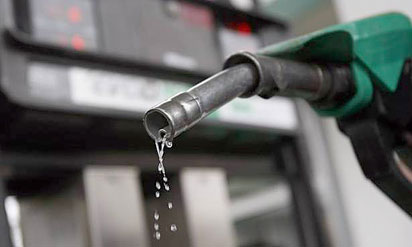
Energy experts and downstream operators have warned that Nigeria may witness a fresh increase in petrol and diesel prices if global crude oil prices surge above $90 per barrel amid escalating tensions between the United States and Iran.

The warning comes as hostilities in the Middle East triggered fresh volatility in the global oil market, raising concerns over the vulnerability of Nigeria’s domestic fuel pricing structure despite the country’s push for local refining.

Recent checks across major cities indicate that petrol currently sells between N824 and N880 per litre, depending on location, logistics costs, and the marketer involved, following the latest price adjustment by the Dangote Petroleum Refinery. The development comes after the refinery reduced its Premium Motor Spirit (petrol) gantry price by N25 per litre, lowering the ex-depot rate from N799 to N774 per litre in February 2026.

Five energy experts, in separate interviews with our correspondent on Sunday, said the recent US–Iran conflict could have far-reaching effects on global crude oil prices, warning that any sustained escalation of hostilities, particularly around the strategic Strait of Hormuz, is already feeding risk premiums into the market.

They all agreed that the development could translate into higher fuel costs for consumers if the crisis deepens. Already, global crude oil prices rose by about 10 per cent over the weekend after several oil majors reportedly halted tanker movements near the Strait of Hormuz, one of the world’s most critical energy transit routes, amid escalating hostilities in the Middle East.

The waterway links the Persian Gulf to the Indian Ocean and handles a significant portion of global oil shipments. Any disruption to the route is widely seen as capable of triggering supply shocks and price spikes.

As of 10 pm Sunday, Brent crude traded at $72.87 per barrel, while West Texas Intermediate stood at $67.02. Nigeria’s Bonny Light crude was priced at $78.62 per barrel. Analysts warned the situation could deteriorate if the crisis escalates, pushing prices closer to the $90 benchmark.

Chief Executive Officer of Dairy Hills, Kelvin Emmanuel, said Nigeria’s exposure to global crude pricing remains high because the Dangote Refinery still imports a significant portion of its feedstock.

He stated, “Dangote currently processes an average of 18 million barrels of crude oil monthly. Out of this, about 12 million barrels are imported, while he gets about 5.7 million barrels, which is the equivalent of six cargoes, from the Nigerian National Petroleum Company Limited.

“The commercial operators are not keen on supplying him feedstock because they hide under the guise of willing buyer, willing seller to inflate third-party commissions to the domestic refiner, in contravention of Section 109 of the Petroleum Industry Act.

See also  Akpabio, Yilwatda challenge Nigerians to monitor governors on hardship

“Any sharp increase in crude oil prices from this escalation will lead to a revision in the cracking margin spread of the refiner and, consequently, the price of refined products. The fact that protection and indemnity clubs are raising war risk insurance premiums on tanker vessels will also make it more expensive to land feedstock in Nigeria. If crude prices rise above $90 per barrel, the refiner will have to revise the price of PMS and diesel in Nigeria.”

He also questioned the transparency of the government’s naira-for-crude arrangement, saying, “The government claims that it supplies him nearly 190,000 barrels under the naira-based crude swap but is unable to account for the volume of cargoes given under said arrangement, or specify the equivalent petrol and diesel output.”

Similarly, the Chief Executive Officer of Petroleumprice.ng, Olatide Jeremiah, said Nigeria’s continued reliance on imported crude and refined products leaves the country vulnerable to international market shocks.

He said, “Nigeria is the largest crude oil producer in Africa and at the same time hosts the biggest refinery on the continent and the seventh largest globally. Ideally, a hike in global crude prices should not have a direct impact on local fuel prices.

“The Petroleum Industry Act clearly prioritises domestic refineries in crude allocation. If Dangote sourced 100 per cent of its crude locally, global price volatility would have little or no impact on domestic fuel prices because transactions would be naira-denominated.

“However, more than 60 per cent of Dangote refinery’s crude feedstock is being sourced abroad, and 40 per cent of refined products being consumed are imported. Fuel prices will be at the mercy of oil prices. Petroleum traders in Nigeria have been tracking events between Iran and the US, and a surge in oil prices is expected. For Nigeria, revenue will increase, but Nigerians should brace for higher fuel prices on Monday, no doubt.”

Jeremiah added that the geopolitical tension should serve as a wake-up call for authorities to boost crude production and address oil theft and under-supply to domestic refineries.

“Also, the crises affecting the strategic Strait of Hormuz, through which tankers pass to Africa, won’t directly affect the supply of crude to Nigeria, depending on the markets we serve, like North America, Asia, and Europe.

“This is a wake-up call to the federal government that Nigeria’s growing and functional refineries cannot continue to rely on foreign crude. With current production at 1.5 million barrels per day, just 50 per cent of our potential, Nigeria should produce at least 2.5 million barrels per day if not for theft, corruption, and sabotage.

“This international oil price shock is an eye-opener. Every little oil price fluctuation, upward or downward, affects prices, profitability, and investor confidence. Production must be enhanced to ensure refineries like Dangote survive. The Petroleum Industry Act encourages domestic refineries to be prioritised for sufficient feedstock. The naira-for-crude arrangement only provides 30 per cent to Dangote, which is insufficient for a refinery of this scale,” he concluded.

See also  Governors convene emergency session, school lockdowns rise due to kidnapping crisis

An energy law expert at the University of Lagos, Dayo Ayoade, said the global oil market operates on a demand-supply model, and Nigeria can no longer shield consumers from international price volatility following the removal of fuel subsidies.

He said, “The instability in the Middle East and any threat to the Strait of Hormuz will drive oil prices higher based on both perception and real supply concerns.

“Now the local fuel market has transitioned to a more commercial model, which is affected by international developments. Without subsidies, any crude price increase will directly impact fuel prices at the pump. More revenue may come in, but we must remain cautious.”

Professor Emeritus Wumi Iledare, a petroleum economist, cautioned against panic, noting that the global oil market is more diversified and responsive than during past geopolitical crises.

He said, “We must resist the temptation to interpret the US–Iran strike as the beginning of another historic oil shock. This is not the 1973 oil embargo, nor the Iran–Iraq war, nor the Gulf War era. The global oil market today is structurally more diversified, transparent, and responsive. Prices reacted sharply in the past because supply options were limited and information was slower.”

Iledare added that oil prices are determined by global market forces rather than by OPEC alone, noting that geopolitical tensions may introduce only a temporary risk premium that fades when fundamentals remain stable.

National Publicity Secretary of the Independent Petroleum Marketers Association of Nigeria, Chinedu Ukadike, said marketers were monitoring the situation and would respond based on market developments.

He said, “Anything that affects the international oil market will affect local supply and prices. We are watching the trend and the reactions of the refinery and the government. We assure Nigerians that marketers will continue to ensure a steady supply once products are available.”

See also  Trump’s Christmas missiles strike fear in northern Nigeria

The PUNCH reports that the crisis escalated after coordinated military strikes on Iran by the United States and Israel, prompting retaliatory attacks across the region and raising fears of a wider conflict. Saudi Arabia has vowed to respond to any aggression, further heightening tensions.

President Donald Trump announced on Truth Social that Iran’s supreme leader, Ayatollah Ali Khamenei, was killed Saturday after US and Israeli predawn assaults. Iranian state media later confirmed his death.

The situation highlights Nigeria’s continued exposure to global oil shocks despite ongoing reforms and investments in local refining. Experts stressed that improving crude production, curbing theft, and ensuring adequate domestic supply to refineries remain critical to achieving energy security and insulating the economy from future price volatility.

Brent crude jumped 10 per cent to about $80 per barrel over the counter on Sunday, while analysts predicted that prices could climb as high as $100 after US and Israeli strikes on Iran.

The Strait of Hormuz, a narrow but strategic corridor linking the Persian Gulf to the Indian Ocean, handles a significant portion of global oil shipments. More than 20 per cent of global oil is moved through the Strait. Any threat to the route typically pushes oil prices higher due to supply risks and rising shipping costs.

The suspension of cargo movements followed heightened military activity in the region, including missile exchanges and naval alerts, which raised fears among shipowners and insurers. War risk premiums on vessels operating in the region were also increased, making crude transportation more expensive.

Meanwhile, key members of the OPEC+ oil cartel announced a greater-than-expected increase to production quotas on Sunday following US and Israeli strikes on Iran. The eight-member V8 group, including Saudi Arabia, Russia, Kuwait, Oman, Iraq, and the UAE, agreed to a “production adjustment” of 206,000 barrels per day (bpd), effective in April.

Analysts, however, warned that the increase may be insufficient to prevent a spike in oil prices if tensions persist. Jorge Leon, an analyst at Rystad Energy, noted that Iran could target the Strait of Hormuz, which carries nearly a quarter of the world’s seaborne oil supplies.

Leon said, “If oil cannot move through Hormuz, an extra 206,000 barrels per day does very little to ease the market. Prices will respond to Gulf developments and shipping flows, not a relatively small increase in output.” Algeria and Kazakhstan are also part of the V8 group.

punch.ng

FOLLOW US ON:

FACEBOOK

TWITTER

PINTEREST

TIKTOK

YOUTUBE

LINKEDIN

TUMBLR

INSTAGRAM

Continue Reading
Click to comment

Leave a Reply

Your email address will not be published. Required fields are marked *

Business

One week to deadline, banks in last-minute rush for Recapitalisation

Published

on

Banks are in a last-minute push to meet the Central Bank of Nigeria’s recapitalisation deadline, with the apex bank expected to make a major announcement this week as the March 31, 2026, cut-off approaches.

Findings by The PUNCH indicate that most lenders have substantially met the new capital requirements, while a few institutions are resolving final regulatory and structural issues ahead of the deadline.

Top officials of the CBN said the regulator would provide an update on the exercise on Tuesday or Wednesday, amid expectations that the process will largely conclude within the stipulated timeline.

The recapitalisation exercise, introduced in March 2024, requires banks to meet new minimum capital thresholds of up to N500bn for international commercial banks, as well as lower thresholds for other licence categories.

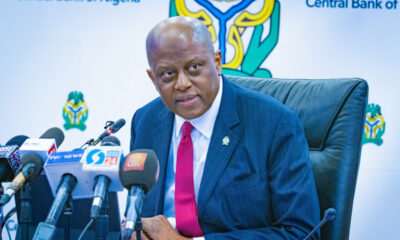
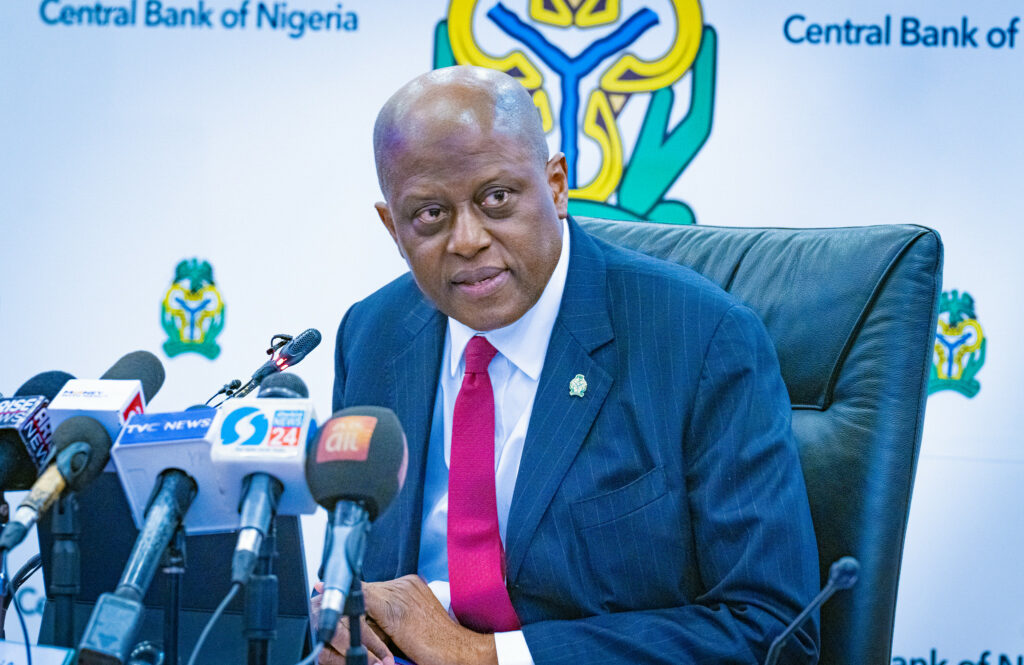
Speaking at the end of the 304th Monetary Policy Committee meeting in Abuja, the CBN Governor, Olayemi Cardoso, expressed confidence that the process would be completed within the deadline, while acknowledging that a few institutions were still finalising their plans.

“And quite frankly, I expected to conclude within that stipulated time. It is expected,” he said.

He added, “There are other institutions that are still finalising their plans and evaluating a range of strategic options. And there’s time, which, of course, includes consolidating where appropriate.”

Cardoso disclosed that the banking sector had already mobilised significant capital under the exercise. “As of February 19, 2026, total verified and approved capital raise stands at N4.05tn,” he said.

He further stated that, “Of this, N2.90tn, which is 71.6 per cent, has been mobilised domestically, with $706.84m, which is N1.15tn, representing 28.33 per cent foreign.”

See also  Akpabio, Yilwatda challenge Nigerians to monitor governors on hardship

He said the mix of domestic and foreign participation reflected strong investor confidence in the sector. “This balance, in my view, represents a mix of domestic and foreign, which signals broad investor engagement and confidence in the sector,” he added.

Despite the progress recorded, investigations showed that a few banks are yet to complete the process, largely due to delays affecting the merger process of two institutions, though there are indications that the issues may be resolved within the week.

There are also uncertainties around three banks under regulatory intervention, with the final capital position dependent on ongoing supervisory actions and possible support arrangements.

The CBN had earlier clarified that three banks under regulatory intervention are being treated as special cases and are not expected to follow the same sequence as other institutions in the recapitalisation process.

Cardoso acknowledged this category of banks during his remarks, noting that “The other group that I think I would be remiss not to mention are the institutions which are currently undertaking regulatory intervention with certain legal and structural considerations that have naturally influenced the sequencing of their recapitalisation actions.

“In other words, it’s unreasonable to expect that they would follow the same sequence as those that really and truly two and a half years ago, when we made this announcement, have had ample time in which to do a lot of the things they are doing.

“We remain the Central Bank of Nigeria, actively engaged with all relevant stakeholders to ensure that they have an orderly and credible outcome while maintaining financial stability.”

See also  Agriculture must get ‘rightful place’ in financial system - CBN

He also reassured depositors about the safety of funds in such institutions. “Depositor funds in these institutions remain secure, and operations continue under close supervisory and regulatory oversight of the central bank,” he said.

Financial analysts say the recapitalisation exercise has exceeded expectations, especially given initial concerns about the size of the capital gap.

The Head of Financial Institutions Ratings at Agusto & Co, Ayokunle Olubunmi, told The PUNCH on Sunday that the recapitalisation exercise had recorded strong progress across the banking sector.

“I think the recapitalisation exercise has been a success thus far,” he said. “When the exercise started, a lot of people were sceptical. Even those who were optimistic were scared because the gap seemed to be huge.”

He noted that domestic investors played a major role in the capital raise. “The bulk of the funds were actually from the domestic economy… that’s the interesting part,” he said.

Olubunmi added that most of the banks yet to be formally cleared had already raised the required funds and were only undergoing regulatory verification. “It’s not that they are still in the market looking for funds. The funds are with the CBN. They’re just providing documentation for the CBN to certify it,” he said.

He further explained that the three banks under regulatory intervention were being handled differently by the regulator. “Those ones… are special cases… we can’t really benchmark them with others,” he said.

According to officials, while about three banks are outstanding in terns of meeting the target, two of the bank are expected to complete their merger process this week.

See also  IMF Ranks Nigeria Among World’s Top Growth Drivers, Places Country Sixth for 2026 GDP Impact

The third bank is also expected to meet the recapitalisation threshold this week.

punch.ng

FOLLOW US ON:
FACEBOOK

TWITTER

PINTEREST

TIKTOK

YOUTUBE

LINKEDIN

Continue Reading

Business

Airlines under pressure after jet fuel surges 100%

Published

on

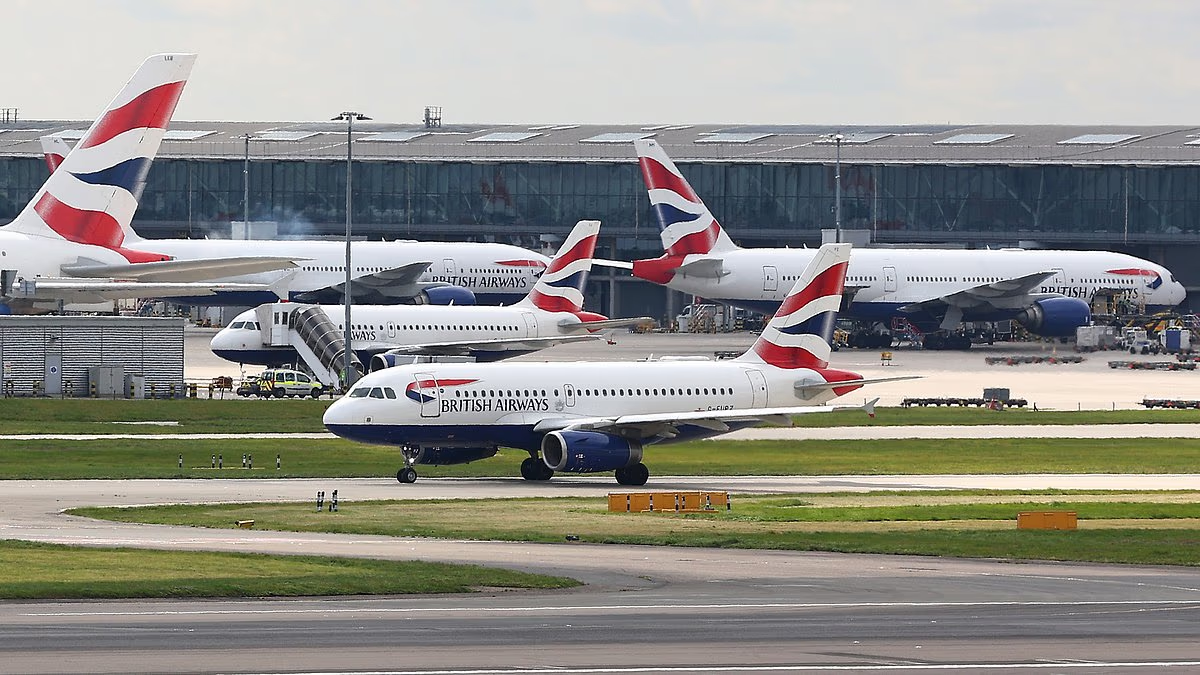
There are indications that airfares may jump in the coming weeks following the hike in the cost of aviation fuel, commonly referred to as Jet A1, a development that is already putting pressure on airline operations and signalling higher ticket costs for passengers.

The spike in JetA1 price is largely due to the crisis in the Middle East, which has slowed the production and movement of crude oil across countries, worsening the operational cost of domestic carriers.

Checks by our correspondent with airlines showed an astronomical increase in the operating cost of airlines, particularly caused by the spike in aviation fuel, which has become the dominant cost driver in recent weeks.

At the time of filing this report, aviation fuel, which was sold between N900 and N995 before the Middle East crisis commenced, has jumped to between N2,500 and N2,700, depending on the airport of delivery, sharply raising the cost burden for operators.

Operators said they were monitoring developments, stressing that an increase in airfares was imminent, with strong indications that the prices of air tickets might double if the current trend persists.

Aviation fuel remains the single highest component of airline operations, accounting for about 30 to 35 per cent of total operational costs, a figure that industry players say is rising rapidly under current market conditions.

Airline sources said the price of the product had remained unstable since February 28, 2026, when the war started in Iran, changing about five times since that time, further complicating planning and pricing decisions.

See also  Malami asks EFCC chair to step aside, alleges bias

The spokesperson for United Nigeria Airlines, Chibuike Uloka, challenged the Federal Competition and Consumer Protection Commission to urgently engage domestic airline operators over the sustainability of current ticket pricing amid rising operational costs.

The FCCPC recently accused airlines of price fixing, with special attention on five unnamed airlines. This was, however, dismissed by the airline operators.

Uloka noted that despite aviation fuel prices soaring beyond N2,000 per litre, many carriers had continued to maintain fares at around N195,000, raising concerns about how long such pricing could be sustained under prevailing economic conditions.

He, however, warned that the situation could deteriorate further if fuel prices get to N3,000 per litre, stressing that not all airlines would be able to remain in operation under such pressure, a development that could further shrink capacity and push fares even higher.

He said, “Honestly, this is a very good time for FCCPC to come out and ask operators how they have been able to sustain flight tickets at N195,000 despite the increase in aviation fuel crossing N2000 and above. They should please ask how operators have kept on with operations? These are hard times. But most definitely, the current prices can’t be sustained for long periods.

“If this continues the way it is, because the way we are now, the price is also getting to N3000 per litre, and if it eventually gets to N3000, not all operators will be able to fly. And the ones that will be able to fly will not be Father Christmas. What we are asking now is not even profit, but at least to be able to operate optimally. Aviation has become a daily necessity because people must be able to move from one place to another. But FCCPC must be able to come out now and ask operators how we are faring.”

See also  Starmer pushes strategic UK-Nigeria alliance with N1.4tn fresh deal

The PUNCH understands that Nigeria has been unable to produce enough crude oil for the Dangote Petroleum Refinery, forcing the indigenous refining company to import crude.

Crude prices have jumped from $65–$69 to about $112 per barrel as of the time of filing this report, further worsening the cost of aviation fuel and pushing airlines closer to inevitable fare adjustments.

This effect has also upped gantry prices, with operators warning that sustained increases will ultimately be transferred to passengers through higher ticket fares.

Industry expert, Samuel Caulcrick, projected an imminent rise in airfares, attributing it to the growing burden of operational costs on airlines, which is increasingly being driven by the surge in aviation fuel prices.

He explained that current market conditions suggest that operating expenses have surged significantly, with aviation fuel now accounting for about 45 per cent of total airline costs, making it the single largest cost component in the sector and leaving operators with little choice but to adjust fares.

Caulcrick noted that the shift in cost structure marks a departure from previous years when maintenance expenses dominated airline spending. However, the persistent increase in the price of Jet A1 fuel has altered the dynamics, placing greater financial pressure on operators and inevitably influencing ticket pricing across the industry.

He stated, “Before now, the highest component of airline operation was maintenance, but that has changed with the continuous rise in the prices of Jet A1. In those days when aviation fuel was less costly, the maintenance cost was higher, but now fueling has taken over.

See also  Togo, Niger, Benin owe Nigeria N25bn for electricity – NERC

“If that component goes up, it will definitely affect the prices of every seat. But we should expect the airfares to go up by 20 to 25 per cent in the coming days.”

punch.ng

FOLLOW US ON:
FACEBOOK

TWITTER

PINTEREST

TIKTOK

YOUTUBE

LINKEDIN

Continue Reading

Business

Fuel Subsidy Was Big Scam – Ex-Minister Of Science and Technology, Ikoh Says

Published

on

Ikoh made this statement at the inauguration of Renewed Hope Ambassadors in Bende, Umuahia South, and Umuahia North LGAs of Abia State.

Former Minister of Science and Technology Henry Ikoh has described Nigeria’s past fuel subsidy regime as a massive scam that benefited a select few while leaving the wider population at a disadvantage.

Ikoh made this statement at the inauguration of Renewed Hope Ambassadors in Bende, Umuahia South, and Umuahia North LGAs of Abia State.

He equally declared that recent economic gains across states have vindicated President Bola Tinubu’s decision to scrap the controversial subsidy, insisting the move has unlocked unprecedented resources for sub-national governments.

According to him, the policy shift had fundamentally altered Nigeria’s fiscal landscape.

The former minister noted that the end of subsidy payments has dismantled a long-standing system in which a few oil merchants became overnight billionaires at public expense, freeing up funds that are now driving visible development nationwide.

“Fuel subsidy was a big scam. A handful of individuals cornered resources meant for Nigerians. Today, that leakage has been blocked, and the impact is clear – states have more money, and development is accelerating,” Ikoh stated.

He argued that many states, once crippled by debt burdens, can now meet salary obligations without borrowing, while others pay a minimum wage of N100,000.

Ikoh pointed to improved federal allocations, noting that states now receive multiples of their previous earnings, enabling investments in infrastructure and social services.

FOLLOW US ON:

FACEBOOK

TWITTER

PINTEREST

TIKTOK

YOUTUBE

LINKEDIN

See also  Governors convene emergency session, school lockdowns rise due to kidnapping crisis
Continue Reading

Trending