Connect with us

News

Insurgency: FG knows every terrorist by name, says Gumi

Published

on

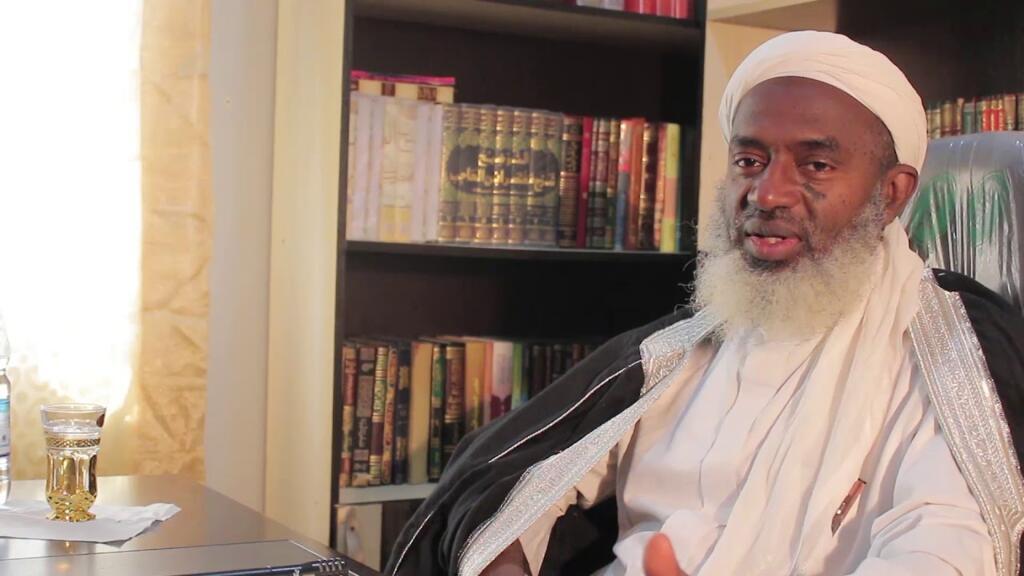
Kaduna-based Islamic scholar Sheikh Abubakar Gumi has stirred debate by claiming that the Nigerian government already knows the identities and hideouts of terrorists across the country. Speaking in a recent DRTV interview, he said his interactions with armed groups are coordinated closely with security agencies.

Gumi addressed rumours that he negotiates with bandits on his own, stressing the involvement of police, military, and other officials. “The government knows every terrorist by name and by location. I don’t go alone to negotiate I go with the police, military, and other security agencies,” he said.

The cleric revealed that some of his efforts take him deep into forests and remote communities, sometimes even accompanied by local women. “I would go to the Emirs. In fact, when we went to one forest, I even went with women into the bush,” he added.

Gumi has long advocated dialogue as a tool to reduce violence, often sparking controversy for interacting with groups considered enemies of the state. He argued that these efforts complement security operations rather than replace them, highlighting the importance of negotiation alongside law enforcement.

Observers note that Gumi’s approach underscores the complexity of addressing Nigeria’s insecurity, where military action alone may not suffice. His collaboration with traditional leaders and security agencies demonstrates a hybrid strategy aimed at curbing violence and encouraging disarmament.

Despite these efforts, insecurity remains high in several northern states, prompting debate on whether dialogue initiatives have tangible results. Critics argue that without accountability and transparency, negotiations could inadvertently legitimise armed groups.

See also  Court to deliver judgment in Nnamdi Kanu’s case on live TV

Gumi’s statements have reignited national conversations on counterterrorism strategies, with many Nigerians discussing the balance between dialogue, intelligence gathering, and military action. His insights suggest that tackling terrorism in Nigeria may require innovative approaches that merge community engagement with formal security measures.

thesun.ng

FOLLOW US ON:

FACEBOOK

TWITTER

PINTEREST

TIKTOK

YOUTUBE

LINKEDIN

TUMBLR

INSTAGRAM

Continue Reading
Click to comment

Leave a Reply

Your email address will not be published. Required fields are marked *

News

Kano gov sacks head of service

Published

on

The Governor of Kano State, Alhaji Abba Yusuf, has relieved the state Head of Service, Alhaji Abdullahi Musa, of his appointment with immediate effect.

The development was contained in a statement issued on Tuesday by the governor’s spokesperson, Sanusi Tofa.

According to the statement, the decision is part of ongoing efforts by the administration to reposition the state civil service for greater efficiency, discipline, and improved service delivery across government institutions.

The statement partly read, “The decision forms part of the ongoing efforts of the present administration to reposition the state civil service for greater efficiency, discipline, and improved service delivery across all government institutions.”

The governor thanked the outgoing Head of Service for his contributions and dedication to the service of Kano State during his tenure.

“We wish him the best in his future endeavours and pray for his continued success in all aspects of life,” the statement quoted the governor as saying.

Yusuf also directed that the Permanent Secretary, Administration and General Services at the Cabinet Office, Bilkisu Maimota, should serve in an acting capacity pending the appointment of a substantive Head of Service.

The statement added, “The governor has directed that Hajiya Bilkisu Shehu Maimota, the Permanent Secretary, Administration and General Services at the Cabinet Office, should serve in an acting capacity pending the appointment of a substantive Head of Service.”

The governor further directed Musa to hand over the affairs of the office to the acting Head of Service not later than Wednesday, March 11, 2026.

See also  Isese Day: Lagos, Ogun, Oyo, Osun declare Wednesday public holiday as Ekiti, Ondo opt out

The development comes amid recent political realignments in Kano following the governor’s defection from the New Nigeria Peoples Party to the All Progressives Congress, a move that has triggered adjustments across political and administrative structures in the state.

PUNCH Online observed that the shift has led to a wave of repositioning among political appointees and government officials as the administration aligns with the new party structure while pursuing broader reforms within the state civil service.

Continue Reading

News

India, others reject Tinubu’s envoys, see why

Published

on

India and other yet-to-be disclosed countries have declined to accept some of President Bola Tinubu’s recently posted ambassadors-designate due to diplomatic policies that discourage receiving envoys from administrations with less than two years remaining in office, The PUNCH has gathered.

High-ranking officials in the Presidency and the foreign service disclosed on Tuesday that India, where career diplomat Ambassador Muhammad Dahiru has been designated to serve, maintains a standing policy against accepting ambassadors from governments with tenures of less than two years remaining.

Our correspondent gathered that the Asian giant is exercising its discretionary powers to turn down the Ministry of Foreign Affairs’ request to accept Dahiru’s posting.

The development confirms an earlier exclusive report by this newspaper in February 2026, in which sources revealed that storms were brewing for many of Tinubu’s ambassador-designates who faced the prospect of rejection by host countries due to time constraints on their tenure.

Three separate sources familiar with the matter, who spoke on condition of anonymity due to the sensitive nature of diplomatic negotiations, said the Federal Government was already receiving signals from New Delhi and possibly other capitals about their reluctance to grant agrément.

Agrément is the formal approval given by a receiving country to accept a diplomat designated by the sending country, and it is a prerequisite before an ambassador can assume duty.

“They don’t accept an ambassador from an administration that has less than two years in office. So they are giving us that body language already,” a Presidency official told our correspondent.

The source continued, “Some countries are reluctant to accept some people, not because of the individuals but because of time. They are already seeing the Tinubu government as an outgoing government.

“So their concern is that he has just one year left, so what if he doesn’t win the election? Another government may come and remove them. We also understand that some countries have this policy. Any ambassador from an administration that has less than a year or two in office will not get accepted. And one of such countries is India.”

A second source, a senior foreign service official, confirmed India’s position but expressed hope that Nigeria could leverage its relationship with New Delhi to secure an exception.

See also  UNICEF Nigeria welcomes new country representative

“I know India has that policy. If you are less than two years to the end of the tenure, there will be difficulties accepting an ambassador. Maybe we can leverage our relationship with them to scale through that.

“Of course, there are those among them who gauge political tides, and some may see that this government can win the next election. Perhaps they may see that the election may not be so competitive because virtually everybody has moved towards the APC. They may say the chances for APC’s victory are high. That is one of the arguments the government will push forward,” the official said.

The source emphasised that while India is the only country with a confirmed policy against short-tenure ambassadors, other nations may follow similar conventions.

“India is the only one I can confirm to you for now. The others will be based on their conventions and practices. But the one I know for sure now is India. We will have to do a lot of convincing because they have a standing rule,” the official stated.

A third official disclosed that while the Ministry of Foreign Affairs had secured funding for the mandatory induction course for ambassadors-designate, the timeline remains uncertain.

“On the training, we don’t know when for now. But the Foreign Ministry has the funds already to undertake the induction course,” the source said.

President Tinubu, on Friday, March 6, approved the postings of 65 ambassadors-designate and high commissioners to various countries and the United Nations, with Ambassador Dahiru assigned to serve in New Delhi.

Among the 65 nominees are former Aviation Minister Femi Fani-Kayode (Germany), presidential aide Reno Omokri (Mexico), former Katsina State Governor Lt Gen Abdulrahman Dambazzau (China), and Senator Jimoh Ibrahim (UN Permanent Representative).

The Ministry of Foreign Affairs has so far only received agrément from the United Kingdom for High Commissioner-designate Aminu Dalhatu and from France for Amb Ayodele Oke, leaving the fate of the remaining 63 envoys uncertain.

The Independent National Electoral Commission has scheduled the next presidential election for January 16, 2027. Tinubu’s first tenure is set to conclude in May that year.

In an earlier report, our correspondent had gathered that several countries may insist that ambassadors have a minimum tenured period of a year or two tied to the life of the sending country’s administration.

See also  ‘I’m Not A Criminal, They Are In Your Offices And Corridors Of Power’ – Baba-Ahmed Recounts DSS Invitation

A highly-placed foreign service official had then disclosed, “The problem we have, which we are trying at the moment to see what we can do about, is that most countries, like India, will tell you that if an ambassador has less than one year or two, they may have issues.

“Usually, one year counts to the end of any current administration. So, that is where there might be a challenge. By the time they get the agrément, some of these ambassadors will have just a few months left.”

The official noted that some ambassadors may not commence their tours of duty until August 2026, which would leave them with barely nine months before the next election.

“Some people may not go before August because some countries will take their time to do background checks. When you send the name, sometimes they will respond, ‘Send someone else.’ And when you insist on asking why, they will give you their own report of their background checks. Or they may just ignore you for six months,” the official disclosed.

Under Article 4 of the 1961 Vienna Convention on Diplomatic Relations, receiving states must grant consent before any ambassador can be accredited.

In an interview with our correspondent, Nigeria’s former envoy to Singapore, Amb Ogbole Amedu-Ode, said receiving states were only being pragmatic by considering Nigeria’s political calendar before accepting an envoy.

“The underlying word here is pragmatism. Those receiving states are just being pragmatic if they take that view because the next round of general elections is in a year from now, in February and March.

“The question is now about an envoy from a president who is facing an election in a year. Elections, no matter how we think we understand them, can go either way.

“So, why receive letters of credence from a principal envoy from a President who has just one year and some months remaining for his first term in office? So, they may dilly-dally in issuing an agrément,” Amedu-Ode said.

See also  Court to deliver judgment in Nnamdi Kanu’s case on live TV

He described the administration’s delay in nominating ambassadors as a mistake.

“The mistake has been made by the current administration already because they shouldn’t have waited two to three years into their term before nomination, screening, and deployment of heads of missions.”

However, Nigeria’s former envoy to Algeria, Mohammed Mabdul, had noted that friendly nations were unlikely to reject Nigerian nominees outright but drew a distinction between career and political appointees.

“The political appointees are the problem. Once received and accredited, they are usually expected to remain for two to three years. But with the next election in just a year now, there is the possibility that they may start returning to participate in campaigns. So, they may not make any serious impact with their posting,” Mabdul stated.

The diplomatic impasse may further delay Tinubu’s last-ditch efforts to restore full ambassadorial representation abroad 27 months after he recalled all 83 career and non-career ambassadors in September 2023 and left the country’s 109 missions without substantive heads.

Since assuming office, the Tinubu administration has strengthened ties with India.

The President visited India in September 2023 to attend the G20 Summit in New Delhi as a guest nation, where he met with Indian Prime Minister Narendra Modi to discuss bilateral cooperation in defence, agriculture, trade, and investment.

Just over a year later, in November 2024, Modi made his first visit to Nigeria in 17 years, the first by an Indian prime minister since 2007.

During the two-day visit, the leaders signed Memoranda of Understanding on cultural exchange, customs cooperation, and survey cooperation, and discussed expanding the India-Nigeria Strategic Partnership established in 2007.

Tinubu bestowed upon Modi Nigeria’s second-highest national honour, the Grand Commander of the Order of the Niger, making him only the second foreign dignitary after Queen Elizabeth II to receive the award.

punch.ng

FOLLOW US ON:

FACEBOOK

TWITTER

PINTEREST

TIKTOK

YOUTUBE

LINKEDIN

TUMBLR

INSTAGRAM

Continue Reading

News

Anxiety as patient goes missing after leaving Lagos hospital

Published

on

The family of Kehinde Albert has appealed to members of the public to help locate the 42-year-old man who has been missing since February 27.

PUNCH Metro gathered that Kehinde disappeared from the General Hospital, Gbagada, Lagos, where he had been receiving treatment.

Speaking on behalf of the family during a telephone interview with our correspondent on Tuesday, the missing man’s elder brother, Olatunde, said Kehinde had battled alcoholism for years and was preparing to begin a rehabilitation programme that required him to undergo medical tests.

He explained that Kehinde was taken to the hospital on February 26 alongside his twin brother for preliminary examinations ahead of the rehabilitation.

“On Thursday, February 26, I took him to the hospital with his twin brother because we wanted to enrol him in a rehabilitation programme for his alcoholism. We were told to carry out some medical tests on him,” he said.

“He had not been feeling well generally. About two years ago, we took him to a private hospital and spent a lot of money on treatment. Things became worse for him after we lost our mother last year.

“Our mother used to take care of them, but after her death, there was no one to restrain him and he returned to drinking. So when we went to the rehabilitation centre, we were advised to run some tests.”

According to him, while at the hospital, Kehinde suddenly developed seizures and convulsions and was immediately admitted.

“When we got to the hospital, he suddenly started having seizures and convulsions, so he was admitted. After treatment by the medical staff, he became better later that Thursday,” he added.

See also  4 sisters, ages 2 to 7, die in house fire after being left home alone overnight

Olatunde said he returned to the hospital the following day to purchase some prescribed drugs, leaving Kehinde in the care of his twin brother.

“On Friday, I went to get some drugs and left him with his twin brother because he was in better health,” he said.

He explained that he later saw the twin brother on the street and became worried.

“Later that night, I was surprised to see his twin brother on the street. When I asked why he had left Kehinde at the hospital, he said the hospital workers chased them away,” he said.

However, Olatunde said hospital staff told him a different story when he returned to the facility.

“They told me that Kehinde and his twin brother had made several attempts to run away from the hospital but were restrained. They said that while they were scrutinising their files, Kehinde sneaked out of the premises.

“That was on Friday, February 27, around 8 p.m. We have been searching for him since then. We have already lost our mother, and Kehinde is 42 years old. We need all the help we can get to find him.”

When contacted, the Medical Director of the General Hospital, Gbagada, Dr Olusegun Babafemi, said the patient was properly discharged after he and his twin brother insisted on leaving the hospital and became agitated.

According to him, Kehinde had initially visited the hospital for medical tests but nearly collapsed while at the laboratory.

“He came for tests, but while he was at the laboratory, he almost collapsed. The emergency team quickly moved him to the emergency unit where he was resuscitated,” Babafemi said.

See also  Sweden raises income requirement for citizenship applicants

He added that after Kehinde stabilised, his twin brother, Taiwo, insisted they wanted to leave the hospital.

“The nurse told him his brother still needed some tests before he could be discharged and advised that a cardiologist and a psychiatrist should examine him. But the brother insisted they would not stay,” he said.

Babafemi said the twin brother later attempted to leave the hospital with Kehinde without authorisation.

“While the nurse was attending to something else, the brother tried to leave with him. The nurse raised the alarm, and security personnel pursued them and brought them back to the hospital,” he added.

According to him, hospital staff subsequently informed them that they could leave if they signed a discharge form, but they refused and became agitated.

“They were told that the hospital is not a prison and that if they wanted to go, they could sign that they wished to leave. However, they refused to sign and insisted they just wanted to go,” Babafemi said.

He noted that hospital officials even assisted them with a registration payment when it was discovered they did not have enough money.

“I asked if it was because of the N1,000 fee that he wanted to abscond. I asked how much he had, and he said N500. Our Chief Security Officer gave him N500 so he could complete the payment. Someone escorted him to make the payment, and he paid the N1,000,” Babafemi explained.

He said Kehinde was subsequently discharged after completing the process.

“About two hours later, the brother returned and said he could not find him. At our hospital, once a patient is discharged, the hospital is no longer responsible for the person unless the patient is admitted to the ward,” he said.

See also  UNICEF Nigeria welcomes new country representative

Babafemi added that the hospital had circulated Kehinde’s photograph on its internal platforms and advised the family to check locations he usually visits.

“He may have gone somewhere familiar,” he added.

punch.ng

FOLLOW US ON:

FACEBOOK

TWITTER

PINTEREST

TIKTOK

YOUTUBE

LINKEDIN
TUMBLR

INSTAGRAM

Continue Reading

Trending