Connect with us

News

Tinubu brokers French military assistance deal to fight terrorism

Published

on

President Bola Tinubu on Sunday said Nigeria has secured French collaboration on military equipment and support following a lengthy discussion with French President Emmanuel Macron on Saturday.

The President disclosed this during a meeting with governors at his Ikoyi residence in Lagos, where he observed the Eid-el-Fitr holidays after returning from his two-day state visit to the United Kingdom.

This is according to excerpts of the President’s address to the governors at the meeting made available to The PUNCH Sunday evening.

Tinubu revealed that Nigeria was prepared to leverage its goodwill and existing lines of credit to acquire necessary equipment and training for security forces in the fight against terrorism.

He said, “I can report to you, yesterday again, at a lengthy discussion with Emmanuel Macron, their collaboration with us for equipment and support.

“I’m making frantic efforts to contact other nations. If we have to spend our goodwill and line of credit, we have those who are willing to support us with equipment and training.”

He described insecurity as the next major challenge confronting his administration, emphasising the need for collective effort to achieve victory.

“The next phase of our struggle is staring us in the face; it is the challenge of insecurity in this country.

“I’m making all the efforts to ensure that collectively we share the joy and be proud of victory over tyranny,” Tinubu said.

The President stressed that insecurity remained an enemy of development, progress, and prosperity, expressing confidence that governors were mindful of the challenge.

See also  Nigeria spends N9tn importing petrol

He disclosed that one of the major discussions during his state visit to the UK centred on military equipment acquisition.

“One of the major discussions in the UK is equipment.

I can report to you, yesterday again, at a lengthy discussion with Emmanuel Macron, their collaboration with us for equipment and support,” he stated.

At the meeting attended by Vice President Kashim Shettima, Tinubu also addressed economic concerns, acknowledging that the Middle East crisis would affect inflation and purchasing power in Nigeria.

“I know this Middle East crisis will elicit inflation, will affect our purchasing power.

“The labour union and others will be gathering to support them because of the effect of the Middle East War and prices at the pumps, resulting in transportation problems and food prices,” he stated.

The President expressed appreciation to the governors for responding to his invitation on short notice, describing their attendance as impressive and demonstrating sincerity, commitment, and the value of friendship and togetherness.

“I am very surprised at the short notice that this number is extremely impressive.

“It shows our sincerity, commitment and the value of friendship and togetherness. I thank every one of you for what we have been doing,” he said.

Tinubu also called on governors to focus on caring for the vulnerable in their states, stating that while they are all doing well, they can do better.

He extended condolences to Governor Babagana Zulum of Borno State over last Monday’s bombings, urging him to return immediately to give a message of sympathy and condolence to the people.

See also  NNPC April crude supplies to Dangote cross 1bn barrels

The President reaffirmed his administration’s commitment to investing in technology and equipment to defeat terrorism and other security threats across the country.

“We must defeat terrorism and all of these criminal acts. As our investment in technology and equipment, we must defeat them,” he declared.

Nigeria has been battling multiple security challenges, including Boko Haram and Islamic State West Africa Province insurgencies in the North-East, banditry in the North-West and North-Central regions, separatist agitations in the South-East, and kidnapping across various parts of the country.

France has historically maintained military cooperation with several West African countries and has been involved in counter-terrorism operations in the Sahel region, where terrorist groups have exploited security vacuums to expand their operations.

The meeting with governors comes barely a week after the Maiduguri bomb blasts that killed 23 people and injured 108 others in coordinated suicide attacks.

Following the incident, President Tinubu had directed security chiefs to relocate to Maiduguri to take charge of the security situation and approved additional equipment and operational support to enhance counter-terrorism capabilities.

Vice President Kashim Shettima on Tuesday visited victims receiving treatment at the University of Maiduguri Teaching Hospital.

He assured Nigerians that beyond the presidential directive to security chiefs, the Federal Government was investing more in equipment and logistics to boost the fight against terrorism.

The President’s disclosure follows his state visit to the UK, where he held discussions with King Charles III, Queen Camilla, and Prime Minister Keir Starmer.

During the visit, Nigeria and the UK sealed new export agreements and discussed deepening cooperation on security matters, with Tinubu emphasising that partnership with the United Kingdom remains essential in confronting terrorism challenges in West Africa.

See also  Consensus coup: Govs tighten grip on senate tickets, displace incumbents

punch.ng

FOLLOW US ON:

FACEBOOK

TWITTER

PINTEREST

TIKTOK

YOUTUBE

LINKEDIN

Continue Reading
Click to comment

Leave a Reply

Your email address will not be published. Required fields are marked *

News

SEE FULL LIST: NJC recommends 28 candidates for judicial appointments

Published

on

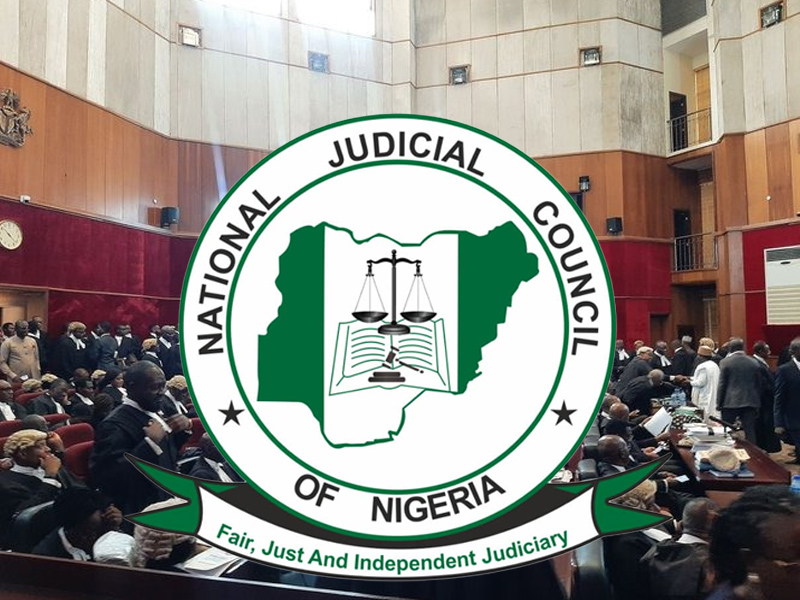
The National Judicial Council (NJC) has recommended 28 candidates for appointment as judicial officers across six states, including 24 candidates for various State High Courts.

The recommendations cover the High Courts of Kano, Ebonyi, Edo, Adamawa and Ogun states, the Plateau State Sharia Court of Appeal, Adamawa State Sharia Court of Appeal and Adamawa State Customary Court of Appeal.

The Council announced the recommendations in a statement issued on Wednesday by its Deputy Director of Information, Kemi Babalola-Ogedengbe.

It said the decisions were taken at its 112th meeting held on November 3, 2026, under the chairmanship of the Chief Justice of Nigeria, Justice Kudirat Motonmori Olatokunbo Kekere-Ekun.

According to the Council, one candidate was recommended as Grand Kadi of the Plateau State Sharia Court of Appeal, while another was recommended as Kadi of the Adamawa State Sharia Court of Appeal.

Two others were recommended as judges of the Adamawa State Customary Court of Appeal.

The appointment includes “24 High Court candidates and four candidates for the Sharia and Customary Courts of Appeal.”

The full list of the 28 recommended candidates is as follows:

PLATEAU STATE SHARIA COURT OF APPEAL (GRAND KADI)

1. Tijjani Jibrin Zololo

KANO STATE HIGH COURT

2. Nafisah Yusuf Hassan
3. Halima Yahuza Ahmad
4. Abdullahi Abdulsalam Bature
5. Musa Ibrahim Umar

EBONYI STATE HIGH COURT

6. Dickson Edmund Amaga

EDO STATE HIGH COURT

7. Benson Osagie Osawaru
8. Taiye Osayanmon Omoruyi
9. Dorothy Ibhade Adamaigbo
10. Festus Osagie Usiobaifo
11. Pius Idemudia Oiwoh
12. Majebi Samuel Amune
13. Emike Jessica Imuekemhe

See also  No legal basis for CJN’s ban on ‘Barrister’ title — Law society

ADAMAWA STATE HIGH COURT

14. Aminu Sa’ad
15. Ibrahim Ulenda Musa
16. Sadiq Giwa
17. Musa Bala Mijinyawa
18. Japhet Ibrahim
19. Aliyu Bakari
20. Yakubu Ahmadu

OGUN STATE HIGH COURT

21. Olakulehin Luqman Abiola Oke
22. Adebimpe Folusho Obienu
23. Fatimat Adeola Daudu
24. Rafiat Bolanle Kadiri
25. Oludotun Olaniyi Osho

ADAMAWA STATE SHARIA COURT OF APPEAL (KADI)

26. Abubakar Ishaku

ADAMAWA STATE CUSTOMARY COURT OF APPEAL

27. Elshama Gwama Dimas
28. David Benjamin Pembi

The NJC said all the recommended candidates were expected to be sworn in by their respective state governors without delay.

Source: punchng.com

FOLLOW US ON:

FACEBOOK

WHATSAPP CHANNEL

TWITTER

PINTEREST

TIKTOK

YOUTUBE

LINKEDIN

INSTAGRAM

Continue Reading

News

JD Vance reveals Iran war cost Republicans midterm elections, read details

Published

on

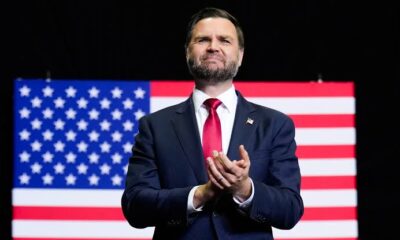
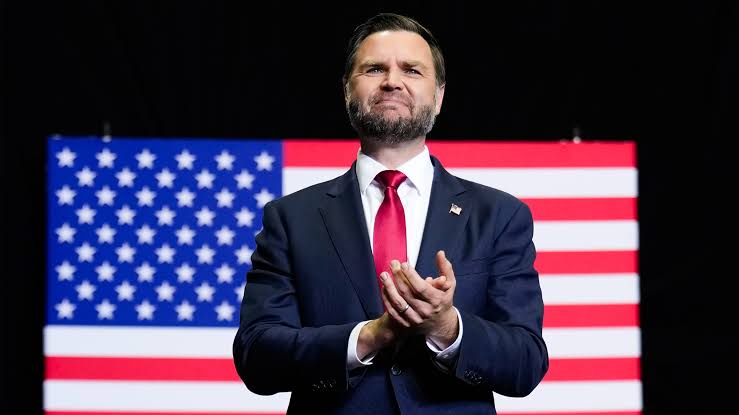
United States Vice President JD Vance has blamed the Iran war for the Republican Party’s poor performance in the 2026 midterm elections, saying many supporters of President Donald Trump switched allegiance to Democrats over dissatisfaction with the conflict.

Vance said this in a post on his X handle on Wednesday, arguing that the party’s defeat was not primarily caused by poor voter turnout but by the defection of voters who supported the Trump-Vance ticket in 2024.

He said data analysis conducted by his team before the elections had shown that Republican supporters were turning out in significant numbers, despite opinion polls predicting a major Democratic victory.

“One of the things the data analysts on our side obsessed over was ‘composition’—whether the electorate looked close enough to 2024 for Republicans to win,” he said.

Vance explained that although turnout was encouraging in several states, a member of his data team had warned him that many Republican voters were angry and might not vote for the party.

“Well, that looks prophetic now. Our voters did show up. In Florida, for example, the electorate was nine points more Republican than Democrat, just a couple points worse than 2024,” he said.

“But the main problem is not turnout. The main problem is that many people who voted for Trump/Vance in 2024 voted for Democrats in 2026.”

The Vice President acknowledged that the party might have failed to communicate its economic policies effectively, particularly on the cost of living and inflation.

However, he said the major reasons voters abandoned the Republicans were concerns about the war, economic hardship, America’s foreign policy priorities and its relationship with Israel.

See also  Fubara cancels N134b secretariat contract awarded by Ibas, orders refund

According to Vance, a pollster who accurately predicted the election outcome identified four major demands among former Republican supporters who switched to the Democrats.

The demands were to end the war, prioritise the cost of living and inflation, put America first and change the country’s relationship with Israel.

“The reason we lost is the war. The president himself said so last night,” Vance stated.

He also defended television personality Rachel Campos-Duffy, saying her earlier call for a diplomatic resolution to the conflict had proved politically sound.

Vance warned against attempts by Republican establishment figures to attribute the party’s electoral setback to other issues, particularly immigration policy.

He said he was open to reviewing immigration enforcement strategies, including targeting businesses that employ undocumented workers, but rejected calls for amnesty.

“Anyone pushing amnesty is lying to you,” he said.

The Vice President challenged those who believed the war was worth the political cost to defend that position openly, noting that the defeat could cost Republicans control of the Senate for the next six years.

“If you’d like to argue it was worth it, that losing the Senate for the next six years was worth it, then do so. Argue it was a worthwhile cost to pay,” he said.

“Agree or disagree, that’s at least honest.”

Despite the setback, Vance expressed optimism about the country’s future, urging disappointed Republican supporters to channel their anger into rebuilding the party and electing candidates who share their political views.

“Let’s take that anger and get back to the work of saving our country,” he added.

See also  Reps summon ministers over budget underperformance

Source: punchng.com

FOLLOW US ON:

FACEBOOK

WHATSAPP CHANNEL

TWITTER

PINTEREST

TIKTOK

YOUTUBE

LINKEDIN

INSTAGRAM

Continue Reading

News

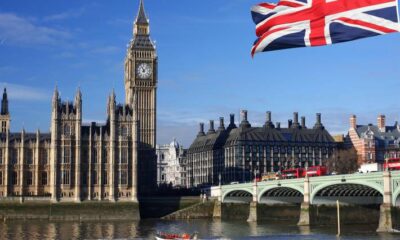
UK to strengthen immigration enforcement with facial recognition

Published

on

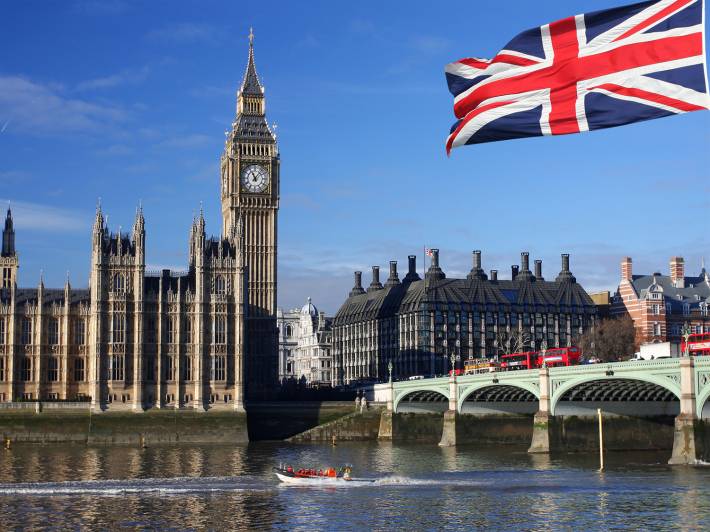
The United Kingdom government plans to expand live facial recognition technology to strengthen immigration enforcement and identify individuals who have violated immigration rules.

The initiative, being developed by the Home Office, could see facial recognition cameras deployed at transport hubs and public events to help immigration officers identify people who have overstayed their visas, entered the country unlawfully or breached their immigration conditions.

According to policy documents published in October and sighted by PUNCH Online on Thursday, the proposed expansion could extend the technology’s use to general immigration enforcement, including civil immigration violations that do not necessarily involve criminal offences.

The development comes as Home Secretary Shabana Mahmood seeks to intensify immigration enforcement through increased funding, additional personnel and expanded deportation operations.

The Home Office said the technology would help officers identify individuals subject to removal proceedings and those attempting to re-enter the UK unlawfully.

The policy documents also suggest that facial recognition could reduce the need for repeated enforcement visits to residential properties and workplaces.

Authorities have already conducted three trials of the technology at Holyhead port in north Wales between November 2025 and February 2026. The trials focused on identifying individuals travelling from Ireland who were subject to deportation orders or wanted over immigration-related criminal offences.

The programme has now entered its formal delivery phase, with officials considering wider deployments at transport hubs and large public gatherings.

A Home Office spokesperson confirmed that further trials were being considered while the government examined the potential benefits and implications of the technology.

See also  Obasanjo faults Osoba, accuses Atiku of impeachment plot before 2003 Poll; read details

U K Home Secretary, Shabana Mahmood, said: “Facial recognition technology has been the biggest breakthrough for catching criminals since DNA matching, already helping police take thousands of dangerous criminals off our streets.

“The benefits are clear, but we must ensure that its use is fair, safe and proportionate.

“It is right we put in place clear laws to ensure that the use of this technology is watertight, so the public can have confidence that these tools, which are vital to our safety, are used responsibly too.”

However, the proposed expansion has raised concerns among civil liberties organisations and migrant rights advocates over privacy, surveillance and the possibility of inaccurate identification.

The Joint Council for the Welfare of Immigrants described the development as a significant escalation of immigration enforcement powers, while the Open Rights Group questioned the transparency of the plans, public consent and the absence of comprehensive legislation governing facial recognition.

Critics have also warned that the technology could disproportionately affect people of colour because of concerns about identification accuracy.

Meanwhile, Biometrics and Surveillance Camera Commissioner William Webster has questioned whether existing regulatory arrangements are sufficient to oversee the expanding use of facial recognition across government agencies.

Under the proposed policy, individuals under 18 will not be included on facial recognition watchlists.

Source: punchng.com

FOLLOW US ON:
FACEBOOK

WHATSAPP CHANNEL

TWITTER

PINTEREST

TIKTOK

YOUTUBE

LINKEDIN

INSTAGRAM

Continue Reading

Trending