Connect with us

Education

FG unveils entrepreneurship certification in 14 varsities

Published

on

The Federal Government has unveiled the Entrepreneurship, Innovation and Business Incubation Certification programme in 14 universities, with plans to expand it to all federal universities by 2027 and all federal tertiary institutions by 2028.

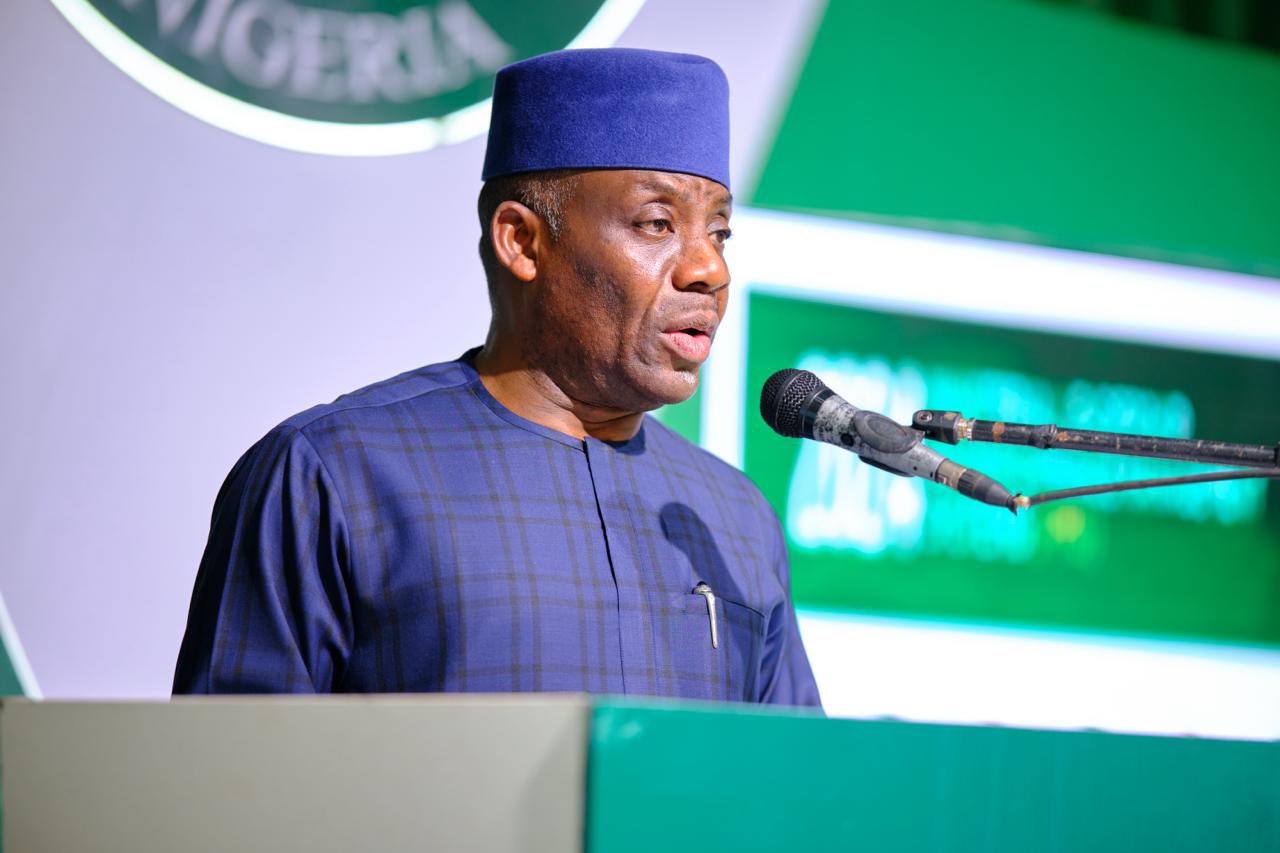
The Minister of Education, Maruf Alausa, disclosed this on Friday in Abuja during the official unveiling of the initiative, describing it as a major shift in Nigeria’s education system toward innovation, entrepreneurship, and job creation.

“Today marks not just the launch of a programme, but the beginning of a new paradigm in Nigeria’s education system, one that shifts our young people from job-seekers to job-creators, from passive learners to active innovators, and from graduates to nation builders,” he said.

He noted that the programme comes at a critical time when the country must harness the potential of its youthful population while addressing the limitations of traditional education models.

Alausa warned that rapid technological changes are disrupting industries and widening the gap between education and employability if proactive measures are not taken.

“The world is changing rapidly. Technology is reshaping industries, and many traditional jobs are disappearing. Even as new opportunities emerge, if we do not prepare our young people adequately, we risk widening the gap between education and employability,” he said.

He explained that the EIBIC programme is designed to embed entrepreneurship across disciplines, citing ongoing efforts at the University of Lagos as a model.

According to the minister, the programme will equip students with practical competencies in innovation, business planning, financial literacy, and venture development, enabling them to build sustainable enterprises even before graduation.

See also  Act now to avert strike, ASUU warns education minister, presidency

He further linked the initiative to President Bola Tinubu’s economic vision, describing it as part of a broader strategy to build a knowledge-driven and innovation-led economy.

“EIBIC aligns with our national priorities. This initiative aligns perfectly with the vision of His Excellency, President Bola Tinubu, under the Renewed Hope Agenda to build a resilient, knowledge-driven, and innovation-led economy,” Alausa said.

According to the minister, the programme will be implemented in phases, beginning with 14 universities, including the University of Lagos, Ahmadu Bello University, University of Jos, Bayero University Kano, Uthman Danfodio University, University of Benin, University of Port Harcourt, Obafemi Awolowo University, University of Ibadan, University of Maiduguri, Abubakar Tafawa Balewa University, University of Nigeria, Nsukka, Nnamdi Azikiwe University, and University of Abuja.

He added, “Today, EIBIC is being rolled out in 14 universities. By next year, all federal universities will be onboarded, including some federal polytechnics and Colleges of Education. By the end of 2028, all our federal tertiary institutions will be fully onboarded.”

The minister also highlighted the Student Venture Capital Grant introduced by the ministry, revealing strong interest among Nigerian youths.

“On Sunday, we will be choosing 63 people who will benefit from the Student Venture Capital Grant. Guess how many people applied? 36,000 young entrepreneurs applied,” he said.

Alausa directed vice-chancellors of participating institutions to fast-track the approval of the programme within their respective senates.

“I am directing you all on or before the end of April; all your senators must approve this programme. This is a directive that I am not going to take lightly. I will call, and there will be consequences because we are in a hurry to get this programme to our youth,” he warned.

See also  Out-of-school children rise to 273m globally – UNESCO

Earlier, the Chairman of the EIBIC Planning and Monitoring Committee and Vice-Chancellor of the University of Jos, Prof. Tanko Ishaya, described the initiative as a major step toward aligning education with national economic goals.

“This landmark initiative by the Minister marks a transformative leap in repositioning Nigerian education as a true driver of national economic development,” he said.

Ishaya noted that the programme complements existing funding opportunities for student entrepreneurs.

He added that the initiative would strengthen the link between academic learning and market needs while fostering innovation and enterprise among students.

“By focusing on practical skills acquisition, innovation-driven thinking, and structured incubation, it is not just satisfying individuals. It is building a new generation of job creators, innovators, and industrial leaders,” Ishaya said.

The launch attracted key stakeholders from across the education sector, with expectations that the EIBIC programme will play a critical role in reducing youth unemployment and driving sustainable economic growth in Nigeria.

The EIBIC programme is a mandatory entrepreneurship development initiative designed for students in tertiary institutions. It runs concurrently with academic programmes, starting from the first year through to graduation.

The structure includes early exposure through orientation programmes, continuous entrepreneurship training, and access to incubation, mentorship, and funding opportunities.

Students are guided through a structured pathway from idea development to venture creation, to enable them to build sustainable businesses even before graduation.

Upon completion, participants receive an additional certification in entrepreneurship alongside their academic degrees.

punch.ng

FOLLOW US ON:

FACEBOOK

TWITTER

PINTEREST

TIKTOK

YOUTUBE

LINKEDIN

Continue Reading
Click to comment

Leave a Reply

Your email address will not be published. Required fields are marked *

Education

ASUU threatens nationwide strike over unpaid salaries, agreement

Published

on

The Academic Staff Union of Universities has threatened to resume its suspended nationwide strike if the federal government and state governments fail to urgently address outstanding issues affecting university lecturers.

ASUU said it could reactivate the strike “without any further notice” over the incomplete implementation of the December 2025 agreement, payment of the remaining 3.5 months of withheld salaries and non-remittance of billions of naira deducted from lecturers’ salaries.

The union’s position was contained in a statement sent to our correspondent in the early hours of Friday by its President, Christopher Piwuna, after an emergency meeting of its National Executive Council held at the University of Abuja.

ASUU said the December 2025 agreement followed more than eight years of negotiations and struggles but had not been fully implemented by the Federal Government and several state governments.

“Unless immediate and concrete steps are taken to FULLY and COMPREHENSIVELY address issues bordering the welfare and well-being of Nigerian academics, ASUU-NEC will not accept any blame for calling out its members on a nationwide strike action within the shortest time possible,” the union warned.

It commended Abia State Governor, Alex Otti, and the governments of Bauchi, Ekiti, Ogun, Benue, Yobe, Adamawa, Kebbi, Katsina and Borno for commencing implementation of the agreement.

The union said Kano, Edo, Plateau, Taraba, Gombe and Bayelsa had also pledged to commence implementation in September or October, while warning other states to act before their universities were plunged into an “industrial crisis of monumental proportions.”

See also  JAMB bars unmonitored CBT centers from 2026 UTME registration

On withheld salaries, ASUU acknowledged that the Tinubu administration had paid four of the 7.5 months withheld during the Buhari administration but demanded the immediate release of the outstanding 3.5 months.

“We have consistently acknowledged President Bola Ahmed Tinubu for paying four (4) out of the withheld salaries. However, leaving out the unpaid balance does not give his government the full credit of a labour-friendly administration,” it said.

ASUU also alleged that pension contributions, cooperative deductions and union check-off dues running into billions of naira had remained unremitted for several months.

The union warned that the combination of unpaid salaries, unremitted deductions and poor implementation of the agreement was threatening industrial peace in the universities.

“In no mistaken terms, ASUU posits that the non- or haphazard implementation of the 2025 FGN-ASUU Agreement by federal and state governments is a recipe for industrial crisis in Nigeria’s public universities,” it stated.

It urged the Federal Government and state governments to act quickly, insisting that it would not accept responsibility if the suspended strike was reactivated.

“ASUU-NEC resolved to notify all concerned that the Union may activate its suspended strike action without any further notice if the critical issues raised in this release are not speedily addressed,” the union said.

Source: punchng.com

FOLLOW US ON:
FACEBOOK

TWITTER

PINTEREST

TIKTOK

YOUTUBE

LINKEDIN

INSTAGRAM

Continue Reading

Education

Proprietors defend 30% fee hike as schools resume Monday

Published

on

Proprietors of private primary and secondary schools have defended increases of up to 30 per cent in school fees ahead of the resumption of schools for the 2026/2027 academic session on Monday.

The school owners attributed the increase to rising operational costs, including fuel, transportation, rent, infrastructure, textbooks and teachers’ salaries.

The development comes as parents across Lagos, Ogun and Oyo states intensify preparations for the new academic session, with the state governments having fixed September 14 for resumption.

Some schools have increased tuition by between 10 and 30 per cent, while others have raised ancillary charges, including fees for textbooks, uniforms and transportation, in a bid to cushion the impact of rising operating expenses.

The proprietors insist that the latest fee increases are necessary to keep their schools running and retain qualified teachers.

A proprietor in Magboro, Ogun State, Bola, said his school increased its fees by about 20 per cent, largely because of the rising cost of transporting pupils and fluctuations in fuel prices.

He said schools were also under pressure to retain teachers, many of whom were demanding better remuneration.

“Teachers are looking for better pay. Some schools that don’t pay well may resume and find their teachers gone. Schools that cannot increase teachers’ salaries are closing down,” he said.

Bola added that his school was currently training its teachers ahead of the new session, saying the cost of retaining qualified personnel had become a major concern for proprietors.

Isiaka, who heads an association of private school owners in Ogun State, said schools in his area increased tuition by about 15 per cent.

See also  JAMB fixes June 13 for 2026 UTME mop-up

He attributed the increase to the rising cost of petrol, teachers’ salaries, infrastructure upgrades and procurement, as well as rent for schools operating from leased premises.

He said textbook prices had also risen by about 10 per cent.

According to him, however, the increase in private school fees has not triggered a significant movement of pupils from private to public schools.

In Lagos, some proprietors said they had been forced to make steeper adjustments as operating costs continued to rise.

Aliyu, a school owner in the Satellite area of Lagos, said tuition in his area had increased by between 20 and 30 per cent.

He cited higher expenditure on fuel, transportation, rent and other operational needs, noting that his annual rent had risen from N4m to N9m.

“My rent was increased from N4m to N9m, and I have been told that it will be increased every year. Teachers are asking for double their salaries, and teachers are scarce,” he said.

Aliyu said proprietors were trying to keep tuition increases within manageable limits by adjusting ancillary charges.

“What we do is increase those ancillary charges while making minimal increases in school fees. We increase the cost of textbooks, uniforms and other fees to break even,” he explained.

Another proprietor, Ikenna, who operates a school in Surulere, Lagos, said his school increased fees by about 20 per cent to reflect the cost of facilities and services being provided to pupils.

He said the school spent N3m on interactive boards, adding that the investment also brought additional costs for electricity and staff to manage the facilities.

See also  NELFUND opens student loan portal for 2025/2026 academic session

Ikenna said the rising cost of living among staff, higher rents and the difficulty of recruiting quality teachers were also contributing to fee increases.

He noted that schools often faced pressure to adjust their fees when neighbouring schools did the same.

“If a nearby school increases, there is a tendency for neighbouring schools to also increase,” he said.

He added that recruiting quality teachers from outside the immediate environment could also require schools to provide accommodation, further increasing their operating costs.

In Ebutte-Metta, Lagos, another proprietor, Lateef, said his school increased its fees by 30 per cent, blaming the decision largely on a sharp rise in rent.

He said the rent on his school premises had risen from N3m to N5m.

Lateef also said his school was considering stopping its bus service because it had become increasingly difficult to operate profitably amid uncertainty over fuel prices.

“Only big schools can keep running bus services at the moment due to fuel price uncertainty. Many small schools struggle to continue running buses, as the buses have become more of a promotional tool for their schools,” he said.

In Ibadan, Oyo State, a school proprietor, Morayo, said her school increased its fees by about 10 per cent.

She said the adjustment was relatively moderate because textbook prices had risen by only about two per cent.

The fee increases come amid preparations by schools and households for Monday’s resumption.

Parents have been visiting bookshops to purchase textbooks and other school materials, while pupils and students who travelled during the holidays have begun returning ahead of the new session.

See also  Enugu gov celebrates 13-year-old STEM Olympiad gold medallist

At schools, head teachers and other administrators have been meeting with teachers to conclude preparations for the session, including reviewing records from the previous term, drawing up timetables and agreeing on organisational plans.

Some schools have also undertaken repairs and infrastructure upgrades ahead of resumption.

Source: punchng.com

FOLLOW US ON:

FACEBOOK

TWITTER

PINTEREST

TIKTOK

YOUTUBE

LINKEDIN

INSTAGRAM

Continue Reading

Education

WAEC results row deepens as police invite official

Published

on

The Nigeria Police Force National Cybercrime Centre has invited a staff member of the West African Examinations Council, Olanrewaju Fadehan, to appear in Abuja on Wednesday over an alleged case of cyberstalking and criminal defamation.

This comes as the Lagos State High Court restrained Fadehan from publishing or circulating alleged defamatory statements concerning the examination body and its Director-General, Dr Amos Dangut.

The police invitation, signed by the Director of the NPF-NCCC, AIG Akaninyene Ezima, directed Fadehan to report to the centre in Abuja at 10 am on Wednesday for an interview over an alleged case of cyberstalking and criminal defamation.

Reacting to the developments, Fadehan said he had received the court papers and was aware of the injunction.

“They’ve even done that already. At least, they sent me a court paper yesterday (Monday). That one is an interim injunction that I should not post anything any longer,” he said.

On the police invitation, he added, “They’re taking me to the cybercrime centre in Abuja. Tomorrow (Wednesday), I’m supposed to appear before them.”

On Monday, Justice Yetunde Adesanya, in an interim order made in Suit No. LD/ADR/6656/2026, restrained Fadehan from “publishing, broadcasting, circulating or disseminating” any “defamatory, maligning and/or injurious falsehood” concerning WAEC, its examinations, results and certificates, or Dangut’s “character and/or integrity.”

The order covers publications in video, audio, written or other formats on any platform, including YouTube and WhatsApp. It is to “abate after seven (7) days” unless renewed by the court.

WAEC and Dangut are seeking N500m general damages for libel, N300m aggravated and exemplary damages and N25m costs, totalling N825m.

See also  JAMB bars unmonitored CBT centers from 2026 UTME registration

They are also seeking an order compelling Fadehan to retract the alleged defamatory publications, issue a public apology and permanently remove them from all platforms.

Fadehan, who is Head of Examinations at WAEC’s office covering Anambra, had, in viral videos, called for a review of the recently released 2026 West African Senior School Certificate Examination results, citing alleged irregularities.

He also made allegations of financial impropriety against the council’s management, including issues concerning the supply of calculators, students’ identification cards and charges imposed on candidates and other service seekers.

Fadehan further alleged that some candidates were not provided with appropriate calculators during the examination, claiming that this contributed to poor performance in Mathematics and other calculation-based subjects.

He subsequently petitioned the WAEC Board, the House of Representatives Committee on Basic Education and Examining Bodies and the Minister of Education, alleging that rather than addressing his complaints, the council subjected him to disciplinary proceedings and placed him on interdiction.

In a separate correspondence to Fadehan, WAEC’s lawyers, Union Attorneys, alleged that he published a series of videos attacking the council and Dangut.

The lawyers referred to publications titled, among others, “Tyranny in WAEC, Nigeria: Dangut must go,” “WAEC: My alleged offence and the overbearing sanctions,” “WAEC’s MND: Petition to ASF, National Assembly and Minister for Education plus appeal,” and “Anomalies in WAEC – Series 1: I won’t wait.”

They further alleged that Fadehan later published another video titled “Dangut is a thief,” describing the publications as containing “inaccurate information and reckless statements.”

The lawyers said the publications continued despite a cease-and-desist letter dated August 24, 2026.

See also  Out-of-school children rise to 273m globally – UNESCO

In its response to the viral videos, WAEC, through its spokesperson, Moyosola Adesina, accused Fadehan of spreading falsehoods and sensational materials to spite the council.

The council alleged that Fadehan was involved with some staff in the misappropriation and attempted cover-up of hundreds of litres of diesel from its underground tank at the Awka office.

WAEC said Fadehan, following a four-week suspension, began making unsubstantiated allegations against the council under the guise of whistleblowing.

“It is important to also note that Mr Fadehan is still a staff member of the council and his employment has not been determined.

“He has published that his employment has been determined while continuing to earn salaries from the council. His allegations have been investigated at various levels and found to be false. He has been spreading falsehoods and sensational materials to spite the council,” WAEC stated.

However, speaking with The PUNCH on Tuesday, Fadehan disputed the allegations arising from the fuel shortage controversy, saying an internal panel found that nobody stole fuel and that the shortage resulted from leakage.

“The panel resolved that nobody stole anything,” he said.

Fadehan said the fuel controversy was separate from the matter for which he was currently on interdiction, insisting that the latter arose from allegations of defamation.

“So, it was based on the issue of defamation now that I was put on interdiction. It has nothing to do with fuel.

“The fuel issue is gone. The issue of fuel is being brought up when I raised the issue of a calculator that was not given to the candidate. He now set up a panel for me. The same Dangut set up a panel for me, and the query of that panel reads that I defamed him,” he said.

See also  Firm offers two-year scholarship to rescued schoolchildren

He denied being bitter over the sanctions imposed on him by WAEC, saying he had appealed against them.

“I’m not bitter. I’ve appealed what they did. So I’m not bitter,” he said.

The PUNCH reports that Fadehan made allegations against the examination body in a now viral video, claiming that candidates who sat the computer-based version of the examination were particularly affected.

Fadehan alleged that the problems were noticeable around the release of the results, which he said was initially expected to be announced between August 3 and 5, 2026, adding that WAEC had traditionally released results on Mondays.

He further alleged that rather than addressing his complaints, he was subjected to disciplinary proceedings and subsequently placed on interdiction.

Source: punchng.com

FOLLOW US ON:

FACEBOOK

TWITTER

PINTEREST

TIKTOK

YOUTUBE

LINKEDIN

INSTAGRAM

Continue Reading

Trending