The Nigerian Education Loan Fund has announced the official opening of its student loan application portal for the 2025/2026 academic session, providing access to financial support for students across tertiary institutions in the country.
The agency said the application window will run from Thursday, October 23, 2025, to Saturday, January 31, 2026.
This is contained a statement issued on Tuesday by NELFUND’s Director of Strategic Communications, Oseyemi Oluwatuyi.
NELFUND urged fresh students to apply using their Admission Number or JAMB Registration Number in place of a matriculation number.
It appealed to tertiary institutions to show understanding regarding registration and fee payment deadlines for applicants awaiting loan disbursement.
“Institutional Institutions are encouraged to show understanding in enforcing registration and fee Flexibility payment deadlines for students awaiting loan disbursement
“Institutions that have not yet commenced their 2025/2026 academic session should Special Notice formally write to NELFUND with their approved academic calendar for scheduling flexibility
“NELFUND appeals to all institutions to consider temporary registration measures for students whose loan applications are being processed to ensure that no student loses access to education due to financial constraints,” the statement said.
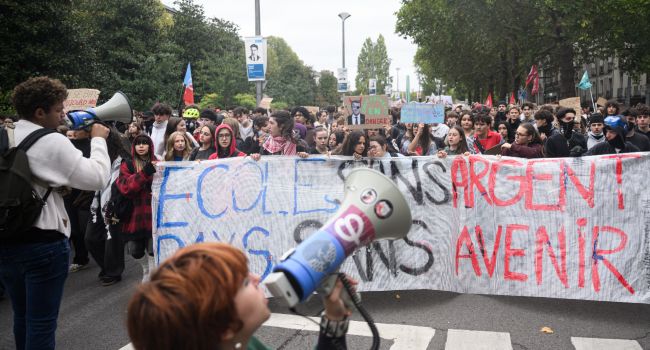
France readied on Tuesday for fresh nationwide demonstrations supporting students who have been protesting poor classroom conditions for weeks, with authorities and participants wary of further violence.
The mobilisation, backed by unions and the far-left opposition France Unbowed party, was to include a march through Paris starting at 1200 GMT, along with marches in other cities.
It follows demonstrations on Thursday that saw more than 70,000 people take to the streets across France, with about 500 people arrested.
French authorities had been hoping that the student protest movement that started in late September was starting to ease, ahead of half-term holidays. The protests have seen students pile up dumpsters and other obstacles to block access to high schools, with clashes occasionally breaking out with police.
On Monday, only 130 of France’s 3,700 lycees were closed, according to the education ministry, though it stated that, while “the number of school closures is falling… the violence is intensifying”.
In an incident seemingly unrelated to the protests, police arrested a 14-year-old on Monday near Marseille after a middle school headmaster and a teacher were shot with a hunting rifle, wounding both.
The education ministry said eight members of teaching staff were injured on Monday, mostly in the Paris region and cities of Bordeaux and Lyon, in relation to the protests. Its tally did not include the shooting, which police were treating as a separate case.
• ‘Aren’t being heard’ –
While most of the protests have been peaceful, students say they are determined to press the government to address the problems of too many absent teachers, dilapidated buildings, overcrowded class schedules and other grievances.
“Students aren’t being heard enough… not their proposals to authorities and elected officials,” a 19-year-old graphic design student in Paris, Leo, said.
He added that the protesters — many of whom were minors — were “disturbed by the level of repression never before seen for a student movement”.
One young protester lost a hand from a police stun grenade earlier in the protests, another lost many of his teeth from a tear-gas canister fired in his face at close range, and another lost an eye.
Rights groups and students have accused the police of a disproportionate use of force.
Several police officers and teachers have also been hurt, and on Monday authorities said fireworks fired through a tube injured two school workers in Reims, one school worker in a Paris suburb and a police officer outside a school in Marseille.
Tuesday’s demonstrations supporting the students were to be followed on Saturday by wider public rallies against the rising cost of living.
Naila, a 17-year-old student in the city of Rennes who said she would participate in Tuesday’s demonstration, hoped it would “converge” with the wider one on Saturday.
President Emmanuel Macron, speaking to reporters on Monday, said the pupils’ grievances would take time to address and urged restraint from protesters.
“These are issues that deserve time, consultations, discussion and respect,” Macron said.
• Worries about lost lessons –
More than 6,800 people — largely minors — have been taken into police custody over the course of the protests, according to the justice ministry.
Police have opened internal investigations into 24 allegations of brutality against demonstrators.
After last week’s nationwide demonstrations, the government promised some 3,000 substitute teachers would be deployed in the coming days to replace absent staff at the 114 worst-affected high schools.
A government spokeswoman on Monday said they had started to be assigned.
But the national students’ union has dismissed the government’s move as “crumbs” and is demanding a 10 billion-euro ($11 billion) boost for lycees.
Some parents and students, however, voiced concerns about all the classes being missed because of the protests. A few worried that the children were being used as pawns by opposition political parties.
Some parents pleaded for the teens to lift their blockades at Paris schools.
“The blockades are by their very nature undemocratic,” complained one mother, who went by the pseudonym Gladys.
“It’s shameful to block students who really want to study, by a movement they aren’t part of,” said Clara Juillet, a university student in the city of Tours who has been unable to attend lessons for a week because of the protests.
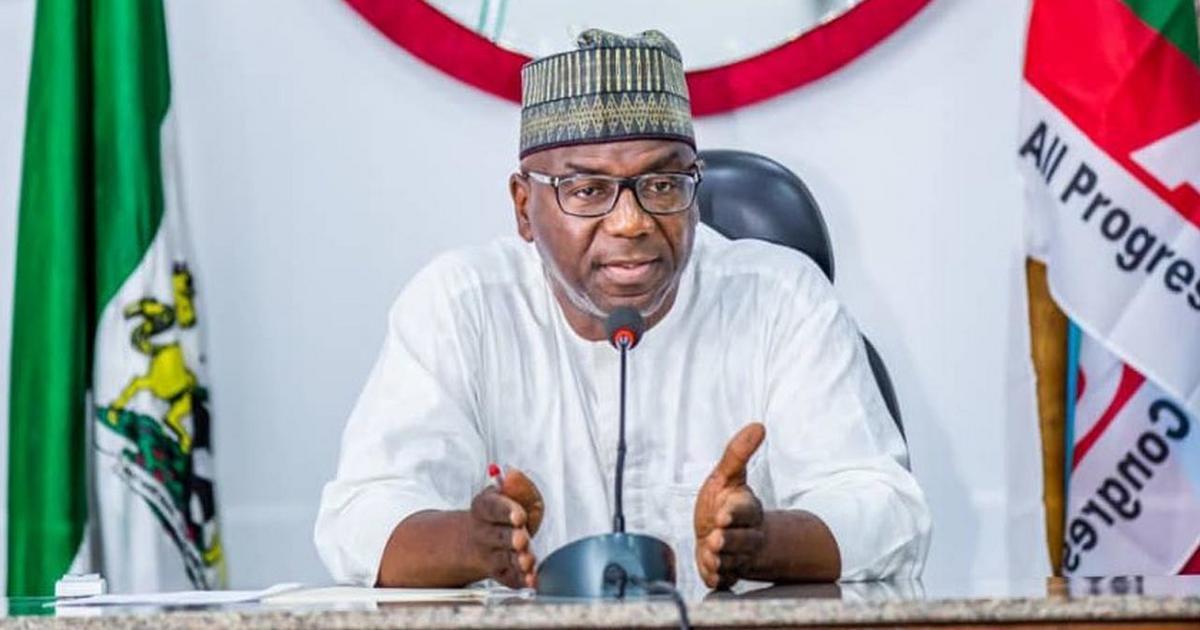
Kwara State Governor, AbdulRahman AbdulRazaq, has donated N180m to support Islamic education, research and academic development as Az-Zumratul Adabiyyah School of Arabic and Islamic Studies, Ilorin, marked its centenary.
The donation, announced at the institution’s 100th anniversary celebration on Sunday, comprised contributions to Ansarul Islam Society, the founding body of Muhammed Kamaldeen University, Ilorin, support for the university and scholarship grants for 30 students.
The governor, who was represented by his Special Adviser on Special Duties, AbdulRazaq Jiddah, said the donations were intended to support the institution and advance educational development.
Providing a breakdown of the donation in a Facebook post, the Senior Special Assistant to the Governor on Communications, Ibraheem Abdullateef, said AbdulRazaq donated N50m to Ansarul Islam Society in his capacity as the Sardauna of Ilorin.
According to Abdullateef, the governor made another N50m donation on behalf of the AbdulRazaq family.
The governor also announced a N50m contribution by the Kwara State Government to Muhammed Kamaldeen University, Ilorin, to support research and educational advancement.
Abdullateef said, “In a similar vein, he noted that the Kwara State Government would also donate the sum of N50m to Muhammed Kamaldeen University (MKU), Ilorin, as a form of support to strengthen research and educational advancement in the institution.
“On top of it, AbdulRazaq directed the university to compile names of 30 deserving students for scholarship, with each getting N1m grant each to inspire and support their academic journey.”
The scholarship grants amount to N30m, bringing the total announced donations to N180m.
In his congratulatory message to the Adabiyyah family worldwide, AbdulRazaq described the centenary as a significant milestone in the institution’s history.
The governor congratulated the founders, successive administrators, teachers, students, alumni, supporters and other members of the community associated with the institution.
“One hundred years is a remarkable milestone in the life of any institution. For Az-Zumratul Adabiyyah, it has been a century of commitment, sacrifice, scholarship, discipline, and service to humanity. On behalf of the government and people of Kwara State, I congratulate the founders, successive administrators, teachers, students, alumni, supporters, and the entire community associated with this historic institution. I commend all those whose dedication has sustained its mission through changing times and generations,” AbdulRazaq said.
The governor urged the institution’s management and alumni network to use the centenary celebration to develop a clear plan for its next phase of growth. “I encourage the management of Az-Zumratul Adabiyyah and its alumni network to use this important occasion to develop a clear plan for the institution’s next phase of growth,” he said.
AbdulRazaq also identified areas he considered important to the institution’s future development, including curriculum improvement, teacher training and digital learning. “While they continue to prioritise curriculum development, teacher training, digital learning, improved libraries, research, and partnerships with other reputable educational institutions,” he said.
Reaffirming his administration’s commitment to education, the governor said the state government would continue to work with relevant stakeholders within the limits of its policies and available resources. “Our administration remains committed to working with relevant stakeholders and institutions within the framework of our educational policies and available resources to advance learning, research, and scholarship in the state,” he said.
Abdullateef stated that the announcement of the donations was greeted with applause and cheers from traditional rulers, clerics, dignitaries and students who attended the centenary celebration
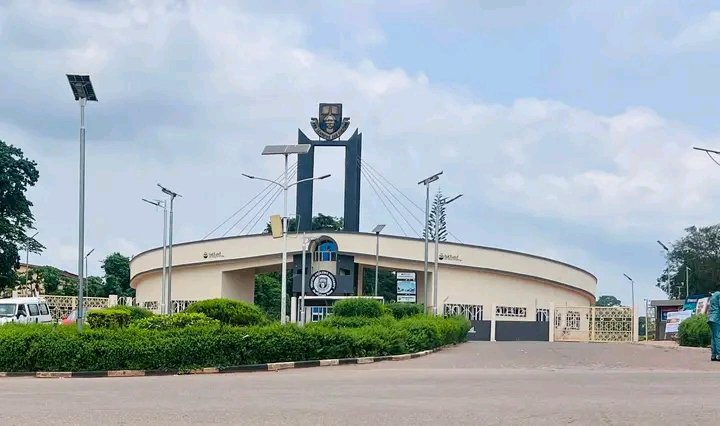
Obafemi Awolowo University, Ile-Ife, has emerged overall champion of the 15th West African University Games, winning 122 medals, according to the official medal table shared on the Games’ social media handles on Sunday.
The host institution won 33 gold, 50 silver and 39 bronze medals to finish ahead of the University of Ghana, which secured second position with 59 medals, comprising 26 gold, 21 silver and 12 bronze.
Benson Idahosa University finished third with 21 gold, 10 silver and seven bronze medals, while the University of Ibadan placed fourth with 17 gold, 12 silver and 13 bronze medals.
The rankings are based on the number of gold medals won, followed by silver and bronze medals where necessary.
Below is the full medal table for the 15th West African University Games, hosted by OAU in Ile-Ife, Osun State.
– 9. University of Cape Coast: six gold, one silver, nine bronze — 16 medals
– 10. Nile University of Nigeria: six gold, one silver, two bronze — nine medals
– 11. Kwame Nkrumah University of Science and Technology: five gold, four silver, three bronze — 12 medals
– 12. Ladoke Akintola University of Technology: three gold, five silver, six bronze — 14 medals
– 13. Rev. Fr. Moses Orshio Adasu University, Makurdi: two gold, three silver, five bronze — 10 medals
– 14. University for Development Studies: two gold, two silver, two bronze — six medals
– 15. University of Abuja: one gold, six silver, six bronze — 13 medals
– 16. University of Energy and Natural Resources: one gold, two silver, seven bronze — 10 medals
– 17. Federal University, Oye-Ekiti: one gold, one silver, four bronze — six medals
– 18. Osun State University: no gold, six silver, 10 bronze — 16 medals
– 19. Lead City University: no gold, two silver, one bronze — three medals
– 19. University of Ilesa: no gold, one silver, six bronze — seven medals
– 20. Plateau State University: no gold, one silver, one bronze — two medals
– 21. Federal University of Agriculture and Technology, Okeho: no gold, no silver, four bronze — four medals
– 22. Federal University of Technology, Akure: no gold, no silver, three bronze — three medals
OAU describes Games as investment in youth
In a report published on October 5, 2026, on its website, OAU said the opening ceremony brought together 50 universities, with more than 1,500 athletes and officials expected to participate across 18 sports.
Speaking at the ceremony, the university’s Vice-Chancellor, Professor Adebayo Simeon Bamire, said, “For OAU, the Games are an investment in the future of our youth.”
WAUG 2026 mascot, Ori-Olokun
He said the university wanted the infrastructure and systems developed for the competition to continue benefiting its community after the Games.
Also speaking at the opening ceremony, WAUG President Ibrahim Tanko Shaibu urged athletes to give their best while respecting their opponents and officials.
“Give your best, respect your opponents and officials,” he told the athletes, according to OAU’s October 5 report.
In a separate notice published on October 11, OAU said the closing ceremony would celebrate the achievements of participating athletes and institutions, as well as the spirit of fair play, resilience and friendship during the Games.
The 15th West African University Games were scheduled to run from October 2 to 12 at OAU, Ile-Ife.