



Connect with us

Lifestyle

I Don’t Love Men – Laide Bakare Opens Up On Relationships

Published

on

Veteran Nollywood actress Laide Bakare has opened up about her personal stance on relationships.

It was reports that she spoke during an appearance on a TV show hosted by her colleague Ayo Adesanya.

During the conversation, the topic shifted to her approach to love and living arrangements in a relationship.

The host questioned why she would not allow a man she is dating to stay in her home before marriage.

In response, Bakare explained that she has never allowed a man to live with her and does not plan to start. She said that her feelings toward men are different from what many people expect.

According to her, she does not feel love for men in the usual sense but instead relates to them with liking, appreciation, and respect.

The actress also spoke about her expectations when it comes to marriage.

She stated that any man who intends to marry her must follow the traditional process, including paying her bride price. For her, marriage should come with full responsibility from the man.

Bakare added that she is more comfortable spending time at a man’s residence rather than having him stay in hers.

She insisted that a man must take full responsibility by fulfilling cultural expectations and taking his wife into his home after marriage.

She said: “I don’t love but like, appreciate and respect men. I have never accommodated a man in my home before and I will never do it. A man who wants to marry me should pay my bride price. I prefer spending time in the man’s house rather than accommodating him in my home. A man should be responsible. He should pay my bride price and take me home.”

See also  Tension in Osun council as Ataoja, Oluwo battle for seniority

FOLLOW US ON:

FACEBOOK

TWITTER

PINTEREST

TIKTOK

YOUTUBE

LINKEDIN

Continue Reading
Click to comment

Leave a Reply

Your email address will not be published. Required fields are marked *

Lifestyle

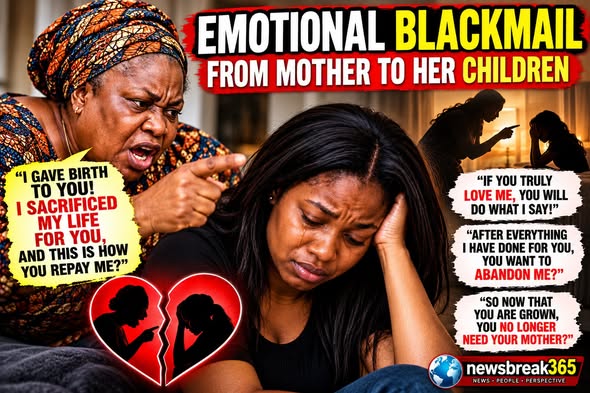
Emotional abuse from parent to their children,how does it affect their life ?

Published

on

Emotional abuse from a parent can affect a child deeply, sometimes even into adulthood. Unlike physical wounds, the damage may not be visible, but repeated insults, humiliation, rejection, threats, manipulation, constant criticism, or making a child feel unwanted can shape how that child sees themselves and other people.

How emotional abuse can affect a child

Low self-esteem: The child may begin to believe the negative things they constantly hear about themselves.
Fear and anxiety: They may become afraid of making mistakes because they expect criticism or punishment.
Difficulty trusting others: When the person who should provide safety becomes a source of emotional pain, trusting people can become difficult.
Problems with relationships: As adults, they may struggle with boundaries, communication, intimacy, or choosing healthy relationships.
People-pleasing: They may constantly seek approval because they learned that love depends on satisfying others.
Anger and resentment: Unresolved childhood pain can sometimes turn into anger toward the parent or other people.
Emotional withdrawal: Some children learn to suppress their feelings because expressing themselves has previously led to ridicule or rejection.
Difficulty accepting love: A child who repeatedly hears that they are worthless may struggle to believe someone genuinely loves or values them.
Fear of failure: Constant criticism can make a child afraid to try new things or take healthy risks.
Repeating the cycle: Without healing and awareness, some adults may unintentionally reproduce the same harmful patterns with their own children.

One important thing

Discipline is not the same as emotional abuse. Parents can correct children firmly while still treating them with dignity, love, and respect. Correcting a child’s behavior should not involve destroying the child’s sense of worth.

See also  PHOTOS: Old Residency, Calabar – “Colonial Nigeria’s Aso Rock”

Children need correction and affection, boundaries and reassurance, discipline and emotional safety.

A parent may forget an angry word spoken years ago, but a child may carry those words for decades. What we repeatedly say to children can become the voice they hear inside themselves when we are no longer around.

If a parent has hurt a child emotionally, acknowledging the harm, apologizing sincerely, changing the behavior, and rebuilding trust can make a significant difference. Children can also heal from painful experiences with support from safe adults, healthy relationships, and professional counseling when needed.

FOLLOW US ON:

FACEBOOK

TWITTER

PINTEREST

TIKTOK

YOUTUBE

LINKEDIN

INSTAGRAM

Continue Reading

Lifestyle

Children Need Love, Caring, Not Abuse

Published

on

Children are a precious gift from God, and they should be raised with love, patience, guidance, discipline, and understanding—not fear, hatred, humiliation, or abuse.

A child who is constantly shouted at, insulted, neglected, or mistreated may carry those wounds for many years. Discipline is important, but discipline should never become an excuse for cruelty or violence. Parents and guardians should correct children in a way that teaches them right from wrong while still making them feel loved and valued.

The Bible reminds us that children belong to God and deserve our care:

“Lo, children are an heritage of the LORD: and the fruit of the womb is his reward.”
— Psalm 127:3 (KJV)

Jesus also demonstrated how important children are:

“Suffer the little children to come unto me, and forbid them not: for of such is the kingdom of God.”
— Mark 10:14 (KJV)

Parents are specifically warned not to treat their children in ways that destroy their spirit:

“And, ye fathers, provoke not your children to wrath: but bring them up in the nurture and admonition of the Lord.”
— Ephesians 6:4 (KJV)

Colossians gives a similar warning:

“Fathers, provoke not your children to anger, lest they be discouraged.”
— Colossians 3:21 (KJV)

This does not mean children should be allowed to do whatever they want. Children need boundaries, correction, and discipline. But biblical discipline should be guided by love and wisdom—not uncontrolled anger or abuse.

“He that spareth his rod hateth his son: but he that loveth him chasteneth him betimes.”
— Proverbs 13:24 (KJV)

See also  How the European powers shared Africa in the 1884-1885 Berlin Conference.

True love does not seek to destroy. It teaches, corrects, protects, encourages, and gives a child the opportunity to grow.

As parents, let us remember that a child is not a punching bag, an emotional dumping ground, or someone to be humiliated whenever we are angry. Children are human beings entrusted to our care.

Let our homes be places where children can feel safe, heard, protected, and loved. Let us correct their mistakes without destroying their confidence. Let us teach them without breaking their spirit.

Children need love.
Children need care.
Children need guidance.
Children need protection.
Children need encouragement.
Children need parents who will raise them—not abuse them.

A child’s childhood cannot be repeated. Let us give them memories of love, security, and guidance—not memories of fear and abuse.

Raise children with love, discipline with wisdom, and correct with compassion.

“And above all things have fervent charity among yourselves: for charity shall cover the multitude of sins.”
— 1 Peter 4:8 (KJV)

FOLLOW US ON:

FACEBOOK

TWITTER

PINTEREST

TIKTOK

YOUTUBE

LINKEDIN

INSTAGRAM

Continue Reading

Lifestyle

Is It Proper for Husband and Wife to Fight in the Presence of Their Children?

Published

on

No, it is not healthy for a husband and wife to engage in serious fights, insults, threats, or physical violence in the presence of their children.

Children may not fully understand the reason for the argument, but they often understand the fear, anger, tension, and pain surrounding it. Constant exposure to parental conflict can make a child feel insecure and may affect their emotional well-being, behavior, school life, and understanding of relationships.

Disagreements are normal in marriage. Husband and wife will not always agree on everything. However, there is a difference between having a disagreement and fighting in a destructive way.

A mature couple should learn to discuss their differences calmly, especially when their children are around. If emotions become too intense, it is better to pause the conversation and continue it privately when both partners have calmed down.

Parents should also remember that children learn from what they see. When they repeatedly witness insults, disrespect, shouting, or violence between their parents, they may grow up believing that such behavior is normal in a relationship.

The Bible teaches:

“A soft answer turneth away wrath: but grievous words stir up anger.” — Proverbs 15:1 (KJV)

And:

“Let all bitterness, and wrath, and anger, and clamour, and evil speaking, be put away from you.” — Ephesians 4:31 (KJV)

Marriage should be a place where love, respect, patience, and understanding are demonstrated—not a battlefield where children are forced to witness hostility between the two people they depend on most.

If you disagree, talk. If you are angry, calm down. If you are hurt, communicate. But protect your children from unnecessary conflict.

See also  "I crossed Seme border on foot", Dele Momodu recalls exile ordeal

A child should not have to choose sides between Daddy and Mummy. They deserve to see their parents resolve disagreements with wisdom, respect, and love.

FOLLOW US ON:

FACEBOOK

TWITTER

PINTEREST

TIKTOK

YOUTUBE

LINKEDIN

INSTAGRAM

Continue Reading

Trending