Connect with us

News

Xenophobia: 130 Nigerians sign up for South Africa evacuation

Published

on

At least 130 Nigerians have already registered for voluntary evacuation flights from South Africa as Nigeria moves to safeguard its citizens amid rising tensions linked to anti-foreigner protests in the country.

The Minister of Foreign Affairs, Bianca Odumegwu-Ojukwu, in a situation report via her X handle on Sunday, said the evacuation arrangement is part of broader diplomatic and security measures being coordinated with Nigerian missions in South Africa.

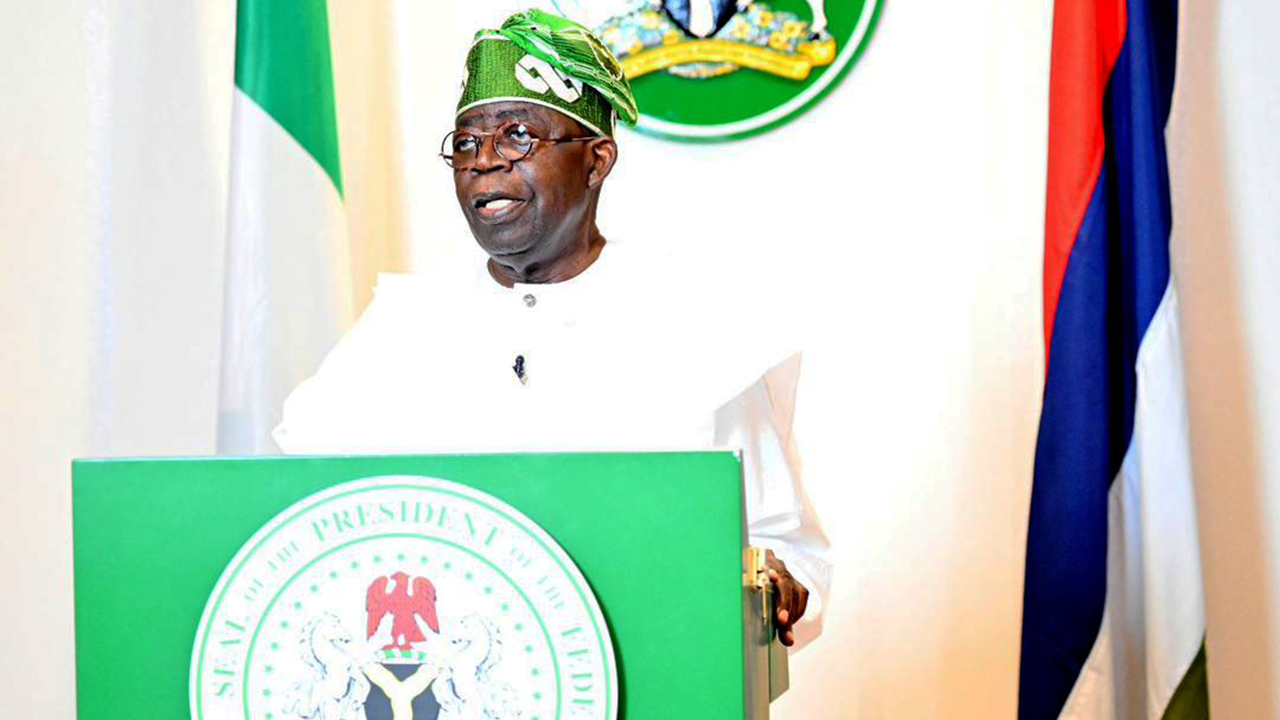
The minister explained that the evacuation plan follows directives from President Bola Tinubu, who ordered heightened monitoring of the situation and stronger protection for Nigerians abroad.

“The President has reiterated that the priority at this time remains the safety of our citizens,” she said, adding that “arrangements are currently underway to collate details of Nigerians in South Africa for voluntary repatriation flights for those seeking assistance to return home.”

Odumegwu-Ojukwu said, “So far, 130 applicants have duly registered for the exercise with our mission,” noting that the number is expected to increase as more citizens seek assistance to return home.

Odumegwu-Ojukwu also confirmed that the ministry had summoned South Africa’s Acting High Commissioner over the unrest, while diplomatic engagements continue with authorities in South Africa.

The development comes amid renewed anti-immigrant demonstrations in cities including Pretoria and Johannesburg, which Nigerian authorities say have heightened concern for the safety of their nationals.

“There is heightened anxiety over the series of anti-foreigner protests, also targeted at Nigerians in select cities in the Republic of South Africa in recent weeks,” the minister said.

See also  FULL LIST: FG lists federal hospitals where dialysis costs ₦12,000

She added that the President had “expressed grave concern on the situation following a briefing, and has called for more effective control of the situation by relevant host security services.”

Odumegwu-Ojukwu noted that while South African authorities, including President Cyril Ramaphosa and senior security officials, had condemned violence, disturbing images circulating online had fuelled international concern.

“The images pervading both mainstream and social media depicting violence, carnage and targeted xenophobic killings of foreign nationals and demonstrations characterised by xenophobic rhetoric, hate speeches and incendiary anti-migrant statements by the arrowheads of such rallies, have generated worldwide condemnation,” she stated.

According to her, protests held between April 27 and 29, 2026, were largely peaceful but still required heavy police deployment in the affected cities.

“The protests spearheaded by a local anti-migration movement, in Pretoria and Johannesburg, between 27 – 29 April 2026, witnessed a largely peaceful procession, under the presence of heavily armed police who occasionally sprayed teargas to deter the protesters from engaging in violent activity.

“There is no recorded killing of any Nigerian or destruction of Nigerian-owned properties during this particular protest,” the minister explained.

However, Odumegwu-Ojukwu confirmed two separate deaths involving Nigerians, both allegedly linked to interactions with security personnel.

“Amamiro Chidiebere Emmanuel died on 25th of April 2026 as a result of injuries sustained from brutal beatings by military personnel of the South African National Defence Force on 20th April 2026 in Port Elizabeth,” she said, referring to the South African National Defence Force.

She further disclosed that “Nnaemeka Matthew Andrew also died following an alleged interaction with members of the Tshwane Metro Police, and his body was discovered at the Pretoria Central Mortuary on 20th April 2026.”

See also  Kanye West cleared to play in Netherlands

Describing both incidents as unacceptable, Odumegwu-Ojukwu said, “This is utterly condemnable and unacceptable. The Nigerian High Commission is closely following investigations into these unfortunate incidents, and Nigeria demands justice be done in these cases.”

The minister added that another wave of demonstrations is expected between May 4 and 8, 2026, prompting further security and diplomatic coordination between both countries.

She stressed that Nigerian diplomatic missions are working closely with South African authorities to ensure the protection of citizens while evacuation preparations continue.

The minister further stated, “Nigeria is a frontline state which made great sacrifices towards the liberation struggles of South Africa, a fact which needs to be distilled down to the younger generation in South Africa.

“Nigerian lives and businesses in SA must not continue to be put at risk, and we remain committed to working with South Africa to explore ways to put an end to this xenophobic pattern.

“It has become a repetitive wave, most especially before elections in South Africa, and anti-foreigner opposition parties leverage this situation to garner votes.

“Nigeria recently signed a memorandum of understanding with South Africa on early warning to protect citizens of both countries, especially in times such as these.”

punch.ng

FOLLOW US ON:

FACEBOOK

TWITTER

PINTEREST

TIKTOK

YOUTUBE

LINKEDIN

INSTAGRAM

Continue Reading
Click to comment

Leave a Reply

Your email address will not be published. Required fields are marked *

News

UK to strengthen immigration enforcement with facial recognition

Published

on

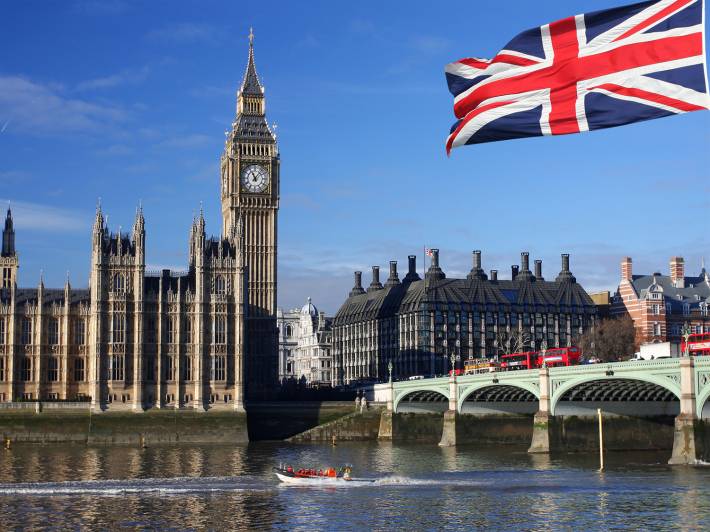
The United Kingdom government plans to expand live facial recognition technology to strengthen immigration enforcement and identify individuals who have violated immigration rules.

The initiative, being developed by the Home Office, could see facial recognition cameras deployed at transport hubs and public events to help immigration officers identify people who have overstayed their visas, entered the country unlawfully or breached their immigration conditions.

According to policy documents published in October and sighted by PUNCH Online on Thursday, the proposed expansion could extend the technology’s use to general immigration enforcement, including civil immigration violations that do not necessarily involve criminal offences.

The development comes as Home Secretary Shabana Mahmood seeks to intensify immigration enforcement through increased funding, additional personnel and expanded deportation operations.

The Home Office said the technology would help officers identify individuals subject to removal proceedings and those attempting to re-enter the UK unlawfully.

The policy documents also suggest that facial recognition could reduce the need for repeated enforcement visits to residential properties and workplaces.

Authorities have already conducted three trials of the technology at Holyhead port in north Wales between November 2025 and February 2026. The trials focused on identifying individuals travelling from Ireland who were subject to deportation orders or wanted over immigration-related criminal offences.

The programme has now entered its formal delivery phase, with officials considering wider deployments at transport hubs and large public gatherings.

A Home Office spokesperson confirmed that further trials were being considered while the government examined the potential benefits and implications of the technology.

See also  2027 Presidency: PDP unveils zoning panel, dispels Jonathan, Obi talks

U K Home Secretary, Shabana Mahmood, said: “Facial recognition technology has been the biggest breakthrough for catching criminals since DNA matching, already helping police take thousands of dangerous criminals off our streets.

“The benefits are clear, but we must ensure that its use is fair, safe and proportionate.

“It is right we put in place clear laws to ensure that the use of this technology is watertight, so the public can have confidence that these tools, which are vital to our safety, are used responsibly too.”

However, the proposed expansion has raised concerns among civil liberties organisations and migrant rights advocates over privacy, surveillance and the possibility of inaccurate identification.

The Joint Council for the Welfare of Immigrants described the development as a significant escalation of immigration enforcement powers, while the Open Rights Group questioned the transparency of the plans, public consent and the absence of comprehensive legislation governing facial recognition.

Critics have also warned that the technology could disproportionately affect people of colour because of concerns about identification accuracy.

Meanwhile, Biometrics and Surveillance Camera Commissioner William Webster has questioned whether existing regulatory arrangements are sufficient to oversee the expanding use of facial recognition across government agencies.

Under the proposed policy, individuals under 18 will not be included on facial recognition watchlists.

Source: punchng.com

FOLLOW US ON:
FACEBOOK

WHATSAPP CHANNEL

TWITTER

PINTEREST

TIKTOK

YOUTUBE

LINKEDIN

INSTAGRAM

Continue Reading

News

Senate considers Tinubu’s N10.79tn foreign loan request

Published

on

The Senate on Wednesday began scrutiny of President Bola Tinubu’s request to secure $7.7bn (N10.79tn) external loan, referring the proposal to its Committee on Local and Foreign Debts for detailed consideration.

The proposed borrowing, which forms part of the Federal Government’s financing plan for the 2026 fiscal year, is expected to contribute to funding a budget deficit estimated at N31.4tn, further placing government borrowing and growing debt obligations under legislative and public scrutiny.

Tinubu’s request, contained in a letter dated October 26, 2026, and addressed to the President of the Senate, sought the National Assembly’s approval to raise N10,790,366,835,481, equivalent to $7,707,404,882.49, using the budget exchange rate of N1,400 to the dollar.

The letter was read during Wednesday’s plenary, following which the Senate President, Godswill Akpabio, referred the request to the Committee on Local and Foreign Debts and directed it to report back as soon as practicable.

The proposed $7.7bn external borrowing represents the foreign component of the N29.2tn new borrowing provision contained in the 2026 Appropriation Act.

According to the President, the approved borrowing plan comprises N18.4tn in domestic loans and N10.79tn in external financing to part-finance the country’s projected N31.4tn budget deficit.

“The 2026 Appropriation Act approved the sum of N29.2tn as new borrowings to part-finance the 2026 budget deficit of about N31.4tn,” the letter stated.

Explaining the rationale for the request, Tinubu said the proposed borrowing complied with Sections 21(1) and 27(1) of the Debt Management Office (Establishment, etc.) Act, 2003, which require external borrowing proposals to be submitted to and approved by the National Assembly.

See also  Senate reconvenes today as Electoral Act triggers uproar

The President disclosed that the Federal Government would explore several financing options simultaneously, taking into consideration borrowing costs, the benefits of each option and the time required to access the funds.

However, he indicated that Eurobond issuance would receive greater attention because of its relatively faster processing time and capacity to generate substantial funds.

“In view of this, emphasis will be on the issuance of Eurobonds, which is typically faster to conclude. Additionally, a larger amount can be raised through Eurobonds at a relatively lower cost in respect to the terms and conditions of the Eurobond,” he stated.

Other financing options identified in the letter included concessional and commercial loans from multilateral and bilateral institutions, facilities from the International Monetary Fund, bridge financing arrangements from book runners, loan syndications and direct borrowing from international financial institutions.

Tinubu, however, acknowledged that the final interest rates, repayment periods and other loan conditions would depend on prevailing market conditions when the financing arrangements are concluded.

He assured lawmakers that the Ministry of Finance and the Debt Management Office would work together to secure the most favourable terms for the country.

“The final terms and conditions, interest rate and tenors can only be determined at the time of pricing. They will all be subject to market conditions prevailing at the time.

“The Federal Ministry of Finance and the Debt Management Office will ensure that Nigeria secures the best terms and conditions within the context of the market,” the President said.

On the proposed utilisation of the funds, Tinubu said the external borrowing would support critical projects and programmes captured in the 2026 Appropriation Act.

See also  Tinubu proposes 110 Court of Appeal justices

He identified defence and security, transportation, agriculture, power, education and healthcare as priority sectors expected to benefit from the financing.

The President argued that the additional funds would provide the resources required to execute key budgetary programmes while consolidating the macroeconomic reforms and gains recorded by his administration.

He also made a case for the borrowing on the grounds that the foreign currency proceeds would contribute to Nigeria’s external reserves.

According to him, the funds would be received by the Central Bank of Nigeria on behalf of the Federal Government, leading to an accretion to the country’s foreign reserves.

Tinubu said the anticipated increase in reserves would provide additional support for the naira and strengthen Nigeria’s external position.

Under the proposed resolution, the President is seeking authorisation to raise the N10.79tn, equivalent to $7.7bn, through one or more of the identified financing channels, with particular emphasis on Eurobond issuance.

Reacting to the request, the Senate President stressed the need for the Federal Government to negotiate favourable borrowing conditions and ensure that any agreement reached with prospective lenders would be beneficial to Nigeria.

He cautioned against accepting loan arrangements without adequately examining their economic implications and the country’s repayment obligations.

“So we have to go out there and search for the best terms, and that’s what they may call a win-win seller, win-win buyer approach,” the Senate President said.

He subsequently referred the request to the Committee on Local and Foreign Debts for detailed examination, directing the panel to submit its report as soon as practicable.

See also  Survivors tell horrific tales of Lagos highrise inferno in Afriland Tower

The committee is expected to scrutinise the proposed financing arrangements, available borrowing options and the terms under which the Federal Government intends to access the funds before the Senate takes a final position.

The latest request comes against the backdrop of persistent concerns over Nigeria’s rising public debt, debt-servicing obligations and the increasing reliance on borrowing to finance annual budget deficits.

Although the Federal Government has consistently maintained that borrowing is necessary to bridge revenue shortfalls and fund critical infrastructure and development projects, concerns remain over the sustainability of the country’s debt profile and the capacity of borrowed funds to generate returns that justify their cost.

Source: punchng.com

FOLLOW US ON:

FACEBOOK

WHATSAPP CHANNEL

TWITTER

PINTEREST

TIKTOK

YOUTUBE

LINKEDIN

INSTAGRAM

Continue Reading

News

Democrats seize Congress as Trump suffers midterm rout

Published

on

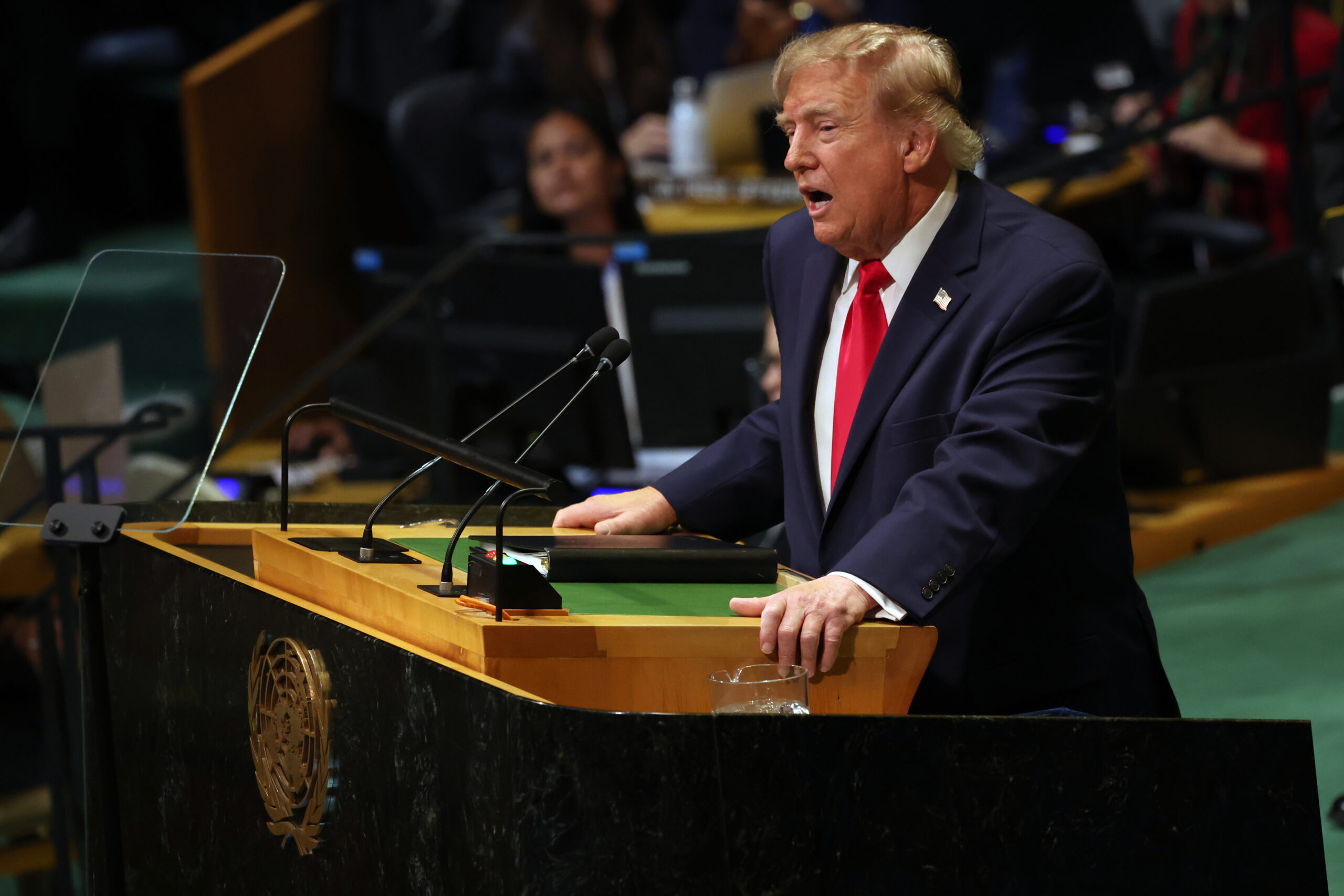
Democrats have seized control of both chambers of the United States Congress in a sweeping midterm election defeat for President Donald Trump’s Republican Party, setting up two years of divided government and a more assertive challenge to his administration.

The victories in Tuesday’s elections, which included flipping at least seven Republican-held Senate seats and more than two dozen House districts, have handed Democrats control of the legislative branch for the first time since Trump returned to the White House.

The outcome represents a major reversal of fortunes for Republicans, who entered the election controlling both chambers, and gives Democrats the power to block legislation, scrutinise presidential appointments and launch investigations into the administration during the final two years of Trump’s term.

Democrats made decisive gains in states that had been considered safe Republican territory, including Texas, South Carolina, Kansas and Iowa.

They also captured Senate seats in Ohio, North Carolina and Maine, overturning the Republican majority that stood at 53 to 47 before the election.

In the House of Representatives, Democrats swept the key competitive races, with gains extending into traditionally conservative districts.

An Associated Press tally reported by Al Jazeera put the party at 228 seats won, with leads in another 34, leaving it on course for a potentially historic majority.

The scale of the defeat prompted an immediate reckoning within the Republican Party, with House Speaker Mike Johnson informing aides that he would not seek to lead the party’s conference in the minority.

Republican Representative Jim Jordan of Ohio has indicated that he will seek the leadership position, arguing that the party must adopt a more aggressive approach to its opposition role.

See also  Ondo air crash: NAF plane vanished from radar shortly after take-off

The election also exposed divisions within the Trump administration over the causes of the Republican collapse, particularly the unpopular war with Iran.

Vice President JD Vance blamed war, which has been described as a war of choice of the Trump administration, for the party’s losses, saying in a social media post: “The reason we lost is the war.”

He wrote: “If you’d like to argue it was worth it, that losing the Senate for the next 6 years was worth it, then do so. Agree or disagree, that’s at least honest. But everyone knows why we lost.”

His comments marked a notable departure from Trump’s defence of the military action. The President said Vance’s assessment was “largely true” but insisted that, given the choice, he would not have changed his decision.

However, preliminary ABC News voter polling suggested that the election backlash extended beyond the war.

Fifty-five per cent of House voters said government corruption was crucial to their vote, while 49 per cent identified the cost of living and 34 per cent cited the Iran war.

Democratic leaders have promised to use their new congressional majority to challenge the administration’s policies and intensify oversight of the executive branch.

House Minority Leader Hakeem Jeffries, who is expected to become Speaker, described the result as an “American tsunami”, saying: “The days of the House of Representatives functioning like a wholly-owned subsidiary of the Trump administration are over.”

Senate Democratic leader Chuck Schumer also signalled a more confrontational approach, saying the party’s priorities would include reducing living costs and tackling corruption.

See also  FULL LIST: FG lists federal hospitals where dialysis costs ₦12,000

Trump, however, said he was willing to accept the election outcome and work with Democrats, despite his previous efforts to cast doubt on electoral integrity.

The Democratic gains extended beyond Congress to state governments, with the party making significant advances in gubernatorial and other down-ballot contests.

Republicans retained Florida, where Trump ally Byron Donalds won the governorship, but lost ground in several states previously considered Republican strongholds.

With some closely contested races still being counted, the final congressional seat totals remain subject to change. The transfer of control in both chambers, however, marks a decisive setback for Trump and raises the prospect of sustained congressional scrutiny of his administration.

Source: punchng.com

FOLLOW US ON:
FACEBOOK

WHATSAPP CHANNEL

TWITTER

PINTEREST

TIKTOK

YOUTUBE

LINKEDIN

INSTAGRAM

Continue Reading

Trending