Connect with us

News

Senate meets Tuesday as fake agency budget row deepens

Published

on

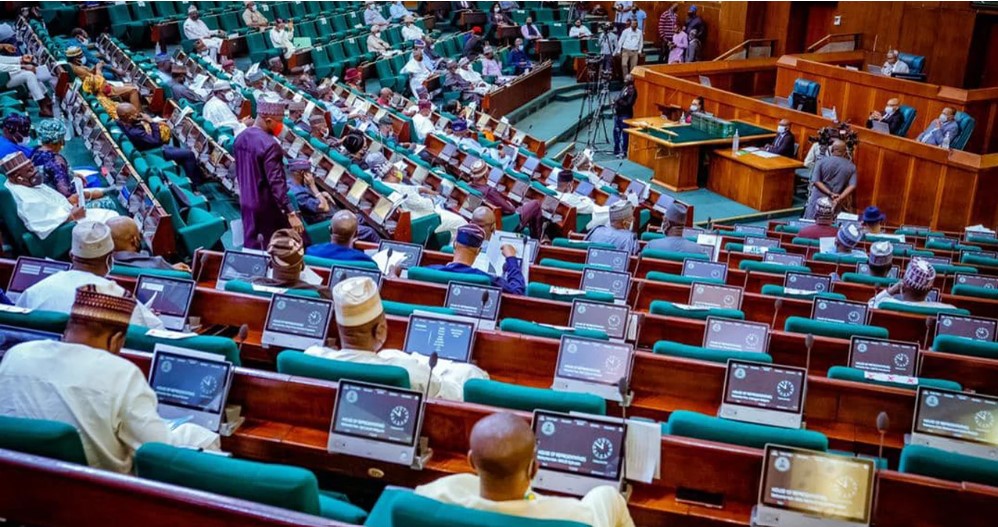
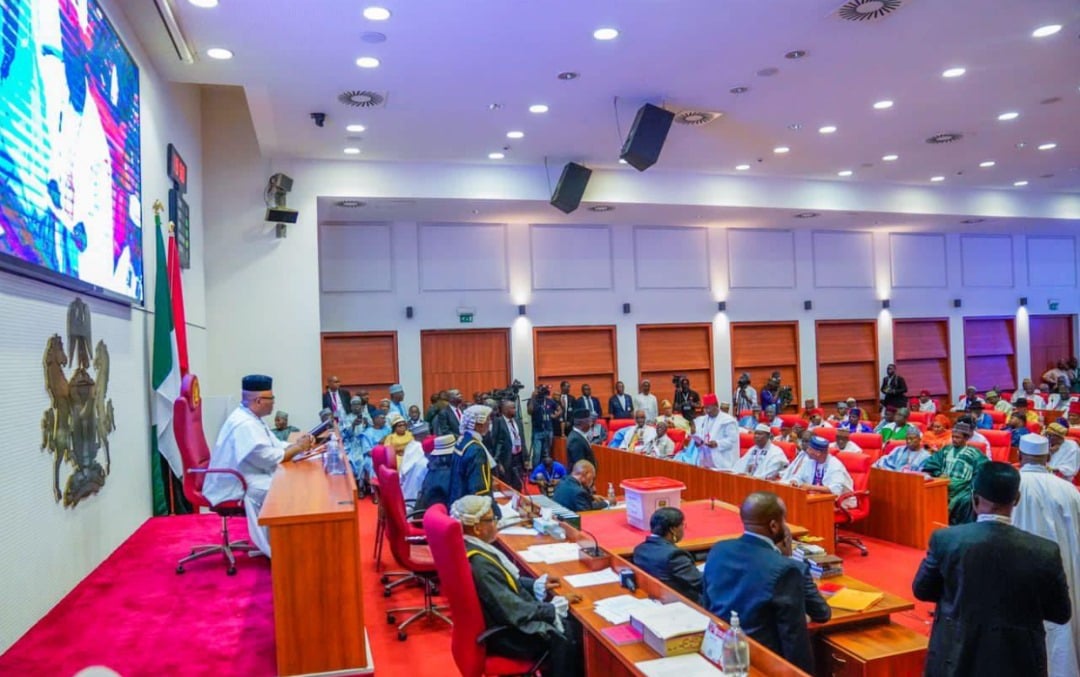
The Senate is expected to address the controversy surrounding the N1.3bn allocation to the controversial Presidential Foreign Intervention Promotion Council in the 2026 Appropriation Act as plenary resumes on Tuesday.

This is as The PUNCH gathered that a forged appointment letter bearing a falsified signature of the Chief of Staff to the President, Femi Gbajabiamila, was accepted at the Civil Service Headquarters without adequate verification, securing Prince Adeniyi Adeyemi Mathew an office at the Federal Secretariat Complex in Abuja and giving the controversial agency the appearance of government legitimacy for over a year.

Multiple sources in the Presidency and the civil service with first-hand knowledge of the scandal, who spoke to The PUNCH on condition of anonymity due to the sensitivity of ongoing proceedings, said the scandal would have been nipped in the bud save for bureaucratic safeguards that failed at multiple points in the Budget Office, the House of Representatives, and the Civil Service Headquarters.

The sources argued that the failure to properly scrutinise the appointment letter cascaded into the controversial Presidential Council ensnaring diplomatic missions, government ministries, the National Assembly and private individuals.

The PUNCH gathered that the N1.3bn controversial allocation was approved without Adeyemi or any official of the council appearing before the Senate Committee on Establishment and Public Service to defend the budget.

A National Assembly source told one of our correspondents Sunday that the entry was made through a backdoor arrangement.

“It was not brought in as a stand-alone item. It was done collectively with others that came in directly from the Presidency. So there was no defence or oversight.

“But I understand the Senate leadership will address the controversy on Tuesday to douse the growing tension and alleged complicity by any of its presiding officers,” the official said.

Meanwhile, sources in the Presidency and civil service provided a detailed account of how the fraud circumvented the bureaucratic safety checks through the undetected forgery.

“The mistake came from several areas, the House of Representatives, the Head of Service, the Budget Office. Most of them did not do due diligence. But you see where you can’t readily blame all of them is what we call grundnorm. There is a foundation. The appointment letter was fake. It was invalid.

“In government, the way it runs is that it is the President, not the Chief of Staff, who appoints. The letter of appointment is then issued by the SGF,” a Presidency source told one of our correspondents.

Explaining the constitutional process which Adeyemi’s allegedly forged letter violated, the source argued, “Everyone who has ever been appointed by this President passed through a specific process. If your parastatal is directly under the Presidency, the SGF makes a memo to the President and the President approves the memo.

“The SGF then issues you a letter of appointment. For those in ministries, he minutes it to the relevant minister, who minutes it to the Permanent Secretary, who then gives it to the appointee. With that letter, you can enter the government payroll.

“The Chief of Staff has never appointed anyone at that level. All DGs and Permanent Secretaries, their appointments are from the President.”

A highly placed civil servant who claimed to have reviewed the document after Adeyemi’s arrest explained that he (Adeyemi) exploited the bureaucratic blind spot.

“Where Adeniyi scammed everyone was that he forged a letter with the signature of the Chief of Staff, which was not even his signature because it was forged. It was not Gbajabiamila’s signature. The Chief of Staff cannot make such an appointment.

“Adeniyi took that fake letter, falsely signed by Gbajabiamila, to the civil service headquarters and said ‘please refer to my appointment letter attached.’ He arranged his terms of reference where he stated that he needed an office.

See also  Fire guts Yinka Ayefele’s Music House in Ibadan, Fresh FM affected

“The problem is, the President’s letter to the SGF or minister is not usually attached to such documentation, you are just expected to attach the appointment letter. But they were supposed to know that the Chief of Staff doesn’t appoint anyone. That was the loophole,” the official revealed.

The source further explained that said when Adeyemi was allocated an office space at the Federal Secretariat, every subsequent element of the alleged fraud became self-sustaining.

“Once you have an office there, it confers a very high level of legitimacy on you. You can meet big guests there. He had a letterhead and even a website. Once he established that office at the Federal Secretariat, every other thing followed. Nobody tried to do the needful anymore until someone raised the alarm,” said the official.

The official also confirmed that the office was locked up following Adeyemi’s initial arrest and reallocated to another official. However, he continued to operate away from the secretariat.

“The man was still running the scam after he left the secretariat, but he doesn’t use that place anymore,” the source said.

A second Presidency source said the fraud was first detected by officials of the Nigerian Investment Promotion Commission, who noticed that the fictitious council was encroaching on their statutory mandate.

“The issue first came up from the NIPC in October last year. It started like inter-agency rivalry. That was how they saw it at the time because this fake agency was now overlapping into the mandate of the NIPC. The following day, it was taken to the Chief of Staff, who said he doesn’t know the person, and then he was the one who alerted the DSS.

“At one of the meetings about this issue, the Chief of Staff swore that he has never met the man and doesn’t even know him. And that his conscience is clear. The Chief of Staff didn’t take it lightly. He followed up until Adeniyi was arraigned in court and put on bail,” the insider said.

The source acknowledged that the prosecution lost momentum after the initial arrest, saying, “You know, when no one follows the case bumper to bumper, it can become very slow at the police. It was since October last year and when it resurfaced in June, I was surprised, because I believed it had been dealt with.

The official further revealed that several civil servants had independently identified the operation as fraudulent, stating, “Many civil servants already flagged it as a scam and it was their report that was used to alert the authorities. Some even thought that the case would unravel itself.”

A third source explained how Adeyemi may have secured a budget allocation for the council despite no formal budget defence.

According to the official, “The National Assembly, the turnover of members is quite high. Many of the people who are knowledgeable about some of these things may be gone. So a new person responsible for that committee on treaties may not really know what is happening. No one is blaming all the people there. But there needed to be due diligence which wasn’t done.

“He probably knows someone in the National Assembly and told them ‘please allocate something to us too.’ So it appeared like a government organisation that had a letterhead, an office and other things.

“All of these things, especially the fake appointment letter, conferred legitimacy on him. The whole problem stemmed from that oversight. People have been asking how he found his way into the budget.”

See also  US arms NAF for terror war

The source added that Adeyemi’s bail conditions had since been violated.

“The police is supposed to pick him up again. He ran foul of his bail conditions. He was actually arraigned in court. There is a big document on him from the police,” said the official.

Meanwhile, the N1.3bn budget allocation to the PFIPC has drawn reactions from civil society organisations and opposition parties, some of whom demanded that the President’s Chief of Staff steps down.

SERAP, HEDA demand disclosure

The Socio-Economic Rights and Accountability Project, in a Freedom of Information request dated July 4, 2026, signed by Deputy Director Kolawole Oluwadare, asked Senate President Godswill Akpabio and Speaker Tajudeen Abbas to release certified copies of all documents concerning the consideration and approval of the N1,302,978,784 allocation in the 2026 Appropriation Act.

SERAP also requested records identifying members of the National Assembly committees that considered the allocation, the names and official designations of all public officers who appeared before the committees to defend the provision, and clarification on whether the allocation was in the executive’s original bill or inserted during the legislative process.

“Nigerians have a right to know whether public funds were appropriated for an entity that was not lawfully established and, if so, how this occurred. Nobody has a more sacred obligation to obey the law than those who make the law,” the organisation stated.

It warned that it would institute legal proceedings if the information was not released within seven days.

The Human and Environmental Development Agenda similarly called for a full public inquiry, with its chairman, Olanrewaju Suraju, stating: “If the Presidency maintains that the PFIPC does not exist, Nigerians deserve to know how an allocation for the council found its way into the 2026 Appropriation Act. The public has a right to know who proposed the allocation, the government institutions that processed and approved it, and whether any public funds have been released or committed.”

‘You have become the scandal itself,’ Atiku knocks Tinubu

Former Vice President Atiku Abubakar, through his SSA on Public Communication, Phrank Shaibu, intensified criticism of the Tinubu government, describing the PFIPC controversy as symptomatic of a recurring governance pattern.

Atiku said, “There is an old African saying that when a man’s roof leaks every rainy season, neighbours stop blaming the clouds and begin to question the strength of the house itself. Nigeria has sadly arrived at that point.

“The issue is no longer one scandal or another. The issue is the pattern. And when scandals become a pattern of governance, the inevitable conclusion is this: you are no longer managing scandals; you have become the scandal itself.”

He said the controversy offered President Tinubu an opportunity to demonstrate transparency by ordering an independent investigation.

“The countdown has already begun. Nigerians expect answers, not evasions. The presidency still has five days left to tell Nigerians who created this phantom organisation, who authorised its activities, and who must be held responsible. Silence cannot become the official response to a scandal of this magnitude,” he said.

PDP faction, CDHR demand probes

For its part, the Tanimu Turaki-led Peoples Democratic Party faction described the scandal as confirmation of what it called reckless governance.

It said, “If the Presidency’s account is correct that Prince Matthew is an impostor, then it means the Federal Government is so porous and vulnerable, an admission that the country has been brazenly defrauded because institutional gatekeepers entrusted with protecting our collective patrimony are either grossly incompetent or thoroughly distracted from the responsibilities of governance.”

See also  Senate vows state police law by year-end

The Committee for the Defence of Human Rights called on Gbajabiamila to voluntarily step aside pending independent investigation, with National President Yinka Folarin and National Secretary Idris Afees jointly signing the statement.

“The allegations on both sides are grave. While the Federal Government alleges forgery, impersonation, fraudulent operation of bank accounts and misrepresentation, the defendant has levelled equally weighty allegations of bribery and abuse of office against one of the country’s highest-ranking public officials. If either set of allegations is proven, it represents a serious assault on the integrity of public institutions,” the statement said.

Kwankwasiyya demands answers on budget

The Kwankwasiyya Movement, through spokesperson Dr Habibu Sale Mohammed, said the matter had gone beyond one individual.

It argued “This is no longer about one man. It has become a question of public accountability. If the council never existed, how did it find its way into the national budget? Who proposed and approved the allocation? Which government offices processed the documentation? Was any public money released or committed? If official documents were allegedly forged, how were they used for such a long period without detection?”

The Deputy Spokesman of the House of Representatives, Philip Agbese, urged Nigerians to allow the courts determine the controversy.

Agbese said, “The issue is being handled legally and I think we should all be patient. Nigerians will get to know in detail what transpired, and anything short of that at this material time will not help us.”

Senior lawyers dismiss calls to charge Gbajabiamila

Senior lawyers who spoke to The PUNCH on Sunday dismissed calls for Gbajabiamila to be charged alongside Adeyemi, saying such calls were based on sentiment rather than established facts and proper criminal procedure.

Bankole Akomolafe, SAN, founding partner at Bank-Akomolafe, SAN & Co said, “The issue of joining a person in a criminal matter, in the instant case, is not done on sentiments or emotions. Somebody is claiming that the Chief of Staff is aware of fraud.

“I do not believe that such an amount would have been transmitted by cash, that on its own would be a crime.

“So I want to assume that a transfer was made, electronic transfer. He should be able to publish the statement of account. It is not something that should be difficult to prove.”

He added, “How are we sure that the allegation is not a vendetta to say ‘I will make sure I rubbish you?’ People can allege anything. Let us see something concrete before we come to that suggestion that the person should be charged. Mere allegations are not enough.”

Another senior lawyer, Sampson Erugo, questioned why only Adeyemi had been formally charged, arguing that many others who facilitated the scheme should also be probed.

Erugo argued, “I wonder why the hurry in the trial of one person in this scandal. For there to be a budget, there is an office for the agency, and so many issues, meaning that so many people are involved. They have an office at the National Secretariat, they have accounts with the CBN. Why should they rush to charge one man? A lot of people should answer for their roles in the scam.”

Adeyemi is due to appear before the Federal High Court in Abuja on July 27, 2026, alongside two accomplices identified only as Femi and Anu who remain at large.

punch.ng

FOLLOW US ON:

FACEBOOK

TWITTER

PINTEREST

TIKTOK

YOUTUBE

LINKEDIN

Continue Reading
Click to comment

Leave a Reply

Your email address will not be published. Required fields are marked *

News

Reps probe alleged N2bn in ex-mining commander’s account, read details

Published

on

The House Committee on Solid Minerals Development has questioned the legal basis for the operations of the Mining Marshals, insisting that the unit lacked specific legislative backing to operate in its current form.

The committee, chaired by Jonathan Gbefwi, raised the concern during an investigative hearing involving the Nigeria Security and Civil Defence Corps at the National Assembly Complex, Abuja. It is probing allegations of extortion, harassment of licensed mining operators and financial impropriety.

Lawmakers are examining the unit’s funding, procurement of operational vehicles and allegations that more than N2bn was found in the account of a former state commander.

Gbefwi, a Labour Party member from Nasarawa State, said the committee was exercising its constitutional powers under Sections 88 and 89 of the 1999 Constitution, as amended, and Sections 2 to 5 of the Legislative Houses (Powers and Privileges) Act, 2017.

He faulted the NSCDC’s failure to submit requested documents despite the appearance of its Commandant-General, Ahmed Audi.

According to him, “the committee served Audi with a formal statutory demand on October 20, 2026, requiring the Corps to submit a comprehensive response under oath.”

The demand required 10 bound and paginated hard copies, alongside an identical electronic version of relevant documents, by 2 pm on November 3. However, Gbefwi said the documents had not been delivered when proceedings commenced. He stressed that Audi’s appearance did not discharge the Corps’ obligation to provide the records.

He said Audi’s responses under oath would be the NSCDC’s official position. He directed the Corps to preserve operational and financial records, including arrest registers, banking documents, vehicle registers and CCTV footage across the 36 states and the Federal Capital Territory.

Gbefwi warned that destroying, concealing, altering or backdating records, or intimidating officers and witnesses, would attract legal consequences.

“Any alteration, backdating, concealment, removal, or destruction of responsive records, or any intimidation, coaching, or retaliation against any officer or witness, constitutes a grave statutory offence under Section 14 of the Legislative Houses (Powers and Privileges) Act, 2017, and Section 19 of the NSCDC Act,” he said.

See also  Fire guts Yinka Ayefele’s Music House in Ibadan, Fresh FM affected

He also referred to a letter dated July 24, 2026, written by the Commander of the Mining Marshals, Attah Onoja, to the Speaker of the House. The letter reportedly contained allegations against a member of the House and questioned the legislature’s integrity.

Gbefwi said Audi had to clarify whether the Corps endorsed the allegations or the letter reflected Onoja’s personal position. Audi was required either to adopt the allegations with documentary evidence or formally disown the letter under oath.

The NSCDC delegation, led by Audi, defended the establishment and operations of the Mining Marshals, maintaining that the unit had a legal basis. Audi undertook to submit the requested documents. Onoja answered questions about the reported N2bn transaction involving a former state commander.

Established by the Federal Government in 2024 as a special enforcement unit within the NSCDC, the Mining Marshals were tasked with tackling illegal mining, protecting mining sites and enforcing mining regulations. Their operations have raised questions about their statutory powers, funding, and alleged harassment and extortion of licensed operators.

In another development, the House of Representatives has called for urgent repairs to failed box culverts along the East-West Road in Rivers State.

The road resolutions followed a motion by Yenagoa/Opokuma Federal Constituency member Oboku AbonsiOforji on Wednesday.

The House urged the Federal Ministry of Works to direct Rock Result Nigeria Limited to return to site and rehabilitate or reconstruct failed box culverts at Iheke in Ahoada East Local Government Area of Rivers State. It also called for an independent engineering assessment of the damaged structures.

See also  Senate vows state police law by year-end

Moving the motion, Oforji recalled that the House had, on October 3, 2023, adopted a resolution drawing attention to the deplorable condition of the Iheke section, prompting government interventions.

He commended the government for constructing culverts, approving rehabilitation funds and re-awarding the contract to Setraco Nigeria Limited.

However, he expressed concern that the culverts had deteriorated despite the financial commitments. He blamed alleged substandard execution, questioning the materials, engineering specifications, supervision and value for public funds.

Oforji said the road linked Bayelsa, Rivers and Delta states.

He said the damaged culverts could “endanger lives, disrupt the movement of people and goods, and aggravate flooding and erosion in the region if urgent remedial action was not taken.”

The motion highlighted delays in dualising the Ahoada-to-Bayelsa and Patani sections. According to Oforji, the project, “initially scheduled for completion in April 2025, was subsequently extended to November 2025 but remained unfinished as of November 25, 2026.”

The House urged the ministry to ensure Rock Result Nigeria Limited repaired the culverts and Setraco Nigeria Limited completed the dualisation works on the Ahoada-to-Bayelsa and Patani sections.

It mandated its Committee on Works and Legislative Compliance to monitor implementation and report back within four weeks for further legislative action.

Source: punchng.com

FOLLOW US ON:

FACEBOOK

WHATSAPP CHANNEL

TWITTER

PINTEREST

TIKTOK

YOUTUBE

LINKEDIN

INSTAGRAM

Continue Reading

News

Mock polls: INEC orders RECs to plug gaps

Published

on

The Independent National Electoral Commission (INEC) has directed Resident Electoral Commissioners across the 36 states and the Federal Capital Territory to address all identified operational and logistical shortcomings ahead of Saturday’s nationwide mock accreditation and result transmission exercise.

The INEC Chairman, Prof. Joash Amupitan, gave the directive on Wednesday in Abuja at a strategic consultative meeting with RECs, warning that the commission could not afford operational failures as preparations intensified for the 2027 general elections.

Amupitan said the mock exercise scheduled for November 28 would serve as a critical test of the commission’s upgraded Bimodal Voter Accreditation System devices, logistics arrangements and automated result validation safeguards on the INEC Result Viewing Portal.

He directed the RECs to personally supervise preparations in their respective states, monitor the exercise and submit comprehensive technical reports to the commission’s headquarters by November 30.

The INEC chairman said the reports must identify network failures, device anomalies and procedural bottlenecks requiring urgent intervention before the general elections.

“Every single operational bottleneck, communication gap, or logistical friction point identified during our recent off-cycle reviews must be permanently closed before Saturday’s nationwide simulation and well ahead of January 16,” he said.

He warned that the commission had no room for administrative lapses, noting that the 2027 elections would involve more than 100 million registered voters, 57,000 newly procured BVAS devices and over 1.41 million ad hoc personnel.

“Margin for error simply does not exist,” Amupitan declared.

The chairman disclosed that the presidential and National Assembly elections would hold on January 16, 2027, while the governorship and state Houses of Assembly elections were scheduled for February 6.

See also  Senate vows state police law by year-end

He said the commission was working with a verified register of more than 100 million voters following three phases of Continuous Voter Registration, which added over 10.77 million registrants, and an audit that removed more than 1.6 million invalid, duplicate or deceased records.

Amupitan also disclosed that the register included 232,658 Persons With Disabilities, whose participation, he said, required accessible polling arrangements and appropriate assistive materials.

He identified six operational priorities requiring immediate attention from the RECs, including the successful conduct of Saturday’s mock exercise, last-mile logistics, BVAS deployment, election security, recruitment and welfare of ad hoc personnel, and the prevention of disinformation and partisan interference.

On logistics, the INEC chairman warned that delays in opening polling units could undermine public confidence and trigger unnecessary tension on election day.

“Delayed openings breed suspicion, anxiety, and avoidable tension,” he said.

He directed the RECs to review transportation arrangements with the National Union of Road Transport Workers, marine operators and aviation partners, while ensuring that Registration Area Centres were physically ready and secured.

He also ordered strict tracking of sensitive and non-sensitive election materials from state warehouses to polling units and their eventual return through collation centres.

On the deployment of BVAS, Amupitan said the commission had reduced the voter threshold per device from 1,250 to 850 to prevent overcrowding, long queues and accreditation delays.

He explained that multiple devices would be deployed to polling units with more than 850 registered voters.

The chairman also said the commission had constructed climate-controlled storage facilities across the states to protect the newly acquired devices from extreme temperatures.

See also  Female soldier, children, others injured in Nasarawa grenade explosion — Report

On election security, he called for stronger collaboration between the RECs, state commissioners of police, directors of the Department of State Services, the Nigeria Security and Civil Defence Corps and other security agencies.

He said the commission would activate its decentralised Inter-Agency Consultative Committee on Election Security structures down to local government and ward levels, supported by Election Risk Management maps to identify potential flashpoints.

Amupitan further directed the RECs to ensure the early resolution of disputes over political rally venues and timings in line with Section 95(4) of the Electoral Act 2026.

He warned that the commission would not tolerate partisan conduct by its personnel, stressing that institutional neutrality was essential to credible elections.

“Equally vital, enforce uncompromising institutional neutrality across every level of your state workforce.

“Under the Electoral Act 2026—including the deterrence provisions of Sections 96, 97, and 148—the Commission will not shield any staff member or official who compromises neutrality, facilitates malpractice, or breaches statutory rules,” he told the electoral commissioners.

The INEC chairman also stressed the need for adequate training and timely payment of allowances to the more than 1.41 million ad hoc personnel expected to participate in the elections.

He identified National Youth Service Corps members, university vice-chancellors, academics serving as returning and collation officers, and career civil servants among the personnel who would support the electoral process.

Amupitan urged the RECs to maintain regular engagement with political parties, election observers, civil society organisations and the media to prevent information gaps that could fuel misinformation and disinformation.

See also  US arms NAF for terror war

“The Nigerian people are not asking us for excuses or explanations after the fact; they are asking for competence, impartiality, transparency, and courage in the execution of our constitutional mandate,” he said.

He charged the RECs to personally supervise field preparations rather than rely solely on reports from subordinate officers, urging them to communicate operational challenges promptly to the commission’s headquarters.

“As Resident Electoral Commissioners, your leadership sets the ethical and operational tone in your respective states. Stay close to your Electoral Officers, supervise field audits personally rather than relying solely on secondhand assurances, and report realities on the ground with complete candour so Headquarters can support you swiftly,” he said.

Source: punchng.com

FOLLOW US ON:

FACEBOOK

WHATSAPP CHANNEL

TWITTER

PINTEREST

TIKTOK

YOUTUBE

LINKEDIN

INSTAGRAM

Continue Reading

News

El-Rufai backtracks on Ribadu phone-tapping claim, read details

Published

on

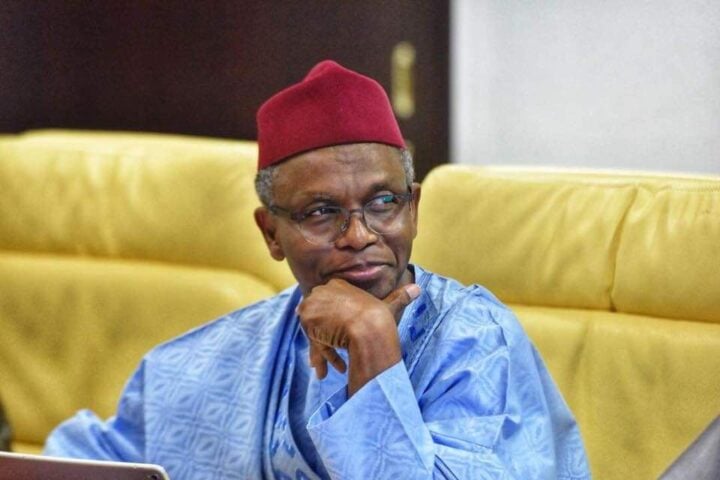
Detained former Kaduna State Governor, Nasir El-Rufai, on Wednesday told the Federal High Court in Abuja that his claim that the telephone of the National Security Adviser, Nuhu Ribadu, was tapped was false, saying he made the statement to scare the government and make its officials uncomfortable.

El-Rufai, who made the admission before the trial judge, Justice Joyce Abdulmalik, described the claim as political rhetoric rather than a factual statement, insisting that neither he nor other opposition figures intercepted Ribadu’s telephone conversations.

The former governor spoke while testifying as the first defence witness in his ongoing prosecution by the Department of State Services over allegations that he intercepted the NSA’s telephone conversations, among other offences.

El-Rufai, who governed Kaduna State between 2015 and 2023, is facing trial over comments he made during an appearance on Arise Television’s Prime Time programme on February 13.

According to court documents, El-Rufai allegedly admitted during the interview that he knew and was associated with an individual who had illegally intercepted the NSA’s telephone communications.

The former Minister of the Federal Capital Territory, who served under former President Olusegun Obasanjo, is accused of breaching national security and public safety through his actions, an offence punishable under Section 12(1) of the Cybercrimes (Prohibition, Prevention, etc.) (Amendment) Act, 2024. He was also charged with failing to report the alleged crime to the relevant security agencies.

During the television interview, El-Rufai had alleged that DSS operatives attempted to abduct him at the Nnamdi Azikiwe International Airport, Abuja, on February 12, 2026, upon his return from Cairo.

He further alleged that the security agency was acting on the instigation of the Independent Corrupt Practices and Other Related Offences Commission, which he claimed had received a directive from Ribadu to detain him.

See also  Female soldier, children, others injured in Nasarawa grenade explosion — Report

The court had, on October 26, ordered the former governor to open his defence to the allegations after dismissing his no-case submission seeking to be discharged and acquitted of the charges.

Justice Abdulmalik held that the application lacked merit and declined to terminate the trial.

At the continuation of proceedings on Wednesday, El-Rufai’s lawyer, Paul Erokoro (SAN), played a recording of the interview his client granted Arise TV on February 13, in which he claimed that someone tapped Ribadu’s phone and relayed his conversations to him and other opposition figures.

After listening to the recording, Erokoro asked his client to clarify what he meant by the statement.

Responding, El-Rufai acknowledged making the claim but said it was not intended to be understood literally.

He explained that his intention was to draw attention to what he described as the government’s surveillance of opposition figures and other prominent Nigerians, including former presidents and senior judges.

El-Rufai said, “What I wanted to say was that the government was monitoring opposition figures and that we knew what they were doing.

“I used the word ‘tap’ as political rhetoric to make them uncomfortable. It was rhetorical, not literal. It was linguistic flourish, just to make the government uncomfortable.”

When reminded by Erokoro that the interviewer had told him that tapping someone’s phone was illegal, the former governor said he intended to expose what he described as the government’s secret monitoring of opposition figures without lawful court orders.

He said, “I was referring to the government violating the law and not someone else doing it.”

Asked who he meant by “we” when he claimed that “we are listening to their conversations…”, El-Rufai said he was referring to himself and other prominent opposition figures.

He, however, denied that they tapped Ribadu’s phone, explaining that he learnt of an alleged plan to abduct and detain him through a mutual friend.

See also  US arms NAF for terror war

The former governor declined to disclose the identity of the person, saying he did not want to jeopardise the interest of his source.

He told the court that after returning home from the television interview, the said friend visited him and clarified that he had not tapped the NSA’s phone.

According to El-Rufai, he told the person that he already knew but had deliberately made the claim to make government officials uncomfortable.

Earlier in his testimony, the former governor said he had known Ribadu since 2003, when he, as head of the Bureau of Public Enterprises, assisted him in establishing the Economic and Financial Crimes Commission by providing office accommodation and funding.

He attributed the breakdown in their relationship to the 2011 presidential election, when Ribadu contested for the presidency, and he supported the late former President Muhammadu Buhari, whom he considered a better candidate.

El-Rufai further alleged that the NSA was opposed to him because of his opposition to President Bola Tinubu’s re-election bid.

He denied involvement in telephone interception, insisting that he neither possessed the knowledge nor the equipment required to tap phone conversations.

However, during cross-examination by the prosecuting counsel, Oluwole Aladedoye (SAN), El-Rufai, who said he obtained a law degree from the University of London, maintained that he would not disclose the identities of those he referred to as “we” in the television interview.

He also refused to name the person who allegedly informed him that Ribadu, Kaduna State Governor, Uba Sani, and the ICPC chairman had met and agreed to ensure his arrest.

See also  NYSC announces schedule for 2026 Batch ‘A’ Stream II orientation

The former governor said he learnt of the alleged plan before returning from Cairo on February 12. He explained that he resisted attempts by DSS operatives to arrest him at the airport upon his arrival because they failed to produce a valid arrest warrant.

El-Rufai also maintained that his claims during the Arise TV interview that he had never stolen public funds and knew nothing about the disappearance of activist Dadiyata while he was governor of Kaduna State were factual.

He insisted that all other statements he made during the interview were true, except the claim relating to the tapping of Ribadu’s phone.

The former governor, who said he instituted fundamental rights suits over the alleged search of his residence with a defective warrant, admitted that the cases had been dismissed by both the High Court of the Federal Capital Territory and the Federal High Court.

Towards the end of the cross-examination, Aladedoye informed the court that Erokoro had approached him before the commencement of proceedings to seek his assistance in the defence’s plan to invite Ribadu and the ICPC chairman as witnesses.

The prosecuting counsel said he declined the request, explaining that the matter was beyond his control.

Erokoro, however, said he would file the necessary applications to secure their attendance.

Justice Abdulmalik subsequently adjourned the case until February 15 and 16 for the continuation of El-Rufai’s defence.

Source: punchng.com

FOLLOW US ON:

FACEBOOK

WHATSAPP CHANNEL

TWITTER

PINTEREST

TIKTOK

YOUTUBE

LINKEDIN

INSTAGRAM

Continue Reading

Trending