Connect with us

Education

FG declares admissions outside CAPS illegal, warns institutions of sanctions

Published

on

The Federal Government has declared that any admission conducted outside the Central Admissions Processing System (CAPS) is illegal, warning tertiary institutions across the country that violations of approved admission procedures will attract sanctions.

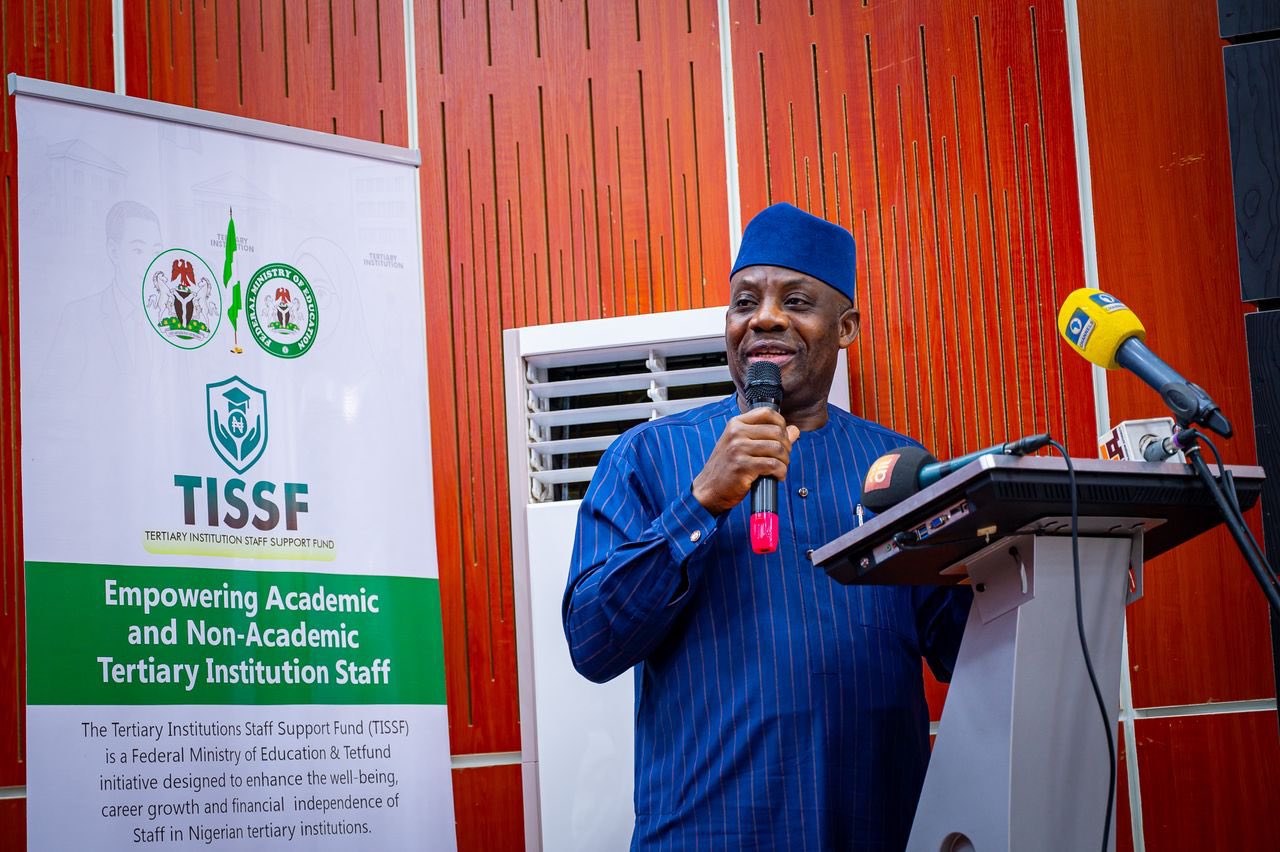
The Minister of Education, Maruf Alausa, issued the warning on Monday at the 2026 Policy Meeting on Admissions to Tertiary Institutions held in Abuja, stressing that institutions operating parallel admission processes would no longer be recognised by the government.

He said the integrity of the admissions system remained central to restoring trust in Nigeria’s tertiary education framework, adding that the era of unregulated practices must end.

“Let me reiterate, without equivocation, that admissions conducted outside this framework are illegal and will not be recognised,” Alausa said.

He warned that institutions that continued to bypass the Joint Admissions and Matriculation Board’s CAPS platform risked severe consequences.

“The era in which institutions operated parallel admission systems, often to the detriment of deserving candidates, must come to an end,” he added.

The minister further cautioned that the Federal Government would not tolerate any breach of admission regulations, noting that erring institutions would be held accountable.

“I have resisted many attempts at condoning illegality in the admissions process. I will not be a party to such actions.

“Any institution found to have conducted admissions outside the CAPS will be held accountable, and appropriate sanctions shall be applied without hesitation,” he stated.

According to him, heads of institutions in both public and private sectors must be aware that such breaches could attract serious penalties, including regulatory action.

See also  I studied for eight hours daily to score 372 – UTME candidate, Daniella Owoeye

“Heads of institutions, whether in the public or private sector, must recognise that such violations could result in severe consequences, including the suspension of operating licences or other regulatory actions, where applicable,” Alausa warned.

He emphasised that enforcement of the policy was not intended to be punitive but necessary to restore credibility and order in the system.

“Government will continue to enforce compliance with this policy, and appropriate sanctions will be applied where necessary. This is not a punitive measure; it is a necessary step towards restoring order and credibility in the system,” he said.

On admission age, the minister announced that the Federal Government had retained 16 years as the minimum age for entry into tertiary institutions.

“Following extensive consultations and policy reviews, the government has maintained sixteen (16) years as the minimum age for admission into tertiary institutions,” he said.

He explained that the decision reflected a balance between academic readiness and inclusivity, while noting that exceptional cases would be handled under strict guidelines.

“While we recognise the existence of exceptionally gifted individuals, such cases must be treated within clearly defined and rigorously enforced guidelines,” he added.

Alausa also commended JAMB for improving access for persons with disabilities, including waivers of application fees, describing the initiative as a step toward equity.

“This initiative is not only humane but also a powerful affirmation of our national commitment to equity and equal opportunity,” he said.

He further highlighted reforms in the education sector, including the implementation of the Nigerian Education Loan Fund to remove financial barriers to higher education.

See also  Education minister retracts claim, confirms 2009 FGN-ASUU agreement still valid

“For decades, financial constraints have constituted a significant barrier for many capable young Nigerians,” he noted.

He said the interest-free loan scheme covering tuition and upkeep was a strategic investment in national development.

On transparency, he insisted that tertiary institutions must publish key operational data, including enrolment figures and financial allocations, to strengthen accountability.

Public universities, polytechnics, and colleges of education must operate with openness that reflects their public mandate,” he said.

Alausa also underscored the government’s push for digitalisation in education, including the adoption of computer-based testing and integration of emerging technologies in curricula.

He described the 2025 agreement with the Academic Staff Union of Universities (ASUU) as a turning point, aimed at improving welfare, funding, and institutional stability.

“The 2025 Agreement represents a decisive breakthrough in resolving a dispute that had persisted for many years,” he said.

He added that the reforms were designed to ensure uninterrupted academic calendars and restore confidence in public universities.

The minister also warned against examination malpractice, saying stricter verification systems were being introduced to protect the credibility of certificates.

“The credibility of our certificates depends on the integrity of the processes through which they are earned,” he said.

Alausa urged stakeholders to prioritise implementation over policy announcements, stressing that reforms would only succeed through execution.

“For too long, our sector has been characterised by well-articulated policies that fail to translate into tangible outcomes,” he said.

He called on participants at the policy meeting to uphold integrity, noting that the future of millions of Nigerian students depended on fair and efficient admissions processes.

See also  Honorary awards: TASUED dismisses claims of snubbing Gbenga Daniel

“The decisions we take here will have far-reaching implications for millions of young Nigerians,” he said.

The minister reiterated the government’s commitment to building a tertiary education system that is inclusive, merit-driven, and globally competitive, before formally declaring the meeting open.

punch.ng

FOLLOW US ON:

FACEBOOK

TWITTER

PINTEREST

TIKTOK

YOUTUBE

LINKEDIN

INSTAGRAM

Continue Reading
Click to comment

Leave a Reply

Your email address will not be published. Required fields are marked *

Education

OAU has fulfilled founding fathers’ vision, says TETFund boss

Published

on

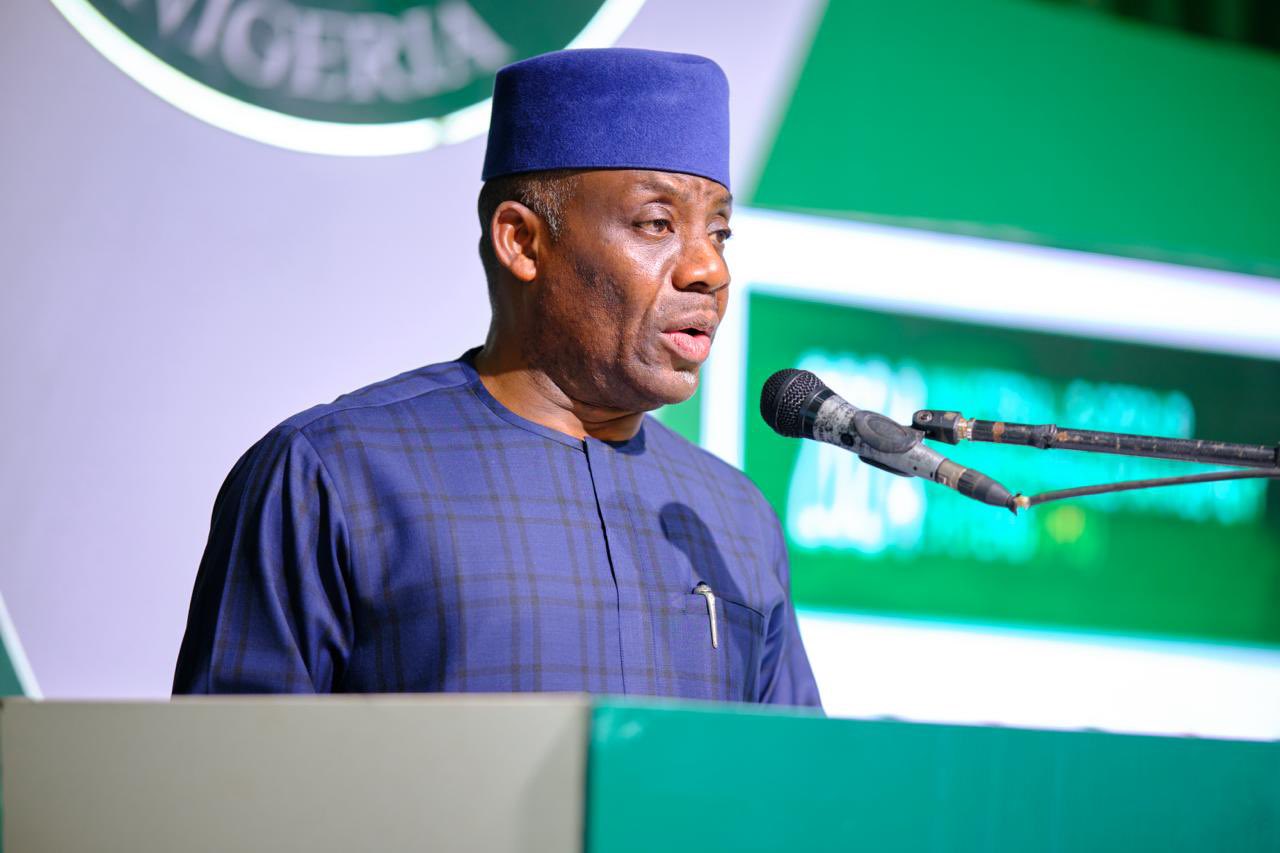
The executive secretary, Tertiary Education Trust Fund, Sonny Echono, has said the Obafemi Awolowo University (OAU), Ile-Ife, Osun State, has lived to the ideals of its founding fathers, breeding experts in various fields of human endeavors.

Echono, while delivering a lecture to mark the 65th anniversary of Obafemi Awolowo University, Ile-Ife, Osun State, also said investment in research and innovation systems will generate practical solutions suited to local realities.

The TETFUND boss, in the copy of the paper obtained in Osogbo on Friday, paid glowing tributes to the pioneer and successive Vice Chancellors of the university for sustaining the legacies of the university’s founding fathers.

“The Great Ife has remained a symbol of commitment and purposeful leadership. Expectedly, the university has lived to the ideals of its founding fathers as the breeding ground for erudite scholars, legal luminaries, successful businessmen, diplomats, accomplished technocrats and administrators, including its legion of Nigerian National Merit Award Winners, who are contributing to national development, and have continued to uphold the reputation of the university,” he said.

Speaking on the concept of research and innovation, Echono noted that research and innovation remain key drivers of national development, saying nations that have achieved sustained economic growth and technological advancement have done so through deliberate investment in knowledge generation, scientific inquiry, and practical innovation.

He added that in present day global economy, development does not depend on natural resources, but on the capacity to create, apply, and commercialize knowledge.

“Research and innovation remain key drivers of national development. Nations that have achieved sustained economic growth and technological advancement have done so through deliberate investment in knowledge generation, scientific inquiry, and practical innovation.

See also  Okpebholo to revive teaching of Edo languages in schools

“In today’s global economy, development does not depend on natural resources but on the capacity to create, apply, and commercialize knowledge. Nigeria’s developmental challenges, though significant, also present opportunities for innovation-driven transformation.

“Addressing issues such as unemployment, insecurity, hunger, healthcare limitations, industrial underdevelopment, and technological dependence requires sustained investment in research and innovation systems that generate practical solutions suited to local realities,” Echono said.

Commending President Bola Tinubu for focusing on research and innovation that can provide solutions to challenges peculiar to the country and her people, Echono also stressed that building a fully functional and innovation-driven economy requires deliberate efforts to address issues of funding constraints, insufficient infrastructure, inadequate motivation, limited academia-industry collaboration, and challenges in commercialising research outputs.

He emphasised that the role of TETFund in enhancing the capacity of tertiary institutions in the country for research and development through its interventions activities has become increasingly strategic for strengthening Nigeria’s research and innovation ecosystem.

He further said that by supporting research funding, academic capacity development, innovation hubs, commercialisation initiatives, and entrepreneurship programmes, TETFund has been repositioning institutions in the country as active contributors to national development.

He declared that Nigeria’s “Sustainable development largely depends on how effective we are at leveraging knowledge, innovation, and technology to grow national economy, expand opportunities, create jobs and wealth, develop new products and services and improve the well-being of its people. This is essential for national growth, competitiveness, and long-term stability.”

Earlier, the Vice Chancellor of the university, Prof Simeon Bamire, said the institution has been recording steady growth since it’s establishment about 65 years ago and commanded the sacrifices and commitment of staff members and students towards sustaining legacies of excellence OAU is reputed for.

See also  FG, Germany chamber of commerce partner to train, export graduates

The PUNCH reports that Bamire announced plans to unveil the N10bn President Bola Ahmed Tinubu Centre of Excellence in Intercultural Dialogue and Youth Empowerment on June 8 as part of activities marking the institution’s 65th anniversary.

Bamire said the centre was designed to serve as a platform for research, dialogue, leadership development, innovation and youth empowerment.

punch.ng

FOLLOW US ON:

FACEBOOK

TWITTER

PINTEREST

TIKTOK

YOUTUBE

LINKEDIN

INSTAGRAM

Continue Reading

Education

UNIPORT names ex-Rivers health commissioner new vice-chancellor

Published

on

The University of Port Harcourt has approved the appointment of Professor Princewill Chike as the 10th Vice Chancellor of the institution.

Chike was the Rivers State Commissioner for Health during the administration of Governor Nyesom Wike.

He will succeed the outgoing Vice Chancellor, Prof. Owunari Georgewill, whose tenure will elapse on July 13.

Georgewill, who is the 9th VC of UNIPORT, will preside over his last convocation ceremony scheduled for Friday, June 5 and Saturday, June 6, 2026.

The university, in a statement issued in Port Harcourt on Thursday, said Chike’s appointment was approved by the institution’s governing council following a selection process.

The statement titled ‘University of Port Harcourt Appoints Professor Princewill R. Chike as 10th Vice-Chancellor was signed by the Public Relations Officer of UNIPORT,  Dr  Sam Kpenu.

The statement reads, “The Governing Council of the University of Port Harcourt has approved the appointment of Professor Princewill R. Chike as the 10th Vice-Chancellor of the University.

“The appointment was made by the 17th Governing Council following the successful conclusion of the selection process.

“The process was conducted in strict compliance with the provisions of the Universities (Miscellaneous Provisions) Act and the University of Port Harcourt Act.

“It involved the constitution of a Search Team and a Joint Council-Senate Selection Board, which carried out their responsibilities in accordance with the extant laws and regulations governing the appointment of Vice-Chancellors in Nigerian universities.

“The Pro-Chancellor and Chairman of the Governing Council, Senator Mao Ohuabunwa, congratulated Professor Chike on his appointment and expressed confidence in his ability to provide visionary leadership for the continued growth and development of the university.

See also  Okpebholo to revive teaching of Edo languages in schools

“Professor Princewill R. Chike is expected to formally assume office as the 10th Vice-Chancellor of the University of Port Harcourt on 13 July 2026.”

Continue Reading

Education

ASUP gives 21-day ultimatum to poly over poor welfare

Published

on

The Academic Staff Union of Polytechnics (ASUP), Federal Polytechnic Ngodo-Isuochi chapter, Abia State, has issued a 21-day ultimatum to the institution’s management over alleged non-implementation of staff welfare demands and breach of statutory obligations.

The ultimatum was contained in a letter addressed to the Rector Dr. Pdi Ndubuisi, dated May 26, 2026, which was jointly signed by the ASUP chairman in the institution, Mr Ador Osundu; and secretary, Mr Onyeneke Arrhenius.

In the letter sighted on Monday, the union’s executive stated that repeated efforts through dialogue, congresses, and official correspondence to draw the attention of the institution’s management had failed to yield action, creating “industrial tension, eroding trust, and threatening the stability of the institution”.

ASUP warned that failure to resolve the issues within 21 days would compel it to activate “all lawful trade union mechanisms, including industrial action”.

The body added that the ultimatum, adopted at the union’s congress on May 22, 2026, takes effect from the date of receipt of the letter (May 26).

ASUP listed six unresolved issues, citing violations of Nigerian labour, health, and anti-corruption laws.

The union accused management of failing to invite the National Housing Fund (NHF) officials for staff sensitisation and enrolment in violation of the National Housing Fund Act, which mandates employer cooperation in deductions and remittances.

Management was also faulted for not facilitating the National Health Insurance (NHIA) enrolment for staff, denying access to affordable healthcare guaranteed under the National Health Insurance Authority Act 2022 and the National Health Act 2014.

ASUP equally raised concerns over alleged diversion of funds approved for a borehole project into a personal account.

See also  Education, agriculture candidates now exempted from UTME, says JAMB

“We call for an independent audit of the project fund, failure to do that will force us to petition the Independent Corrupt Practice Commission and the Economic and Financial Crimes Commission,” the lecturers stated.

The union decried what it called a chronic shortage of essential drugs and medical supplies at the health centre, describing it as a failure of the institution’s duty of care. It demanded immediate restocking and engagement of competent medical personnel.

The union expressed dissatisfaction over management’s failure to remit deducted check-off dues from February 2026 till date, calling it a violation of the Trade Unions Act and Section 40 of the 1999 Constitution.

“The union remains open to negotiation until the ultimatum expires, should management invite its leadership for talks.

“As we await management’s action, ASUP reaffirms its commitment to industrial peace, staff welfare, and institutional progress,” the letter stated.

When contacted the Public Relations Officer of the Polytechnic Dr Mrs Anukaenyi Blessing, said she cannot comment on the petition because she is not a member of the management board of Institutions.

punch.ng

FOLLOW US ON:

FACEBOOK

TWITTER

PINTEREST

TIKTOK

YOUTUBE

LINKEDIN

INSTAGRAM

Continue Reading

Trending