Connect with us

News

Nigeria receives $187.3m as United States reviews aid conditions

Published

on

The United States has disbursed a total of $187,352,312 in foreign assistance to Nigeria in 2026, according to updated data published on the US Department of State website on May 20, 2026, under the ‘US Foreign Assistance’ report.

According to the data, Nigeria emerged as the second-largest recipient of US assistance in sub-Saharan Africa during the period, behind Ethiopia.

The bulk of the funding was implemented through the US Agency for International Development, which accounted for $186,715,308 of the total disbursement.

It was followed by the Department of State with $370,210, the Department of Defence with $240,146, the Department of the Interior with $16,456, the Department of Agriculture with $10,042, and the Department of Transportation with $150.

Several agencies recorded no disbursements for the period. These include the Millennium Challenge Corporation, Department of Health and Human Services, Trade and Development Agency, African Development Foundation, Department of the Treasury, Department of Justice, Department of Labor, Department of Commerce, Department of Energy, Department of Homeland Security, the Peace Corps, Environmental Protection Agency, the US Army, the US Navy, the US Air Force, the Inter-American Foundation, and its International Development Finance Corporation.

The disclosure comes at a time when US lawmakers are weighing tighter conditions for future assistance to Nigeria.

Last month, the US House Appropriations Committee advanced provisions in the proposed 2027 appropriations bill that would impose stricter oversight on funding to the country.

Under the proposal, up to 50 per cent of US assistance to Nigeria could be withheld until the Secretary of State certifies that the Federal Government is taking effective steps to address insecurity, protect vulnerable populations, and ensure accountability for perpetrators of violence.

See also  Senate confirms Amupitan as INEC chairman

The bill also introduces cost-sharing requirements and links future funding to progress in counterterrorism efforts, human rights protections, and humanitarian response.

The measure still requires approval by the full US Congress and the President before it can become law, but it reflects growing concern among US lawmakers over ongoing violence in Nigeria, particularly attacks affecting Christian communities.

The Federal Government has consistently rejected allegations of religious persecution, maintaining that insecurity in the country affects citizens across all faiths, while reaffirming continued cooperation with the US on security reforms.

Continue Reading
Click to comment

Leave a Reply

Your email address will not be published. Required fields are marked *

News

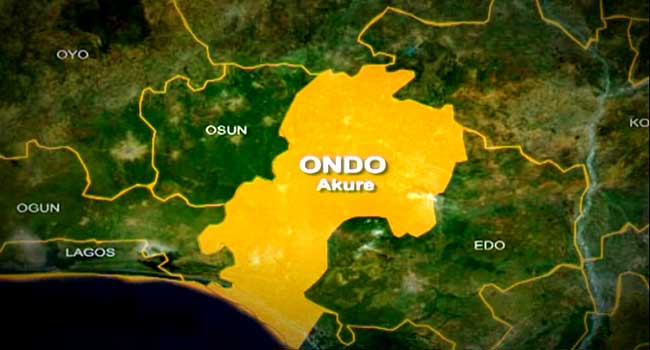
Aiyedatiwa orders river fumigation, health kits for residents after Ondo plane crash

Published

on

Ondo State Governor, Lucky Aiyedatiwa, has ordered the fumigation of the Igbokoda River and the distribution of nose masks and other health kits to residents following complaints about the offensive stench from the site of last week’s Nigerian Air Force aircraft crash.

The directive followed growing concerns over possible environmental pollution and health risks as recovery operations continue at the crash site in Igbokoda, headquarters of Ilaje Local Government Area of the state.

In a statement on Wednesday, signed by the state Commissioner for Information and Orientation, Idowu Ajanaku, the governor directed the Ministries of Environment and Health to begin extensive fumigation of the river to prevent a possible outbreak of diseases.

The statement read, “Following complaints by residents of Igbokoda over the strong stench emanating from the river where the Nigerian Air Force aircraft crashed last week, Ondo State Governor, Hon. Lucky Orimisan Aiyedatiwa, has directed the Ministries of Environment and Health to commence extensive fumigation of the river.”

It added that the intervention was necessary because the river served as a major source of livelihood for residents of Igbokoda and neighbouring communities.

Aiyedatiwa also directed the Ilaje Local Government Area to arrange water tankers to supply potable water to residents if the river was found to be severely polluted and unsuitable for use.

“The arrangement is to remain in place pending a lasting intervention to address the pollution,” the statement added.

The governor further directed the Ministries of Health and Environment to distribute nose masks and other essential health kits to residents to protect them from potential health hazards.

The statement said, “The governor reiterated the state government’s commitment to providing all necessary support to the Nigerian Air Force in its ongoing evacuation efforts, as well as ensuring the welfare and safety of residents of the affected community.”

See also  ''Act of National disgrace'- Omoyele Sowore reacts to DSS letter to X demanding the deactivation of his account

PUNCH Online reports that the crash occurred on October 5, when a Nigerian Air Force ATR-42 aircraft, registration number NAF 931, crashed into a swampy area of Igbokoda during a routine mission from Benin City, Edo State, to Lagos. The incident claimed the lives of all 25 people on board, comprising five crew members and 20 passengers.

Nine days after the incident, the recovery of the victims’ remains and the aircraft wreckage remained a major concern, with residents reporting an increasingly offensive smell from the river.

The Igbokoda monarch, Oba Afolabi Odidiomo, had called on the Federal and Ondo State governments to expedite recovery efforts and address suspected contamination from decomposing human remains and spilt aviation fuel.

The recovery operation has been complicated by the swampy terrain and the aircraft’s submersion in the water. Following the crash, the state government deployed amphibious swamp machines to support the Nigerian Navy, Air Force, emergency response agencies and local divers in accessing the site and retrieving the wreckage and victims’ remains.

The Nigerian Air Force has also intensified search and recovery efforts and constituted a 12-member board of inquiry to investigate the circumstances surrounding the crash. The Federal Government had earlier ordered an investigation into the incident.

Source: punchng.com

FOLLOW US ON:

FACEBOOK

TWITTER

PINTEREST

TIKTOK

YOUTUBE

LINKEDIN

INSTAGRAM

Continue Reading

News

Nuhu Ribadu reveals terrorists deploy AI, crypto to evade security agencies

Published

on

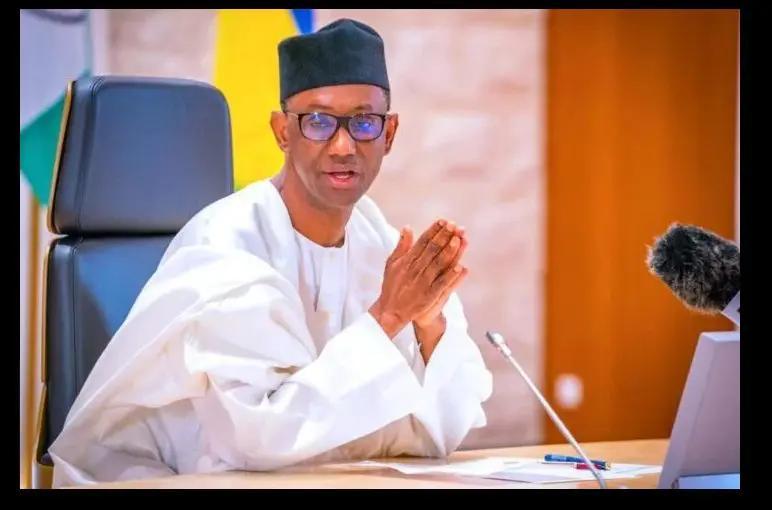
The National Security Adviser, Nuhu Ribadu, and the African Union Counter-Terrorism Centre have warned that terrorist groups are increasingly exploiting social media, cryptocurrencies and emerging technologies to recruit members, conceal funds and coordinate attacks across West Africa and the Sahel.

They raised the alarm in Abuja on Tuesday at a three-day regional training conference on detecting and disrupting terrorists’ exploitation of information and communication technologies and emerging technologies.

Ribadu, represented by the National Coordinator of the National Counter Terrorism Centre, Maj Gen Adamu Laka, said terrorist groups were using digital platforms to spread propaganda, radicalise potential recruits, raise funds and coordinate operations across borders.

He warned that the growing use of artificial intelligence, drones and virtual assets had added new dimensions to the security challenges facing Nigeria and other countries in the region.

“Emerging technologies add further complexity: Artificial Intelligence can rapidly produce personalised content; drones and autonomous systems can expand operational capabilities; and virtual assets can create new financing channels. We must, therefore, strengthen our ability to anticipate, detect, analyse and disrupt threats before they materialise,” he said.

Ribadu said the response required more than acquiring sophisticated equipment, stressing the need to develop technical expertise, strengthen institutions and improve cooperation among security agencies.

The NSA also called for increased cross-border intelligence sharing and the timely exchange of actionable cyber threat information among West African and Sahelian countries.

“Nigeria recognises that no institution, country or sector can defeat terrorism alone,” he said.

The former Economic and Financial Crimes Commission chairman added that Nigeria was working with the African Union Counter-Terrorism Centre to secure accreditation for the National Counter Terrorism Centre as a regional centre of excellence for counterterrorism in West Africa and the Sahel.

See also  Senate confirms Amupitan as INEC chairman

He said the initiative followed President Bola Tinubu’s declaration at the High-Level Africa Counterterrorism Summit held in April 2024.

Also speaking, the Acting Director of the AU Counter-Terrorism Centre, Idriss Lalalli, said terrorist organisations, including the Islamic State West Africa Province, Boko Haram and Jama’at Nusrat al-Islam wal-Muslimin, were expanding their activities through digital technologies.

He said, “Across West Africa and the Sahel today, ISWAP, Boko Haram and JNIM are extending their reach through technology. They recruit on social media platforms, move and conceal funds via mobile money, gift cards and cryptocurrencies.

“They buy weapons on darknet marketplaces, communicate over satellite links beyond our networks, and fly drones across borders, using artificial intelligence to tailor propaganda and evade detection.”

Lalalli warned that the speed and relatively low cost of using digital tools had enabled terrorist cells to reach wider audiences and move faster than security agencies could respond.

“What makes this difficult is speed and cost. A cell with a modest budget can now reach audiences far beyond its physical presence and move faster than our procedures can respond. The capability to counter it remains thinly and unevenly distributed across our member states,” he said.

The director, however, said the capacity gap could be addressed through specialised training, regional coordination and stronger collaboration with private-sector operators.

Lalalli said the programme would equip participants with skills in cyber threat intelligence, open-source intelligence, digital forensics and blockchain analysis to help them track online recruitment networks, preserve digital evidence and trace cryptocurrency transactions.

He stressed that the different areas of training needed to work together to support investigations and prosecutions.

See also  NOA - Police make 1,950 arrests, EFCC secures 588 convictions in August

The AU official also called for stronger partnerships with social media companies, telecommunications operators and financial service providers, noting that much of the infrastructure exploited by terrorist groups was privately owned.

“You leave as this continent’s first cohort of trainers in this domain. You will leave here not just carrying home a certificate, but a responsibility. The Centre will stand behind you. But the multiplier is you,” he said.

The three-day conference brought together participants from West Africa and the Sahel, alongside representatives of the African Union, the Economic Community of West African States, the Multinational Joint Task Force, regional intelligence structures and international organisations.

Source: punchng.com

FOLLOW US ON:

FACEBOOK

TWITTER

PINTEREST

TIKTOK

YOUTUBE

LINKEDIN

INSTAGRAM

Continue Reading

News

Tinubu transmits NDLEA, NSIB amendment bills to Senate

Published

on

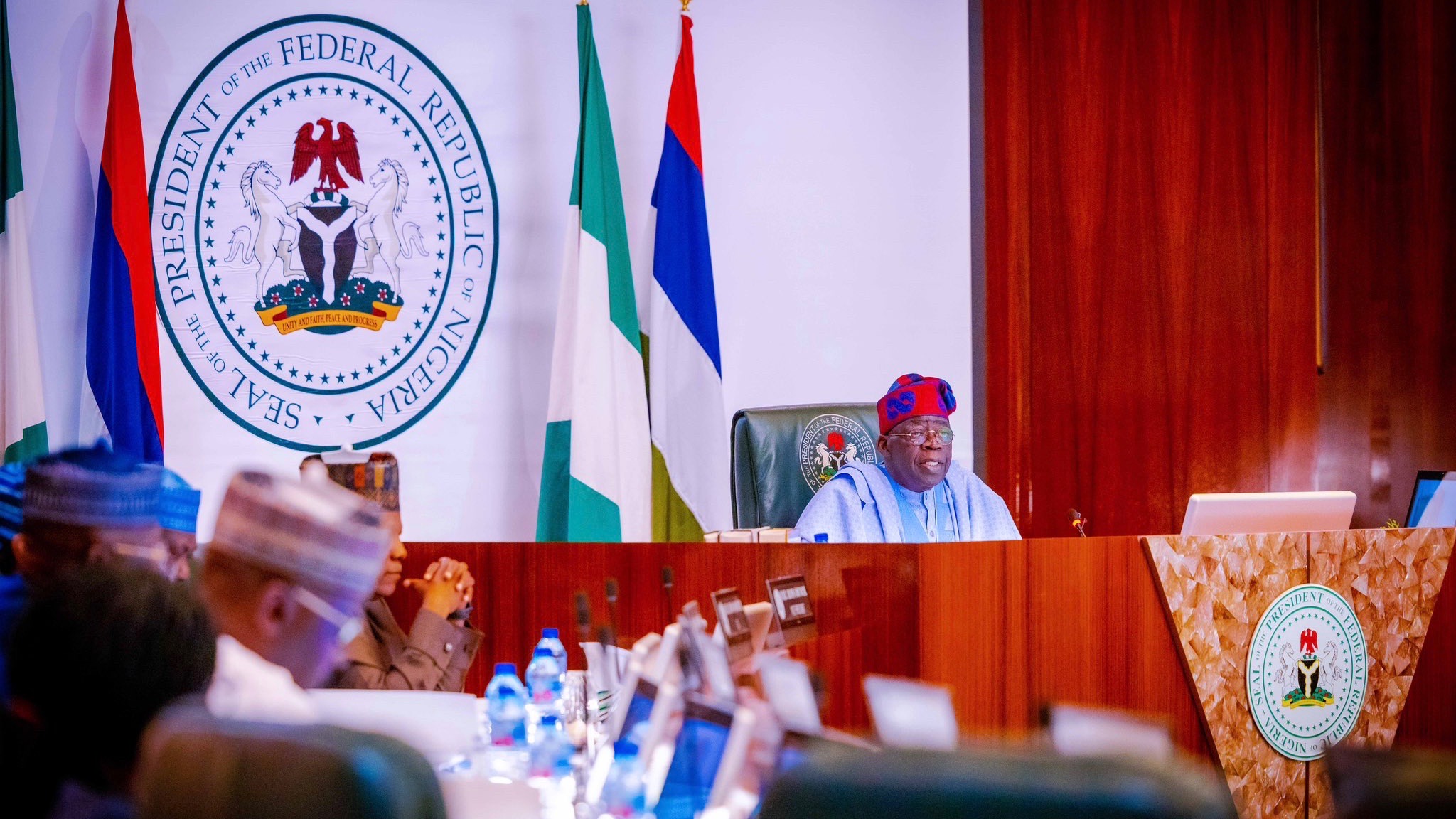
President Bola Tinubu on Tuesday transmitted two bills seeking to overhaul Nigeria’s drug enforcement framework and expand the investigative powers of the Nigerian Safety Investigation Bureau to the Senate for consideration.

The bills, the National Drug Law Enforcement Agency Bill 2026 and the Nigerian Safety Investigation Bureau Amendment Bill 2026, were forwarded to the upper chamber in separate letters addressed to the Senate President, Godswill Akpabio.

The proposed legislation seeks to consolidate existing laws on drug-related offences and reposition the NSIB as an independent, multimodal safety investigation authority with jurisdiction beyond aviation accidents.

Both bills were transmitted pursuant to Section 58(2) of the 1999 Constitution, as amended, which provides for the presentation of bills to the President for assent after passage by the National Assembly.

In his letter on the NDLEA Bill, Tinubu said the proposed legislation would repeal the existing NDLEA Act and the Indian Hemp Act and establish a consolidated legal framework for combating drug-related offences.

According to the President, the bill seeks to strengthen enforcement against the cultivation, processing, sale, trafficking and use of illicit drugs, while empowering the agency to investigate persons suspected of involvement in drug-related activities.

The letter reads: “The National Drug Law Enforcement Agency Bill 2026 seeks to repeal the National Drug Law Enforcement Agency Act, Cap. N30, and the Indian Hemp Act, Cap. I16, Laws of the Federation of Nigeria 2004, and to enact a consolidated framework to enforce the law against the cultivation, processing, sale, trafficking and use of hard drugs.”

See also  Senate confirms Amupitan as INEC chairman

Tinubu urged the Senate to give the proposed legislation expeditious consideration.

Following its presentation, Akpabio referred the NDLEA Bill to the Senate Committee on Rules and Business for further legislative action.

In a separate letter, the President transmitted the NSIB Amendment Bill 2026, seeking changes to the legal framework governing the bureau.

The proposed amendment seeks to amend the Nigerian Safety Investigation Bureau (Establishment) Act No. 35 of 2022 to strengthen the bureau’s independence and expand its mandate to cover accidents and incidents involving multiple modes of transportation.

Under the proposed changes, the bureau’s investigative responsibilities would extend beyond aviation to include rail, maritime and other transport-related occurrences.

The bill also seeks to transfer supervisory oversight of the bureau to the Presidency and strengthen its institutional, operational and administrative powers.

The proposed expansion comes amid renewed attention to aviation safety following the October 5 crash of a Nigerian Air Force ATR-42 aircraft near Igbokoda in Ondo State, which reportedly killed 25 people.

The Senate has since called for a comprehensive investigation into the crash and an audit of military aircraft serviceability and maintenance funding.

In his letter transmitting the NSIB bill, Tinubu requested the Senate’s consideration of the proposed changes in accordance with Section 58(2) of the Constitution and urged lawmakers to expedite action on the legislation.

Akpabio subsequently referred the bill to the Senate Committee on Rules and Business for further legislative consideration.

The two bills will now undergo further legislative scrutiny, with the proposed NDLEA legislation targeting a consolidated framework for drug law enforcement and the NSIB amendment seeking to broaden the scope of independent safety investigations across Nigeria’s transport sector.

See also  NOA - Police make 1,950 arrests, EFCC secures 588 convictions in August

Source: punchng.com

FOLLOW US ON:

FACEBOOK

TWITTER

PINTEREST

TIKTOK

YOUTUBE

LINKEDIN

INSTAGRAM

Continue Reading

Trending