Connect with us

Politics

Presidency waves off Atiku threat as ex-VP woos Amaechi ahead of 2027; Read details

Published

on

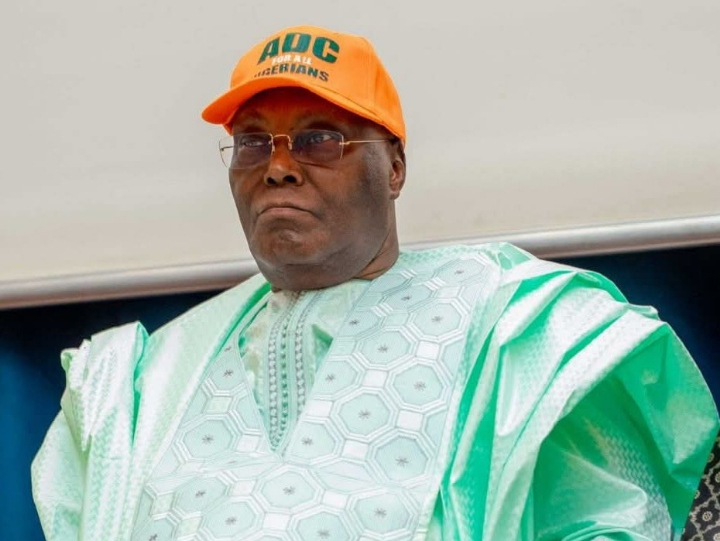
A fresh political storm erupted on Thursday after the Presidency and the ruling All Progressives Congress dismissed former Vice President Atiku Abubakar’s emergence as the African Democratic Congress presidential candidate as inconsequential, describing the opposition coalition behind him as a gathering driven by grievances rather than ideas.

Atiku polled 1,846,370 votes to defeat former Minister of Transportation, Rotimi Amaechi and economist Mohammed Hayatu-Deen, who secured 504,117 and177,120 votes respectively.

The primary election had sparked controversy after both Amaechi and Hayatu-Deen rejected the conduct of the voting process across the 36 states. and that FCT, insisting that the exercise was flawed.

The duo subsequently boycotted the collation and declaration of results.

Reacting, the Presidency said Atiku’s candidacy posed no electoral threat to President Bola Tinubu in 2027, while insisting that Nigerians would judge the next election on performance and not opposition realignments.

The development also triggered backlash with opposition parties warning that Atiku’s renewed ambition could deepen tensions over Nigeria’s delicate power rotation arrangement between the North and South, which has remained a major but unwritten principle shaping presidential politics since 1999.

Although not enshrined in the Constitution, the principle has remained a stabilising factor in the country’s fragile federal structure, often invoked by political parties and elite coalitions to justify zoning of presidential tickets across regions.

Atiku’s emergence as the ADC flag bearer has reopened old wounds in Nigeria’s political architecture, particularly within opposition ranks already struggling with internal fragmentation, ideological incoherence, and competing ambitions ahead of 2027.

The Presidency was first to react, describing Atiku’s candidacy not as a political threat but as a continuation of what it termed a familiar and predictable pattern of presidential ambition that has defined the former Vice President’s political career for over three decades.

Senior Special Assistant to the President on Media and Publicity, Mr Temitope Ajayi, who spoke to The PUNCH, dismissed the coalition that produced Atiku’s candidacy as an alliance driven not by ideology or governance vision but by resentment and exclusion from political power.

He said the opposition bloc lacked a coherent developmental agenda and instead represented a gathering of politicians motivated by personal grievances.

Ajayi said, “Atiku is welcomed. It is a familiar terrain for him. He is a perennial contestant in our presidential race. He has been chasing this presidential ambition since 1992.

“He has been a candidate in three elections of AC in 2007, PDP in 2019 and 2023, and he was an aspirant in 2015, 2011 and 1992. He has been an aspirant thrice and a candidate thrice based on available record.

“By way of that, we can say he is a veteran of the presidential contest. But he doesn’t pose any threat to President Tinubu’s election.”

The presidential aide further argued that the coalition backing Atiku was already fractured before the primary, citing the withdrawal of key political actors such as Peter Obi and former Kano State Governor Rabiu Kwankwaso as evidence of its weakening structure.

He said the opposition alliance had collapsed under the weight of competing ambitions and lacked the ideological foundation necessary to challenge the ruling party.

“They were banking on building a major platform around all the main opposition figures, especially those dissatisfied in PDP, and a few elements in the APC. So, they were hoping to build a coalition around aggrieved politicians, those who left government years ago and still want to remain at the heart of everything.

“Their coalition was not built around any higher purpose goal, any manifesto about national development, but around the egos of aggrieved individuals who feel they should be at the centre of every government.

See also  Atiku ’s three-decade quest for Aso Villa, analyzed

“They are not contesting anything with Tinubu on ideas, or philosophy, or developmental vision. It’s about: ‘Oh, I was supposed to be a minister or ambassador but I couldn’t, then Tinubu must go,’” Ajayi said.

He further dismissed comparisons between Atiku’s 2027 ambition and former President Muhammadu Buhari’s successful 2015 presidential bid, insisting that the political conditions that led to Buhari’s victory no longer exist.

Ajayi argued that Buhari benefited from a rare consolidation of opposition forces under a single platform, a unity that is absent in the current political landscape.

He said, “Buhari won the election on a unified opposition platform where everybody subsumed their personal ambitions and structures and interests under the collective. But that is not happening here.

“He doesn’t even command the Buhari support base in the North that could have propelled him. Atiku and Buhari are not the same. There is no indices to compare them.”

On internal opposition dynamics, Ajayi added, “With Obi and Kwankwaso gone, Amaechi is aggrieved because he said he rejected the result of the primaries that produced Atiku, who is remaining there? And Atiku is hoping to be a northern candidate. Nigerians are looking for a President of Nigeria, not a President of a region.”

He also criticised opposition narratives around Peter Obi’s political trajectory, arguing that the former Anambra State Governor had never independently secured a competitive party primary.

“That one (Obi) has never won a party (promary) but has always been coronated candidate or had the tickets donated to him. So, Obi cannot face an intra-party contest because he does not have the capacity to win a party primary.

“He ran for governor under PDP but couldn’t get the ticket and went to APGA, where APGA was handed to him based on Ojukwu’s popularity in Anambra State,” Ajayi said.

Atiku, 78, remains one of Nigeria’s most enduring political figures, having contested presidential elections and party primaries across multiple platforms since the early 1990s.

His political journey has spanned the Social Democratic Party era of the aborted Third Republic, the Action Congress in 2007, and the Peoples Democratic Party in both 2019 and 2023, where he lost to Muhammadu Buhari and President Bola Tinubu respectively.

Despite repeated defeats, Atiku has maintained a consistent presence in Nigeria’s presidential contests, positioning himself as a leading opposition figure and coalition builder across multiple election cycles.

His latest emergence under the ADC platform, however, has reignited long-standing debates over zoning, national unity, and political equity, particularly among opposition parties seeking to redefine their electoral strategy ahead of 2027.

SDP, LP kick

The Social Democratic Party and Labour Party were quick to criticise the development, describing Atiku’s renewed ambition as politically insensitive and contrary to the unwritten principles of North-South power rotation.

The SDP reaffirmed its internal zoning arrangement, stressing that its presidential ticket had been deliberately reserved for the South in line with its constitutional provisions.

The party’s National Publicity Secretary, Rufus Aiyenigba, said the party’s decision was rooted in its commitment to fairness, equity, and national cohesion.

He stated, “SDP, as a truly national political party, believes in and will always promote the need to balance power and create equity and entrench a sense of belonging amongst the varied ethnic nationalities and building blocs of the country.

“That is why the party has institutionalised in its constitution the concept of rotating the presidential ticket between the South and North of the country.”

Aiyenigba added that leadership should be determined by competence and capacity rather than ethnicity or geography.

The Labour Party, on its part, took a sharper tone, describing Atiku’s insistence on contesting the 2027 election as provocative in light of prevailing national sentiments around power rotation.

See also  2027: I’ll align with party offering presidential, VP ticket — Kwankwaso

In a statement signed by its National Publicity Secretary, Ken Asogwa, the party said Atiku’s ambition ignored the fragile nature of Nigeria’s political balance.

He said, “While the Constitution undoubtedly grants him the right to contest, morality and political sensitivity ought to guide such ambitions in a fragile federation like ours.”

The LP also raised concerns over internal disputes within the ADC following allegations of irregularities in its presidential primary, suggesting that the coalition party was already facing credibility challenges.

The party further positioned itself as the most viable opposition force ahead of 2027, citing its grassroots structures anchored on organised labour institutions such as the Nigeria Labour Congress and the Trade Union Congress.

Asogwa argued that unlike other opposition parties, its structure was deeply embedded at the grassroots level nationwide.

The spokesman added that while the ADC was battling internal contradictions, the Nigeria Democratic Congress lacked nationwide spread and institutional strength, while the PDP had become weakened by internal crises.

“We therefore urge Nigerians to continue to place their hopes in the Labour Party as the only realistic and credible pathway towards rescuing the country from the stranglehold of the APC government,” he added.

Speaking on the growing debate, the Coalition of United Political Parties’ Publicity Secretary, Mark Adebayo, said the ADC was deliberately positioned to favour Atiku’s ambition, claiming it would be difficult for any aspirant, including Peter Obi, to emerge as the party’s presidential candidate ahead of the former Vice President and his allies.

He said, “There is no crime in running multiple times for any political office. So, even if Atiku has run 100 times, he can still continue to run for as long as he has the energy, health, and resources. There is no law that limits the number of times anyone can run for a particular office.

“I believe it just shows his determination and vision. Even President Bola Tinubu, at the time he wanted to declare for the Presidency in 2022, said it had been his lifelong ambition.”

APC reacts

Meanwhile, the APC also joined the debate, dismissing Atiku’s emergence as the ADC candidate as a reflection of inconsistency and political desperation.

The ruling party insisted that Nigerians would ultimately base their 2027 decision on performance, stability, and continuity under President Bola Tinubu’s administration rather than opposition sentiment or coalition arrangements.

APC Director of Publicity, Bala Ibrahim, maintained that voters would prioritise the Renewed Hope Agenda over what he described as emotional political realignments.

He stated, “Certainly, we are not disturbed that he (Atiku) emerged as a presidential flag bearer. In any case, we are confident Nigerians are going to look at the performance of the party. They are going to look at the performance of the President, and wouldn’t allow sentiment to play any prominent role in their decision-making.

“We are confident Nigerians are going to evaluate the Renewed Hope Agenda of the President alongside the promises made by the party. And we are confident their votes will be in our direction.

“Atiku’s emergence shows inconsistency and failure of integrity,. It shows the failure to stick to agreed terms and stand by promises made. Looking at the sentiment and emotion in the country, everyone will agree that Nigerians will not allow power to shift from the South to the North.”

Atiku camp

In a swift reaction, Atiku’s Senior Special Assistant on Public Communication, Phrank Shaibu, said the Presidency’s attempt to dismiss the emergence of Atiku as inconsequential only betrays its growing nervousness.

See also  Anambra Decides: Election peaceful, hitch-free says Bianca Odumegwu-Ojukwu

Shaibu noted that a government truly confident of its performance would not devote precious time and energy to monitoring and attacking the opposition barely hours after a primary election.

“The truth is that Nigerians themselves — not presidential spokesmen — will determine in 2027 who poses a threat to whom. And today, millions of Nigerians battling hunger, insecurity, unemployment, and economic despair already know that the country cannot continue on this disastrous path,” he stated.

Shaibu further described as dishonest the Presidency’s claim that the ADC coalition was merely a gathering of “aggrieved politicians.”

According to him, what truly fuels the movement is the collective frustration of ordinary Nigerians abandoned by a government that has perfected the art of propaganda while citizens sink deeper into suffering.

“Nigerians are not angry because politicians lost power; Nigerians are angry because families can no longer afford food, businesses are collapsing, farmers cannot safely access their lands, and kidnapping has become a national industry under this administration’s watch,” he added.

“No amount of dismissive rhetoric can erase the fact that this government has presided over one of the harshest periods in the nation’s history.

“The Presidency may pretend not to see the gathering storm, but history has repeatedly shown that governments often mistake silence borne out of suffering for acceptance — until election day delivers a rude awakening.”

Shaibu also clarified his principa’ls visit to Amaechi, at his Abuja residence, less than 24 hours after emerging as the presidential candidate of the ADC.

A political associate of the former VP, Dele Momodu, disclosed details of the visit in a post on Instagram on Thursday, describing it as part of efforts to unite the party after the contentious exercise.

“In an effort to unify party ranks after the ADC presidential primaries, His Excellency Atiku Abubakar and other party leaders visited His Excellency Rotimi Amaechi at his Abuja residence for strategic consultations,” Momodu wrote.

Providing further insight into the meeting, Shaibu said the engagement was aimed at fostering unity and discussing issues affecting the country.

“It was purely a brotherly and statesman-like meeting between two leaders who share a common concern about the worsening condition of the country and the urgent need for patriotic engagement at this critical time in our national life,” he said.

According to him, Atiku also used the opportunity to celebrate Amaechi on his birthday while both leaders exchanged views on the state of the nation.

“His Excellency Atiku Abubakar used the opportunity to felicitate with Chief Rotimi Amaechi on his birthday and also exchange views on national issues, particularly the economy, insecurity, and the broader future of Nigeria,” he added.

Shaibu further stated that discussions centred on the need for collaboration within the party following the conclusion of the presidential primary.

“Atiku emphasised during the meeting that the progress of Nigeria and the collective task of solving the myriad problems confronting the nation are far more important than who won or lost the party primaries. He reminded all stakeholders that, ultimately, they are all winners united by a common objective of rescuing Nigeria and rebuilding hope for Nigerians,” he said.

Political observers, however, described the meeting as an early reconciliation move by the former Vice President to consolidate support within the ADC ahead of what is expected to be a fiercely contested 2027 presidential race.


Continue Reading
Click to comment

Leave a Reply

Your email address will not be published. Required fields are marked *

Politics

Nigeria @66: No ambition worth setting Nigeria ablaze, Bamidele warns politicians

Published

on

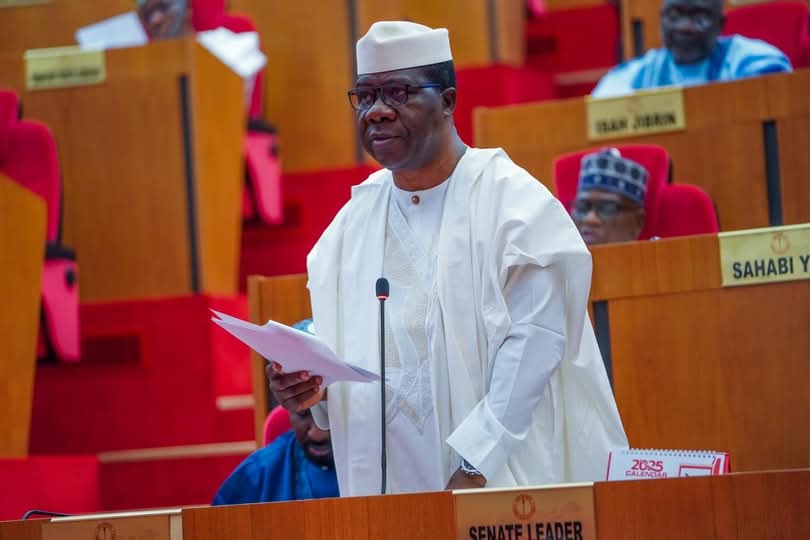
The Senate Leader, Senator Opeyemi Bamidele, has warned politicians against inflammatory rhetoric and other actions that could threaten Nigeria’s peace ahead of the 2027 general elections.

Bamidele, who is also the Chairman of the South-West Caucus in the National Assembly, urged political parties and their candidates to conduct their campaigns peacefully and in accordance with the Electoral Act, 2026 and the 1999 Constitution, as amended.

The Ekiti lawmaker spoke in a statement issued in Abuja on Thursday to commemorate Nigeria’s 66th Independence Anniversary.

He acknowledged the right of political actors to exercise their political rights, but said such rights must be exercised within the confines of the law.

Bamidele warned that political freedom did not extend to hate speech, inflammatory comments or actions capable of triggering political unrest and ethno-religious violence before, during and after the elections.

He said, “The exercise of political rights at this defining moment should be guided by the rules of the electoral contest and not by the rules of the jungle. While every aspiration is legitimate in a democracy, it should be pursued with decorum, patriotism and utmost restraint.

“No ambition is worth setting the nation ablaze. As we mark our 66th anniversary of political freedom and prepare for the 2027 elections, political parties and their candidates must conduct their activities within the ambit of the law.

“Nigeria is our collective heritage. She is greater than the political ambition of any party or candidate. Our activities must be conducted to preserve our collective heritage and not destroy what we have sustainably built.

“As political parties and their candidates campaign across the states of the federation and unveil their agenda for the future of our fatherland, such an agenda must align with the wishes and aspirations of our founding fathers.”

See also  Anambra Decides: Election peaceful, hitch-free says Bianca Odumegwu-Ojukwu

The Senate Leader’s warning comes as political parties and their candidates intensify preparations for the 2027 elections, with campaigns expected to dominate the political space in the months ahead.

The electioneering period has also been accompanied by reports of intimidation and the activities of political thugs in some parts of the country, raising concerns over the conduct of the elections.

Bamidele therefore urged political actors to prioritise national unity and democratic stability over personal and partisan ambitions.

He said Nigeria’s 66 years of independence should remind political leaders of the need to protect the country’s unity and democratic institutions as they seek electoral mandates.

Source: punchng.com

FOLLOW US ON:

FACEBOOK

TWITTER

PINTEREST

TIKTOK

YOUTUBE

LINKEDIN

INSTAGRAM

Continue Reading

Politics

Wike reveals he’ll resign if Tinubu loses FCT, Rivers in 2027, read details

Published

on

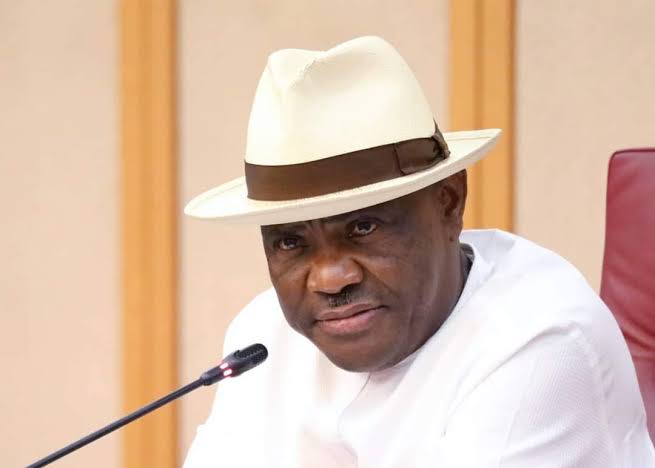
The Minister of the Federal Capital Territory, Mr Nyesom Wike, has declared that he will step down from his cabinet position if President Bola Tinubu fails to secure victory in both the FCT and Rivers State in the 2027 presidential election.

Speaking during an engagement with leadership and members of the Apo Mechanics and Traders Association in Abuja, Wike stated that his continued tenure as a cabinet minister is directly tied to his ability to deliver political results for the President in his primary areas of influence.

In a statement issued on Wednesday by the Senior Special Assistant on Public Communication and Social Media to the minister, Lere Olayinka, Wike said that should the ruling party lose in the FCT and Rivers State at the presidential poll scheduled for January 16, 2027, he will formally tender his resignation the very next day.

“If I cannot deliver where I work, then I’m not worthy to be here,” Wike said, emphasising that his political mandate required concrete electoral success.

“If I lose FCT, I’m not supposed to be FCT Minister.

By January 17, 2027, I will announce my resignation as FCT Minister should the President lose in Rivers State and the FCT,” he added.

Outlining his political strategy for the territory, Wike revealed that the administration was building a multi-party coalition to secure victory across various elective offices in the FCT.

He explicitly endorsed candidates across legislative tiers while reiterating total support for the President’s re-election bid.

“Let us be clear on direction: for the Presidency, it is Bola Ahmed Tinubu! For the Senate, Philip Aduda is a man of the people, unlike those who only appear on television. The two House of Representatives candidates we are supporting are also here. They are former Area Council chairmen.

See also  2027: ADC faction eyes Jonathan, Saraki, Makinde alliance

“In the FCT, we are running a unified coalition across parties to deliver results.

“If I cannot deliver FCT as minister, then I am not qualified to hold this office. We have a firm agreement, and today is the final affirmation,” Wike said.

Source: punchng.com

FOLLOW US ON:

FACEBOOK

TWITTER

PINTEREST

TIKTOK

YOUTUBE

LINKEDIN

INSTAGRAM

Continue Reading

Politics

Gombe 2027: Pantami, Mailantarki, Garry enter fresh PDP ticket battle

Published

on

CHIMA AZUBUIKE examines the political dynamics surrounding the fresh Gombe State governorship primary holding Tuesday (today), which pits former minister Isa Pantami against Khamisu Mailantarki and Usman Garry

Today, former Minister of Communications and Digital Economy, Prof. Isa Pantami; businessman and politician Khamisu Mailantarki; and Usman Garry will again hit the field to battle for the Peoples Democratic Party governorship ticket in Gombe State for the 2027 election. The fresh governorship primary election complies with an order by the Federal High Court sitting in Gombe. The court, in a judgment on September 24, nullified the May 26 primary that produced Pantami, directing the PDP to conduct another exercise within 30 days, in compliance with its Constitution, guidelines and relevant electoral laws.

The judgment delivered by Justice Amina Mohammed followed a suit filed by Usman Garry, a PDP governorship aspirant, who challenged the process through which Pantami emerged as the party’s candidate. Garry objected to the affirmation of Pantami as the standard-bearer of the Abdulrahman Mohammed-led faction and eventually filed a suit against the former minister. Garry had asked the court to set aside Pantami’s emergence because the PDP did not conduct a valid governorship primary in accordance with its rules and applicable electoral laws.

The Federal High Court nullified the process that produced Pantami and ordered the PDP to conduct a fresh primary. The court found problems with the process that produced Pantami and directed the party to repeat the exercise in accordance with its guidelines and applicable electoral laws.

Before joining the PDP, the former minister had sought the governorship ticket of the All Progressives Congress. When the APC settled on Jamilu Gwamna as its consensus candidate, Pantami withdrew from the contest and subsequently moved to the PDP. His arrival immediately altered the calculations within the opposition party.

Pantami’s impending movement to the PDP circulated while Mailantarki, Saleh Abdulkadir, Garry and Monica Kaltho were preparing for the party’s governorship contest.

Pantami will again slug it out with other aspirants, Mailantarki and Garry, who reject the former minister’s entry into the governorship ticket race.

Between Pantami, Mailantarki, and Garry

Pantami enters Tuesday’s contest as a politician whose national profile gives the primary a significance beyond the ordinary competition for a party ticket. A former Director-General of the National Information Technology Development Agency and former minister, Pantami boasts supporters who argue that his experience, networks and resources make him capable of mounting a serious challenge against the APC candidate, Gwamna.

Mohammed Kudu, a PDP chieftain, dismissed the capacity of some of the other aspirants to confront the governing party, describing Mailantarki, Saleh Abdulkadir and Garry as weak to confront the APC candidate.

Kudu said, “Who among Khamisu Mailantarki, Saleh Abdulkadir, Garry Usman has what it takes to challenge the APC? We recognise that Jamilu Gwamna is grassroots; hence, the only person that can face him, man to man, is Malam (Ali Pantami). He has made money as former Minister of Communications and Digital Economy, and as former Director-General of NITDA and as a visiting lecturer. Maybe Saleh Abdulkadir, who seems genuine, but you know he is not as wealthy as he used to be.”

He added, “He (Ali Pantami) has the capacity to defeat Gwamna of APC in a fair contest because he has international connections and he has built enough capital in both human and other resources that translate into wealth. All that will count in the build-up to the election.”

Kudu’s comments reflect one side of the political argument surrounding the PDP contest: that the party needs a candidate with sufficient political, financial and organisational resources to confront the APC.

See also  Fake agency scandal: Gbajabiamila sues Adeyemi for N15bn

But that argument is contested by opponents of Pantami’s emergence.

For them, the issue is not simply whether Pantami possesses the resources or profile to contest the 2027 election. They question the circumstances surrounding his entry into the PDP and his rapid movement from APC aspirant to PDP governorship candidate.

Dr Maryam Abubakar, a policy analyst, described what she called the “unprecedented desperation” surrounding Pantami’s political journey.

She said, “How can you once say politics is dirty, only for late President Muhammadu Buhari to appoint you from NITDA to cabinet minister, and you suddenly forget your sermons where you lashed politics and politicians.”

Abubakar also questioned Pantami’s relationship with the APC before his defection.

She said the former minister, despite developing an interest in politics, failed to support the governing party sufficiently.

“Even when his interest began to manifest, he refused to empower the party members or support the party to achieve its mandate in the state. Instead, we started hearing rumours that Malam (Ali Pantami) was funding African Democratic Congress in Gombe but refused to identify with them publicly because of court cases ADC faced and alleged possible witch-hunt by the anti-graft body,” she added.

“How can you contest this week in APC and next week become a PDP candidate? It’s the height of desperation. As a technocrat and Islamic scholar, we expected a new order in the way of doing things, not doing things like regular politicians who lack ideals and purpose. What was baffling was allowing yourself to be a product of a corrupt process.”

So, the PDP held the May 26 primary amid misgivings. The decision to challenge the primary was therefore not unexpected.

Gombe’s political landscape is shaped by local structures and established political networks, while national visibility and access to influential political actors can also affect a candidate’s campaign.

The PDP’s choice will therefore be watched beyond the immediate party contest.

The Gombe PDP primary has consequently evolved from an ordinary intra-party contest into a test of how political ambition, party organisation and electoral law intersect.

Today’s exercise is, therefore, a bid to correct issues of the past. The PDP is now conducting a new nomination process, creating a fresh opportunity for all three cleared aspirants.

Although Saleh Abdulkadir was prominent in the initial contest and was mentioned among those who challenged Pantami’s emergence, the PDP’s current list of cleared aspirants for Tuesday’s primary comprises Pantami, Mailantarki and Garry.

That means the field has narrowed considerably from the wider contest that preceded the May primary.

Abdulkadir’s absence from the fresh contest further concentrates the battle among three political camps.

For the PDP, this may make the primary easier to organise, but it does not necessarily make the political dispute less complicated.

The principal disagreement remains over the process that brought Pantami into the party’s nomination race and the question of whether the fresh exercise can finally settle the matter.

For Pantami, it provides the opportunity to seek a new mandate from the party after his first nomination was nullified.

For Mailantarki and Garry, it offers the opportunity to challenge Pantami through a fresh process in which they have been cleared to participate.

And for the PDP, it presents another opportunity to conduct a process that can withstand judicial scrutiny.

Circumventing legalities

The legal questions surrounding Tuesday’s contest became complicated on September 24 when the Supreme Court restored provisions of the Electoral Act 2026 dealing with party membership registers and the nomination of candidates. The apex court upheld the validity of Sections 77(5), 77(6), 77(7) and 84(2), reversing the earlier Court of Appeal position that had voided the provisions.

See also  2027: ADC faction eyes Jonathan, Saraki, Makinde alliance

Section 77(5) requires that persons eligible to vote at party primaries must have their names contained in the membership register submitted to the Independent National Electoral Commission within the prescribed period.

The controversy followed the timing of Pantami’s movement from the APC to the PDP.

According to the account supplied by Gombe public affairs commentator, Chika Udenkwo, Pantami left the APC on May 19, while the APC primary was held on May 21 and the PDP primary took place on May 26.

Udenkwo therefore argues that the key question is not simply whether Pantami defected from the APC before the PDP primary.

The more precise question, he says, is whether Pantami’s name appeared in the PDP membership register submitted to INEC within the statutory period applicable to the May 26 primary.

He said, “Pantami left the APC on May 19. The APC primary followed on May 21. And on May 26, Pantami emerged from the PDP primary.”

He added, “The question now is not simply whether he had left the APC before joining the PDP. The more precise question is this: Was Pantami’s name contained in the PDP membership register submitted to INEC within the statutory period applicable to the May 26 primary?”

According to Udenkwo, if May 26 is used as the reference date, the 21-day period would take the relevant deadline back to May 5.

“That makes the documentary evidence critical. Was Pantami already a PDP member by that date? Was his name on the register submitted to INEC? When exactly was that register submitted? And was the same register actually used for the May 26 primary?” he asked.

Those questions, however, must be distinguished from the legal effect of the September 24 Supreme Court judgment itself.

The Supreme Court’s ruling restored the provisions; it did not, by itself, pronounce on Pantami’s individual eligibility for Tuesday’s Gombe primary.

As today’s fresh primary holds, one of the questions includes whether the party has complied with the applicable requirements for the new primary, including membership records, notice, screening, participation and its own guidelines.

The membership-register question could nevertheless become significant if a litigant argues that an aspirant or delegate was not properly qualified under the restored provisions.

On the contention, Udenkwo argued, “A victory on Tuesday would give Pantami a fresh nomination, not a reliance on the May 26 exercise that has already been nullified.

“But that victory would still have to survive any subsequent legal challenge—one based on compliance with the Electoral Act, the PDP Constitution, the court’s order, and the applicable membership register.”

He added, “In other words: winning the primary and establishing the legal validity of the nomination are related—but distinct—questions. That reasoning also applies to Mailantarki and Garry.

“If either defeats Pantami, the resulting nomination would equally be subject to the statutory and party requirements governing the fresh primary.”

For Mailantarki and Garry, Tuesday’s contest is an opportunity to reset a process that both have spent months challenging.

Their opposition to Pantami’s emergence was not limited to political statements. Their objections eventually formed part of the litigation that produced the Federal High Court’s order for a fresh primary.

The two now have to shift from challenging the previous process to competing within the new one. That presents a different political calculation.

Instead of asking the court to remove Pantami from a ticket already produced by the party, they must now persuade delegates or eligible party members to choose either of them over the former minister.

See also  PDP HQ showdown: Makinde, Wike factions hold rival NEC sessions today

The question therefore becomes whether the legal challenge has translated into political momentum.

Mailantarki’s position has also been affected by the withdrawal of Kaltho, who had initially been part of the challenge before later aligning with Pantami.

Kaltho’s movement altered the political arithmetic around the opposition to Pantami, leaving Mailantarki, Garry and Abdulkadir among the figures challenging the earlier emergence.

Whether that change will have an effect on Tuesday’s voting remains a political question to be answered by the primary.

A primary under scrutiny

The September 29 exercise is also taking place under a level of scrutiny that the May primary did not successfully withstand.

The Supreme Court, in its judgment, restored statutory provisions concerning party membership registers and nomination procedures.

Political observers are consequently watching not only the outcome but the process.

Tuesday’s primary presents a credibility test for the PDP.

The party has already experienced the consequences of an internal nomination process that ended in litigation.

The Federal High Court’s order provides the party with an opportunity to correct the procedural issues that led to the nullification of the earlier exercise.

Udenkwo said, “The question becomes whether the PDP has complied with the requirements applicable to this fresh primary: the membership register, notice, screening, delegate participation, and the party’s own constitution and guidelines.”

He added, “And here, the Supreme Court’s ruling makes the membership register particularly significant. The law does not merely require a party to maintain a register. It requires that register to be submitted to INEC within the prescribed period—and it restricts participation in the primary to persons whose names appear in it.”

Today, the PDP will have to be able to demonstrate compliance with the court order and the applicable electoral framework.

The scrutiny will extend to the eligibility of delegates, the party’s register and the conduct of the exercise.

Udenkwo said, “The Supreme Court has now made the statutory validity of Sections 77 and 84 clear. What it has not done is determine the factual circumstances of every candidate or every primary conducted before its judgment.”

“That leaves room for litigation—where an aspirant believes a party failed to comply with the membership-register requirements or other statutory conditions,” he added.

For now, however, the PDP’s immediate responsibility is to conduct the fresh exercise ordered by the Federal High Court.

For Pantami, Tuesday offers a second opportunity to secure the party’s ticket through a fresh primary. For Mailantarki and Garry, it offers a second opportunity to challenge him directly rather than through the previous process. For the PDP, it offers the chance to close a chapter that has already generated substantial internal disagreement and legal action.

But whether Tuesday finally closes that chapter will depend not only on who wins, but on how the party conducts the exercise.

The 2027 question

Tuesday’s primary cannot be viewed entirely in isolation from the wider 2027 contest.

The APC has already positioned Jamilu Gwamna as its candidate.

The contest is therefore framed along the line of having a candidate that can challenge the APC in the general election.

For Kudu, Pantami’s national profile and network give him the capacity to confront Gwamna.

But the argument also exposes one of the central issues before PDP delegates: whether the choice of candidate should be determined primarily by political experience, organisational structure, personal resources, grassroots networks, national connections or some combination of these factors.

Source: punchng.com

FOLLOW US ON:

FACEBOOK

TWITTER

PINTEREST

TIKTOK

YOUTUBE

LINKEDIN

INSTAGRAM

Continue Reading

Trending