Connect with us

Politics

2027: How coalition can stop Tinubu – Osuntokun

Published

on

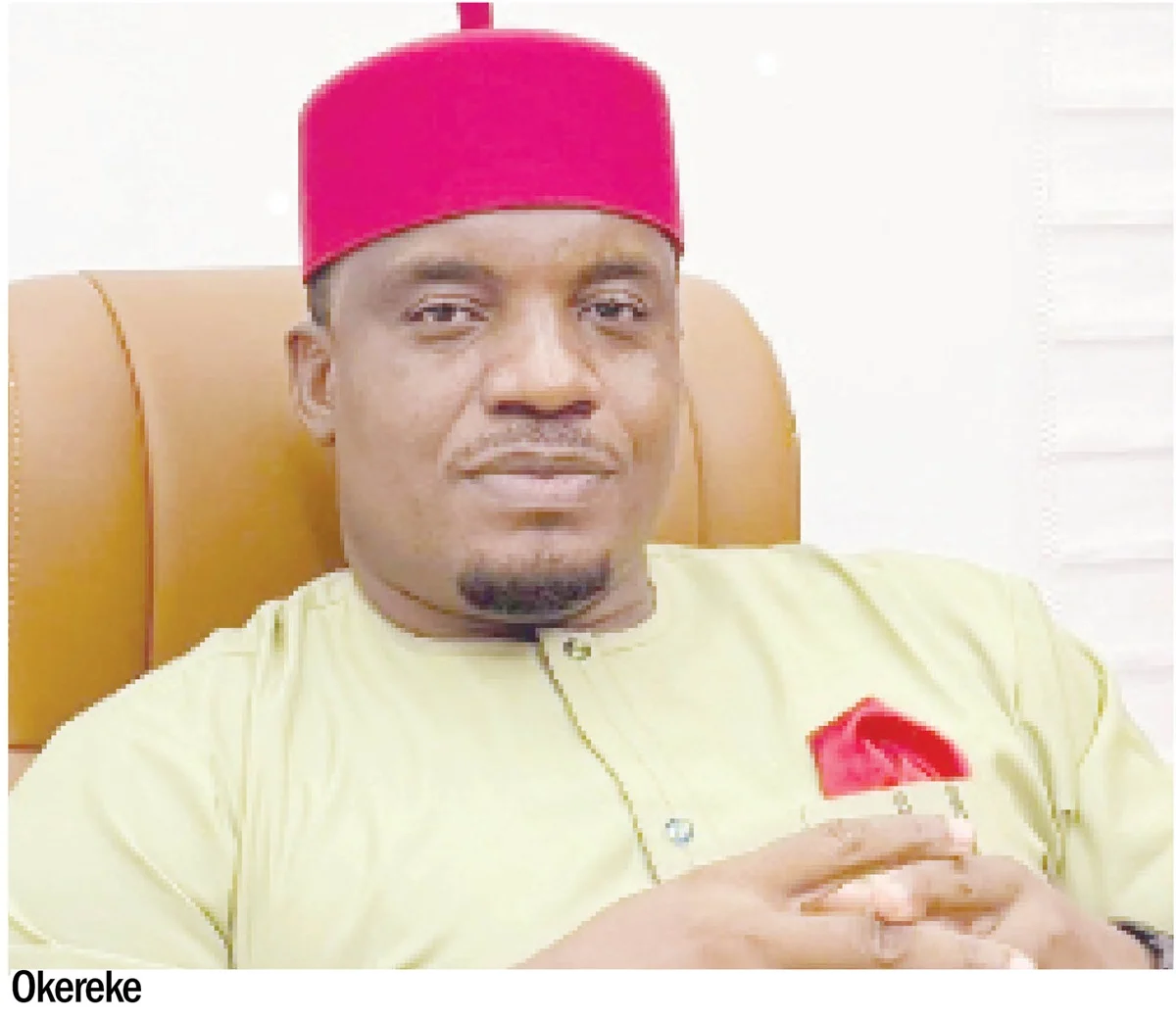
Chief Akin Oshintokun, 63, former political adviser to President Olusegun Obasanjo; director of the Presidential Campaign of the Peoples Democratic Party, PDP in 2011; and director-general of the Obi-Datti Presidential Campaign Council of the Labour Party, LP in 2023, in this interview, shares his thoughts among others on socio-political happenings and permutations ahead of the 2027 polls, and avers that without a united opposition President Bola Tinubu would be re-elected.

The polity is witnessing defections across party lines. Won’t it hurt the 2027 elections?

That is a platitude. Any trend towards one-party dictatorship is not good, especially for an inherently pluralistic country. The reason for this is rooted in what we call ‘zero-sum politics’ where the winner takes all and the loser loses all. It prioritises patronage and consumption politics over a positive correlation between reward and productivity.

The major facilitator of this culture is the prevailing quasi-unitary casino economy. The embodiment of this insidious system is the over-centralisation of power in the executive, otherwise known as the presidency. If you have a president as we currently have (and the one before him) who is prepared to test the dysfunctional limits of the constitution, what you get is a leviathan, and what follows is the phenomenon of state capture. In other words, all the other organs of government, the legislature and the judiciary, are subordinated to the president.

It certainly impoverishes the political party system because it is a precursor of one-party dictatorship. These defections are also a reflection of total loss of faith and confidence in the capacity of the electoral agency and the judiciary. If these two bodies have integrity and credibility, no complainant would feel compelled to be in the good books of the president to get justice.

At the other end, there are the unpopular candidates who would require the president’s support to get them into office. The other name of this state capture is one-party dictatorship. It is the logic of this trend that is playing out in the anomie of political leaders absconding from their parties to grovel at the feet of the president.

This is bad behaviour, quite alright but it is realistic and practical. The president, as it were, has an arsenal of powers to promote, thwart and frustrate the political aspirations of any other player. The president is like Father Christmas who is invested with all the goodies to share as he wills. And he is a magnet for all manners of economic supplicants, especially the greedy ones. This is why the race to clinch the presidency is akin to a mad stampede, in the pursuit of which aspirants would take no prisoners. This is why it is the most destabilising factor of Nigerian politics

What is the root cause of the Labour Party crisis?

The roots of the crisis lie in the divergence of aspirations between the illegal Abure national party executive and the Peter Obi writ large army called the Obidients. The former is the rough and ready mercenary with the mission to exploit the party for filthy lucre while the other largely consists of reform-minded young progressive Nigerians.

Ultimately, the crisis hacks back to the reality that Nigeria is bereft of a viable political party system. What we call parties are no more than special purpose vehicles, SPV, for contesting elections. They are ideologically indistinguishable and that is why their boundaries are so porous such that upwards of 60 percent of those who founded the APC were PDP functionaries. With specific regards to the Labour Party, the Abure national executive has effectively become the agent

See also  ADC will go for presidential primary if consensus fails – Atiku

Do you think the LP stands a chance in the 2027 elections?

There is nothing like a viable Labour Party without Peter Obi. So maybe you need to rephrase your question as, is Obi a viable candidate in the 2027 presidential election? The answer, of course, is a conditional yes. Now, you know that there is a difference between winning elections and being declared as winning the election in Nigeria. The viability of his aspiration is conditional on such other factors as the vulnerability of a fractious opposition. If the opposition parties can pool together to present Obi as their presidential candidate, then Tinubu may be on his way out of the Aso Rock villa.

It is, however, a different ball game altogether for the president to accept defeat. I can’t see through the thick fog of a scenario in which he would accept any result other than his declaration as a winner.

What is your take on the state of the nation?

Nothing captures contemporary Nigeria more than (a state of) anomie and political dysfunction. In the short term to mid-term, the one-size-fits-all all prescribed cure (deregulation of the downstream oil sector and floating of the forex market) had stabilised the economy literally at the expense of unbearable immiserisation of the vast majority of Nigerians. For them, it is a cure worse than the disease.

Please get me right, there is nothing peculiar in the experience of socio-economic crisis. Every individual and society are routinely confronted with economic and other standard of living challenges. It is how you grapple with the challenges that matters. It is the extent to which there is closure of the gap between what you say and what you do, that matters. If you are splurging hard- earned Nigeria income on the criminal opulence of the power elite while compelling Nigerians to live on less than one dollar a day, you are increasingly pushing the country to the tipping point.

When you preach the sermon of salvation while indulging in wanton hedonism, the result is the stress and distress written all over the faces of the under-privileged; the permanence of massive security breakdown of law and order with emphasis on the Middle-Belt region. The late Professor Sam Aluko once characterised it as “the rich cannot get to sleep because the poor are hungry and angry.” Unfathomable and profuse nation bleeding corruption has become normalised.

Most hopeless of it all is that rather than agree on requisite constitutional reforms, factions of the rogue elite are deadpan and unyielding, waiting impatiently for their turn at ceasing and bleeding Nigeria by the jugular. The tragic reality stares us all in the face, and its depredations are worse than fiction.

What is your take on the coalition-backed ADC?

Coalition-backed ADC? Well, the ADC emerged from a political movement floated by President Olusegun Obasanjo in 2018 called the Coalition of Nigeria Movement. At its transition from a pressure group to a political party, the former president withdrew his participation to preserve his non-partisan statesmanship. He, however, made the exception of the governorship race in Ogun State in 2019, where he backed the aspiration of Nosiru Isiaka.

See also  32 governors, 8,450 delegates arrive Abuja for APC convention

So this is the history of ADC until it became the beautiful bride of leading opposition figures like Atiku Abubakar, Peter Obi, Rotimi Amaechi, and others in this electoral cycle. If these personalities successfully band together and stand behind one of them, then they are in business. It may be reminiscent of the intervention of the APC in 2015.

Do you think the coalition can stop APC and Tinubu in 2027 general election?

This will depend on a number of intervening variables. One is that the economy continues to nosedive with all it connotes for the vast majority of Nigerians. Remember Bob Marley reminded us that a hungry man is an angry man. The other is the difference between former President Goodluck Jonathan and the incumbent president. As Jonathan conceded defeat, you could see a sigh of relief in his mien. He radiated the kind of serenity that bordered on inner joy. It was not just because he had a recessive personality, It was also because his political career is a study in effortless grace.

He did not exert himself to become deputy governor, governor, vice-president, and finally president. The manifestation of this grace was so conspicuous as to make Christiane Amanpour of the Cable Network News, CNN, ask him whether it was down to his unique first name, Goodluck, that had been at play in his rise to the presidency. To the contrary, Tinubu got to his present office by sheer grit and mastery of the political jungle culture of survival of the fittest. He was prepared to realise his objective through means, fair, and foul. Remember the proponent of the political philosophy of “snatch it, grab it and run with it…power is not served a la carte”

What is your assessment of President Bola Tinubu on insecurity, infrastructure, and good governance?

First, I think we need to establish the volume of the debt that has been contracted and the income derived from oil-pursuant to expenditure on capital projects, and what the financial gatekeepers tag cost-benefit analysis. If you borrow ten million dollars to execute a project of one million dollars, this is infrastructure development, but how would you characterise such an expenditure? There is also the question of priorities. Given our huge infrastructure deficit, I do not understand the logic, for instance, of the prioritisation of the thirteen billion dollars Lagos-Calabar coastal highway. It makes sense only if it’s utility is to serve as a conduit for misappropriation of public funds.

Nonetheless, one has to acknowledge the effectiveness of the deregulation of the forex market and the companion downstream sector of the oil economy.

There is however a lot of credibility in the pervasive speculations of massive corruption being perpetuated in the public sector. If morning shows the day, the daylight robbery of gifting one of the most expensive SUVs to national legislators is a marker. My friend and brother, the National Security Adviser, Nuhu Ribadu, is doing his level best, but our security crisis has become a basket case, this inherited crisis is of a magnitude that would readily overwhelm anyone relatively new to that office.

See also  I’m Interested In The Evidence You Have Against Peter Obi – Aisha Yesufu Tells Adeyanju

The crisis will likely remain unresponsive to the best of efforts until the security architecture is deconstructed and decentralised. Over and above these assessments is the fact that Nigeria is afflicted with systemic failure.

The meaning of this failure is that no aspect can be successfully isolated for remedial attention. Such is the logic of circularity. There is an integrated linkage between the security aspect and the economic downturn. There is a linkage between infrastructure collapse and the prevailing economic recession and vice versa.Nigeria only stands the chance to succeed in overcoming these challenges when the nature of this national crisis is comprehended as a circular systemic failure-in need of a shock therapy intervention. The kind of therapeutic intervention that compels itself is a constitutional overhaul that gives Nigeria the opportunity for a sociopolitical renewal. There is, of course, the option of a revolutionary intervention with the potential collateral damage of a violent upheaval. There is the inevitability of Jack Kennedy’s admonition that those who make peaceful change impossible makes violent ones inevitable.

Some say that Nigeria is now more divided than ever before. What is your view?

This has become a cliche but it is substantially true. There are micro subnational identity crises spouting all over the place, including the intriguing political decoupling of Hausa-Fulani identification. The Hausa, we are told, are now engaged in a nationalist reawakening against Fulani imperialism. We are told that this is particularly the case with the enduring anarchy in Zamfara state.

Will the agreement to do one term make Atiku or Obi more likely to beat Tinubu?

I’m very sceptical about this kind of political bargaining. In the case of Atiku (a very generous father figure), other than physical debility (he is over 80 years), I have no basis to believe he would stick by any such commitment. If he could repeatedly defy the principle of North/South power rotation, why would a personality of this pedigree stick to any such unenforceable commitment?

With the present political trend, no region, especially the Islamic North, will agree to any such agreement once their man secures the throne.

In my reckoning, the North/South rotation subsists until 2031. Given this notion, the pledge of Obi to restrain himself to a single term is more believable and enforceable. Coincidentally, the putative aspiration by former President Jonathan fits the bill squarely. Even if he is inclined to renege on such a pledge, the constitution completely rules him out of a second term. Besides, I doubt he has the stomach for the roforofo fight inherent in Nigeria political power play.

What is the way forward for the country?

I have earlier reiterated constitutional reform as the way forward in the short, mid, and long-term. I can see no other peaceful options. If we agree in principle for a new constitution, the details will follow in quick order. If only wishes are horses. Given the deep division within, I hope, rather than expect this option to become a reality any time soon. President Tinubu should be the last bus stop on this nightmarish journey to an unknown destination.

FOLLOW US ON:

FACEBOOK

TWITTER

PINTEREST

TIKTOK

YOUTUBE

LINKEDIN

TUMBLR

INSTAGRAM

Continue Reading
Click to comment

Leave a Reply

Your email address will not be published. Required fields are marked *

Politics

Automatic ticket: Tinubu leaves lawmakers’ fate in govs’ hands

Published

on

President Bola Tinubu has rebuffed lobbying efforts by the leadership of the Senate to secure automatic return tickets for the ruling party’s sitting legislators ahead of the 2027 general elections, instead reaffirming the authority of state governors over the selection of candidates in their respective states, The PUNCH reports.

This was as he formally empowered governors to drive the primaries process after a meeting with the state executives on Thursday evening.

Our correspondents gathered that the President’s position has deepened anxiety among federal lawmakers, including several senators whose relationships with their governors have been strained.

The President made the decision at a closed-door meeting with the extended leadership of the Senate at the Presidential Villa on Wednesday evening.

Tinubu had earlier suggested that he would “do everything within the party’s power” to ensure the return of serving legislators, a promise that raised expectations in the National Assembly.

Multiple senior National Assembly sources familiar with the meeting said the senators had gone to the Villa specifically to press for Tinubu’s assurances.

The source said, “The meeting was to plead for automatic tickets for senators but President Tinubu insisted that the governor of each state has the influence over candidates.

“They made a case for continuity and stability and argued for automatic tickets, but the President was very clear in his response.

“He told them plainly that governors were the leaders of the party in their states and must have a say on who gets the ticket.”

One of our correspondents had spotted the official Mercedes sedan of Senate President Godswill Akpabio and Speaker of the House of Representatives, Tajudeen Abbas, arriving at the Villa at minutes past 5pm on Wednesday.

The PUNCH also learned that the visit that was not on the President’s official schedule for the day.

Senate Majority Leader Michael Opeyemi Bamidele, in a post on his verified X account in the early hours of Thursday, confirmed the gathering, describing it as a session that deliberated on “matters of urgent national importance” following a resolution passed at a closed executive session of the Senate earlier that day.

“Far-reaching decisions were taken at this strategic meeting,” Bamidele wrote.

Special Adviser to the President on Information and Strategy, Bayo Onanuga separately confirmed the meeting, describing it as a consultation between Tinubu and “the extended leadership of the Senate.”

Less than 24 hours later, President Tinubu convened a second meeting, this time with APC governors.

The governors’ meeting, initially scheduled for 4pm at the Council Chamber, began at approximately 5pm after the venue was moved to the Conference Room of the President’s Office.

See also  PHOTOS: Nigerians react to Billionaire business magnate Arthur Eze wearing Jagaban cap at an event

Present were Prof. Babagana Zulum of Borno State, Hope Uzodimma of Imo State, Inuwa Yahaya of Gombe State, Hyacinth Alia of Benue State, Biodun Oyebanji of Ekiti State, Peter Mbah of Enugu State, and AbdulRahman AbdulRazaq of Kwara State, among others.

Some states were represented by their deputy governors.

Niger State Governor, Mohammed Bago, who spoke to State House correspondents revealed that Tinubu had formally empowered governors to drive the primaries process.

Bago said, “We came to thank the President for his magnanimity and his support to the governors and for our party, the APC.

“He gave us a matching order on what to do for him, he has given and ceded his executive power to the governors to go ahead and conduct primaries based on the Electoral Act, either a consensus or direct primaries.

“So he has reiterated his support for our decision, and he has given us a go ahead.”

Kwara State Governor AbdulRahman AbdulRazaq confirmed the development saying, “The timetable for the primaries has been released. We’ve discussed the process moving forward so that there will be free and fair elections, no rancour, at the end of the process, so the party comes out stronger, stronger than ever, heading towards the election.”

Tinubu’s stance on the automatic came days after the National Chairman of the All Progressives Congress, Prof. Nentawe Yilwatda, said granting automatic tickets is not part of the party’s ethos.

At a media chat in Abuja on April 17, Nentawe said, “There is no automatic ticket in our constitution. The party cannot promise an automatic ticket.

“The constitution of the party does not provide for automatic tickets, and the party cannot wishfully promise automatic ticket to anyone. The Electoral Act also does not provide for automatic ticket.

“It says all primaries must be either by consensus or by direct primaries.”

He added that performance, not incumbency, would be the deciding factor for those seeking re-election.

The APC’s revised 2027 primary timetable, announced by the party’s Deputy National Publicity Secretary, Duro Meseko, at the 186th National Working Committee meeting on Thursday, now pegs Senate primaries for May 18, 2026.

House of Representatives primaries are scheduled for May 15, with the presidential primary on May 23.

Meseko also disclosed that the screening of aspirants, initially scheduled for May 6 to May 8, including the presidential screening set for May 9, has now been rescheduled.

See also  Why I returned to Nigeria on Ivorian jet — Jonathan

Announcing the adjustment to the APC 2027 schedule of activities, the Deputy National Publicity Secretary stated, “We now have a new revised timetable in accordance with the Constitution of the Federal Republic of Nigeria, 1999, as amended, the Electoral Act 2026, and the Independent National Electoral Commission revised timetable and schedule of activities for the 2027 general elections.

“We hereby present the new revised timetable and schedule of activities for the conduct of the 2027 general elections to the press.

“Notice had already been given to state chapters on Monday, April 20. Sales of forms will commence this Saturday, April 25, to Saturday, May 2, 2026. The last day for submission of completed forms and accompanying documents is now Monday, May 4, 2026.

“Screening of aspirants- House of Assembly, House of Representatives, Senate, Governorship, and Presidential will hold as follows: Wednesday, May 6, to Friday, May 8, 2026, for House of Assembly, House of Representatives, Senate, and Governorship screening respectively. Saturday, May 9, 2026, is the screening for Presidential aspirants.

“Publication of screening results for State House of Assembly, House of Representatives, Senate, Governorship, and Presidential will hold on Monday, May 11, 2026.

Screening appeals will be handled by the appeal committees from Tuesday, May 12, to Wednesday, May 13, 2026, for State House of Assembly, House of Representatives, Senate, Governorship, and Presidential.

“Primary elections of the All Progressives Congress commence as follows: Friday, May 15, 2026: House of Representatives primary elections.

“Monday, May 18, 2026: Senate primary elections. Wednesday, May 20, 2026: State House of Assembly primary elections. Thursday, May 21, 2026: Governorship primary elections. Saturday, May 23, 2026: Presidential primary elections.”

Meseko announced that the post-primary appeal committees will sit on Monday, May 18, 2026 for the House of Representatives; Wednesday,  May 20, 2026 for the Senate; Thursday, May 21, 2026 for the State House of Assembly; Saturday, May 23, 2026 for the governorship; and Monday, May 25, 2026 for the presidential.

He explained that the party has adopted the two modes of primary elections provided in the 2026 Electoral Act, direct primary and consensus for selecting candidates for elective positions.

The Independent National Electoral Commission has fixed the Presidential and National Assembly elections for January 16, 2027.

The Governorship and State Houses of Assembly elections will hold on Saturday, February 6, 2027.

The Commission also stated that party primaries, including the resolution of disputes arising from them, are scheduled to hold between April 23, 2026 and May 30, 2026.

See also  Fubara: Seven Steps On How To Impeach A Governor In Nigeria

According to INEC, campaigns for the Presidential and National Assembly elections will commence on August 19, 2026, while campaigns for the Governorship and State Houses of Assembly elections will begin on September 9, 2026.

Tinubu’s position may jinx the re-election bid of several lawmakers in several states.

Among them is Senator Gbenga Daniel of Ogun East, who is facing a concerted effort by Governor Dapo Abiodun to reclaim the senate seat for himself.

Daniel was reportedly shut out of a stakeholders’ meeting of the Ogun East senatorial district, a gathering that Governor Abiodun presided over.

Abiodun himself, who cannot seek a third term as governor, has been picked as the preferred senatorial candidate in Ogun East, with the Senate Committee on Appropriations chairman, Senator Adeola Olamilekan, positioned as the governorship candidate.

In Nasarawa State, Senator Aliyu Wadada, Chairman of the Senate Committee on Public Accounts, has secured a consensus endorsement for the governorship, which would see him exit the Senate.

In Oyo, Senator Sharafadeen Alli received the APC’s backing on April 15 to succeed Governor Makinde.

These departures, alongside the growing list of senators whose governors are actively working against their return, may see a high turnover rate in the red chamber.

A North-East senator who spoke to one of our correspondents on condition of anonymity warned that the APC is walking a constitutional tightrope.

The lawmaker said, “There is no provision for an automatic ticket in the APC Constitution. The Electoral Act recognises the consensus and direct primaries option.”

“Whatever they discuss in their meeting cannot upstage the law. We should either go by consensus or adopt the primary election model,” the senator added, noting that he was not privy to what was decided at the Senate leadership’s meeting with the President.

In Benue state, the fallout between Secretary to the Government of the Federation, George Akume, and Governor Hyacinth Alia over control of the APC structure in the state has pushed 10 of the state’s 11 federal lawmakers into Akume’s camp.

However, Tinubu on Thursday at the meeting, which Alia attended, gave governors the green light to determine the direction of the states primaries.

In late March, Deputy Spokesman of the House of Representatives Philip Agbese defected from the APC to the Labour Party, after his return prospects under the APC collapsed.

Continue Reading

Politics

Supreme Court Reserves Judgment In PDP, ADC Leadership Crises

Published

on

The Supreme Court on Wednesday reserved judgment in the leadership tussles within the Peoples Democratic Party (PDP) and the African Democratic Congress (ADC), raising fresh uncertainty over the stability of the opposition parties ahead of the 2027 general elections.

A five-member panel of the apex court, led by Justice Mohammed Garba, reserved judgment after hearing arguments from parties in separate appeals challenging lower court decisions.

Naija News understands that no date was fixed for the delivery of the judgment. The development comes amid tight timelines set by the Independent National Electoral Commission.

INEC has fixed May 10 for submission of party membership registers, while party primaries are scheduled between April 23 and May 30, 2026.

The commission also set January 16, 2027, for Presidential and National Assembly elections, and February 6, 2027, for governorship and state assembly polls.

With both parties embroiled in multiple litigations, their ability to organise congresses, primaries, and other activities has been significantly disrupted.

The situation has left aspirants in limbo, uncertain about their political future as the legal battles continue.

Within the PDP, the crisis has split the party into factions led by Tanimu Turaki and Abdulrahman Mohammed.

The Turaki-led faction, backed by Governor Seyi Makinde and Bala Mohammed, is seeking validation of the party’s November 2025 convention held in Ibadan.

Lower courts had nullified the convention over alleged procedural breaches, including claims that Sule Lamido was denied the opportunity to contest.

ADC Crisis Deepens With Multiple Factions

The ADC is also facing a deepening leadership crisis involving former Senate President David Mark.

See also  Damilola Marshal, KWAM1’s daughter declares ambition for Lagos Assembly

The dispute arose after the handover of party leadership by Ralph Nwosu to a coalition group led by Mark, sidelining Nafiu Gombe.

The situation has since split the party into three factions, including one aligned with Dumebi Kachikwu.

The crises have resulted in multiple cases before the courts, raising concerns about the parties’ readiness for the 2027 elections.

Mark, through his counsel, argued that the dispute is an internal party matter and should not be subject to judicial interference.

However, opposing factions insisted that the courts have jurisdiction over the matter.

Following the conclusion of arguments, the apex court reserved judgment, with a date to be communicated to the parties.

FOLLOW US ON:

FACEBOOK

TWITTER

PINTEREST

TIKTOK

YOUTUBE

LINKEDIN

INSTAGRAM

Continue Reading

Politics

Wike-backed PDP fixes presidential form at N51m, gov N21m

Published

on

A faction of the Peoples Democratic Party backed by the Minister of the Federal Capital Territory, Nyesom Wike, has fixed its presidential nomination and expression of interest forms at ₦51m and governorship form at ₦21m ahead of the 2027 general elections.

The PDP National Organising Secretary of the faction, Umar Bature, disclosed this in a timetable made available to journalists on Wednesday.

According to the schedule, the faction will submit its register to the Independent National Electoral Commission on April 21, 2026, and notify the commission of its primaries on April 22.

The timetable shows that the expression of interest form for all positions costs ₦1m, while nomination fees vary across offices.

Aspirants for State Houses of Assembly are to pay ₦2m, House of Representatives ₦3m, Senate ₦5m, governorship ₦20m, and presidential aspirants ₦50m.

The sale of forms will begin on April 27 and close on May 4, while the deadline for submission of completed forms is May 9.

Screening of aspirants for State Houses of Assembly, National Assembly and governorship positions is scheduled for May 11, while that of presidential aspirants will hold on May 12.

The presidential primary has been fixed for May 18, while governorship primaries will be held on May 27.

House of Representatives primaries are scheduled for May 21 and Senate primaries for May 23, while State Houses of Assembly primaries will hold between May 21 and May 24. Appeals are expected to be concluded by May 30, 2026.

Bature added that female aspirants would only pay the expression of interest fee for their respective positions.

See also  32 governors, 8,450 delegates arrive Abuja for APC convention

The PDP has been embroiled in an internal crisis, leading to a split into two factions—one led by Tanimu Turaki and supported by Oyo State Governor Seyi Makinde and Bauchi State Governor Bala Mohammed, and the other led by Abdulrahman Mohammed with the backing of Wike.

Several cases filed by both factions are pending in court.

At the Supreme Court on Wednesday, the justices said a date for judgment would be communicated to the parties.

Continue Reading

Trending