Connect with us

Business

FG, FAO to combat bird flu with $350,000 project

Published

on

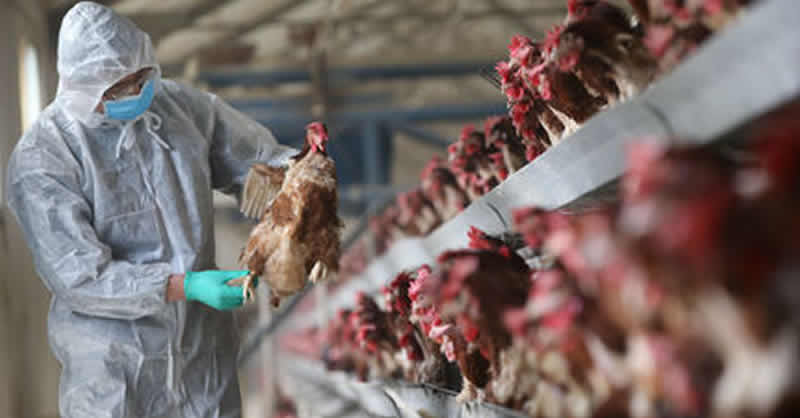
The Federal Government has said it is partnering with the Food and Agriculture Organisation to strengthen Nigeria’s preparedness, detection and response to Highly Pathogenic Avian Influenza (bird flu) through a $350,000 intervention that will also train 240 animal health personnel.

The government disclosed this in a statement issued on Thursday night following the inauguration of the FAO Technical Cooperation Programme Project on Strengthening HPAI Preparedness, Detection and Response in Nigeria.

According to the statement, the initiative is designed to improve disease surveillance, laboratory diagnostic capacity, risk communication, and stakeholder coordination under the One Health framework.

The Minister of Livestock Development, Idi Maiha, was quoted as saying that the poultry industry remains vital to Nigeria’s food security and economic growth but continues to face threats from transboundary animal diseases.

“The poultry industry remains a critical component of Nigeria’s livestock sector. However, it continues to face threats from transboundary animal diseases, particularly Highly Pathogenic Avian Influenza, which has remained a recurring challenge since its first occurrence in Nigeria in 2006,” the minister said.

Maiha noted that the resurgence of the disease since 2021 has continued to affect poultry farmers across different scales of operation, with implications for food security and international trade.

“We are concerned because of the destructive effect of avian influenza in Nigeria. It is threatening livelihoods, threatening food security, and threatening international trade. We must work together to restore livelihoods, close gaps in poultry product supply, and reconnect our poultry industry to international markets,” he stated.

The minister commended the FAO for approving and funding the project, describing the intervention as timely and consistent with the Federal Government’s efforts to strengthen disease prevention and control within the livestock sector.

See also  NNPC, NUPRC remit N322bn, $116.9m after Tinubu order

The statement also quoted the Permanent Secretary of the ministry, Dr Chinyere Akujobi, represented by the Chief Veterinary Officer of Nigeria, Dr Samuel Anzaku, as saying that Nigeria has continued to record outbreaks of HPAI annually despite progress made in disease control.

“The epidemiology of the disease has evolved, with outbreaks now affecting multiple avian species. Layer farms remain the most severely impacted segment, resulting in substantial economic losses and disruptions across poultry value chains,” she said.

The FAO representative, Dr Otto Muhinda, reaffirmed the organisation’s commitment to supporting Nigeria in combating transboundary animal diseases and building a resilient poultry industry.

“FAO is proud to partner with the Federal Ministry of Livestock Development and other stakeholders in building a more resilient poultry sector. Through this project, we aim to enhance Nigeria’s capacity for early detection, preparedness, and rapid response to Highly Pathogenic Avian Influenza, thereby protecting livelihoods, food security, and public health.

“Over the next nine months, the project will train 240 animal health personnel, contributing to a stronger frontline workforce capable of preventing and responding to disease outbreaks. It will also support the development of predictive tools to improve preparedness and reduce future risks of HPAI in Nigeria,” he said.

According to the statement, stakeholders including representatives of the Office of the National Security Adviser, the Veterinary Council of Nigeria, the Nigerian Veterinary Medical Association, the Federal Ministry of Health and Social Welfare, and the Federal Ministry of Environment stressed the need for collaboration in tackling disease outbreaks.

The ministry stated that Nigeria recorded confirmed outbreaks of HPAI in Kebbi, Kano, Katsina, Plateau, and Bauchi states in 2026, underscoring the continued threat posed by the disease to the poultry industry, food security, and livelihoods.

See also  Marketers reject fuel pricing curbs, threaten shutdown; read why

It added that the FAO-supported intervention would be implemented in seven pilot states to strengthen disease surveillance, improve laboratory diagnostic capacity, enhance biosecurity measures, promote risk communication, and bolster rapid response mechanisms.

Bird flu, or avian influenza, is a highly contagious viral disease caused by strains of the influenza A virus that primarily infect wild and domestic birds.

While it primarily spreads among avian populations, certain strains, such as H5N1, can occasionally infect humans and other mammals, primarily through direct contact with infected animals or contaminated environments.

punch.ng

FOLLOW US ON:

FACEBOOK

TWITTER

PINTEREST

TIKTOK

YOUTUBE

LINKEDIN

INSTAGRAM

Continue Reading
Click to comment

Leave a Reply

Your email address will not be published. Required fields are marked *

Business

US Government Warns American Business Executives About Investing In Nigeria

Published

on

A United States Department of State report has warned American business executives in Nigeria.

The department warned that insecurity, corruption, port inefficiencies, and regulatory uncertainty could significantly hinder investment in Nigeria.

It was reports that the department gave the warning in its 2026 Investment Climate Statements on Nigeria.

The report explained that those challenges continue to weigh on the country’s business environment despite signs of macroeconomic stability.

The department said the country’s investment landscape has been shaped by the outcomes of “painful but necessary” structural reforms introduced by the President Bola Tinubu administration.

The report said the removal of fuel subsidies and liberalisation of the foreign exchange market initially triggered significant economic volatility, although early 2026 indicators suggested some stabilisation.

However, it warned that security concerns, administrative bottlenecks and the social consequences of economic reforms remain significant considerations for foreign investors.

“The security environment is a primary variable which gives pause to potential investors,” the report said.

It noted that although attacks on oil infrastructure in the Niger Delta have decreased, oil theft and illegal bunkering persist.

In the North, the expansion of terrorist and ‘bandit’ groups continues to degrade the climate for agribusiness and mining,” the document added.

The report also raised concerns about how regulators treat foreign business executives in disputes, citing the detention of Tigran Gambaryan, a US citizen and Binance executive, for nearly eight months in 2024.

“Furthermore, the use of coercive exit bans and detentions, highlighted by the high-profile nearly eight-month detention in 2024 of U.S. citizen Binance employee Tigran Gambaryan, serves as a cautionary note for foreign executives regarding the risks of aggressive regulatory friction,” it said.

See also  World Bank dismisses Nigeria’s single-digit inflation target

The report said such cases could shape perceptions of Nigeria as a destination for foreign investment.

The department identified inefficiencies at Nigerian seaports as another major challenge for businesses, particularly those dependent on imports and exports.

“Port inefficiency remains a significant ‘hidden tax’ on investment,” the report said.

It noted that the Lekki Deep Seaport handled $9.6 billion in trade in 2025 and operated at 50 per cent capacity, helping to ease pressure on older facilities.

FOLLOW US ON:

FACEBOOK

TWITTER

PINTEREST

TIKTOK

YOUTUBE

LINKEDIN

INSTAGRAM

Continue Reading

Business

Nigerian states’ revenues rise 93%, but education spending drops — World Bank

Published

on

The World Bank says Nigeria’s 36 states recorded a 93 per cent increase in revenues between 2023 and 2025 but education received a declining share of the sector’s expenditure.

The bank disclosed this in its latest Nigeria Development Update, which examined how increased public revenues have influenced spending priorities across the federation.

The report was made available to the News Agency of Nigeria by the World Bank in Washington D.C.

According to the report, states’ aggregate revenues rose by approximately 93 per cent in real terms, while expenditure increased by 92 per cent during the period.

The report attributed the improvement partly to exchange-rate reforms, petrol subsidy removal, stronger revenue administration and increased allocations from the federation account.

It said states also benefited from refunds, settlement of longstanding federal obligations, intervention funds, and stronger Value Added Tax collections.

However, education’s share of total state expenditure declined from 14.9 per cent in 2021 to 12.1 per cent in 2025, according to the report.

Health expenditure remained broadly stable at approximately seven per cent, while social protection’s share increased from 1.4 per cent to 4.4 per cent.

The bank said capital expenditure increased significantly, accounting for 61 per cent of state spending, compared with 46 per cent previously.

Transport infrastructure recorded the largest increase, alongside substantial spending on housing, agriculture and other economic investments.

The report quoted Mathew Verghis, the World Bank Country Director for Nigeria, as saying that increased revenues provided the opportunity to improve infrastructure, education, healthcare, and water services.

See also  Nigerians spend N1.54tn on beer, others in nine months

He said greater spending efficiency, accountability and improved service delivery were essential to ensuring that additional public resources benefited Nigerians.

The bank acknowledged improvements in states’ fiscal reporting, transparency and internally generated revenue.

It, however, stressed that stronger investment in human capital was necessary to translate economic reforms into sustainable employment and improved living standards.

The report also projected average economic growth of 4.4 per cent between 2026 and 2028, subject to sustained reforms and improved service delivery.

It urged federal and state authorities to ensure that increased public revenues translated into tangible improvements in Nigerians’ welfare.

NAN

Source: punchng.com

FOLLOW US ON:

FACEBOOK

TWITTER

PINTEREST

TIKTOK

YOUTUBE

LINKEDIN

INSTAGRAM

Continue Reading

Business

Nigeria promotes investment without building production capacity – UNILAG don

Published

on

A professor of Comparative Political Economy at the University of Lagos, Adelaja Odukoya, has asserted that Nigeria’s economic policies promote investment without sufficiently strengthening domestic production.

Odukoya argued that the contradiction had weakened the country’s productive foundations, with policies encouraging investment and entrepreneurship while failing to create the technological capacity, productive employment and processing industries needed to drive sustainable development.

Odukoya spoke at the maiden edition of the Adeleke University Toyin Falola Annual Lecture, held on Thursday at the Performing Arts Theatre, Adeleke University, Ede.

The lecture had as its theme, “History, Power and Accumulation: Reimagining Africa in the Globally Disorderly Order.”

Odukoya identified several contradictions in the way the Nigerian state manages economic activity.

He said, “The state promotes investment without creating conditions for technological transfer. It encourages entrepreneurship without generating sufficient productive employment.

“It expands primary-product exports while leaving processing capacity undeveloped. It constructs infrastructure without establishing strong linkages with domestic production.”

According to him, the contradictions explain why increased economic activity and accumulation do not necessarily translate into development.

“Accumulation is not synonymous with development,” Odukoya stated.

He argued that genuine development should be measured by the expansion of productive, technological, institutional and human capabilities.

“A country could attract investment, export minerals and agricultural commodities and record economic activity while still failing to build the domestic industries and technological capabilities required for long-term development,” he said.

His argument was echoed by Prof Toyin Falola, who said Africa’s vast natural resources would continue to reinforce dependency unless governments developed the industrial, technological and institutional capacity to transform them into productive power.

See also  APC’s gov candidate slams Otti’s ‘harsh’ tax hike on Aba traders

Falola said Africa’s resource problem was not simply one of historical exploitation, but also the continent’s failure to convert its resource endowments into power.

“The issue, however, is not just to repeat the history of exploitation. It is more important to know how Africa turns its great resources into power,” Falola said.

He argued that Africa could not afford to remain a spectator as global economic and geopolitical arrangements continued to change, stressing that resource ownership without the capacity to add value would not guarantee influence.

Falola said the continent required a combination of knowledge, government policy and industrial capacity to change its economic position.

“There must be universities that generate new knowledge; there must be governments that translate this knowledge into policies; there must be industries that add value to the continent’s natural resources,” he said.

He added that Africa needed more than improved infrastructure and stronger economies if it wanted to exercise greater influence in the global system.

“The future of the continent will require more than just better infrastructure, improved economies, and more effective political institutions,” Falola said.

Source: punchng.com

FOLLOW US ON:

FACEBOOK

TWITTER

PINTEREST

TIKTOK

YOUTUBE

LINKEDIN

INSTAGRAM

Continue Reading

Trending