
Connect with us

Education

Teacher’s detention sparks uproar among Lagos colleagues

Published

on

Colleagues of a Lagos teacher, Peter Shodipe of Ijaiye Ojokoro Junior College, have appealed to authorities to thoroughly review the circumstances surrounding a drama presentation that allegedly triggered panic among students in the school.

Shodipe was arrested after a co-curricular programme organised by the National Value Education Department of the school caused confusion when some students mistook a drama presentation on banditry for a real-life attack.

The incident, which occurred during a Wednesday co-curricular activity, later drew the attention of the police after frightened students shouted that bandits had invaded the school.

Speaking with our correspondent on Saturday, sources within the school maintained that Shodipe was merely carrying out an approved educational assignment.

A teacher in the school, who requested anonymity for fear of victimisation, said the programme had been planned as part of activities marking National Awareness Day and was intended to educate students about insecurity, particularly banditry and kidnapping.

According to the source, the National Value Education Department, comprising teachers of Social Studies, Civic Education, Security Education and History, had agreed to organise a pep talk, quiz competition and drama presentation focusing on the causes, effects and prevention of insecurity.

Shodipe, who was assigned to coordinate the drama, reportedly selected students from JSS3 for the presentation and supervised rehearsals a day before the event.

The source said, “The drama was not a standalone activity. It was part of a broader educational programme. We prepared quiz questions, assigned teachers to different responsibilities and planned awareness talks.

“The drama was intended to help students understand the realities of insecurity and the importance of vigilance. It was never conceived as entertainment or content for social media.”

The source explained that preparations for the programme began within the school compound on the morning of the event.

See also  Appeal Court affirms 2-year jail term on UNICAL Professor convicted of s£xual harassment

The teacher specifically noted that the preparations were observed by officials of the Lagos State Neighbourhood Safety Corps stationed at the school.

“Students changed into costumes near the school gate while officials of the Lagos State Neighbourhood Safety Corps stationed at the school observed the preparations.

A staff member volunteered a bus to serve as a prop for the drama, and the vehicle remained on the school premises throughout the preparations.

“Some parents dropping off their children also saw students changing into costumes and understood that a drama presentation was about to take place,” the source added.

However, confusion reportedly erupted when the bus moved into position for the performance.

Some students who had not been briefed on the exercise allegedly began shouting, “Bandits! Bandits!” causing panic among other students and staff members.

The situation escalated as frightened students fled into neighbouring schools within the educational complex before some eventually ran onto nearby roads.

This also prompted concerned residents to alert security agencies.

Another teacher in the school, who also preferred not to be named due to the sensitive nature of the incident, said police officers later arrived and arrested Shodipe.

“When the officers arrived, they first went to the principal’s office. The principal later took them into the staffroom, where Mr Shodipe was identified.

“Education officials and school administrators subsequently made efforts to intervene, but by then the matter had already been escalated beyond the divisional level before the teacher was transferred to the state command headquarters,” the source said.

The detention of the teacher has generated concern among colleagues, particularly following comments made by the Lagos State Commissioner of Police, Tijani Fatai, who described the incident as content creation.

See also  NUC Approves 13 New Courses For Universities In Nigeria (Full List)

Speaking during a strategic meeting with police officers on Friday, the police commissioner said, “I can recall a teacher tried to create content around banditry and some other students who were not there got to know of this, and this caused a lot of pandemonium within the school.”

He further warned content creators against raising false alarms, stating that anyone found creating unnecessary content around sensitive security issues would face the law.

However, the colleagues strongly disputed that characterisation, insisting that describing the activity as content creation misrepresented the context in which it occurred.

The teacher further said, “We were surprised to hear it described that way because this was not a skit designed for social media and nobody was creating content.

“Mr Shodipe is a classroom teacher. He was assigned by the department to coordinate one aspect of an officially approved school programme, just as other teachers were assigned to handle the quiz and awareness sessions. Everything happened within the framework of teaching and learning.”

The source said the existence of departmental plans, rehearsals and other programme components demonstrated that the exercise was educational in nature.

“If this had been a personal project, people might understand the allegation. But this was a departmental activity involving multiple teachers and students. There were meetings, preparations and assigned responsibilities. The unfortunate panic that followed does not change the original purpose of the programme.

“The programme involved several teachers and formed part of activities approved by the department. What happened was an unintended consequence of a role-play exercise, not an attempt to create online content or spread a false alarm,” the source added.

See also  How I bagged PhD at 27, won UT Dallas’ Outstanding Graduate Student award — Nigeria’s Muneer Yaqub

The teacher acknowledged that communication gaps may have contributed to the misunderstanding but argued that any shortcomings should be treated as administrative issues rather than criminal conduct.

“We are not saying everything was perfect. Looking back, perhaps more people should have been informed because of the sensitive nature of the topic. But there is a difference between a mistake in planning and a criminal act. Nobody intended to cause panic, and nobody gained anything from what happened,” the source added.

The sources further appealed to the authorities to consider testimonies from parents, security personnel, students and staff members who witnessed the preparations before reaching any conclusions.

“What we are asking for is fairness. Let investigators speak with the teachers who planned the programme, the security personnel who witnessed the preparations and the parents who saw the students getting ready for the drama.

“We believe Mr Shodipe deserves a fair hearing and should not be punished for what appears to have been an unintended misunderstanding.”

It was gathered that efforts by Shodipe’s family to gain access to the detained teacher have so far been unsuccessful.

When contacted for a reaction, the Secretary of the National Union of Teachers in Lagos State, Gbenga Ayetobo, said the union had no information on the incident.

“No information for now, please,” he said.

The state Police Public Relations Officer, Abimbola Adebisi, could not be reached for comment as calls and text messages sent to her phone number were not responded to as of the time of filing this report.

punch.ng

FOLLOW US ON:

FACEBOOK

TWITTER

PINTEREST

TIKTOK

YOUTUBE

LINKEDIN

INSTAGRAM

Continue Reading
Click to comment

Leave a Reply

Your email address will not be published. Required fields are marked *

Education

SEE FULL LIST: 26 education initiatives highlighted by Tinubu’s minister

Published

on

The Minister of Education, Tunji Alausa, has highlighted 26 initiatives and reported achievements of President Bola Tinubu’s administration in the education sector, including university reforms, teacher development, technical education and student entrepreneurship.

The initiatives were outlined in an A–Z document titled From Reform to Results, shared by Alausa on Tuesday on his X account.

The document, which covers the Nigeria Education Sector Renewal Initiative (NESRI), highlights programmes aimed at improving access to education, strengthening institutions, promoting research and innovation, and equipping young Nigerians with practical skills.

Beyond the Nigerian Education Loan Fund, the initiatives span basic, secondary and tertiary education, with interventions targeting students, teachers, researchers and other education stakeholders.

Below are the 26 initiatives and the figures contained in the document.

A. ASUU Agreement

The Federal Government reached a new agreement with the Academic Staff Union of Universities to improve staff welfare and promote stability in the university system.

The agreement provides for a 40 per cent increase in academic staff remuneration, a revised Consolidated Academic Tools Allowance, strengthened cadre-based allowances and provisions for earned academic allowances.

B. Better Education Service Delivery for All (BESDA)

The programme is aimed at addressing the challenge of out-of-school children, particularly in 17 northern states with high numbers of children excluded from formal education.

It is expanding access to basic education and creating opportunities for children to return to learning.

C. Campus Mobility Initiative

The initiative provides environmentally friendly transportation to improve movement within university campuses.

The government reported that 780 electric tricycles had been deployed across 48 universities, with 35 provided to each institution.

D. Diaspora BRIDGE

The programme connects Nigerian experts living abroad with students and institutions in the country to contribute their knowledge and experience to teaching and learning.

The document reported that 1,141 experts had registered, with 16,675 students benefiting across 107 tertiary institutions.

E. Empowering Educators

Through EduRevamp and the Accelerated Teacher Professionalisation Pathway, the government is supporting teachers’ professional development, certification and licensing.

The document listed 53,553 teachers registered on EduRevamp and 51,794 registrations for the first ATPP cohort.

It also reported a ₦2bn investment in the programme, which targets 250,000 teachers by 2027.

F. Free Technical Education

The initiative provides free technical education to students in federal and selected state technical colleges.

The benefits include free tuition, boarding, textbooks and uniforms.

The document also reported that 38 federal and state technical colleges had been rehabilitated to improve the environment for practical skills training.

G. Girl-Child Education

Through initiatives including the Adolescent Girls Initiative for Learning and Empowerment, the government is addressing barriers preventing girls from enrolling, remaining and succeeding in school.

See also  16-year-old girl emerges Nigeria’s youngest chartered accountant

The document reported that 7.19 million girls were benefiting from direct interventions across 21 AGILE states, while 3.7 million were enrolled in junior and senior secondary schools.

More than 422,720 girls had completed life-skills programmes, while over 10,000 schools had benefited from improved classrooms, water, sanitation and hygiene facilities, and teaching and learning materials.

H. HOPE Education

The HOPE-Education programme, supported by $552m in World Bank funding, is aimed at strengthening foundational education and improving learning outcomes.

The document listed 29 million child beneficiaries, support for more than 500,000 teachers, 65,000 public schools to be strengthened and 10,000 non-formal learning centres to be improved.

I. Inspire Live!

The programme provides live online lessons for pupils from Primary One to Senior Secondary School Three.

Lessons are delivered by certified educators, with artificial intelligence-assisted question-and-answer support.

The initiative is designed to address teacher shortages and improve access to quality teaching, particularly in schools with limited teaching personnel.

J. JAMB Admissions Reform

The government has introduced changes to tertiary admission requirements to create more flexible pathways for prospective students.

Under the reforms, the Unified Tertiary Matriculation Examination requirement has been removed for admission into National Certificate in Education programmes.

Entry requirements have also been reviewed for selected National Diploma programmes.

K. Knowledge Economy

The initiative seeks to promote research, innovation, entrepreneurship and the commercialisation of ideas in tertiary institutions.

Through Research, Innovation and Commercialisation Committees, universities are being encouraged to turn research findings into practical solutions, businesses and employment opportunities.

The document also listed a National Laureate Prize with an annual award fund of ₦365m to recognise excellence in research and innovation.

L. National Learning Assessment

The Federal Ministry of Education has reintroduced the National Learning Assessment to measure what pupils are learning and identify gaps in the education system.

The assessment is expected to provide evidence to guide improvements in teaching, curriculum development and education policy.

M. Medical Education Expansion

The initiative focuses on increasing the number of healthcare professionals trained in Nigerian institutions and strengthening medical education.

The document reported that annual nursing enrolment had increased from 28,000 to 115,000, while medical and dental enrolment rose from 5,000 to 12,000.

Pharmacy enrolment also increased from 3,644 to 7,419.

It added that a ₦110bn intervention was supporting the rehabilitation of 24 medical schools.

N. Nigerian Education Loan Fund

The Nigerian Education Loan Fund provides financial support to eligible students to cover institutional fees and upkeep.

See also  NUC Approves 13 New Courses For Universities In Nigeria (Full List)

The document reported that 1,659,853 applications had been processed, with ₦192.89bn paid as institutional fees and ₦179.73bn disbursed as upkeep allowances.

The fund had also covered 319 beneficiary institutions, with total reported disbursements of ₦372.62bn.

O. Out-of-School Children and Almajiri Education

The initiative seeks to reintegrate out-of-school children into learning through inclusive education and the National Almajiri Policy, which integrates formal education with traditional Qur’anic education.

According to the document, more than one million out-of-school children had been reintegrated, while 200 bilingual learning centres had been established and 1,400 Tsangaya teachers trained.

It also listed 13,000 classrooms for construction or rehabilitation.

P. Prioritising Educators’ Welfare

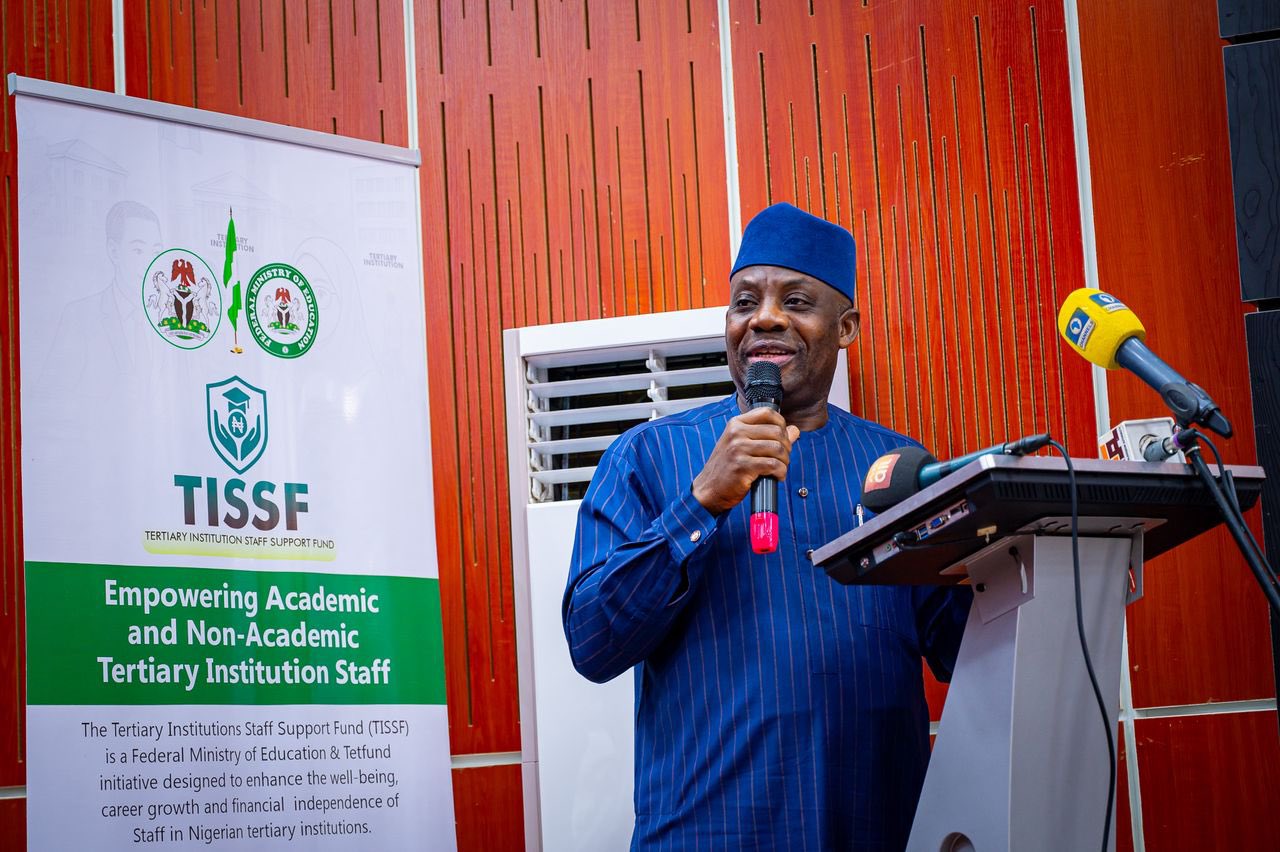
Through the Tertiary Institutions Staff Support Fund, academic and non-academic workers in public tertiary institutions can access financial support of up to ₦10m for housing, transportation, medical needs, education and other welfare requirements.

The document reported that ₦28bn had been disbursed to 15,000 staff members across 153 public tertiary institutions.

Q. Quality Assurance

The government said it was strengthening education standards, curriculum and learning outcomes through its quality assurance reforms.

A key component is the introduction of a new national curriculum, which includes the return of Nigerian History to classrooms and a stronger emphasis on Civic and Heritage Studies.

The initiative is intended to make learning more relevant and equip pupils with knowledge of their country’s history, identity and responsibilities.

R. Renewable Energy for Education

Through the Renewed Hope Energising Education Programme and the University Compressed Natural Gas Project, the government is providing cleaner and more reliable energy for tertiary institutions.

The document reported that solar mini-grids had been built in 37 federal universities and seven teaching hospitals.

It also listed 20 federal and state universities equipped with CNG refuelling stations.

S. Student Venture Capital Grant

The Student Venture Capital Grant provides equity-free funding to student entrepreneurs with innovative ideas in science, technology, engineering, mathematics and medical sciences.

The first cycle attracted 30,639 registrations from 404 tertiary institutions, with 65 finalists selected.

The document reported that more than ₦2.5bn had been disbursed to 45 student entrepreneurs, with each receiving up to ₦50m.

T. Technical and Vocational Education and Training

The Federal Ministry of Education’s TVET initiative provides practical skills training through Master 6, Master 12 and technical college pathways.

The programme is designed to connect vocational training with certification, employment and entrepreneurship.

The document reported more than 2.8 million applicants and 156,446 verified trainees.

It also listed over ₦65.7bn in stipends and start-up support disbursed to verified trainees, alongside ₦30.2bn paid to training centres.

See also  Appeal Court affirms 2-year jail term on UNICAL Professor convicted of s£xual harassment

U. University Financial Autonomy

The initiative is aimed at helping universities diversify their revenue sources, strengthen governance, commercialise research and reduce dependence on government funding.

Through a partnership with the Nigeria Higher Education Foundation, federal universities are also being supported to establish and strengthen advancement offices to engage alumni, attract philanthropic contributions and develop alternative funding sources.

V. Visibility

The ministry is improving public access to information on education programmes, institutions and reforms through websites, portals, dashboards and reports.

These include the NESRI website, the National Education Data and Information portal, the Digital National Education Management Information System, NELFUND’s monthly reports and the Federal Tertiary Institutions Governance Portal.

The document reported that the governance portal had onboarded 58 of 63 federal universities, 37 of 41 federal polytechnics and 27 of 29 federal colleges of education.

It also said more than four million learners had been assigned Learner National Identification Numbers, against a target of 40 million by 2027.

W. Workforce Expansion

The government is expanding professional training in specialised fields where Nigeria faces shortages of skilled personnel.

Through the National Committee for the Advancement of Occupational Therapy, Audiology and Speech Therapy Education, the ministry is working to expand degree programmes and strengthen clinical training in the three fields.

X. eXpanding Digital Access

Through the National Education Data Infrastructure, the government said more than 40 million learners and 215,000 schools had been mapped to improve education planning.

The document also reported that 16,000 learners had been enrolled in the first cohort of the Digital Technical Academy.

Other interventions include the deployment of 1,000 smart boards across the 36 states and the Federal Capital Territory, as well as the onboarding of 111 tertiary institutions onto AWS Academy.

Y. Youth Entrepreneurship

Through the Entrepreneurship, Innovation and Business Incubation Certification programme, the government is integrating entrepreneurship and innovation into tertiary education.

The programme is currently being implemented in 14 federal universities to equip students with business skills and help them turn ideas into viable ventures.

Z. Zero-Rated Education

The Federal Ministry of Education is working with the Nigerian Communications Commission and other partners to make approved educational platforms accessible at reduced or no data costs.

Through the Education Internet Exchange Point, learners and institutions are also expected to access educational materials and digital resources free of charge or at reduced costs.

Source: punchng.com

FOLLOW US ON:

FACEBOOK

WHATSAPP CHANNEL

TWITTER

PINTEREST

TIKTOK

YOUTUBE

LINKEDIN

INSTAGRAM

Continue Reading

Education

Australia scraps digital writing tests for Year 5 pupils

Published

on

Australia will return to pen-and-paper writing tests for Year 5 pupils from 2028 following growing concerns over the impact of excessive screen time and digital technology on children’s learning outcomes.

The decision, agreed by the country’s education ministers, will see pupils take the National Assessment Programme – Literacy and Numeracy (NAPLAN) writing test on paper rather than computers.

According to an updated ABC News report late Tuesday, South Wales Deputy Premier and Education Minister, Prue Car, said there was growing evidence that excessive screen exposure was affecting students and their academic performance.

“There is a lot of evidence to suggest that excessive screen time has been harmful for students and their outcomes.

“Ministers across the country have agreed that we work towards year 5 NAPLAN being writing with pen and paper, that will be in addition to year 3 already being pen and paper,” Car said.

Car is also pushing for the writing assessments for Years 7 and 9 to return to paper, with the Australian Curriculum, Assessment and Reporting Authority, which administers NAPLAN, expected to provide advice to ministers on the proposal.

Explaining the decision, she said students performed better when writing by hand than typing on screens.

“It’s about the evidence of how children learn and they actually do better when they’re writing pen to paper as opposed to typing on screen.

“So making sure that the assessment is actually pen to paper will then necessitate more classroom time being pen and paper as opposed to a computer,” she said.

See also  Appeal Court affirms 2-year jail term on UNICAL Professor convicted of s£xual harassment

The decision comes amid concerns about declining academic performance among Australian pupils, with recent international assessments highlighting challenges in literacy, numeracy and students’ use of digital devices.

Australian students recorded their worst-ever results in the recent Programme for International Student Assessment, which compares educational performance across countries.

The assessment found that Australian students spent an average of 2.6 hours daily using digital devices, compared with the Organisation for Economic Co-operation and Development average of 1.7 hours.

NAPLAN results have also consistently shown that about one-third of Australian students are not meeting what education authorities describe as challenging but reasonable expectations in foundational literacy and numeracy.

The Heads Up Alliance, a grassroots movement of parents campaigning against screen time, welcomed the proposed changes but called for more comprehensive reforms.

Its founder, Dany Elachi, said the decision was a step in the right direction but argued that more needed to be done to reverse the decline in educational standards.

“New South Wales’ recently announced screen time parameters and proposed NAPLAN reforms are welcome steps in the right direction.

“However, more will be needed to reverse the decline in Australian educational standards. It turns out that Australia’s Digital Education Revolution of 2008 was, in effect, a vast experiment on our children. Today, the results of that experiment have become impossible to ignore,” Elachi said.

La Trobe University Distinguished Professor Pamela Snow also backed calls for a broader reassessment of technology use in schools, arguing that its adoption had moved faster than the available evidence supporting its benefits.

See also  16-year-old girl emerges Nigeria’s youngest chartered accountant

“I think as a general principle, the application of technology and education has got way ahead of the evidence.

“We can’t just keep going with these stopgap measures of tinkering around the edges downstream,” Snow said.

Snow said technology was introduced into classrooms too quickly.

“It’s now just become normalised, and, of course, it’s difficult now to wind it back and calibrate its use, but I’m not aware of any actual evidence that says technology has enhanced students learning,” she added.

Car said education ministers had also agreed to begin work on a broader digital detox initiative for Australian classrooms.

“State and territory ministers and the Commonwealth have agreed to start work on a digital detox for Australian classrooms.

“In New South Wales mandatorily from 2028, we’re going forward with screen time limits in classrooms, phased in from preschool to year 12 in the HSC year,” she said.

The education ministers are expected to release a communique later in the week outlining further reforms, including a proposed federal super commission partly aimed at addressing concerns over Year 12 dropout rates.

The ministers are also considering reforms to the primary school mathematics curriculum and additions to the national curriculum to address anti-Semitism.

Source: punchng.com

FOLLOW US ON:
FACEBOOK

WHATSAPP CHANNEL

TWITTER

PINTEREST

TIKTOK

YOUTUBE

LINKEDIN

INSTAGRAM

Continue Reading

Education

UniAbuja land dispute: ASUU threatens industrial action

Published

on

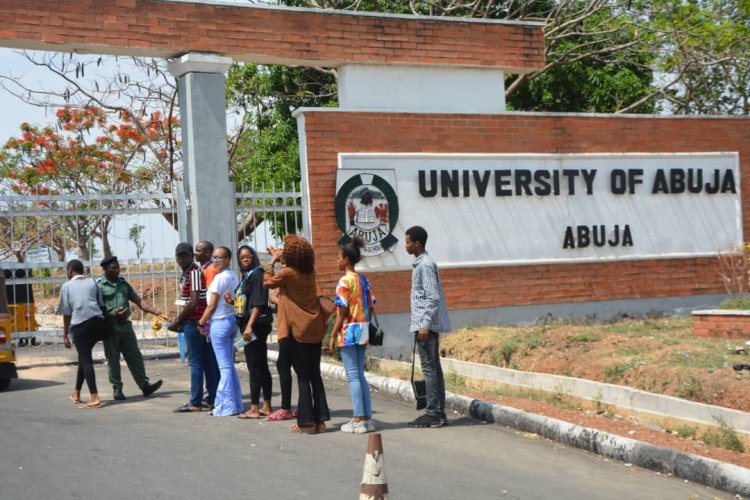
The Academic Staff Union of Universities (ASUU), University of Abuja (UniAbuja) branch, has demanded the immediate reversal of the alleged unlawful allocation of the university’s land by FCT Minister, Nyesom Wike.

The union also appealed to President Bola Tinubu to call Wike to order over the disputed land, saying this would allow peace and harmony to prevail on the university campus.

The Chairperson of ASUU, UniAbuja branch, Prof. Sylvanus Ugoh, made the demands at a news conference on Tuesday in Abuja.

The News Agency of Nigeria (NAN) reports that the conference was tagged: “Ministerial Encroachment into University of Abuja Land: Some Points to Ponder.”

Ugoh said the union would no longer guarantee industrial harmony if the minister failed to reverse the alleged allocation of the university’s land to his friends and cronies.

“The act of the FCT Minister is an outright breach and total disregard for the rule of law.

“On Aug. 18, Justice F.E. Mesiri of Maitama High Court granted interlocutory injunctions, including an order restraining the FCT Minister from entering or encroaching on University land.

“In spite of the court order, the FCT Minister went ahead on Sept. 26, to allocate the university land to companies and individuals,” he said.

Ugoh said the minister announced on June 30, 2025, during the inauguration of an access road to the Economic and Financial Crimes Commission (EFCC) Institute in Giri, the retrieval of 7,000 hectares from the 11,000 hectares allocated to the university.

He said the minister had accused the university of land grabbing and fencing several hectares of land without proper approval or documentation.

See also  Future of education in Kwara uncertain if teachers are not motivated – NUT chairman warns

“There is overwhelming documentary evidence showing that this parcel of land was allocated to the University of Abuja,” he said.

He explained that the University of Abuja was established on January 1, 1988, with an initial land allocation of 11,824 hectares to accommodate its long-term academic and infrastructural development.

According to him, the university authority could not have on its own decided where to situate the institution.

He said the university and the land were the property of the Federal Government and not the FCT.

Ugoh said the large landmass was deliberately allocated to provide room for future expansion, research activities, academic facilities and other institutional needs.

He noted that the university, as a dual-mode institution offering conventional and distance learning programmes, required sufficient land to fulfil its mandate.

Ugoh said the land was also needed for the establishment of research institutes, innovation centres and other facilities that would contribute to national development.

He added that portions of the land served as green areas for ecological balance, environmental conservation and climate change mitigation.

“The development of the University of Abuja may seem very slow, but it is still the Federal Government that is responsible for the development of its university.

“We appreciate the zeal of the FCT Minister to develop the FCT, but the argument that the land has been left undeveloped for too long does not stand.

“Universities gradually realise their full potential. It is pertinent to mention that the 11,824 hectares of University of Abuja land is not in any way beyond a dual-mode university in the country’s capital.

See also  Shun cultism, hooliganism, Babcock varsity VC urges new students

“For instance, University of Ilorin occupies 15,000 hectares, Obafemi Awolowo University, Ile-Ife, occupies 13,000 hectares, Federal University of Technology, Minna, occupies 10,650 hectares and Federal University of Agriculture, Abeokuta, occupies 10,000 hectares,” he said.

He explained that out of the 11,824 hectares occupied by the University of Abuja, about two hectares were hilly and would require huge resources to develop.

He said the union would, within the ambit of the law, resist in totality any attempt by the minister to unlawfully take away UniAbuja land.

NAN reports that the news conference followed an emergency congress of the union held at the university on November 3 to deliberate on the land dispute.

In June 2025, Wike accused the varsity of land grabbing and noted that the institution has claimed 11,000 hectares of land, of which he had retrieved 7,000.

(NAN)

Source: punchng.com

FOLLOW US ON:

FACEBOOK

WHATSAPP CHANNEL

TWITTER

PINTEREST

TIKTOK

YOUTUBE

LINKEDIN

INSTAGRAM

Continue Reading

Trending