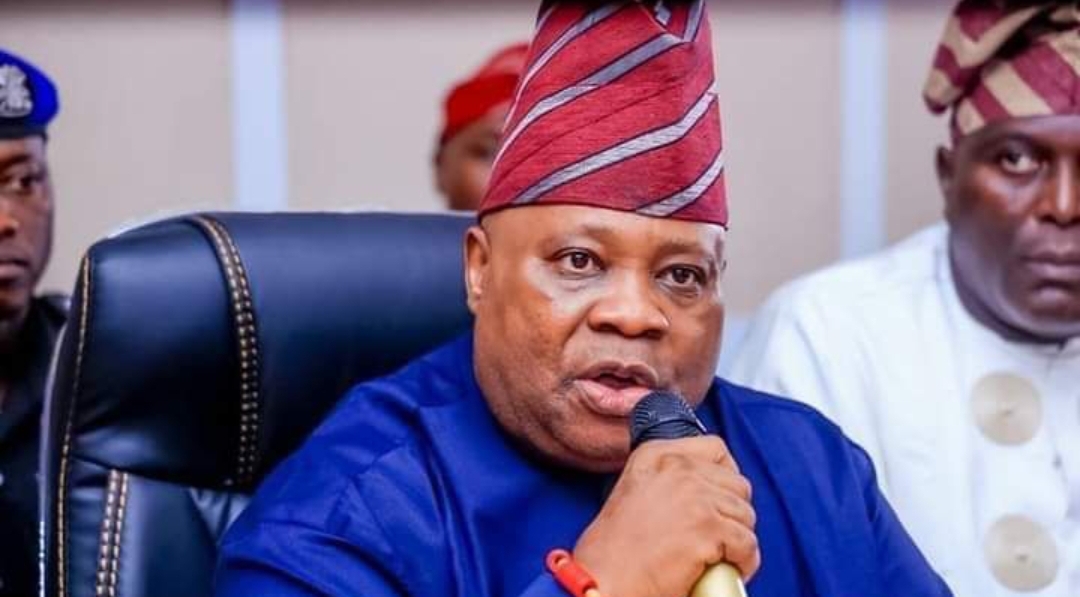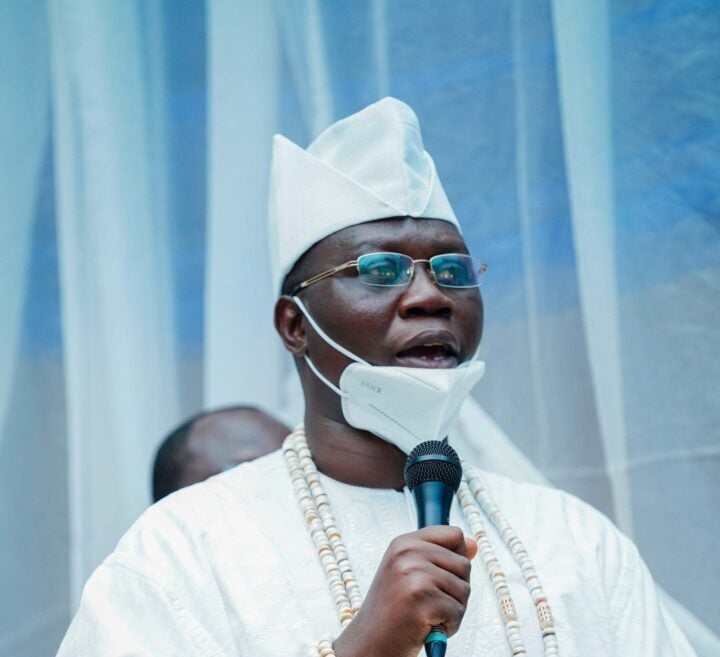
You warned in 2022 that terrorists were setting up camps in the South-West. Despite repeated alerts, gunmen attacked three schools in Oriire, Oyo State, on Friday, killing two people and abducting teachers and students. What failures by the authorities made this attack possible?
The office of the Aare Ona Kakanfo has been limited to just giving out information without being given room for collaboration. I have more information that I can give to law enforcement agencies. Six months ago, we tried to work on our intelligence across the entire South-West region. We spotted many local governments where there was an influx of these terrorists — I won’t call them bandits again. If you call them bandits, you are playing down the kind of criminals they are. We spotted many local governments and we documented it.
How many local governments were affected?
We have 137 local government areas in the South-West, and we spotted not remnants of terrorists, but a lot of terrorists in no fewer than 40 local governments. We have many terrorists that have infiltrated those local government areas.
Did your intelligence reports produce any action?
We kept that document to ourselves because we were more confident that working with state governments, which are the institutions governing the states, would yield results compared to working with law enforcement agents. As a result, we called for collaboration with state governments for the past two years. This is a government that knows your antecedents, knows that you have a structure across Yorubaland, even beyond Yorubaland and in some northern states, yet refuses to talk to you, refuses to agree with you, or even assist you despite being in power and benefitting from security votes. Yet they didn’t call to discuss with you. So, you have to bear in mind that the only assistance you can give to Yoruba people is to talk to the media and give little information that some states have been infiltrated and that there would be attacks in those states, because you are not helping matters by divulging the entire information.For me to raise the alarm that some states have been infiltrated and that terrorists would strike means that the information was based on intelligence and that it would happen. Precisely in November last year, I raised the alarm during the Ajagunmale Festival in Ibeju-Lekki, Lagos, that terrorists had moved from Kogi to attack Ondo and Ekiti states. This was apart from the one I raised in 2022 about the infiltration of Yorubaland. And what is happening in the two states? An Oba was killed in Ondo State about two months ago. Now these people have shifted a little to Oyo State, and we have witnessed about two or three attacks in Ibadan. Definitely, they are determined to move to Lagos.
There was a time I raised the issue of Lagos. Just three days ago, I got information that there was an influx of terrorists into a cattle market after the Lagos boundary into Ogun State. And if care is not taken, anything can happen in Lagos. Also, from the information we have, the target of some of these terrorists is Lagos. They are looking for a way for something to happen simultaneously in Lagos, Ogun, Oyo, Osun, Ondo and Ekiti states. I just saw the video of a prophet saying we should be watchful because anything can happen in Yorubaland. I was just laughing. This goes beyond when a soothsayer gives you a spiritual message. This is what we have gathered from intelligence.
After the Oriire attack, hunters reportedly tried to rescue the victims but retreated after facing superior firepower. Can hunters and local groups truly confront these terrorists if properly empowered?
The power of the hunters is limited. Most of the hunters are not like our native hunters, who had spiritual potential like the hunters of old in Yorubaland. At the same time, the Amotekun Corps in South-West states has limited powers. By law, the Federal Government did not allow them to handle sophisticated firearms. And what we have seen is that if Amotekun personnel were allowed to carry superior weapons like AK-47 rifles and others, and there was collaboration through my office, through the South-West Security Stakeholders, which comprises 14 organisations, you could gather the strength and population of these organisations.
Which groups make up the South-West Security Stakeholders?
The South-West Security Stakeholders’ Group, led by the Aare Ona Kakanfo of Yorubaland, comprises the Oodua People’s Congress, Agbekoya Society, Vigilante Group of Nigeria, Professional Hunters Association, Oodua Warriors, Vigilante Jahun, Agbekoya Peace Movement, Agbekoya Solidarity Movement, COMSAIC, Isokan Ile Oodua, Egbe Obinrin Oodua Agbaye and Omo Oduduwa United, among others, all of which have grassroots structures across local governments. These 14 different groups have the potential for security relevance and good antecedents in local security. There are many things these groups can do if there is collaboration, whether at the state or local level. But some politicians just gather some Agbekoya members and hunters without proper coordination, without speaking to the source, and without engaging the leaders of the organisations. By doing that, you are only dealing with the weak products of those organisations. But when you discuss with the leaders, they can provide you with the strong and brave members of the organisations to work with you. We could even show them the strategies we normally use on security and what it takes to handle crime. But you have a situation where some local government chairmen just gather some hunters and OPC members in their local governments, give them money and patrol vehicles, and expect them to perform. Some of those people don’t have the spiritual potential or the strategy needed to tackle sophisticated criminals. You are in Lagos; you can reflect on the antecedents of OPC from around 1999 to 2005 and what OPC did until law enforcement agencies tried to frustrate us. The frustration gave us a bad image. Through law enforcement agents, many of our members were imprisoned, some were brutally killed, and we went low. People ask whether OPC is still alive like before. The question we ask them is: did you give OPC the job to do? The structure is intact and OPC is still well coordinated, even more than it was between 2000 and 2005.
But OPC is now split into factions. Doesn’t that weaken its effectiveness?
You can talk about three factions. There is no major group that will not have smaller factions. Even in political parties, you have the major parties and then some remnants that want to use the same name. But if the situation demands it, and it concerns Yorubaland, we bring them together. We collaborate with areas that have structures. We will not exclude any OPC faction from the issue of security. All hands must be on deck to confront these criminals. You can have less potential and still know the criminals in your area. Security is not always about carrying sophisticated arms. You need intelligent people. You need people who can infiltrate enemy territories. You need multilingual people who can speak different languages and use that advantage to gather intelligence. You also need people with spiritual potential. You even need clerics who will pray for the success of your mission. So, the issue of security has different sectors. By combining those sectors, you can achieve victory against criminals.
One abducted teacher was reportedly beheaded in the Oyo attack. What message are the terrorists trying to send?
They used that innocent man to send a message. And don’t forget that Oriire Local Government is at the extreme end of Ogbomoso. Oriire shares boundaries with Kwara State, and some parts of Kwara State have practically been taken over by terrorists. Parts of Oriire Local Government also share boundaries with the extreme end of Oke-Ogun. Places like Igboho and Igbeti share boundaries with Kwara State, and some parts of that area share boundaries with the Benin Republic. And don’t forget that the Benin Republic is facing security threats from these terrorists.
Recall the attack that happened in a Kwara community about three months ago, which led to the killing of 200 people. Most of the terrorists came from the Benin Republic to attack Kwara State. So the areas of Oriire, Ogbomoso, Igbeti and Igboho are places that share boundaries with Kwara State and the Benin Republic. Some places in Ekiti State also share boundaries with Kogi and Kwara states. So, the influx of people coming from Kogi into Kwara State is very possible, and the influx of people coming from Kwara into Oyo State is equally possible.
So, I believe 100 per cent that the hardliners among the terrorists came from Kwara to carry out this havoc. This is not the first time.
The first time they came to a community in Ogbomoso, they killed five forest guards about two months ago. They used that incident to test the waters. The second time, they kidnapped about 40 people.
Could locals be collaborating with these terrorists?
It’s possible because, in some areas, it is not only Northerners or terrorists coming from the Sahel or Chad who are involved in these acts. They have agents whom they pay huge amounts of money to gather intelligence for them. Before they strike, they make sure they have someone who will provide intelligence on that area over a period of two months. It is a well-coordinated operation.
These are people trained by ISIS, Al-Qaeda and ISWAP. So they are internationally trained to fight guerrilla warfare. It’s not only guerrilla tactics they are using; it is guerrilla warfare. They strike and move people away, or kill and disappear. You do not know their actual base, where the Nigerian Army, native security groups or the police can strike them, or where air raids can target them. They operate and move from one place to another.
The only way to stop or reduce this security threat is for every relevant group to work with the government.
The kidnappers are yet to demand ransom. What does that suggest to you?
I think they want to use the tactics employed in the Chibok girls’ case, because most of the pupils are female. It is a very bad signal to Yorubaland.
Many expect you to mobilise Agbekoya, hunters and other groups against these invaders. What is delaying that move?
Yes, I have authority over every community, but I also have leaders under me. Even in the olden days, a warrior could not go to war without the approval of the king and the council of chiefs. The Aare Ona Kakanfo could not go to war without the approval of the Alaafin and the Oyomesi. So there is a structure.
Now that we have moved from monarchy being in charge of communities, we have governments — federal, state and local governments. You cannot intrude into the security architecture of any community without the approval of the state and local governments. This is not a minor security operation involving just five people. If you want to carry out a mass operation against terrorists in a community, you might need up to 500 people.
So when you move 500 armed men into a state without the approval of that state’s authorities, you create a security threat. Moving 500 people with weapons would require at least 30 buses and heavily built men with their equipment and protection. As you pass through a state, whether you display banners or not, security personnel at checkpoints will notice and communicate with their superiors. Those superiors will inform the security adviser, who will then alert the governor.
If the governor is unaware of your movement, he will order that such people be apprehended. When the 500 people are apprehended and asked why they are in the state, and they say they came to fight terrorism, they will be asked who authorised the operation. Did you discuss it with the Commissioner of Police? Did you engage the Director of the Department of State Services? Did the governor approve it? If you cannot provide satisfactory answers, you are in trouble.
The police will charge you with illegal possession of arms and ammunition, which carries about 10 to 15 years imprisonment. You will also face several other charges related to causing security threats. Before you realise the implications, you are already in jail.
But when there is understanding with the governor, he will inform the Commissioner of Police that some men want to collaborate with security agencies, and then you can work together without problems. We made many mistakes when we started OPC, and we do not want to repeat them. My current position is different from that of a national coordinator of OPC. I now hold a title that covers the entire Yorubaland. So, I must demonstrate to Yoruba people and the global community that I will not act against the laws of the country. We must operate within the confines of the law.
If the governors give the green light, are you ready for battle?
Definitely. The structure is there. Even in places with weak structures, we will move people there to support them. And if there is a shortage of men in some areas, we will carry out quick recruitment. Although that is unlikely because we are talking about 14 organisations, and some of them have said they are waiting for my instruction. And if they are waiting for my instruction, I am waiting for the instruction of the South-West governors.
Should traditional rulers convene an emergency security summit for the South-West?
They organised one in Ile-Ife, Osun State, two years ago, and in the communiqué, they gave room for collaboration, but state governments and the Federal Government are yet to listen. Even at that summit, only one deputy governor attended.
If traditional rulers call a summit on security, South-West governors ought to send at least their deputy governors if they cannot attend personally. The traditional rulers are trying to do their job for them, but only one deputy governor from Osun State attended the summit.
If the entire South-West royal fathers, who are the custodians of the land, invite you as an authority to discuss important issues, I think governors should take it seriously. You should not have the mindset that because you are the Chief Security Officer, you alone should convene such meetings. If you maintain that mindset, you may spend eight years as governor and leave office, while the monarch remains on the throne.
Governors should respect invitations from traditional rulers just as traditional rulers almost always honour invitations from governors. Almost every week, governors invite them to events and they attend. Your power as governor is temporary. Some traditional rulers are working spiritually. I am still working spiritually; otherwise, the situation could have been worse. But spiritual efforts alone are not enough. We need physical collaboration, and we are ready.
What must the authorities do?
So, the authorities must brace up. They must realise that all hands must be on deck to make sure our region is safe. And they should not forget that this is the economic nerve centre of Nigeria, and that 60 to 70 per cent of the economic potential of Nigeria is in the South-West. So, if anything happens to the South-West, like what we are witnessing in the North-East and North-West, the economy of Nigeria may collapse. Most of the expatriates that moved from the North and Niger Delta reside in Lagos and Ogun states. Most of them are bringing their investments to Ogun State. So, we should make sure that we do everything to secure this region.
Can state police solve the security crisis?
I still do not understand why state police has yet to become a reality. President Bola Tinubu has tried to push the issue of state police several times. There was a time he even promised that he would approve state police, saying international partners had spoken to him about establishing it in Nigeria. Also, during Ramadan, when some stakeholders came to break fast with him, he said he was ready for state police.
So, we should ask the President or the Presidency: what is the impediment to establishing state police? When there was agitation for state police, some people came up with the idea of creating forest guards. Within two months, forest guards were created and given sophisticated weapons such as AK-47 rifles. But these forest guards are seen in cities and towns; you don’t see them in forests. Rather, they are in towns using their rifles to intimidate civilians. They were supposed to operate in forests, but they were not recruited from among people familiar with forest environments. Instead, the recruitment was used to serve political patronage.
The Amotekun Corps, which should have been upgraded to state police and allowed to possess such weapons, has been denied that opportunity by the Federal Government. This is because they don’t want states to have certain powers. When you think about political advantage without considering the safety of the people you are leading, it becomes a problem.
Imagine the state of the families of the about 40 kidnapped people. Do we know the condition the pupils have been exposed to? Many of them are not familiar with bush or forest environments. These terrorists will keep giving them unclean water and unhygienic food. If care is not taken, we may lose some of the 39 pupils in the custody of these criminals.
punch.ng
FOLLOW US ON: