Connect with us

News

1.34 million Nigerians denied UK visa in 21 years

Published

on

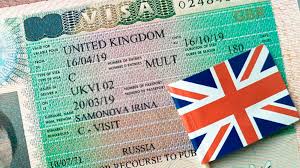
The United Kingdom rejected at least 1,344,595 Nigerian visa applications between 2005 and the first quarter of 2026, official Home Office data obtained by The PUNCH shows.

The rejection rate places Nigeria second globally in total visa refusals, behind only India and ahead of Pakistan and China, among others, as Nigerians alone accounted for 44.4 per cent of all UK visa rejections across Africa in the period.

Over the 21-year period, the UK also granted 2,723,558 visas to Nigerians, making it the third-highest total issued to any nationality in the world, behind only India and China.

The data showed that Nigeria was the largest single recipient of UK entry clearance visas in Africa, ahead of South Africa (1,638,538) and Egypt (695,606).

The figures are drawn from the UK Home Office’s entry clearance visa outcomes datasets, covering the first quarter of 2005 through the first quarter of 2026, obtained by The PUNCH from the UK government’s immigration system statistics data tables published in 2026.

The dataset covers all decisions across visitor, study, work, family, and other visa routes.

For Nigeria, the cumulative refusal rate over the 21-year period stood at 33.1 per cent, more than double the UK’s global average of 14.8 per cent.

Of the approximately 4.09 million Nigerian applications submitted, 4,068,153 received issued or refused decisions.

Nigeria’s 1.34 million refusals accounted for 15.2 per cent of all 8,829,638 UK visa refusals worldwide.

Over the two decades, approximately one in every seven UK visa rejections went to a Nigerian applicant, even as Nigerians submitted just 6.8 per cent of all global applications.

Visitor visas dominated both the grants and the rejections. Of the 1,344,595 refused applications for Nigerians, 1,127,088, or 83.8 per cent, fell in the visitor category, which carried a 37.1 per cent refusal rate over the full period.

See also  Northern elders, govs plan regional development council

Study visa rejections totalled 130,712 at a 20.5 per cent rate, work visa rejections amounted to 41,410 at 16 per cent, and family refusals were 12,217.

In 2025, visitor visa refusals alone stood at 66,143, against 105,039 issued, at a 38.6 per cent rejection rate.

By the first quarter of 2026, 13,779 visitor visa applications had already been refused at 37.5 per cent.

The period with the sharpest refusal rate was the mid-2000s, where, in 2006, the UK turned down 117,968 Nigerian applications, a rate of 49.6 per cent.

Refusals had also reached 111,058 in 2005 at a 44.4 per cent rate.

The numbers improved over the ensuing decade, with the refusal rate falling to 26.2 per cent in 2011 and eventually reaching its recent low of 21 per cent in 2023, when a post-pandemic surge drove a record 281,658 visa grants to Nigerian applicants.

It was the highest single-year total in the dataset, preceded by 249,332 grants in 2022.

However, the high acceptance rate did not last. In April 2024, the UK raised the minimum salary threshold for Skilled Worker visas from £26,200 to £38,700, a 48 per cent increase, and restricted dependent visa rights for students and care workers, which cut application volumes.

Nigeria’s work visa applications fell by about 68 per cent in 2024 after the salary threshold review rendered many previously qualifying roles ineligible, according to analysis by immigration research firm Intelpoint.

In 2024, 77,706 Nigerians were refused at a rate of 33.5 per cent, and in 2025, 77,571 were refused at 33.1 per cent.

By the first quarter of 2026, 16,692 had been refused at 35.4 per cent, higher than either of the preceding two full years.

See also  PHOTOS: Police disburse N29.6m to families of deceased officers in Sokoto

In Africa, Nigeria topped the list of nationalities with the most UK visa rejections.

Of the 3,027,198 total UK visa refusals for all African nationalities over the period, Nigeria’s 1,344,595 constituted 44.4 per cent.

Ghana ranked second among African countries with 374,108 refusals at a 40.5 per cent rate, followed by Algeria (191,903 refusals at 41.7 per cent rate), Egypt (134,055 at 16.2 per cent rate), Zimbabwe (102,246 at 26 per cent rate), Morocco (93,722 at 22.2 per cent rate), Kenya (75,973 at 18.8 per cent rate), Uganda (64,759 at 34.9 per cent rate), South Africa (61,521 at 3.6 per cent rate), and Sudan (59,069 at 31 per cent rate).

Across all nationalities, the UK processed 60,063,475 visa applications between 2005 and Q1 2026, issuing 50,873,344 and refusing 8,829,638.

African applicants submitted 11,433,508 of those visa requests, making up nine per cent of the global total, yet received 3,027,198 refusals, representing 34.3 per cent of all UK rejections worldwide.

African nations accounted for nearly double the share of applications, yet generated only about half the volume of refusals.

Nigeria alone submitted 35.7 per cent of all African applications and claimed 32.7 per cent of all UK visas issued to Africans.

The UK entry clearance visa system requires citizens of non-exempt countries, including Nigeria, to obtain formal permission before arrival.

Under the points-based immigration framework introduced in 2008 and expanded after Brexit, applicants must demonstrate financial solvency, genuine intent to visit, and sponsorship for work and study routes.

Visitor visa decisions, which remain the most contested category, depend on entry clearance officers’ assessment of financial evidence and the applicant’s ties to their home country.

See also  Bear kills man in Japan

These criteria, reports say, have historically led to higher refusal rates among applicants from economies classified as high-emigration risk.

In the year ending September 2025, Nigerians ranked among the top five nationalities submitting asylum claims after entering the UK on a valid visa.

The Home Office said this pattern has led it to tighten controls on its visa and asylum grants to Nigerians.

Speaking to our correspondent, a former Nigerian Ambassador to Singapore, Ogbole Amedu-Ode, said the inclination to leave the country largely stems from Nigeria’s struggling economy, with many citizens taking the Japa route.

He argued that the japa trend may only be reduced by significant economic improvement in the nation.

“The urge to travel out of the country is, in itself, primarily a function of the performance of our national economy. The economic doldrums have pushed compatriots into Japa mode.

“The trend may, unfortunately, increase until there’s a turnaround in the performance of the national economy,” the ex-diplomat noted.

He said while the number of visa rejections is worrisome, the sheer volume of approvals balances it out.

Amedu-Ode added, “Even then, the simultaneous increase in approvals and rejection is a function of the spike in the number of our compatriots applying to travel to that zone of the world.”

punch.ng

FOLLOW US ON:

FACEBOOK

TWITTER

PINTEREST

TIKTOK

YOUTUBE

LINKEDIN

Continue Reading
Click to comment

Leave a Reply

Your email address will not be published. Required fields are marked *

News

PFIPC scandal: Gbajabiamila invited, not arrested – ICPC

Published

on

The Independent Corrupt Practices and Other Related Offences Commission has dismissed reports suggesting that the Chief of Staff to the President, Femi Gbajabiamila, was arrested over the Presidential Foreign Investment Promotion Council scandal, insisting that he only honoured an invitation from investigators.

The anti-graft agency clarified this in a statement posted on its Facebook page on Tuesday, following reports that Gbajabiamila visited the commission’s headquarters in Abuja on Monday in connection with the ongoing investigation into the purported PFIPC.

In the statement, the ICPC said the Chief of Staff voluntarily appeared before investigators and was not arrested.

“The Commission confirms that the Chief of Staff’s visit was on the invitation of its investigators and consistent with its ongoing efforts to gather all relevant facts in the matter.

“He was not arrested; he simply willingly honoured an invitation,” the statement read.

The commission said President Bola Tinubu had directed it to investigate how the PFIPC allegedly operated from the Federal Secretariat in Abuja for about two years under Adeniyi Adeyemi, who presented himself as the council’s Director-General.

According to the ICPC, Gbajabiamila arrived at its headquarters on Monday afternoon, responded to investigators’ enquiries and left after giving his statement.

“The Independent Corrupt Practices and Other Related Offences Commission (ICPC) confirms that the Chief of Staff to the President, Mr Femi Gbajabiamila, was at the Commission’s headquarters in Abuja on Monday, 20th July, 2026, to give a statement in connection with the ongoing investigation into the circumstances surrounding the purported Presidential Foreign Investment Promotion Council (PFIPC),” the statement said.

See also  Northern elders, govs plan regional development council

It added that investigations into the alleged fake agency were ongoing and that further updates would be provided as necessary.

PUNCH Online had earlier reported that Gbajabiamila appeared before the ICPC on Monday after Tinubu directed the commission to investigate the circumstances surrounding the PFIPC, an entity the Presidency has disowned as fraudulent.

The controversy has prompted parallel investigations by the House of Representatives, with several government agencies and officials appearing before lawmakers over how the purported council allegedly secured office space, budgetary allocation and other official documentation.

At a public hearing convened at the National Assembly Complex by the House of Representatives on Monday, the Central Bank of Nigeria admitted that it had opened two foreign-currency domiciliary accounts for the phantom agency.

Speaking before the House’s Ad-hoc Committee investigating the matter, chaired by Yusuf Gagdi and inaugurated by Speaker Tajudeen Abbas, the Director of CBN Banking Services Department, Hamisu Ibrahim, said the accounts, one in US dollars, the other in British pounds sterling, were opened following a mandate received from the Office of the Accountant-General of the Federation.

“On July 30, 2025, we received a mandate dated July 29, 2025 from the Office of the Accountant-General. We received the mandate to authorise two accounts, one a US dollar domiciliary account, the other a pound domiciliary account, for the Presidential Economic Advisory Council/Presidential Foreign Investment Promotion Council,” Ibrahim told the committee.

He explained the CBN’s verification process, saying, “The process of opening an account requires a mandate from the Office of the Accountant-General of the Federation.

See also  Alteration claims: National Assembly to re-gazzette tax laws, says Reps spokesperson

“Once we receive that mandate, we perform all the necessary verifications to confirm that this mandate is actually coming from that office.

“The department that handles the mandate is different from the department that actually does the account opening,” he said.

He, however, noted that no one came to activate the accounts after they were opened.

Adeyemi was arrested and is facing prosecution over the matter.

punch.ng

FOLLOW US ON:

FACEBOOK

TWITTER

PINTEREST

TIKTOK

YOUTUBE

LINKEDIN

Continue Reading

News

Uzodimma approves N25bn judges’ quarters, N1.9bn CBT centres for Imo

Published

on

Imo State Governor, Hope Uzodimma, has approved the construction of judges’ quarters valued at N25bn as part of efforts to improve the welfare of judicial officers in the state.

The governor also approved N1.9bn for the establishment of four computer-based test centres in Orlu Zone and the creation of a smart digital signage system to modernise the state’s infrastructure.

The approvals were announced on Tuesday by the Commissioner for Information, Public Orientation and Strategy, Declan Emelumba, while briefing journalists after the State Executive Council meeting presided over by the governor in Owerri.

Emelumba said the council approved N25bn for the construction of 40 duplexes for judges, alongside recreational facilities.

He said, “The Council approved N25 billion for the construction of 40 duplexes as judges’ quarters, complete with recreational facilities. The project is designed to provide a conducive living environment for judicial officers.”

The commissioner added that the council also approved the establishment of new computer-based test centres and a smart digital signage initiative.

“Also approved are the new computer-based test (CBT) centres and a smart digital signage initiative aimed at modernising infrastructure across the state,” he said.

According to him, the council approved N1.9bn for the establishment of four CBT centres in Orlu Zone to improve access to the Joint Admissions and Matriculation Board examinations and other computer-based tests.

He said N900m would be released immediately to commence work at two pilot centres located at Bishop Shanahan Okoye Secondary School and Community Secondary School, Omuma.

Emelumba further disclosed that the council approved the establishment of Imo Signage Asset Management Limited to regulate and deploy smart digital billboards through a public-private partnership.

See also  Kaduna abduction: 183 freed victims recount ordeal, gov pledges rehabilitation

Speaking on the digital initiatives, the Commissioner for Digital Economy and E-Government, Chimezie Amadi, said the projects would be financed by private investors without financial commitment from the state government.

According to him, the initiative would be funded “at no cost to the Imo State Government,” adding that Internet of Things-enabled infrastructure would support a modern, digitally managed signage ecosystem.

punch.ng

FOLLOW US ON:

FACEBOOK

TWITTER

PINTEREST

TIKTOK

YOUTUBE

LINKEDIN

Continue Reading

News

You’re too big for REA chairmanship, Fayose ’s brother tells ex-governor

Published

on

Isaac Fayose has told his elder brother, Ayo Fayose, to hand off his newly announced Rural Electrification Agency chairmanship to his son. He said the former Ekiti State governor was too politically significant for such a role.

The younger Fayose made the remark in a video on his Instagram page on Monday, reacting to the Presidency’s announcement that his brother had been appointed chairman of the REA board alongside 25 others named into the leadership of 10 federal agencies and commissions.

According to a statement by the President’s Special Adviser on Information and Strategy, Bayo Onanuga, Fayose would chair the board alongside Ahmadu Abubakar and Ilyasu Ibrahim Makinta as non-executive directors, with the agency’s incumbent Director-General, Abba Abubakar Aliyu, and three executive directors retained.

Isaac opened his post by contrasting the chairmanship with more senior positions he believed his brother deserved, saying, “They said they gave my brother a DG, DG, not a minister, not ambassador.”

He argued that the appointment fell short of his brother’s stature, adding, “They said they gave him DG, head of parastatal, chairman of a committee. They no see give him minister, they no give him ambassador.”

Drawing a comparison with a government critic-turned-appointee, he said, “Even Reno Omokri sef, they gave him ambassador. They couldn’t give my brother ambassador,” and later pressed the point further, asking, “So why just chairman of a parastatal?”

Isaac linked the timing of the appointment to a weekend visit by former Labour Party presidential candidate, Peter Obi.

Prince Isaac Fayose. Credit: Facebook

He said, “They gave my brother DG because Obi came on Saturday to visit me. So they said, no, we must enter that family.”

See also  PHOTOS: No Place For Terrorists In Kwara, Governor AbdulRazaq Says As Forest Guards End Training

PUNCH Online had reported that Isaac hailed Obi as Nigeria’s “incoming president” when the NDC candidate visited his home on Saturday, days after threatening to withdraw his backing, with Obi responding that many of those criticising Isaac online were not genuine supporters of the movement.

He said his brother had long maintained that he had no interest in government positions after leaving office, quoting him as having vowed that whenever he left government house, he would not become a minister, a director-general or a senator, and would return instead to face his private business.

He said, “But my brother told me, Ayodele Peter Fayose, told me, ‘Isaac, when I’m leaving this government house, whenever I leave this government house, I will not be a minister, I will not be DG, I will not be senator, I will not be anything. I will face my business.’”

Isaac noted that his brother had been financially independent long before holding public office, stating that he had been a billionaire from “when I was a baby, and had continued to do well in private business.”

He described the appointment as a “Greek gift” and questioned the timing directly, asking, “Why didn’t they give you appointment since? Why did they wait till Obi come?”

Addressing his brother, he said, “I know you will not take this. But if you take it, who am I? Who am I? Omo Oba.”

He then offered congratulations while telling him to pass the position on instead.

He said, “Congrats on your appointment. You better give your son. Please, don’t use that kind of appointment. You are too big for that. Afobaje ni e,” loosely translated as “you are a kingmaker.”

See also  Kaduna abduction: 183 freed victims recount ordeal, gov pledges rehabilitation

Beyond the appointment, Isaac used the post to restate his confidence in the opposition’s chances in the 2027 general election.

He said, “I am ready to see it through. And I know what we have on ground in Nigeria today. Election, we have 62 per cent, total vote cast, free and fair, credible.”

He dismissed suggestions that the vote would be manipulated, adding, “I’m not scared… They are scared of what they don’t know.”

punch.ng

FOLLOW US ON:

FACEBOOK

TWITTER

PINTEREST

TIKTOK

YOUTUBE

LINKEDIN

Continue Reading

Trending