Connect with us

News

Read the untold story of Oriire rescue operation

Published

on

•How General Rabbe’s episode influenced tactical charge by security agencies
•Security operatives rejected swapping of kidnapped victims with arrested terrorists’ commanders

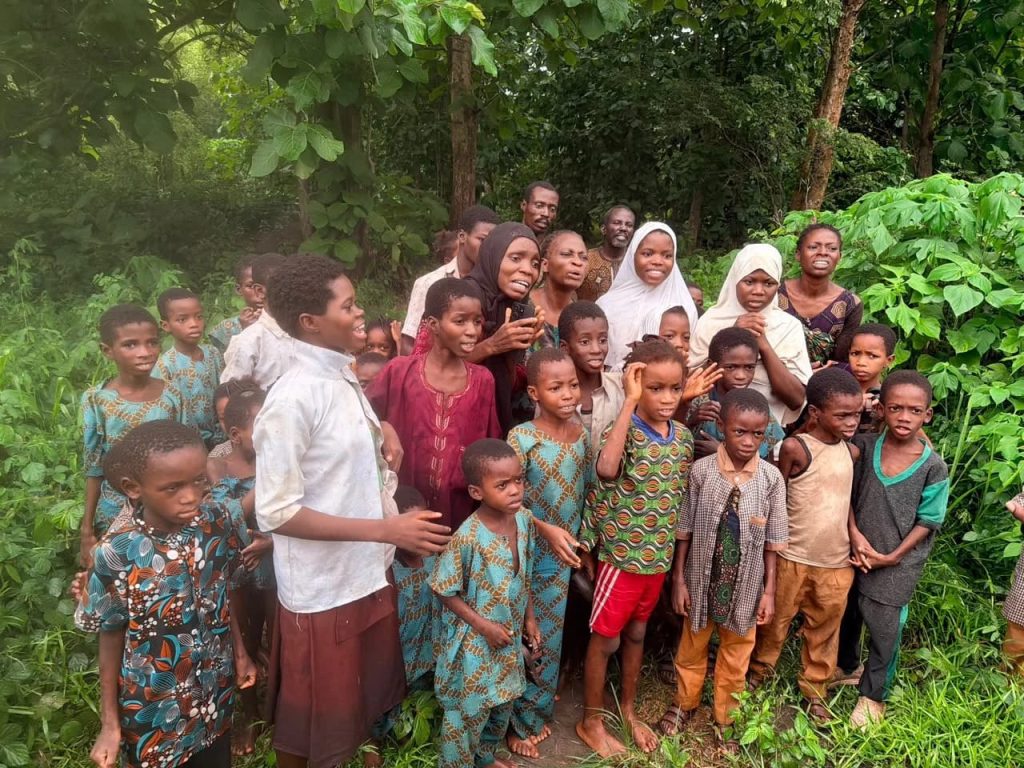
AS residents of Oriire Local Government area of Oyo State heave a sigh of relief, following the rescue of 44 pupils and teachers from kidnappers, findings indicated that security operatives had engaged the abductors in fierce gun battles in their hideouts.

The terrorists had hitherto used the victims as human shields for about 56 days in captivity in the first of the National Park, in the local government area

The Nigerian Tribune reliably gathered that the prolonged gun battles seriously impacted on the armoury of the terrorists, weakening their position to further consolidate on their hold on the kidnapped pupils and their teachers in the forest.

The sources in the security circle, privy to the chain of tactical moves that culminated in last Friday’s final onslaught against the criminals that led to the rescue of the victims, said the offensive was preceded by weeks of sustained troops’ onslaught on the kidnappers.

The military operation paid off as the terrorists suffered losses and were demoralised, as many of their members were killed.

“When the final operation commenced, the resistance was significantly lower than anticipated because they had already been weakened,” one of the dependable sources said.

This was coupled with the fact that no fewer than eight other terrorists were apprehended.

Recall that intelligence led the operation that culminated in the successful rescue of schoolchildren and teachers abducted from Ahoro-Esinle, Yawota and Alawusa communities in Oriire LGA.

See also  LASTMA warns against using rolling skate shoes on Lagos highways

A total 39 schoolchildren and seven teachers were abducted by terrorists on May 15.

One of the teachers was killed in captivity, while the remaining victims were rescued on July 10, during a coordinated operation involving the military and the DSS.

The sources said the circumstances that led to the recent unfortunate death of Major General Abubakar Rabbe in the hands of kidnappers in Katsina State also influenced the tactical approach the operatives deployed in the Oriire rescue operation.

It was gathered that the authorities decided to launch the final assault against the kidnappers rather than adopt the idea of prolonged negotiations that attended the abduction of Gen. Rabbe.

A source told the Nigerian Tribune that the Directorate of State Service (DSS) had earlier recommended a military assault on the kidnappers’ hideouts, based on intelligence that such an operation offered the best chance of rescuing the general and his wife.

But the authorities thought otherwise, thinking that negotiations could persuade the kidnappers to release General Rabbe, who unfortunately died in captivity due to medical complications.

Accordingly, the sad twist reportedly informed the paradigm shift in security strategy that prolonged negotiations with heavily armed terrorist groups sometimes carry greater risks than coordinated and carefully planned rescue operations backed by credible intelligence.

Further details on the operation said after weeks of well-coordinated synergy and intelligence gathering, coupled with military pressure, operatives of the DSS tracked down and arrested several wives and children of the kidnappers in different communities and cities across the country.”

The exercise was reportedly said to have been coordinated by a senior DSS official after security forces had already sealed off the terrorists’ escape routes and surrounded their hideout inside the National Park forest.

See also  Insecurity: Nigeria bleeding, confused, minority reps lament

The sources stated that the family members were taken to the federal capital Abuja, where the wives were interrogated in accordance with investigative procedures.

Video recordings of the interrogations soon leaked to the kidnappers.

“The kidnappers suddenly became more responsive. They abandoned their earlier hardline position and started making frequent contact instead of disappearing after making demands,” a source stated.

Therefore, they resolved to have a rethink on their initial demands.

Further checks indicated that the arrest of members of the terrorists’ family reduced the possibility that the kidnappers could harm the hostages, as such actions could spell doom for their own relatives already under arrest.

As the operatives tightened the noose around the criminals and contact continued, the joint rescue force steadily cordoned off the terrorists’ hideout.

The final order to storm the camp was said to have been issued on Thursday night after fresh intelligence reportedly confirmed that the abducted schoolchildren and teachers were no longer being used as human shields.

The sources said the operation was not just swift with precision but it was also well coordinated and backed by overwhelming firepower, catching the terrorists unawares.

The source assured that the children of the suspects who have not been found culpable would be released, while any of their wives found to have actively participated in the criminal activities would be prosecuted in accordance with the law.

The authorities said the arrest of the terrorists’ family members is in line with President Bola Tinubu’s new policy of not paying ransom or negotiating with terrorists, sources revealed

See also  New Year: Governors Vow Tougher Security Measures Against Terrorists

The kidnappers initially demanded the release of detained terrorist commanders, payment of ransom, two Hilux vehicles and the implementation of Sharia-related laws as conditions for freeing the victims.

They specifically requested the release of Mahmud Usman, also known as Abu Bara’a or Abbas Mukhtar, and his deputy, Abubakar Abba, alias Isah Adam or Mahmud Al-Nigeri. Both men are identified by security agencies as leaders of Jama’atu Ansarul Muslimeena Fi Biladis Sudan (Ansaru), a breakaway faction of Boko Haram linked to al-Qaeda, and were arrested by DSS operatives in 2025.

tribuneonlineng.com

FOLLOW US ON:

FACEBOOK

TWITTER

PINTEREST

TIKTOK

YOUTUBE

LINKEDIN

Continue Reading
Click to comment

Leave a Reply

Your email address will not be published. Required fields are marked *

News

Gbajabiamila reveals 24 state assemblies approve state police amendment

Published

on

The proposed constitutional amendment to establish a dual policing system in Nigeria has secured approval from 24 State Houses of Assembly, meeting the two-thirds threshold required for constitutional alteration.

The Chief of Staff to the President and Chairman of the Presidential Working Group on the National Policing Bill, Femi Gbajabiamila, disclosed this in a statement on Friday, October 23, 2026.

The statement said the approval of 24 of the 36 state assemblies met the constitutional requirement for the Constitution (Sixth Alteration) Bill, 2026, which provides for a dual policing system.

The Working Group commended the state assemblies for their action and the National Assembly for passing the amendment in both chambers.

“In line with Section 9 of the Constitution, the amendment can now be returned to the National Assembly for transmission to Mr President for assent,” the statement read.

The proposed amendment is expected to provide constitutional backing for the policing framework contained in the draft National Policing Bill, 2026, prepared by the Presidential Working Group.

October 30 timeline

The group said the draft bills were undergoing legislative drafting review and validation at the Federal Ministry of Justice and were expected to be returned on or before Friday, October 30, 2026.

It added that the group would give the bills final consideration before presenting them to President Bola Tinubu.

The Working Group urged stakeholders to support what it described as a smooth transition to a dual policing system aimed at making Nigerians safer.

PUNCH had reported in September that the National Assembly transmitted the Constitution (Sixth Alteration) Bill, 2026, to the 36 state Houses of Assembly on September 16 for consideration and approval, giving them an expected administrative timeframe of 30 days to communicate their decisions.

See also  VIDEOS & PHOTOS: FRSC Blames Speeding, Wrongful Overtaking for Anthony Joshua Crash

The proposed amendment seeks to establish a dual policing system comprising the Federal Police Service and state police services.

On October 9, the Senate was confident the amendment would secure the required backing, with Senate Committee on Media and Public Affairs Chairman Yemi Adaramodu saying at the time that four states — Edo, Oyo, Osun and Rivers — had approved the bill.

However, in a report published on October 16, PUNCH said five state assemblies — Edo, Osun, Oyo, Rivers and Zamfara — had approved the amendment, while the remaining 31 were yet to do so.

Meanwhile, PUNCH reported on October 15 that the Chief of Staff to the President, Femi Gbajabiamila, had said the draft National Policing Bill was 90 per cent ready for transmission to the National Assembly after further deliberations by the Presidential Working Group.

On October 21, PUNCH reported that five additional state assemblies — Ogun, Delta, Plateau, Kwara and Adamawa — had approved the amendment, bringing the number of approving states to 10.

Continue Reading

News

One dies, three injured in Lagos building collapse

Published

on

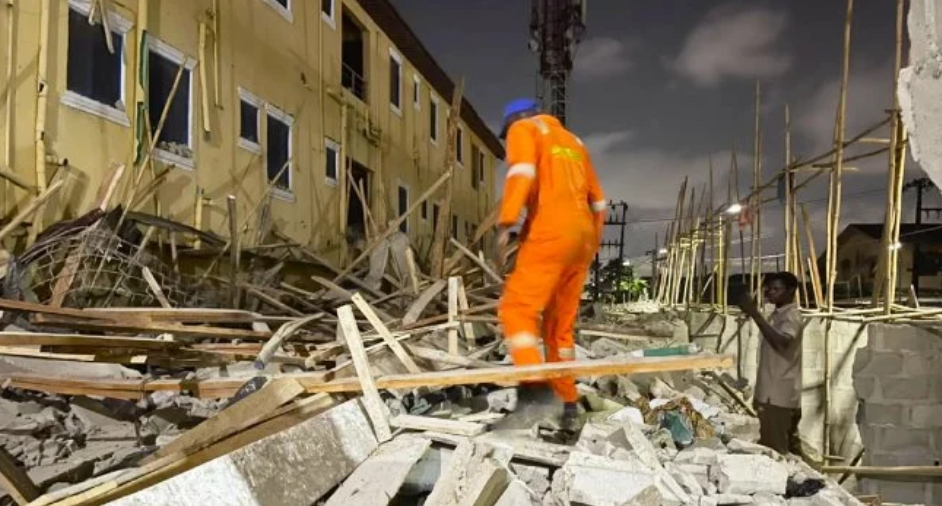
One person has died while three others sustained injuries following the collapse of a building in the Fadeyi area of Lagos State.

The building collapsed on Akinola Street, off Ikorodu Road, on Friday morning.

Lagos building collapse
An emergency responder carries out a search-and-rescue operation at the scene of a building collapse in Lagos State on October 23, 2026. Photo: Channels TV

The Lagos State Emergency Management Agency said the cause of the incident was yet to be established, while rescue teams were working to determine how many site workers remained trapped beneath the rubble, Channels TV reports.

The agency said, “Emergency responders had launched a coordinated search-and-rescue operation to locate and evacuate any victims trapped under the collapsed structure.”

Lagos building collapse
An emergency responder carries out a search-and-rescue operation at the scene of a building collapse in Lagos State on October 23, 2026. Photo: Channels TV

LASEMA added that it was coordinating the response at the scene alongside other agencies and emergency personnel, including LRU paramedics, the Lagos State Fire Service, LASASA and the Alakara Division of the Nigeria Police Force.

Details later…

See also  VIDEOS & PHOTOS: FRSC Blames Speeding, Wrongful Overtaking for Anthony Joshua Crash
Continue Reading

News

Umahi says South-East will vote differently in 2027 over Tinubu’s projects

Published

on

The Minister of Works, David Umahi, has described the South-East’s overwhelming support for Peter Obi in the 2023 presidential election as an “accident of history”, attributing the voting pattern to anger over the region’s alleged marginalisation under the previous administration.

Umahi said the region’s political outlook had changed under President Bola Tinubu, citing federal infrastructure projects and appointments as reasons he believed voters would respond differently in the 2027 election.

Speaking in an interview with ARISE News published on Friday, the minister said the South-East had reasons to feel aggrieved before Tinubu assumed office.

“In 2023, it was an accident of history,” Umahi continued, “It was a demonstration of the anger of the people of South East on how they were treated.”

He added, “We’ve been marginalised in the past, but it’s no longer so.”

Umahi argued that Tinubu had changed the situation through what he described as increased federal infrastructure investments and appointments for the region.

“If in 2023 they demonstrated their anger, in 2027 they are going to demonstrate their joy on how the President has treated them,” he said.

The former Ebonyi State governor maintained that the South-East would acknowledge Tinubu’s commitment to the region, particularly through major federal road projects and other investments.

He also said serving and former governors, traditional rulers and other influential figures in the South-East were increasingly aligning with Tinubu.

Umahi argued that voters would be reluctant to abandon what he described as infrastructure gains for another political “gamble”.

See also  Igbo Town Unions drag Lagos demolitions to UN, ECOWAS Court, alleges ethnic bias

The minister rejected suggestions that South-East leaders supporting Tinubu were betraying the region or Obi, arguing that the region’s political interests should not be permanently tied to one candidate.

He also criticised social media supporters who insult South-East political leaders for backing Tinubu, saying such attacks would not advance Obi’s political interests or those of the region.

Umahi maintained that the South-East needed to engage and negotiate with other parts of Nigeria if it hoped to produce a president in the future.

Asked whether he believed Tinubu would defeat Obi in the South-East in 2027, Umahi responded, “Why do you say I believe? That is what is going to happen!”

The minister insisted that the circumstances that shaped the region’s voting pattern in 2023 had fundamentally changed.

Continue Reading

Trending