Connect with us

News

FG ends UN-led humanitarian coordination in 2027

Published

on

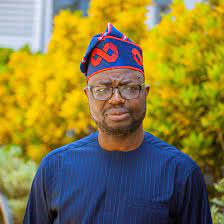
The Federal Government will assume full leadership of Nigeria’s humanitarian coordination system by January 1, 2027, the Minister of Humanitarian Affairs and Poverty Reduction, Dr Bernard Doro, disclosed on Tuesday.

Doro made the disclosure while briefing journalists after the opening of the Joint Humanitarian Transition Workshop, co-hosted by the Federal Ministry of Humanitarian Affairs and Poverty Reduction and the United Nations at UN House, Abuja.

“The transition is on, and by 1 January 2027, government will assume full leadership of the transition,” the minister said, describing the transition as a major shift in the country’s aid architecture since the Boko Haram insurgency began in 2009.

The workshop drew major stakeholders to map a six-month roadmap for handing over the coordination of Nigeria’s humanitarian response from the UN system to national institutions.

Doro explained that Nigeria was among eight countries globally identified by the Inter-Agency Standing Committee for what he described as a humanitarian reset, where international organisations are withdrawing from the centre of humanitarian coordination and repositioning national governments as the primary actors.

Responding to concerns that the withdrawal of international support could leave millions of Nigeria’s most vulnerable citizens without protection, Doro said Nigerians had nothing to fear.

According to him, “It is Nigeria’s constitutional mandate, the government’s constitutional mandate, to ensure that our people are properly looked after. So we have nothing to worry about; we have nothing to be scared of.”

He said the President had demonstrated the disposition required for the transition.

“President Bola Tinubu has shown a high level of compassion, a high level of care for those vulnerable people in Nigeria.

“The government will continue to lead, will continue to ensure that our constitutional responsibility is taken seriously,” the minister said.

See also  Fake PFIPC agency scandal: Tinubu orders 30-day ICPC probe, Senate rejects blame

Tuesday’s transition workshop comes amid a global humanitarian financing crisis that has been building since 2024 and reached a breaking point in 2025, when OCHA, the UN’s humanitarian coordination arm, announced a reduction of at least 20 per cent in its global programme budget following confirmed funding cuts from the United States, Sweden, France and Japan.

OCHA’s 2025 approved programme budget of $426.4m faced a shortfall of at least $75m as major donors either scaled back or exited.

Facing funding cuts, the UN’s 2026 Global Humanitarian Overview sought $23bn for the most urgent needs but warned that much of it would not come.

As of the end of June 2025, less than 17 per cent of the $46bn needed to meet global humanitarian needs had been received, a 40 per cent drop compared to the same period in 2024.

In Nigeria, the Northeastern states of Borno, Adamawa and Yobe alone are home to an estimated 5.9 million people who will require humanitarian assistance in 2026.

However, the 2026 Humanitarian Needs and Response Plan seeks only $516m, prioritising 2.5 million people in the most acute need of life-saving support.

This accounts for less than half of those who require humanitarian assistance.

In 2025, national NGOs received 70 per cent of direct allocations from the Nigeria Humanitarian Fund, managed by UNOCHA.

In his keynote address at the workshop, Doro said the Federal Ministry of Humanitarian Affairs and Poverty Reduction would assume primary coordination responsibility on behalf of the Federal Government, working with all relevant MDAs, state governments, humanitarian organisations, development partners and affected communities.

He outlined the ministry’s vision for a Humanitarian-Development-Peace Nexus approach, in which emergency interventions would gradually transition into recovery, resilience-building, social protection, livelihood support and durable solutions rather than remaining permanently in crisis mode.

He said one of the government’s key priorities for the transition was leading the development of Nigeria’s 2027 Humanitarian Needs and Response Plan.

See also  US lawmaker Riley Moore warns President Tinubu over k!lling of Christians in Nigeria

This process, he stated, would continue to benefit from the technical expertise of UNOCHA and the UN system while firmly positioning the government at the centre of national planning and coordination.

Meanwhile, the UN Resident and Humanitarian Coordinator for Nigeria, Dr Malick Fall, said the workshop was not about reducing support but about transforming the model through which it was delivered.

He warned that the transition must be carefully managed to ensure that no vulnerable Nigerian falls through the cracks during the handover.

“This transition is not about reducing or ending support. On the contrary, it is about transforming the way support is delivered and how domestic funds, both government and private sector, are mobilised to underwrite this effort,” Fall said in his opening remarks.

He argued that the UN was committed to accompanying Nigeria through the process but noted that the outcome must be genuinely national, not a relabelling of the existing international system under a government umbrella.

Fall stated, “The United Nations fully supports the Government’s vision that humanitarian transition should strengthen, not replace, existing national systems, nor should it simply replicate what we currently have in the North-East under a government umbrella. It will be something new and tailored to the government’s vision.”

He warned of the high stakes involved, saying, “This is not merely a technical policy exercise. It is fundamentally about people’s lives and survival.

“We must put the interests of affected people at the centre of every discussion and every decision we make.

“We cannot allow shifts in coordination arrangements or financing modalities to result in gaps in assistance or protection.”

See also  PHOTOS: Protesters storm NASS, demand Senate confirmation of NERC Chairman nominee

He said the workshop’s target was a Joint Transition Action Plan with clear priorities, responsibilities and timelines, developed collaboratively by the government and humanitarian partners.

The European Union’s representative at the workshop, Trond Jensen, cautioned against any assumption that the handover meant reduced vigilance or reduced funding.

He said the EU would remain engaged in Nigeria’s humanitarian space even as leadership transferred to the government, but stressed that the financial architecture needed to be properly anchored before the transition could be considered successful.

Jensen said, “It is very important first to have regular, sufficient and predictable funding sources for humanitarian needs in Nigeria.

“The main responsibility will be for Nigerian authorities. Federal and state governments and also the private sector as a complement are here to fund.”

He added that “The humanitarian needs, unfortunately, are not declining; they are growing, so there is still a lot to do.

“But it is very good and very commendable that Nigeria wants to take responsibility.

“I think it is a very adjusted strategy to a global context of declining humanitarian funding while global humanitarian needs are on the rise.”

The workshop is expected to produce a roadmap for the six-month transition period to January 2027, covering coordination architecture, institutions and capacities, information management, financing mechanisms and anticipatory action frameworks.

punch.ng

FOLLOW US ON:

FACEBOOK

TWITTER

PINTEREST

TIKTOK

YOUTUBE

LINKEDIN

Continue Reading
Click to comment

Leave a Reply

Your email address will not be published. Required fields are marked *

News

Nigerian Air Force names successful candidates for 2025 recruitment, training begins July 19

Published

on

The Nigerian Air Force has released the list of successful candidates for its Basic Military Training Course 46/2025 recruitment exercise.

NAF said the names of successful candidates had been published on its official recruitment portal.

It disclosed this in a public announcement posted on its official Facebook page on Wednesday signed by the Director of Public Relations and Information, Headquarters, Nigerian Air Force, Air Commodore Ehimen Ejodame.

The Air Force said candidates who passed the selection interview are expected to report to the NAF Military Training Centre, NAF Base, Kaduna, on Sunday, July 19, 2026, to commence training.

“The Nigerian Air Force hereby informs the general public that the list of successful candidates for the Basic Military Training Course (BMTC) 46/2025 Recruitment Exercise has been published on the official Nigerian Air Force Recruitment Portal,” the statement said.

It added, “The candidates whose names appear on the published list were successful at the selection interview and are to report to the NAF Military Training Centre (MTC), NAF Base, Kaduna, on Sunday, 19 July 2026, to commence training.”

The NAF directed successful candidates to report with the originals and photocopies of their credentials, alongside other items listed in the joining instructions.

It advised candidates to carefully review all instructions on the recruitment portal before reporting for training.
The Air Force also warned applicants against falling victim to recruitment fraud, stressing that the enlistment exercise is free.

“The Nigerian Air Force reiterates that the recruitment exercise is entirely free of charge. Successful candidates and members of the public are therefore advised to beware of fraudsters and refrain from making any payment to individuals or groups claiming to facilitate recruitment or enlistment into the Nigerian Air Force,” the statement added.

See also  Ondo residents to enjoy regular power supply soon – Aiyedatiwa

The statement advised candidates to visit the official recruitment portal https://nafrecruitment.airforce.mil.ng for the full list of successful applicants and detailed joining instructions.

punch.ng

FOLLOW US ON:

FACEBOOK

TWITTER

PINTEREST

TIKTOK

YOUTUBE

LINKEDIN

Continue Reading

News

Macron to visit Nigeria — French ambassador

Published

on

French President Emmanuel Macron will undertake a State visit to Nigeria this Fall, the French Ambassador to Nigeria and ECOWAS, Marc Fonbaustier, has announced, describing the trip as an opportunity for both countries to review their growing strategic partnership and chart a new course for future cooperation.

Fonbaustier made the announcement while delivering his address at the celebration of France’s National Day on Tuesday night in Abuja.

Revealing what he described as a scoop, the ambassador said Macron’s visit would come two years after President Bola Tinubu’s State visit to Paris.

He said, “Secondly, a scoop. I am pleased and honored to announce that, two years after President Bola Ahmed Tinubu’s State visit to Paris, the President of the French Republic, Emmanuel Macron, will travel to Nigeria for another State visit this fall.

“Together, our two Presidents will assess the progress of our roadmap and outline the key elements of our relationship for the years to come. These will undoubtedly be ambitious and mutually beneficial for our two peoples.”

The envoy said the relationship between Nigeria and France was founded on equality, stressing that both countries regarded each other as partners of equals.

“In a chaotic world searching for meaning, I would like to talk to you about values. I would like to focus on the three values that accompanied the birth of the French Republic: Liberty, Equality, and Fraternity.

“First and foremost, Equality. I say this, and I say it with pride, that the partnership between Nigeria and France is, in reality, not just in words, a partnership between equals.

See also  Ondo residents to enjoy regular power supply soon – Aiyedatiwa

“This equality among members of the international community is the cornerstone of the United Nations Charter, which Nigeria and France continue to defend, against all odds.

“In our bilateral relationship, this principle has concrete implications. It means avoiding prejudice, not imposing anything, and not interfering. On the contrary, it means listening to each other, communicating openly, and making decisions together.

“I stand before you tonight to say that, together, Nigerians and French people, we fully respect the spirit and profound meaning of this word: Equality. Our common interests are clearly stated and understood,” the envoy stated.

Fonbaustier noted that both countries shared the common goals of economic and social development, job creation, and environmental protection.

“We want the economic and social development of both our countries, for our citizens, for job creation, and for improving the standards of living, with due respect for the environment, biodiversity, water and air,” he said.

Fonbaustier highlighted recent commercial partnerships between Carrefour and HyperCity, Accor and Shoreline, as well as Canal+’s acquisition of MultiChoice, saying the collaborations reflected growing economic ties and would enrich television programming in Nigeria.

The ambassador also commended the initiative led by Abdul Samad Rabiu to establish a House of African Worlds in Paris.

On democracy and governance, he said Nigeria and France remained committed to democracy, the rule of law, freedom of expression, and equal opportunities for women and men.

He added that the French Embassy continued to support women, young people, and persons with disabilities to promote their economic and social empowerment.

See also  Oyo unveils plans to digitise street, house numbering

Fonbaustier also underscored ongoing cooperation in agriculture through the French Development Agency, particularly projects aimed at strengthening food security and agricultural value chains in northern Nigeria and across the ECOWAS region.

He said, “We are working together on agricultural issues, particularly to strengthen food security, in Nigeria of course, but also throughout the region together with ECOWAS.

“I would like to underscore the commitment of the AFD (French Development Agency) in the North, particularly its project on agricultural value chains, which complements another innovative project focused on market access, often in very remote areas.

“There are many other collaborative projects. All of them are shaped jointly.”

Speaking on security, he said Nigeria and France shared a commitment to strategic autonomy and the global fight against terrorism.

“Our two countries have repeatedly demonstrated this, through their unfailing and resolute commitment to the global fight against terrorism,” he said.

He added that both countries were working together to support nations seeking to strengthen their capacity to combat terrorism.

“In the face of terrorism, which is affecting the entire region, Nigeria and France are working together to assist countries eager to strengthen their capabilities, in order to better combat this scourge that destroys lives, communities and ultimately, our core values,” he said.

The ambassador stressed that the region needed a strong Nigeria, while Nigeria also required a united and mobilised region to confront insecurity.

On broader international relations, Fonbaustier described the France-Nigeria partnership as part of a wider strategic relationship between Europe and Africa, saying both continents were working together to promote stability, the rule of law, and global cooperation.

See also  NATO vows to crush aggression, approves $50 billion procurements

He also disclosed that Macron’s vision for Africa was shaped in part by his six-month stay in Nigeria as a student 24 years ago.

“The new relationship between Africa and France was, in some way, born in Nigeria or ‘Made in Nigeria’. Because a young man, Emmanuel Macron, spent six significant and formative months in this country while he was a student, 24 years ago.

“He himself admits that this foundational experience inspired the broad outlines of his vision for the continent and his African diplomacy,” he said.

Continue Reading

News

Kebbi gov approves N2.11bn for gratuities of 772 retirees, families

Published

on

Kebbi State Governor, Dr Nasir Idris, has approved the release of N2.11 billion for the payment of gratuities and death benefits to 772 beneficiaries, reaffirming his administration’s commitment to the welfare of retired public servants and the families of deceased workers.

The approval covers state and contract staff, as well as retirees from the Local Government Service and Local Government Education Authorities.

The Head of Service, Malami Shakari, mni, disclosed this in a statement signed by the Director of Administration, Rashidu Muhammad Bala, FCIA, FCIHRSM, and made available to journalists on Tuesday.

According to the statement, Governor Idris approved the release of N2,110,403,965.83 for the settlement of gratuities and death benefits accrued between September 16, 2025, and January 15, 2026.

“The approval is in line with the administration’s commitment to the prompt payment of gratuities and other retirement benefits,” the statement said.

It added that the 772 beneficiaries would receive the payments, including retired state and contract employees, former local government workers, retirees from the Local Government Education Authorities, and the next of kin of deceased public servants entitled to death benefits.

The Head of Service said the governor’s decision reflected his administration’s resolve to prioritise the welfare of workers and retirees across the state.

“The approval underscores Governor Idris’ commitment to improving the welfare of workers, retirees, and the families of deceased public servants by ensuring the timely settlement of their entitlements,” the statement added.

The latest approval is part of the Kebbi State Government’s ongoing efforts to clear outstanding retirement benefits and provide financial relief to retirees and bereaved families.

See also  Oyo unveils plans to digitise street, house numbering

punch.ng

FOLLOW US ON:

FACEBOOK

TWITTER

PINTEREST

TIKTOK

YOUTUBE

LINKEDIN

Continue Reading

Trending