Connect with us

Business

Petrol imports surged by 207% in June — NMDPRA report

Published

on

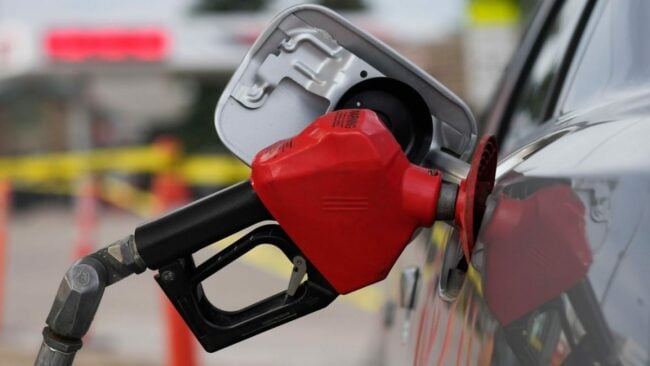
Nigeria’s petrol importation surged by 207 per cent in June 2026, even as domestic Premium Motor Spirit supply fell by 22 per cent, according to the latest data released by the Nigerian Midstream and Downstream Petroleum Regulatory Authority.

The development marked a sharp reversal from the pattern recorded at the beginning of the year when domestic refining was supplying the bulk of the country’s petrol requirements.

The NMDPRA’s June 2026 Fact Sheet, obtained by our correspondent on Saturday, showed that average daily PMS imports rose from 5.9 million litres in May to 18.1 million litres in June.

The 12.2 million-litre daily increase represented a 206.8 per cent month-on-month rise.

In contrast, domestic PMS receipts fell from 41.5 million litres per day in May to 32.5 million litres per day in June, representing a decline of 9 million litres or 21.7 per cent.

Despite the sharp drop in domestic supply, total PMS receipts rose from 47.4 million litres per day in May to 50.6 million litres per day in June. This represented an increase of 3.2 million litres per day or 6.8 per cent.

The report read, “Total PMS receipts rose by seven per cent from 47.4 million litres per day in May to 50.6 million litres in June, driven by a 207 per cent surge in imports to 18.1 million litres, even as domestic supply fell by 22 per cent to 32.5 million litres per day.

“Domestic daily receipts include DPRP gantry and all coastal evacuation receipts. Consumption data is based on volumes trucked out from all facilities into the domestic market.”

The figures suggest that the increase in imports more than compensated for the decline in domestic supply during the month.

The development is significant because Nigeria entered 2026 with a much stronger domestic supply position. In January, domestic PMS supply was reported at 40.1 million litres per day, accounting for about 61.8 per cent of the country’s petrol supply, while imports averaged 24.8 million litres per day.

However, imports fell sharply to 3.0 million litres per day in February before rising to 5.9 million litres per day in March. The country’s dependence on imports then remained relatively low through the following months before the sharp increase recorded in June.

Compared with January, June’s domestic PMS receipts of 32.5 million litres per day were 7.6 million litres, or 19 per cent, lower than the 40.1 million litres recorded at the beginning of the year.

See also  Electricity reforms: Rivers, Kano, 19 others delay takeover

Conversely, June’s import volume of 18.1 million litres per day was 6.7 million litres, or 27 per cent, below January’s 24.8 million litres per day.

However, the composition of supply changed considerably. While domestic supply accounted for the larger share of the market in January, the June figures showed a much greater reliance on imports to supplement local production.

The June data also showed that the country’s crude oil receipts by domestic refineries improved during the month.

Crude oil receipt by domestic refineries rose from 0.578 million barrels per day in May to 0.632 million barrels per day in June, an increase of 0.054 million barrels per day, or 9.3 per cent.

The NMDPRA rounded the increase to 10 per cent in its fact sheet.

The rise in crude receipts occurred at a time when domestic PMS supply decreased, indicating that higher crude deliveries alone did not immediately translate into higher petrol receipts in the domestic market.

The figures could also reflect changes in refinery operations, product yields, maintenance activities, evacuation arrangements and the balance between domestic production and imported products.

The June fact sheet further showed that average daily PMS consumption increased marginally from 46.3 million litres in May to 47.4 million litres in June.

The 1.1 million-litre increase represented a 2.4 per cent rise.

The increase in consumption, however, was far smaller than the 207 per cent jump in petrol imports.

As a result, the country’s petrol stock position improved during the month. PMS stock sufficiency rose from 16.2 days in May to 19.7 days in June.

This represented an increase of 3.5 days, or 21.6 per cent.

The improvement means that the country entered July with almost 20 days of petrol stock sufficiency, despite the increased reliance on imports.

The increase in petrol stocks is significant against the background of the supply disruptions and price volatility that have characterised the downstream petroleum market since the removal of petrol subsidy.

At the beginning of 2026, the NMDPRA reported that PMS stock sufficiency had risen to 33 days in January, compared with 29.2 days in December 2025. However, the stock position subsequently declined before recovering to 19.7 days in June.

The June data also showed a dramatic increase in imported Liquefied Petroleum Gas, popularly known as cooking gas.

Total LPG receipts rose from 4.1 kilotonnes per day in May to 5.1KT per day in June, representing a 24.4 per cent increase.

See also  NLC demands action as petrol sells N1,500/litre due to US-Iran crisis

Domestic LPG receipts, however, fell from 4.0KT per day to 3.6KT per day, a decline of 0.4KT per day or 10 per cent.

Imports rose from 0.1KT per day in May to 1.5KT per day in June.

That represented an increase of 1.4KT per day, or 1,400 per cent.

The sharp increase in LPG imports helped push total receipts higher, even as domestic supply declined.

However, LPG consumption fell from 4.5KT per day in May to 4.1KT per day in June, a decline of 0.4KT per day or 8.9 per cent.

The figures indicate that LPG supply exceeded consumption during the month, potentially supporting inventory replenishment.

The supply of Automotive Gas Oil, commonly known as diesel, declined by 14 per cent in June.

AGO receipts fell from 18.8 million litres per day in May to 16.2 million litres per day in June, a decline of 2.6 million litres or 13.8 per cent.

The decline was entirely recorded in domestic receipts as the country recorded no AGO imports in either May or June.

The NMDPRA data showed that diesel consumption remained unchanged at 16 million litres per day in both months.

Consequently, June’s total AGO receipts of 16.2 million litres per day were only marginally above consumption.

Despite the lower supply, AGO stock sufficiency improved from 31 days in May to 37.1 days in June.

That represented an increase of 6.1 days or 19.7 per cent.

The rise in stock sufficiency, despite lower daily receipts, suggests that existing inventories continued to provide a substantial buffer for the diesel market.

The supply of Aviation Turbine Kerosene also fell during the month.

ATK receipts declined from 3.6 million litres per day in May to 2.5 million litres per day in June.

The 1.1 million-litre decline represented a fall of 30.6 per cent.

ATK consumption also fell from 3.1 million litres per day to 2.9 million litres per day, representing a 6.5 per cent decline.

The drop in consumption was, however, significantly smaller than the decline in receipts.

Domestic gas supply rose marginally during the period under review.

The NMDPRA reported that domestic gas supply increased from 4.984 billion standard cubic feet per day in May to 5.116Bscf/d in June.

The increase of 0.132Bscf/d represented a 2.65 per cent rise.

The authority said its domestic gas supply figure includes volumes supplied to the Nigeria LNG Limited.

The modest improvement came as the Federal Government and industry stakeholders continued to focus on increasing gas availability for power generation, industrial production and other domestic uses.

See also  Speed approvals, boost deepwater investments, NNPCL charges NUPRC

The January-to-June 2026 trend points to a petroleum market that has remained heavily influenced by the changing balance between domestic refining and imports.

Nigeria began the year with domestic PMS supply accounting for the majority of total supply. January’s 40.1 million litres per day from domestic sources compared with 24.8 million litres per day from imports.

By June, however, domestic supply had fallen to 32.5 million litres per day, while imports stood at 18.1 million litres per day.

Although the absolute volume of imports in June remained lower than January’s figure, the sharp increase from the May level showed how quickly the market could turn to imported products when domestic supply weakened.

The trend also highlights the continuing importance of domestic refining capacity to Nigeria’s fuel security.

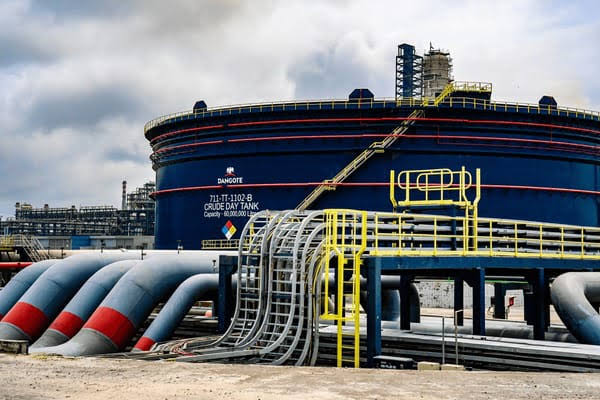
In May, the Dangote Petroleum Refinery supplied an average of 41.5 million litres of petrol daily, according to reports based on the NMDPRA’s monthly data. The figure was significantly higher than the 40.1 million litres per day recorded in January. However, June’s domestic PMS receipt fell to 32.5 million litres per day.

The development comes amid the gradual transformation of Nigeria’s downstream petroleum sector, with the Dangote refinery increasingly supplying the domestic market while imports continue to act as a balancing source.

The figures also demonstrate that increased refinery crude supply does not automatically guarantee a corresponding increase in domestic petrol receipts. In June, crude receipts rose by about 9.3 per cent, while domestic PMS receipts fell by 21.7 per cent.

For consumers, the most immediate implication is that the country’s petrol supply system remains dependent on a combination of local refining and imports.

The June data therefore presents a mixed picture: domestic refining received more crude, total petrol supply increased and stock levels improved, but local PMS receipts fell sharply while imports surged.

In the wider downstream sector, diesel supply remained entirely domestic, LPG imports increased dramatically to supplement weaker local receipts, aviation fuel supply declined and gas availability recorded modest growth.

The data underscores the continuing transition of Nigeria’s petroleum market from an import-dependent system to a mixed supply structure in which domestic refineries are expected to provide the bulk of demand while imports fill supply gaps.

punch.ng

FOLLOW US ON:

FACEBOOK

TWITTER

PINTEREST

TIKTOK

YOUTUBE

LINKEDIN

Continue Reading
Click to comment

Leave a Reply

Your email address will not be published. Required fields are marked *

Business

Read how Nigerians tap savings, loans to buy Dangote refinery shares

Published

on

Some Nigerians seeking to invest in the Dangote Petroleum Refinery and Petrochemicals FZE Initial Public Offering have turned to personal savings, loans and proceeds from the sale of assets to raise funds to buy shares, Saturday PUNCH has learnt.

Findings by our correspondents revealed strong interest in the shares among prospective retail investors, some of whom said they expected the investment to yield substantial returns in the future.

While some respondents said they were dipping into savings or raising funds through other means, others said the prevailing economic hardship had made it difficult for them to participate in the offer.

The refinery opened its IPO on Monday, September 14, giving Nigerians an opportunity to own equity in the company.

The offer comprises 4.1 billion ordinary shares priced at N525 each, with the company targeting about N2.15tn to part-fund an expansion that would nearly double the refinery’s capacity to 1.4 million barrels per day.

The minimum subscription is 10 shares, costing N5,250.

Dangote Group Chief Executive Officer, Aliko Dangote, said the low entry threshold was deliberately set to allow ordinary workers, including drivers, cooks and domestic staff, to become shareholders, describing the offer as “the IPO for the people.”

The offer is expected to close on October 13.

Investors turn to savings, loans

A staff member of the Federal Ministry of Works, David Adelabu, described the shares as expensive for struggling civil servants but said he considered the offer an opportunity to become a shareholder in the refinery.

He said, “I have small shares in some companies, including Glo and MTN, but Dangote’s shares will be the highest I will be buying. It is on the high side, but I feel this is an opportunity to become a shareholder in Dangote.

“I understand that the dividends are not going to be immediate, but I don’t mind even if it will entail selling a plot of land I have in Metumbi here in Minna. I will gladly do so.”

A trader in Dutse, Jigawa State, Adamu Bala, said he planned to use savings from his business to buy the shares.

See also  Petrol remains N865 per litre amid Dangote’s free delivery

“I will not sell my house. I will use a small profit from my shop to buy,” he said.

Similarly, a civil servant, Fatima Mannir, said women in her group had started raising money through contributions, known as adashe, to participate in the offer.

“We have started raising money through adashe,” she said.

A trader in Damaturu, Yobe State, Malam Musa Ibrahim, said he invested part of his business savings after learning about the offer.

“I am using part of the money I have saved from my business.

“I believe that if I can invest a small amount now, it may become useful to me in the future. But I am also being careful because business is not easy at the moment,” he said.

Another resident, Aisha Mohammed, said she raised money by cutting down on some household expenses.

“I did not borrow money to buy the shares. I have been saving little by little, and when I heard about the offer, I decided to use part of what I had saved,” she said.

A businessman, Abdullahi Yusuf, however, said he obtained financial assistance from a friend to increase his subscription.

“I wanted to buy more shares than what my savings could afford, so I discussed it with a friend who agreed to lend me some money.

“I know that borrowing money to invest carries risks, but I am hoping that the investment will perform well. I will repay the money from my business income,” he said.

A petty trader, Hauwa Lawan, said she sold some personal belongings she no longer used and added the proceeds to her savings to finance her purchase.

“I sold some things that I was no longer using and added the money to my savings,” she said.

A farmer, Mallam Abdullahi Adamu, said he sold farm produce to raise about N500,000 to invest in the shares.

In Kano State, an investor, Abdulmalik Ibrahim, said he bought 10 shares for N5,250 using personal funds.

Hardship keeps some investors away

While some Nigerians are finding ways to participate in the IPO, others said economic pressures had put the investment beyond their reach.

See also  Airlines groaning under multiple taxation – Okonkwo

A civil servant in Kogi State, Saliu Joseph, said he would have loved to invest but had just paid his children’s school fees.

“Right now, I don’t think I can afford to participate unless a miracle happens,” he said.

A retired permanent secretary in the state, Bola Boro, also said he would not participate because he could not afford the investment at the moment.

“As a retired civil servant, I cannot afford such an amount to invest in the offer. Even though I am a fan of investment through the stock market, which I have been doing for years, I don’t think it will be convenient for me to participate considering the time frame of just one month,” he said.

A civil servant, Kuta Abdulahi, said the financial demands of his children’s education had left him unable to participate in the share offer.

“I must tell you the truth, I know about the Dangote Refinery shares, but I cannot even think of it at this time. My children are just resuming a new term in school. Where will I get the money for their school fees before thinking of buying shares? Please, I have a lot on my head,” he said.

Similarly, a vulcaniser, Ahmed Alkali, said his income was barely enough to meet his family’s basic needs, making investment in shares difficult.

“With the kind of job I do, I am working from hand to mouth. So, how can I buy shares when I have not eaten?” he asked.

Experts warn against borrowing

Investment experts, however, cautioned Nigerians against taking loans, selling properties or committing all their savings to the IPO, warning that equity investments carry risks.

Speaking with Saturday PUNCH, the Group Managing Director of Lancelot Group, Adebayo Adeleke, urged prospective investors to understand the risks associated with the capital market before committing their funds to the IPO.

Adeleke, who is also a former Secretary of the Independent Shareholders Association of Nigeria, said capital market investments should be made with funds that investors could afford to leave untouched for the long term, noting that equities were unsuitable for people struggling to meet immediate financial needs.

He said, “When you buy shares, you are buying a portion of the ownership of the business. Investment takes a lot of time to pass through gestation, to stability, to profitability. And you cannot, with any degree of certainty, predict when the company is going to turn the corner and begin to produce profits.

See also  NLC demands action as petrol sells N1,500/litre due to US-Iran crisis

“So, investment money is not the money you are likely to need in the next two months, three months, six months, even one year. If you cannot part with your money for a minimum of three to five years, the capital market is not the place to invest.”

Adeleke, however, described the IPO as a strategic investment, citing the refinery’s scale and demand for its products.

Also speaking, the Head of Financial Institutions Ratings at Agusto & Co., Ayokunle Olubunmi, urged Nigerians to consider the risks associated with the investment and avoid committing all their savings to the offer.

He said, “There are plenty of risks to this business. It’s not risk-free. Things can get worse for the business. Valuation is based on expectations of what will happen in the future. Things might not go as planned. And, like we all know, equity is a risky business.”

Olubunmi particularly cautioned prospective investors against selling property or using up all their savings to invest in the offer.

He advised them to invest only a portion of their funds and diversify their portfolios.

The expert also advised those considering taking loans to buy the shares to have a separate and reliable repayment plan rather than depending on returns from the investment.

The Emir of Kano, Muhammadu Sanusi II, had earlier warned prospective investors against using their children’s school fees or selling their homes to invest in the shares.

Sanusi, who gave the warning on Thursday while speaking at the company’s roadshow in Kano, urged prospective investors to invest only money they could afford to set aside for some time, suggesting amounts such as N10,000, N20,000 or N30,000.

Source: punchng.com

FOLLOW US ON:

FACEBOOK

TWITTER

PINTEREST

TIKTOK

YOUTUBE

LINKEDIN

INSTAGRAM

Continue Reading

Business

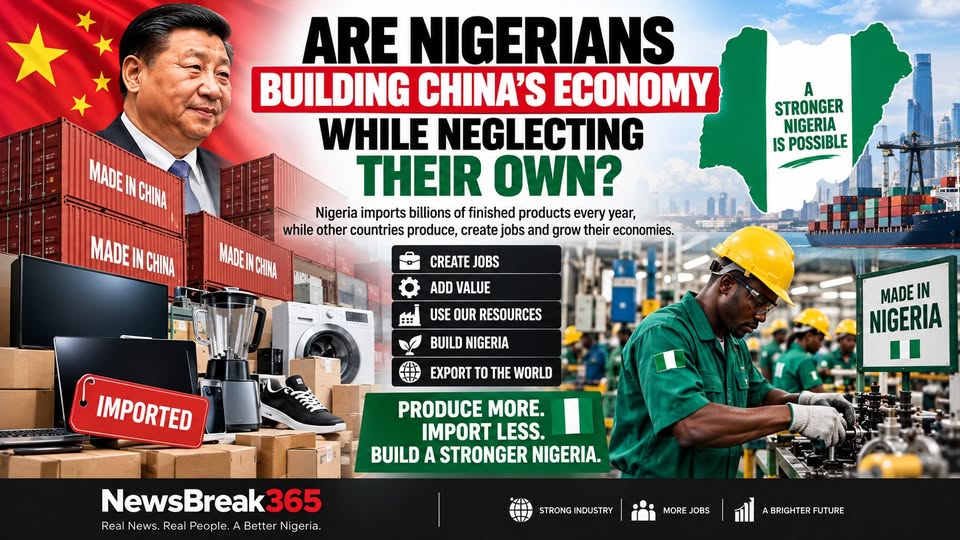
ARE NIGERIANS BUILDING CHINA’S ECONOMY WHILE NEGLECTING THEIR OWN?

Published

on

While other nations are busy producing, manufacturing and exporting, Nigeria must ask itself a difficult question: Are we building our own economy, or simply creating a bigger market for other countries?

Nigeria has a huge population, abundant natural resources and a massive consumer market. Yet the country continues to depend heavily on imported finished products—from electronics and clothing to machinery, household goods and other consumer items.

The issue is not simply about Chinese businesses or businesses from any other foreign country operating in Nigeria. Foreign investment can bring capital, technology, jobs and expertise.

The bigger issue is whether **Nigerian businesses are being given the opportunity and support to manufacture competitively at home.

Instead of remaining primarily a consumer of finished products, Nigeria needs to strengthen its manufacturing sector and move further up the value chain.

Nigeria needs to produce, not just consume.

A stronger manufacturing economy could help Nigeria:

* Create more jobs for Nigerians
* Add value to locally available raw materials
* Develop industrial skills and technology
* Reduce excessive dependence on imported finished goods
* Build competitive Nigerian companies
* Increase the country’s ability to export

The goal should not be to drive legitimate foreign businesses out of Nigeria. The goal should be to build an economy where **Nigerian manufacturers can compete, grow and eventually take Nigerian-made products to markets around the world.

The question Nigerians should be asking is simple:

**Why should Nigeria remain one of the world’s biggest markets for finished products when we have the potential to manufacture many of them ourselves?

See also  NLC demands action as petrol sells N1,500/litre due to US-Iran crisis

🇳🇬 **Nigeria must move from being predominantly a consumer nation to becoming a stronger producer, manufacturer and exporter.

What do you think?

Which products should Nigeria prioritize for local manufacturing instead of relying heavily on imports?

Share your thoughts in the comments.

FOLLOW US ON:
FACEBOOK

TWITTER

PINTEREST

TIKTOK

YOUTUBE

LINKEDIN

INSTAGRAM

Continue Reading

Business

ICRC defends toll pricing on highways

Published

on

The Infrastructure Concession Regulatory Commission has defended the toll pricing structure under the Highway Development and Management Initiative, saying charges are evaluated against the quality and benefits of the upgraded roads.

In a statement made available to PUNCH Online on Thursday, the Director-General, Dr. Jobson Ewalefoh, cited the 227-kilometre Akwanga–Makurdi road corridor as an example.

He said the route has four toll gates, and motorists pay as they travel along it.

He argued that toll payments should be viewed against the previous costs imposed by the poor condition of the road, including lost man-hours, vehicle damage and accident risks.

Feedback from road users, he said, shows many motorists are willing to pay tolls where they see clear improvements in road quality.

Some drivers have expressed support for similar arrangements on other major corridors if the roads are upgraded to the same standard.

“That, to me, is the beauty of a well-structured PPP,” Ewalefoh said.

He explained that negotiators carefully consider toll pricing to keep charges fair. A portion of the revenue is set aside specifically for road maintenance. Under the concession agreements, the government does not bear additional maintenance costs for the duration of the contract.

The government must repair potholes within 48 hours, and it funds major routine repairs from the dedicated toll revenue.

Source: punchng.com

FOLLOW US ON:

FACEBOOK

TWITTER

PINTEREST

TIKTOK

YOUTUBE

LINKEDIN

INSTAGRAM

See also  Speed approvals, boost deepwater investments, NNPCL charges NUPRC
Continue Reading

Trending