
Connect with us

Business

ECOWAS reaffirms plan to rollout ECO single currency in 2027

Published

on

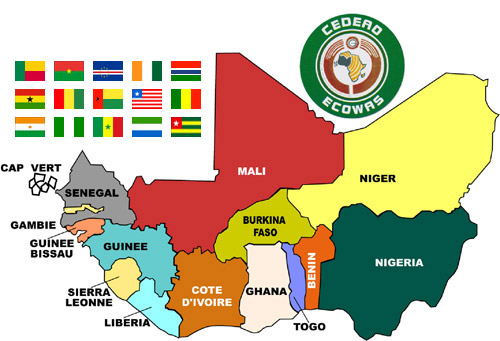
The Economic Community of West African States, ECOWAS, has reaffirmed its commitment to launching the long-awaited single regional currency, the ECO, in 2027.

According to the regional body, this is a major step towards deeper economic integration, stronger regional trade and sustainable growth across West Africa.

The decision was one of the major outcomes of the 69th Ordinary Session of the ECOWAS Authority of Heads of State and Government held on Sunday in Lungi, Sierra Leone, under the chairmanship of Sierra Leonean President, Julius Maada Bio.

In the final communiqué issued yesterday, the leaders said ECOWAS economies remained resilient, despite global economic challenges and projected a favourable outlook for 2026, supported by declining inflation, lower public debt-to-GDP ratios and a widening current account surplus, although fiscal deficits remain a concern.

On the single currency programme, the body declared that “the authority reiterates its firm commitment to the launch of the ECO in 2027 as a key instrument for deepening regional economic integration and promoting sustainable, inclusive and resilient growth within the Community.”

According to the communiqué, the ECO will initially be adopted by member states that meet the agreed convergence criteria, while countries yet to qualify will receive support to enable them join the regional currency at a later stage.

It welcomed the registration of the name “ECO” with African Intellectual Property Organisation and directed the commission to secure trademark registration with other regional and international intellectual property bodies.

Beyond the currency programme, the authority also expressed concern over worsening insecurity in the Sahel and Lake Chad Basin, condemned attacks by terrorist groups and endorsed the revised roadmap for activating the ECOWAS Counterterrorism Brigade, with full operational capability expected by July 2027.

See also  Retired federal workers to receive additional N32,000 monthly

Member states were urged to clear outstanding community levy arrears earmarked for financing the regional counterterrorism force.

The communiqué “strongly condemns the increasing spate of banditry, kidnappings and abductions of school children, particularly in Northern Nigeria.”

It also “expresses its solidarity with the people of Nigeria and commends President Bola Ahmed Tinubu for the swift actions taken to secure the release of victims and the measures put in place to combat the menace.”

ECOWAS also highlighted worsening humanitarian conditions caused by conflict, terrorism, displacement, climate-related disasters and food insecurity, directing the commission to strengthen resource mobilisation and coordinate humanitarian responses, including support for voluntary return of migrants from North Africa.

On relations with the Alliance of Sahel States, ECOWAS extended the mandate of Chief Negotiator, Dr. Lansana Kouyaté, until December 2026 and reaffirmed that negotiations with Burkina Faso, Mali and Niger would continue only as a unified bloc.

The leaders also raised concerns over food insecurity and rising fertiliser prices affecting agricultural productivity across parts of the region.

They welcomed measures taken by member states to cushion the impact of the fertiliser crisis and called for accelerated implementation of ECOWAS Rice Agenda and Regional Rice Roadmap to reduce food imports and strengthen regional food sovereignty.

The Authority reaffirmed its commitment to the ECOWAS Protocol on Free Movement of Persons, Right of Residence and Establishment, stressing the need to preserve regional mobility, facilitate cross-border trade and strengthen economic cooperation.

It added that ongoing engagements with the Alliance of Sahel States should safeguard regional movement and economic exchanges.

See also  Schools, markets open as IPOB ends Monday sit-at-home

ECOWAS strongly condemned continuing xenophobic attacks against Africans in South Africa, particularly West Africans, urging South African government to protect foreign nationals and permanently address the problem, while also backing Ghana’s proposal to place the issue before the African Union Assembly.

On trade, the summit warned that increasing bilateral agreements by individual member states could weaken the ECOWAS Customs Union and directed the commission to coordinate common regional positions during international negotiations.

On aviation, ECOWAS reiterated its determination to reduce the cost of air transport across West Africa, applauding Côte d’Ivoire as the only member state to have removed applicable aviation taxes.
It urged others to accelerate reforms, and called on development finance institutions to support investments in regional aviation infrastructure.

On peace and security, ECOWAS acknowledged progress in democratic governance but expressed concern over terrorism, political instability and humanitarian crises across the region.

It urged Guinea-Bissau’s transition authorities to ensure transparent and inclusive constitutional and electoral processes, respect human rights, release detained political figures and work towards restoring constitutional order. Senegal was appointed facilitator to support dialogue in the country.

The leaders commended the peaceful conduct of elections in Benin, Guinea, Cabo Verde and Côte d’Ivoire and directed the commission to continue supporting member states preparing for elections later this year and in early 2027

FOLLOW US ON:

FACEBOOK

TWITTER

PINTEREST

TIKTOK

YOUTUBE

LINKEDIN

INSTAGRAM

Continue Reading
Click to comment

Leave a Reply

Your email address will not be published. Required fields are marked *

Business

Customs dismiss smuggling, revenue leakage allegations

Published

on

The Nigeria Customs Service has dismissed allegations of increased smuggling, revenue leakage, recruitment impropriety and manipulation of succession within the service, describing them as a misrepresentation of its operations and administrative processes.

The service’s National Public Relations Officer, Deputy Comptroller Abdullahi Maiwada, stated this in a response released on Thursday to an investigative report published by a media outlet (not PUNCH) on August 7, 2026.

The report had alleged intensified smuggling along the Seme, Idiroko, Ilaro, Ipokia and Igbeti-Kishi corridors, as well as manipulation of the 846 valuation code at the Apapa, Tin Can Island and PTML Area Commands.

Maiwada said the claim of a surge in smuggling was inconsistent with the service’s enforcement activities, pointing to regular seizures recorded along the affected corridors.

“Our responsibility is to reduce smuggling to the barest minimum, not to claim that it can be completely eradicated,” he said.

On the 846 valuation code, the NCS explained that it was a digital tool designed for vehicles with non-standard or non-compliant Vehicle Identification Numbers, including specialised heavy equipment, classic vehicles and customised models.

“The 846 code is an established digital valuation code within the Customs portal, specifically designated for vehicles with non-standard or non-compliant Vehicle Identification Numbers,” Maiwada said.

He added that standard vehicles were assessed automatically through manufacturer-linked databases, while 846 applications were subjected to secondary approval by valuation officers and Area Controllers.

Maiwada said discrepancies discovered through post-clearance audits could lead to Demand Notices for the recovery of short-collected duties and sanctions against offending operators, adding that revenue collections at major ports had reached historic levels under the digital framework.

On the recruitment of Assistant Superintendents of Customs II, the Service said the exercise was conducted under the authorisation of the Nigeria Customs Service Board and in line with the NCS Act 2023 and Federal Character Commission guidelines.

See also  States pocket N2.37tn VAT under new tax regime

It said successful candidates were issued provisional offers subject to medical verification, background checks and formal acceptance.

The Service also rejected allegations of succession manipulation and favouritism among officers, saying promotions were determined by seniority, merit, promotion examinations and available vacancies in accordance with established regulations.

“Succession and promotion within the Service are governed by established rules and career progression structures, not personal preference,” the Service said.

Maiwada said leadership training for Deputy Comptrollers was part of the Service’s human capital development strategy, aimed at strengthening trade operations, intelligence management and executive leadership.

He explained that approved training programmes and international exposures were funded through budgetary allocations or formal technical assistance arrangements with partner institutions.

Responding to calls for independent investigations, the NCS said it remained subject to oversight by the Federal Ministry of Finance, National Assembly, Office of the Auditor-General for the Federation and anti-corruption agencies.

“The management maintains a firm, intolerant posture toward corruption, revenue leakage or administrative misconduct,” the Service stated.

It added that any officer or stakeholder found culpable would face disciplinary action and prosecution in accordance with the law, while assuring Nigerians that the Service would cooperate with any legitimate investigation by statutory authorities.

Source: punchng.com

FOLLOW US ON:

FACEBOOK

TWITTER

PINTEREST

TIKTOK

YOUTUBE

LINKEDIN

INSTAGRAM

Continue Reading

Business

Patience Jonathan revealed she mentored Azikel refinery boss Eruani from ‘small boy’ to big businessman

Published

on

Ex-President Goodluck Jonathan’s wife, Patience, has described the Group President of Azikel Group, Dr Azibapu Eruani, as a “small boy” she raised and mentored into the league of Nigeria’s biggest businessmen.

She said her guidance was behind his bold entry into big business at a relatively young age.

The former First Lady spoke on Tuesday in a video which went viral on Thursday during an inspection tour of the Azikel Refinery in Obunagha, Bayelsa State, alongside other dignitaries.

She said she personally introduced Eruani to billionaire businessmen, Aliko Dangote and Aminu Dantata, and pushed him to aspire to their level despite being the youngest among them.

“He’s a boy that I brought up. We are always together. Although he’s the little one among us when we are friends — Dangote, Seyi, Dantata, Eruani — among us, he’s the smallest. But I made sure he followed the Dangotes, he followed Dantata.

“Because I’m a woman in their midst, I made sure I told this small boy, ‘Go and follow them, and stop the grammar.’ But when he told me that one day he would be like Dangote, I said, ‘You’re thinking too high.’ I prayed to God to grant him his heart’s desire,” she said.

Group President of Azikel Group, Dr Azibapu Eruani

The former First Lady also recalled how the immediate past APC administration under Muhammadu Buhari initially failed to grant Eruani a refinery licence before eventually approving three.

“During the Buhari administration, he and others came to me and told me they were going to apply for a refinery. I told him, ‘Eruani, your brother, the President, did not give you a refinery.

See also  States pocket N2.37tn VAT under new tax regime

“Is it the APC government that will give you one?’ I prayed it would happen. But later, they came back and told me they had been given three refineries,” she said.

The inspection coincided with the arrival of the refinery’s Crude Distillation Unit, a major milestone in the development of the $1bn facility.

The 25,000 barrels-per-day plant is a private hydro-skimming refinery designed to process condensate into petrol, diesel, aviation fuel, kerosene and other products.

It is set to become Nigeria’s second-largest full-slate refinery and the first major privately owned refinery in the Niger Delta.

The Managing Director/Chief Executive Officer of the Niger Delta Development Commission, Samuel Ogbuku, who joined the inspection tour, commended Eruani for his perseverance, noting that he had attended the project’s groundbreaking ceremony eight years ago.

Ogbuku described the refinery as an inspiration and a potential catalyst for investment, job creation and economic growth in Bayelsa State, and urged residents, particularly youths, to key into the opportunities it would create.


He also praised the Bayelsa State Government for improving road infrastructure leading to the refinery site and called for continued support for the project.

Governor Douye Diri, who was represented at the inspection by his deputy, Peter Akpe, has consistently backed the project, which is expected to employ hundreds of workers and drive industrialisation in the state.

Other dignitaries at the event included the Chairman of the Bayelsa State Council of Traditional Rulers, King Bubaraye Dakolo; Vice President of Azikel Group, Presley Asemota; and Isaac Yalah, among others.

See also  Schools, markets open as IPOB ends Monday sit-at-home

Source: punchng.com

FOLLOW US ON:

FACEBOOK

TWITTER

PINTEREST

TIKTOK

YOUTUBE

LINKEDIN

INSTAGRAM

Continue Reading

Business

Aiyedatiwa signs new Ondo electricity power sector law

Published

on

Ondo State Governor, Lucky Orimisan Aiyedatiwa, has assented to the Ondo State Electric Power Sector (Amendment) Law, 2026, establishing a stronger legal and regulatory framework for electricity generation, transmission and distribution across the state.

The new law establishes the State Electricity Regulatory Commission, which will oversee tariffs, licences, investments, mini-grids, renewable energy and other electricity-related activities in the state.

It also provides for the creation of the State Independent System Operator and State Market Operator to support the development of an efficient and competitive electricity market.

Key provisions of the legislation include compulsory metering, protection of community and privately funded electricity infrastructure, and penalties for the sabotage of power facilities.

The law further establishes the Equipment Standards and Competence Certification Agency to regulate electrical equipment and ensure that professionals operating in the sector meet required standards.

The legislation also strengthens the Ondo State Power Company and provides greater protection and regulatory certainty for investors in electricity generation, distribution, renewable energy and related infrastructure.

According to the state government on its X handle on Thursday, the new legal framework is designed to attract private investment and expand access to reliable electricity across the state.

The government said the law would “attract private investment, expand electricity access, promote renewable energy” and use reliable power supply to drive industrialisation and economic development.

The administration said the establishment of dedicated regulatory and market institutions would create a more structured electricity sector while improving confidence among investors and other stakeholders.

The government also said the provisions protecting electricity infrastructure and imposing penalties for sabotage would help safeguard investments and improve the reliability of power supply.

See also  Schools, markets open as IPOB ends Monday sit-at-home

With the new law, the state government said Ondo was positioning its electricity sector to support industrial growth, expand economic opportunities and promote sustainable energy development.

Source: punchng.com

FOLLOW US ON:

FACEBOOK

TWITTER

PINTEREST

TIKTOK

YOUTUBE

LINKEDIN

INSTAGRAM

Continue Reading

Trending