
Connect with us

Business

ECOWAS reaffirms plan to rollout ECO single currency in 2027

Published

on

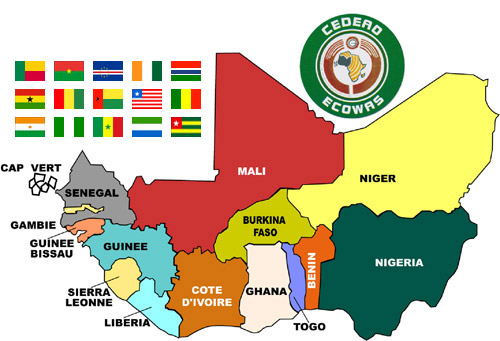
The Economic Community of West African States, ECOWAS, has reaffirmed its commitment to launching the long-awaited single regional currency, the ECO, in 2027.

According to the regional body, this is a major step towards deeper economic integration, stronger regional trade and sustainable growth across West Africa.

The decision was one of the major outcomes of the 69th Ordinary Session of the ECOWAS Authority of Heads of State and Government held on Sunday in Lungi, Sierra Leone, under the chairmanship of Sierra Leonean President, Julius Maada Bio.

In the final communiqué issued yesterday, the leaders said ECOWAS economies remained resilient, despite global economic challenges and projected a favourable outlook for 2026, supported by declining inflation, lower public debt-to-GDP ratios and a widening current account surplus, although fiscal deficits remain a concern.

On the single currency programme, the body declared that “the authority reiterates its firm commitment to the launch of the ECO in 2027 as a key instrument for deepening regional economic integration and promoting sustainable, inclusive and resilient growth within the Community.”

According to the communiqué, the ECO will initially be adopted by member states that meet the agreed convergence criteria, while countries yet to qualify will receive support to enable them join the regional currency at a later stage.

It welcomed the registration of the name “ECO” with African Intellectual Property Organisation and directed the commission to secure trademark registration with other regional and international intellectual property bodies.

Beyond the currency programme, the authority also expressed concern over worsening insecurity in the Sahel and Lake Chad Basin, condemned attacks by terrorist groups and endorsed the revised roadmap for activating the ECOWAS Counterterrorism Brigade, with full operational capability expected by July 2027.

See also  European airports could run out of jet fuel in weeks as Iran war sparks more chaos

Member states were urged to clear outstanding community levy arrears earmarked for financing the regional counterterrorism force.

The communiqué “strongly condemns the increasing spate of banditry, kidnappings and abductions of school children, particularly in Northern Nigeria.”

It also “expresses its solidarity with the people of Nigeria and commends President Bola Ahmed Tinubu for the swift actions taken to secure the release of victims and the measures put in place to combat the menace.”

ECOWAS also highlighted worsening humanitarian conditions caused by conflict, terrorism, displacement, climate-related disasters and food insecurity, directing the commission to strengthen resource mobilisation and coordinate humanitarian responses, including support for voluntary return of migrants from North Africa.

On relations with the Alliance of Sahel States, ECOWAS extended the mandate of Chief Negotiator, Dr. Lansana Kouyaté, until December 2026 and reaffirmed that negotiations with Burkina Faso, Mali and Niger would continue only as a unified bloc.

The leaders also raised concerns over food insecurity and rising fertiliser prices affecting agricultural productivity across parts of the region.

They welcomed measures taken by member states to cushion the impact of the fertiliser crisis and called for accelerated implementation of ECOWAS Rice Agenda and Regional Rice Roadmap to reduce food imports and strengthen regional food sovereignty.

The Authority reaffirmed its commitment to the ECOWAS Protocol on Free Movement of Persons, Right of Residence and Establishment, stressing the need to preserve regional mobility, facilitate cross-border trade and strengthen economic cooperation.

It added that ongoing engagements with the Alliance of Sahel States should safeguard regional movement and economic exchanges.

See also  FG begins N4tn debt settlement, captures five GenCos

ECOWAS strongly condemned continuing xenophobic attacks against Africans in South Africa, particularly West Africans, urging South African government to protect foreign nationals and permanently address the problem, while also backing Ghana’s proposal to place the issue before the African Union Assembly.

On trade, the summit warned that increasing bilateral agreements by individual member states could weaken the ECOWAS Customs Union and directed the commission to coordinate common regional positions during international negotiations.

On aviation, ECOWAS reiterated its determination to reduce the cost of air transport across West Africa, applauding Côte d’Ivoire as the only member state to have removed applicable aviation taxes.
It urged others to accelerate reforms, and called on development finance institutions to support investments in regional aviation infrastructure.

On peace and security, ECOWAS acknowledged progress in democratic governance but expressed concern over terrorism, political instability and humanitarian crises across the region.

It urged Guinea-Bissau’s transition authorities to ensure transparent and inclusive constitutional and electoral processes, respect human rights, release detained political figures and work towards restoring constitutional order. Senegal was appointed facilitator to support dialogue in the country.

The leaders commended the peaceful conduct of elections in Benin, Guinea, Cabo Verde and Côte d’Ivoire and directed the commission to continue supporting member states preparing for elections later this year and in early 2027

FOLLOW US ON:

FACEBOOK

TWITTER

PINTEREST

TIKTOK

YOUTUBE

LINKEDIN

INSTAGRAM

Continue Reading
Click to comment

Leave a Reply

Your email address will not be published. Required fields are marked *

Business

Read how to apply for FG’s loan for laptops, smartphones, others

Published

on

The Federal Government’s newly launched consumer credit scheme for digital devices, the Credit for Laptops, Internet, Connectivity and Knowledge Digital Devices Programme, is now accepting applications from Nigerians seeking affordable, credit-based access to laptops, smartphones and tablets.

The programme, implemented by the Nigerian Consumer Credit Corporation (CREDICORP) in partnership with the Federal Ministry of Communications, Innovation and Digital Economy, was unveiled on Tuesday in Abuja by the Minister, Dr Bosun Tijani, alongside CREDICORP’s Managing Director and Chief Executive Officer, Uzoma Nwagba.

C.L.I.C.K.D. is designed to help Nigerians own digital devices through structured, spread-out payments rather than paying the full cost upfront, starting with locally assembled laptops as CREDICORP prioritises local manufacturing.

How to apply

  1. Visit the website. Go to credicorp.ng/clickd, the official C.L.I.C.K.D. landing page.
  2. Click “I’m Interested.” This takes you to the application form.
  3. Fill in the required details:
  • State of residence — select from all 36 states and the FCT.
  • What best describes you — Employed (Salary Earner), Freelancer/Self-Employed, Business Owner, Student, Job Seeker or NYSC Member.
  • Monthly income (optional) — ranges from below ₦100,000 to above ₦1,000,000.
  • Digital talent programme — applicants indicate whether they are part of one, choosing from 3MTT, Andela Learning Community, Learn2Earn, ALX, HNG Internship, AltSchool Africa, Genesys Tech Hub or “Other.”
  • Device needed — laptop, smartphone, tablet or other.
  • Reason for the device — applicants can select multiple options, including learning and certifications, work/remote work, freelancing, business growth, school, software development, content creation or other.
  • How you heard about C.L.I.C.K.D. — 3MTT, social media, friend or family, school, employer, Google search or other.
  • Confirm and consent. Before submitting, applicants must tick three boxes: confirming the information provided is accurate, agreeing to be contacted regarding the application, and consenting to CREDICORP and its partners using their information to assess eligibility.
    Submit.
See also  FG begins N4tn debt settlement, captures five GenCos

Who qualifies, for now

The current 1,000-laptop pilot is limited to fellows of the Federal Government’s Three Million Technical Talent (3MTT) Programme, under which C.L.I.C.K.D. was launched as a national pilot.

Nwagba said the rollout began in Abuja, where 77 beneficiaries received devices, with the remaining laptops to be distributed to qualified fellows in other states in phases.

CREDICORP has a track record of this phased approach: its main consumer credit scheme launched in April 2024, targeting only federal civil servants before later widening its reach.

The application form’s coverage extends beyond 3MTT, listing Andela Learning Community, Learn2Earn, ALX Africa, HNG Internship, AltSchool Africa and Genesys Tech Hub as talent-programme options — suggesting these fellows may also be able to apply, even though CREDICORP’s public statements so far have referenced only 3MTT beneficiaries for the current 1,000-laptop batch.

CREDICORP has also yet to disclose the specific interest rates, repayment tenure or down-payment structure for C.L.I.C.K.D. loans.

punch.ng

FOLLOW US ON:

FACEBOOK

TWITTER

PINTEREST

TIKTOK

YOUTUBE

LINKEDIN

Continue Reading

Business

NUPRC awards 37 oil blocks, warns against delays

Published

on

The Nigerian Upstream Petroleum Regulatory Commission (NUPRC) on Tuesday declared 31 companies as winners of 37 oil and gas blocks under the 2025 Licensing Round, despite what the commission described as sustained threats and pressure mounted against members of its evaluation team before the conclusion of the exercise.

The successful conclusion of the commercial bid conference marked the end of an eight-month licensing process, with the winning firms now required to pay their signature bonuses and satisfy other post-award conditions within 90 days or risk forfeiting the assets to reserve bidders.

Speaking after the commercial bid conference in Abuja, the Commission Chief Executive of the NUPRC, Oritsemeyiwa Eyesan, disclosed that officials involved in evaluating the bids faced repeated intimidation throughout the process but refused to compromise the integrity of the exercise.

She said the threats persisted until the eve of the commercial bid opening. Eyesan said, “It has been a journey… If you have been told anything contrary to the fact that this process was going to be credible and transparent, do not believe it.”

Commending members of the evaluation committee, she added, “The evaluators have worked tirelessly since June 12. They have been inundated with calls and with threats, serious threats, but they stood their ground. Up until yesterday, we were still threatened, but we stood our ground to say that the times have changed. Nigeria is really open for business.”

She said President Bola Tinubu had mandated the commission to ensure a credible process and thanked the evaluators and observers from the Nigeria Extractive Industries Transparency Initiative for supporting the exercise.

See also  Nigeria buys 61.7m barrels US crude oil amid bulk exports

The commission announced that 31 companies emerged successful after 143 companies submitted about 200 bids for 37 oil and gas blocks out of the 50 assets offered during the licensing round.

The successful companies include SSonic Petroleum Limited, CFP Pipeline and Flowlines, Dutchford E&P Limited, Attabanson Global Company Limited, Rosem Energy Limited, Pivot-GIS Limited, Network E&P, Asharami, LexOil, BVOF, Gupsco Energy Limited, Saratoga, Volante, Concept-Reel Petroleum Services Limited, Clinton Oil Field, Nuway Oaklane Limited, Ramec Italia.

Others are Blueridge E&P, Up Energies Limited, AYM Shafa, Blackrock Holdings Limited, Funtay Integrated Business Limited, Riparian Development and Production Limited, Nikstallis, Stardeep Petroleum, Dakoda & U Limited, Southborne Oil and Gas Limited, Lanaka Petroleum, Highban Resources Limited and Eyre Energy Limited.

The commission explained that the successful companies had emerged only as preferred bidders and would receive Petroleum Prospecting Licences after meeting all statutory conditions under the Petroleum Industry Act.

Eyesan urged the winners to immediately commence the post-award process. She said, “These firms will only be presented final awards after the payment of the appropriate signature bonus and the approval of the Minister of Petroleum Resources in line with the Petroleum Industry Act, 2021.”

She warned that failure to fulfil the post-award conditions within 90 days would invalidate the awards, allowing the commission to invite reserve bidders.

The commission explained that the commercial bid process was designed to eliminate human interference through an automated weighted scoring system. Officials said technical evaluations had been completed before the commercial bids were opened publicly, while no one, including members of the evaluation team, had prior access to the commercial bids.

See also  European airports could run out of jet fuel in weeks as Iran war sparks more chaos

“The weighted score is 40 per cent. All these things are automated. The computer calculates everything. Nobody is using a pen to write any figures. This demonstrates the transparent, efficient and robust process built into this licensing round,” the commission stated.

Meanwhile, the Minister of State for Petroleum Resources (Oil), Senator Heineken Lokpobiri, said the Petroleum Industry Act had ended the discretionary allocation of oil blocks in Nigeria. “The PIA, unfortunately for some people, has prevented discretionary allocation of oil blocks,” he said jokingly.

He stressed that the law guarantees fairness and credibility, assuring investors that no one knows the content of commercial bids before they are officially opened. Lokpobiri also warned successful bidders against treating licences as speculative assets.

“In the past, I have seen people go round conferences across the world carrying licences and looking for partners who never came. Those days must be over. The licences issued today must translate into actual field development and production,” he said.

Also speaking, the Minister of State for Petroleum Resources (Gas), Ekperikpe Ekpo, said the licensing round reflected the Federal Government’s commitment to transparency, competitiveness and credibility.

“The Federal Government remains firmly committed to creating an enabling environment that attracts investment, accelerates exploration and production, and unlocks the full value of Nigeria’s hydrocarbon resources,” Ekpo said.

punch.ng

FOLLOW US ON:

FACEBOOK

TWITTER

PINTEREST

TIKTOK

YOUTUBE

LINKEDIN

Continue Reading

Business

2026 National Revenue Service half-year performance jumps by 50%

Published

on

Nigeria’s federal tax revenue (through the Nigeria Revenue Service, rose from about N14.27trillion in the first half of 2025 to about N21.6 trillion in the first half of 2026, an increase of roughly 51–52 percent in nominal terms, according to an economic report by the Presidency.

The figures were contained in the Economic Snapshot Report 2023 vs 2026.

Key figures

H1 2025 (January–June)

The Federal Government collected about N14.27 trillion in tax revenue under the platform of the now rested Federal Inland Revenue Service (FIRS) in the first half of 2025, according to a performance report
While this represented a major jump in the same period in 2024, it equally put the FIRS on track to meeting a full‑year revenue target of around N25.2 trillion.

H1 2026 (January–June)

The restructured NRS has collected about N21.6 trillion in the first half of 2026, based on an Economic Snapshot Report from the Presidency.

This was described as a 49 percent year‑on‑year increase relative to the corresponding period of 2025, and it was linked to tax reforms, digitalisation, and tighter oil‑revenue controls.

Side‑by‑side comparison

Period

Institution (label used in reports

Reported H1 revenue

Source description

H1 2025

FIRS

N14.27 trillion

Tax collections January–June 2025, as disclosed in a Presidency performance report.

H1 2026

NRS

N21.6 trillion

Tax collections January–June 2026, from a Presidency Economic Snapshot Report.

Growth between H1 2025 and H1 2026

Absolute increase

N21.6 trillion (H1 2026) minus N14.27 trillion (H1 2025) gives an increase of about N7.33 trillion in nominal collections.

Percentage growth

This implies an increase of roughly 51–52 percent year‑on‑year, which is broadly consistent with the “about 49 percent” y/y figure cited for H1 2026 collections, bearing in mind that the latter percentage appears to rely on an internal baseline for “corresponding period 2025” that may differ slightly from the media‑reported N14.27 trillion.

See also  FG begins N4tn debt settlement, captures five GenCos

Contextual factors noted in reports

Media and official commentaries attribute the jump partly to expanded non‑oil tax receipts, digital tax administration, enforcement measures, and reforms under the President Bola Tinubu administration, including closer oversight of oil‑related remittances.

What your taxes do

Project: Ibadan-ife-Ilesa Road reconstruction

Length: 108 (5km completed by Oyo State)

Scope: Dual carriageway treatment, with concrete pavement

Cost: N427 billion

Contractor: CBC Global

Timeline: 65 percent complete.
Reconstruction ongoing

Unfiled returns: CAC to deregister 100,000 firms

The Corporate Affairs Commission has commenced moves to strike off 100,000 companies from its register.

The firms are reported to have failed to file annual returns and other statutory documents.

The commission disclosed this in a public notice signed by its management recently.

It said the exercise, tagged Batch 6, was being carried out pursuant to Section 692 (3) and (4) of the Companies and Allied Matters Act, 2020.

According to the notice, the affected companies can find their names on the commission’s website.

The notice read, “This is to notify the General Public and Esteemed Customers that the Corporate Affairs Commission has commenced another round of striking off names of companies from the Register pursuant to the provisions of Section 692 (3) and(4) of the Companies and Allied Matters Act, 2020.

“The list of the affected One Hundred Thousand (100,000) companies can be accessed at the Commission’s Website http://cac.gov.ng.”

The Commission urged the companies to regularise their records within 90 days of the notice.

It said, “The affected companies are hereby advised to take steps to file all outstanding Annual Returns (and by extension Persons with Significant Control/Beneficial Ownership information) and regularise their records within ninety (90) days of this notice.”

See also  Despite xenophobia, South African investors pour nearly $1bn into Nigeria

Filing of annual returns is a key component of the new tax law which took effect in January 1, 2026.

FG plans to review 270 oil industry taxes, levies

The Federal Government has begun efforts to review no less than 270 taxes, levies, and statutory charges in Nigeria’s oil and gas industry by engaging PwC to undertake the assignment.

The Minister of State for Petroleum Resources (Oil), Heineken Lokpobiri, disclosed this recently while responding to concerns raised by indigenous oil producers during the opening ceremony of the 2026 NOG Energy Week in Abuja.

The minister’s comments came shortly after the Chairman of the Independent Petroleum Producers Group, Adegbite Falade, criticised the multiplicity of charges in the sector, describing Nigeria’s oil and gas industry as perhaps the most taxed and levied in the world.

Lokpobiri admitted that the complaints were valid but said the government had already initiated concrete steps to address them.

“When the Chairman of IPPG was talking, he made mention of the multiplicity of fees and rents. It’s been a major concern that Nigeria has over 270 fees, taxes and rents in this sector. It is true. But that doesn’t mean we’re not doing something about it,” he said.

According to the minister, the Federal Government has been engaging industry stakeholders on the issue since it was brought to its attention and has now commissioned PwC to compare Nigeria’s fiscal charges with those of competing petroleum-producing countries.

NRS steps up compliance on large taxpayers over digital invoice

The Nigeria Revenue Service has intensified efforts to enforce its electronic invoicing policy, directing all large taxpayers to complete migration to its digital invoicing platform by July 31, 2026.

See also  European airports could run out of jet fuel in weeks as Iran war sparks more chaos

The agency said the deadline applies to companies classified as large taxpayers and follows an earlier public notice released on February 17, 2026, which detailed the timetable and requirements for implementing the Electronic Fiscal System, also known as the Merchant Buyer Solution (MBS).

A statement on Sunday by the Chairman’s Special Adviser on Media, Dare Adekanmbi, said the tax authority had begun assessing the level of compliance among affected businesses and warned that failure to meet the deadline could attract legal consequences.

The statement, signed by NRS Chairman, Dr. Zacch Adedeji, urged all affected organisations to complete registration, system integration, testing and commence transmitting invoices through the agency’s electronic platform before the specified deadline.

“NRS has already commenced compliance monitoring activities in order to assess the level of adherence to the e-invoicing mandate among large taxpayers.

“Consequently, any defaulting member may be subjected to appropriate regulatory and enforcement actions in accordance with the provisions of the relevant tax laws and regulations,” added the statement

Taxable Line: The expenses of government, having for their object the interests of all, should be borne by every one, and the more a man enjoys the advantages of society, the more he ought to hold himself honoured in contributing to these expenses — Anne Robert Jacques Turgot (Louis XVI’s Controller-General of Finances 1774–1776 in France)

Q and A: How does NRS handle data protection, confidentiality, and sovereignty?

NRS applies strict data protection, confidentiality, and cybersecurity standards consistent with Nigerian law, including the Nigeria Data Protection Regulation, and aligned with international norms.

Powered by: AADPM; Contact: 08116759796, 07067204545

punch.ng

FOLLOW US ON:

FACEBOOK

TWITTER

PINTEREST

TIKTOK

YOUTUBE

LINKEDIN

Continue Reading

Trending